

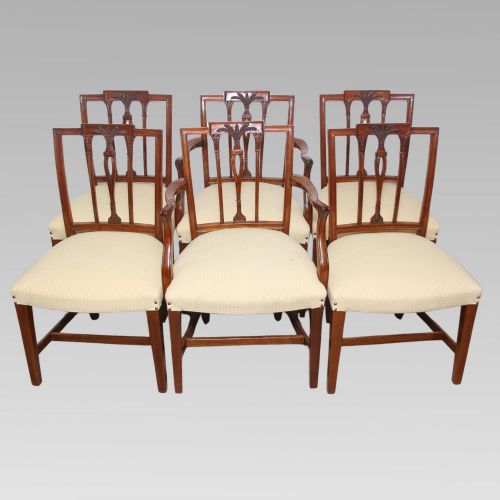


Cream Seat Carver Chairs
Cream seat carver chairs bring upright elegance to a dining room, offering sturdy arm support paired with upholstered or cane seating.
Cream Seat Carver Chairs
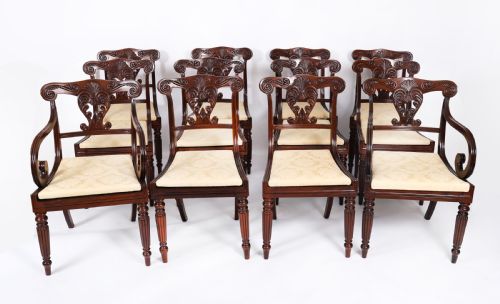
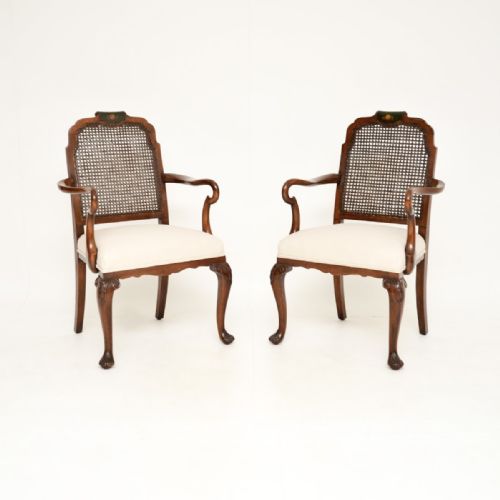
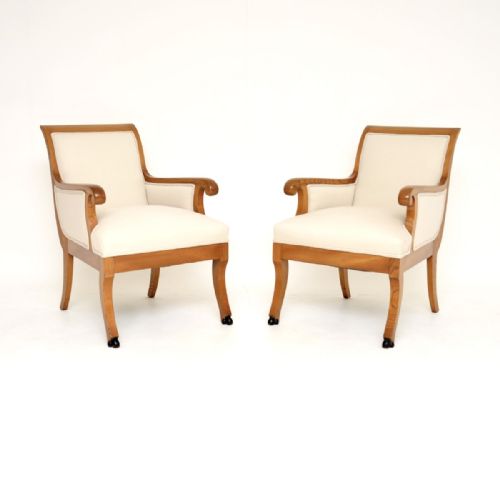
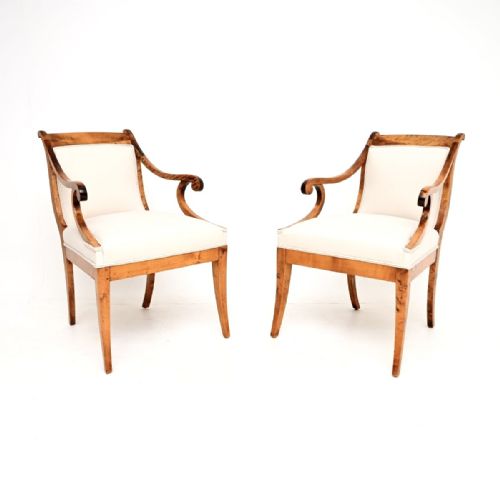
When searching for cream seat carver chairs, buyers encounter armchairs and dining chairs spanning periods from the eighteenth century through the twentieth century. These seating options include formal dining sets and matched pairs designed for the head of a table or a drawing room.
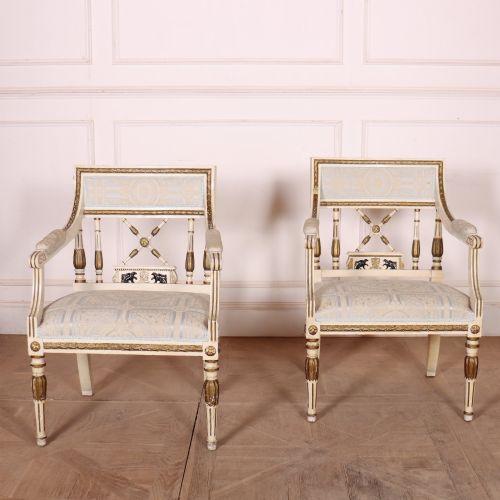
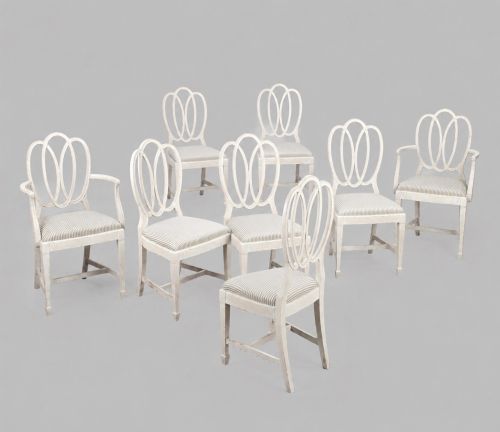
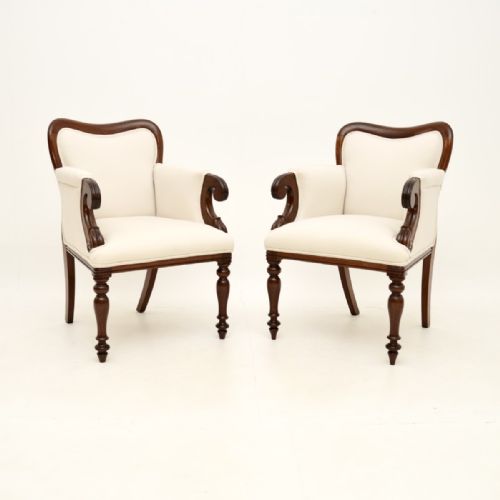
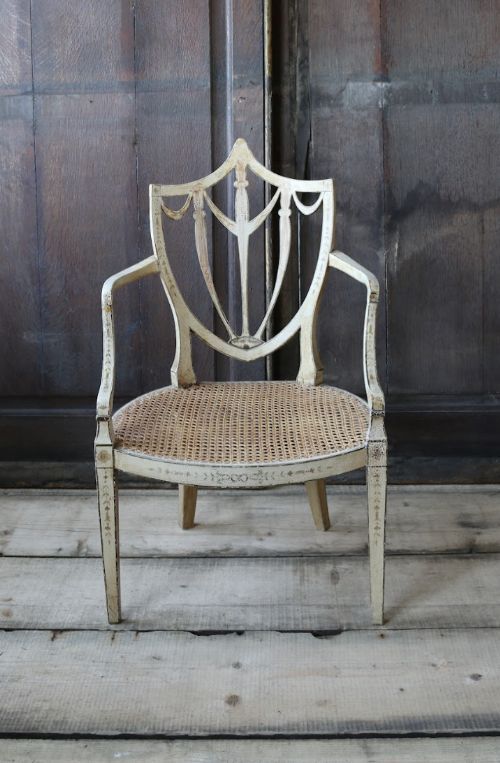
The inventory on this page ranges from Georgian and Regency mahogany models to painted Swedish styles, Edwardian walnut, and Art Deco burr walnut. Many examples incorporate upholstered pads or woven cane set within wooden frames, often created as carvers accompanying larger dining sets.
Materials and construction methods
Wood selection defines these pieces, with makers utilising solid mahogany, walnut, elm, satin birch, and painted wood alongside structural elements of cane and upholstery fabric. Frames are joined using traditional cabinet-making techniques appropriate to each period, from eighteenth-century carved mahogany to later bent and turned supports.
Surface finishes vary from polished timber grains to painted and parcel-gilt decorations, whilst seating surfaces integrate woven cane panels or padded upholstery pads in cream tones. The interaction between carved woodwork and lighter seat fabrics remains a consistent feature across these diverse periods.
Listings feature mahogany, walnut, elm, and painted wood materials across Regency, Victorian, and Georgian periods.
Distinguishing quality in construction
Superior pieces display crisp, deep wood carving and well-proportioned frames that maintain structural integrity without excessive reinforcement. The precision of joinery and the grade of timber selected for visible surfaces separate standard production from exceptional cabinet work.
In painted or gilded examples, the execution of the surface decoration and the preservation of original layers determine the standing of the piece. Similarly, the tightness of cane weaving or the quality of internal upholstery webbing indicates the level of craftsmanship invested in the seating.
Gillows·Epstein
The Cream Seat Carver Chairs Glossary
- Carver
- An armchair designed with open sides to accommodate the formal attire of the eighteenth and nineteenth centuries, typically used at the head of a dining table.
- Bergere
- An enclosed upholstered armchair with a wooden frame, often featuring cane panels on the back and sides.
- Shield-back
- A chair back shaped in the outline of a heraldic shield, popularised by designers during the late eighteenth century.
- Bar back
- A chair design featuring a horizontal wooden slat across the upper backrest, frequently seen in Regency dining furniture.
- Cloud back
- A rounded, upholstered chair design associated with twentieth-century Art Deco seating forms.
Cream Seat Carver Chairs: Frequently Asked Questions
What is a carver chair?
A carver chair is an armchair traditionally placed at the head and foot of a dining table. These chairs feature armrests to accommodate formal clothing and match the side chairs in a dining set.
In daily use, they serve as substantial seating options in studies, hallways, and drawing rooms alongside their primary dining function.
How do I identify a Regency chair?
Regency chairs often feature classical motifs, sabre legs, and horizontal bar backs inspired by ancient Greek and Roman designs. Woods such as mahogany predominate in this period.
Makers of this era frequently incorporated painted finishes and cane seats to create lighter, more refined silhouettes compared to earlier heavy walnut styles.
Are these chairs suitable for daily dining?
Most of these antique and vintage dining chairs are built from solid hardwoods like mahogany, walnut, and elm, making them structurally sound for regular use. Modern conservation often ensures the internal webbing and upholstery remain supportive.
Placing them around a dining table introduces historical character while providing functional seating for everyday meals.
How do Georgian and Victorian styles differ?
Georgian chairs generally display restrained classical carving, elegant proportions, and stylistic influences from Chippendale, Sheraton, or Hepplewhite. Timber choice focuses heavily on rich mahogany.
Victorian pieces tend to be heavier and more robust, often adopting revival styles that draw upon earlier decorative traditions while incorporating nineteenth-century industrial techniques.