
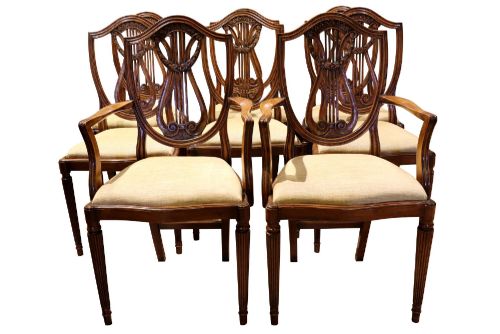
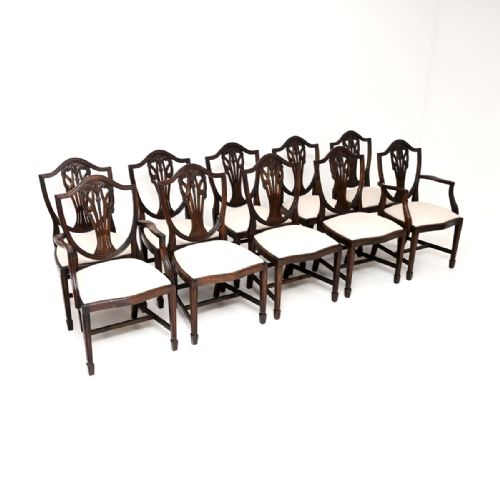
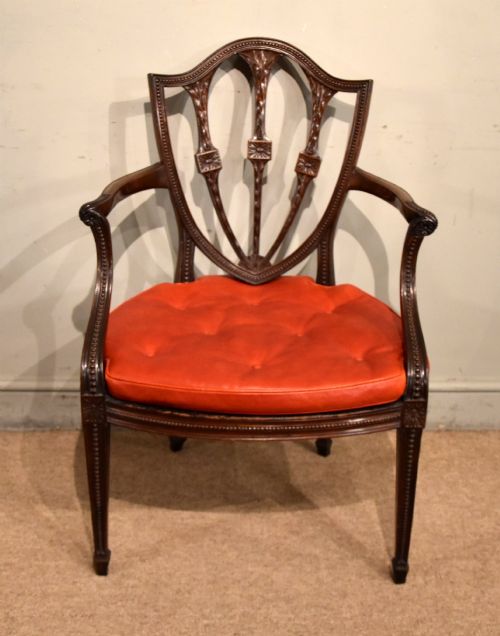
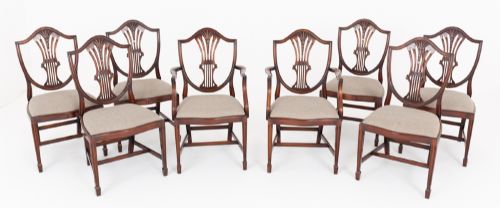
Shield Back Carver Chairs
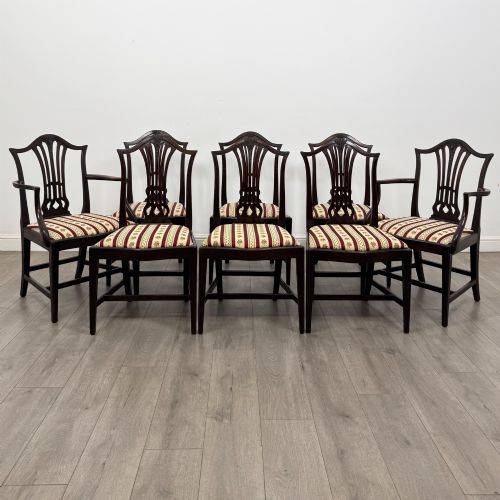
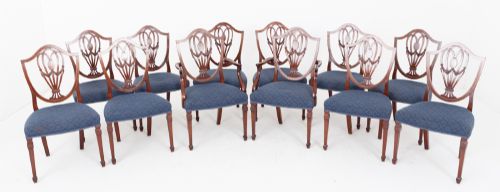
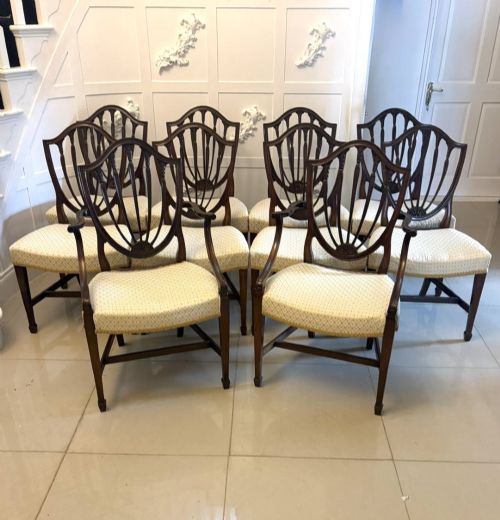
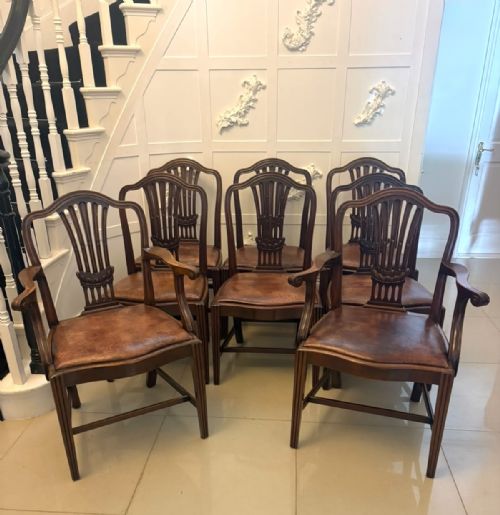
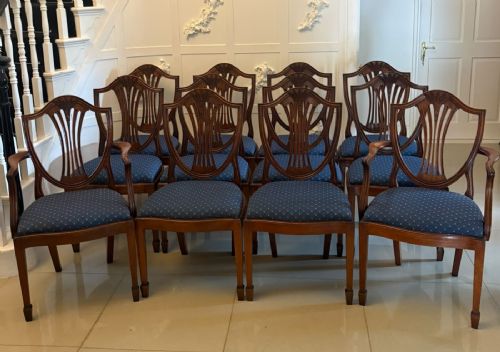
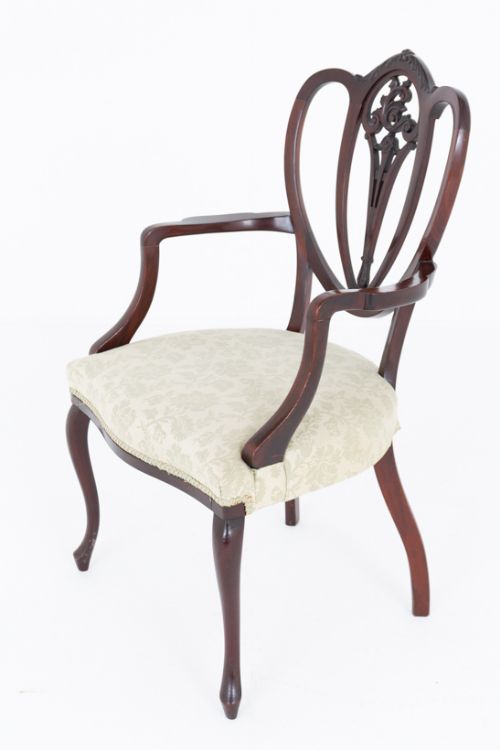
Shield back carver chairs bring neoclassical elegance to a dining room, offering curved support and open arms rooted in eighteenth-century design.
Shield Back Carver Chairs
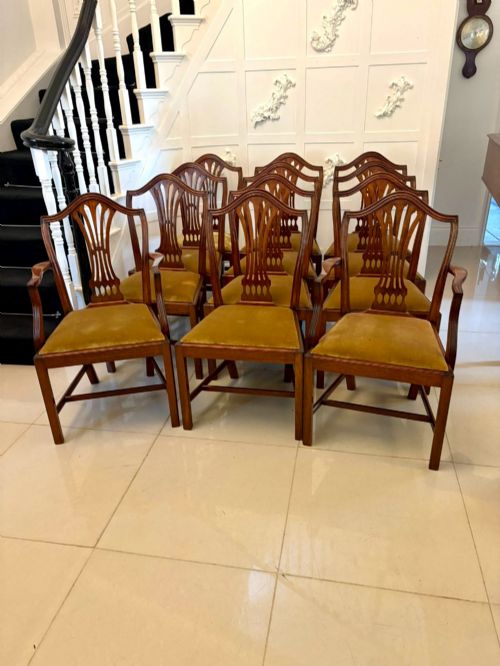
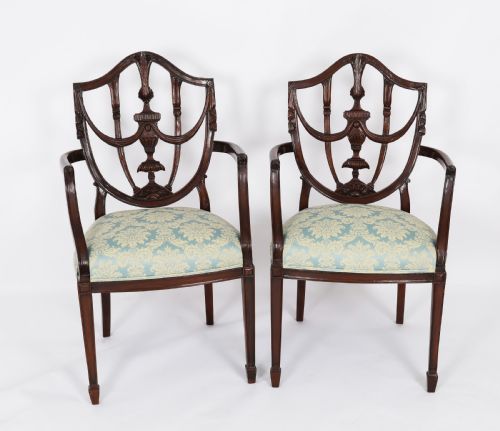
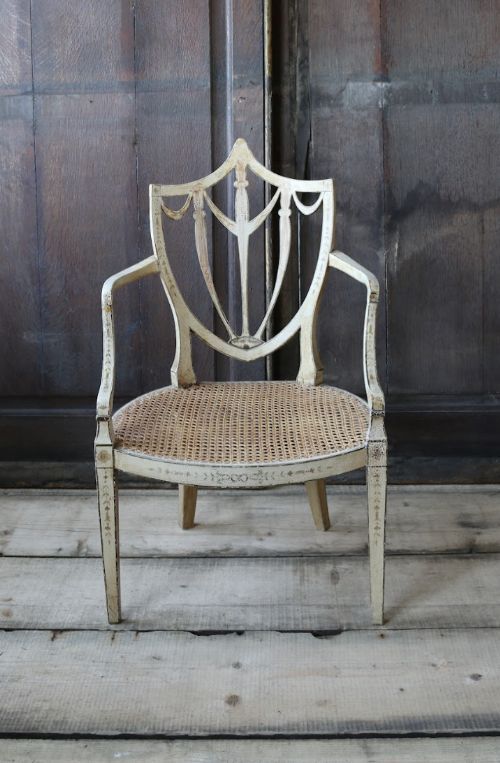
Shield back carver chairs are dining seats and armchairs defined by an open shield-shaped frame to the upper back. When you search for shield back carver chairs, you encounter pieces originating from the eighteenth century alongside later revivals.
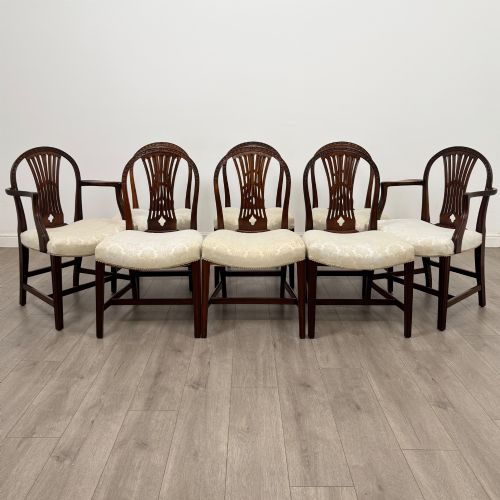
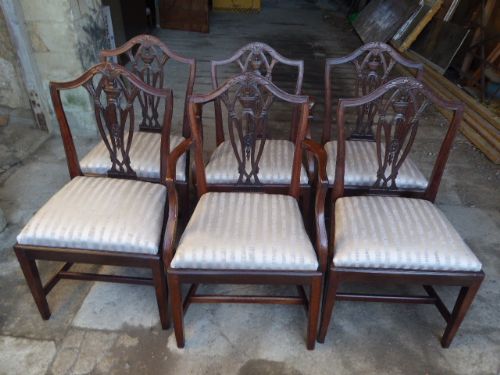
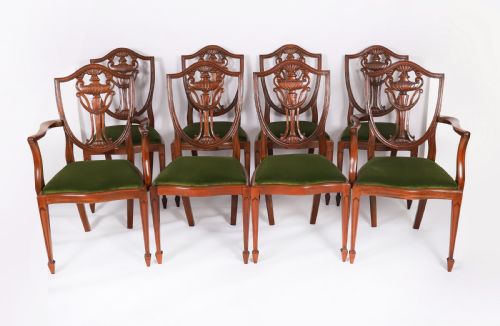
The selections span Georgian originals to Edwardian, Victorian, and twentieth-century revival interpretations. Many appear as part of larger dining sets containing both armchairs and side chairs.
Makers drew on the neoclassical vocabulary popularised by designers such as George Hepplewhite and Thomas Sheraton. The armchairs, or carvers, typically feature scrolling open arms set above broader seats.
Assessing Quality and Execution
Quality rests in the crispness of the hand-carving upon the shield frame and pierced splat. Subtle reeding, husks, or paterae separate simpler production from superior cabinet work.
Structural integrity depends on the tightness of the joints where the arms join the uprights and seat rails. Period originals and careful revivals demonstrate balanced proportions and timber selection that age with patina.
Shield Back Carver Chairs Retail Price Guide 2026
Typical asking prices for shield back carver chairs among the pieces listed under this phrase on Sellingantiques today, from the lower quarter to the upper quarter. They describe what is for sale here now, not the wider market.
Dining chairs occasionally arrive with blocked feet or unusual painted surfaces that hint at a maker's sudden burst of rustic creativity.
Maple and Co·Gillows
The Shield Back Carver Chairs Glossary
- Carver
- An armchair designed for the head of a dining table, featuring supportive open arms. These pieces match the style of the smaller side chairs in a set.
- Shield Back
- A chair back shaped like a heraldic shield, narrow at the base and curving outwards towards the top rail. This design emerged during the late eighteenth century.
- Splatt
- The vertical central strip of wood connecting the seat to the back rail. In these designs, it often takes an intricate, pierced form.
- Hepplewhite Style
- A neoclassical design vocabulary named after cabinet maker George Hepplewhite, characterised by lightness, elegance, and shield-shaped chair backs.
- Revival
- A later period of design that copies or adapts historical styles. Edwardian and Victorian versions frequently recreate eighteenth-century aesthetics.
Shield Back Carver Chairs: Frequently Asked Questions
What is a carver chair?
A carver chair is an armchair traditionally placed at the head and foot of a dining table. It shares its design and stylistic motifs with the matching side chairs.
In older suites, the carvers provide wider seats and open armrests for the hosts.
Are these chairs eighteenth century?
Some examples date from the late eighteenth century during the Georgian period. Others originate from Victorian, Edwardian, and twentieth-century revival periods.
Makers across these later eras closely replicated the original neoclassical proportions and shield back forms.
How do I use them daily?
These chairs function as dining seating, desk chairs, or occasional armchairs in living spaces. Their open arms allow them to slide close to table edges.
Protecting the wood and maintaining the upholstered seats preserves their condition during everyday use.
How do I identify a revival piece?
Revival pieces show construction methods, timber patination, and tool marks characteristic of the nineteenth or twentieth centuries. Examining the underside and joinery reveals the true manufacturing period.
Stylistic cues often align with Edwardian or Victorian interpretations of Georgian designs.