
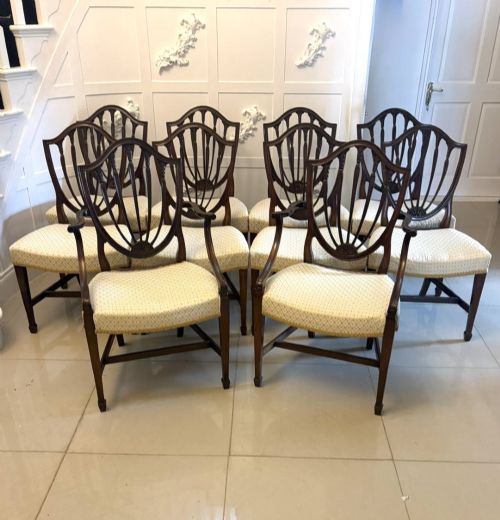
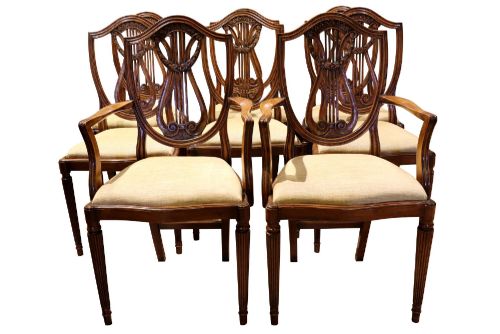
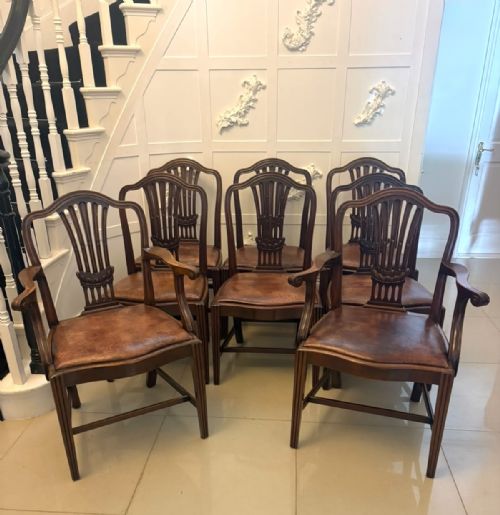
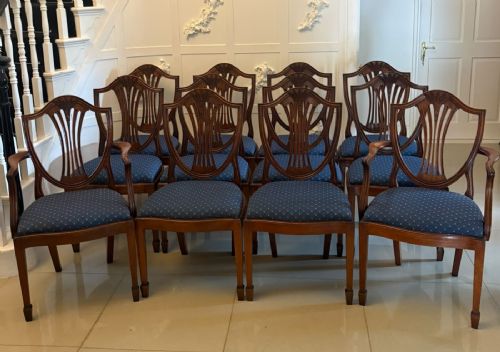
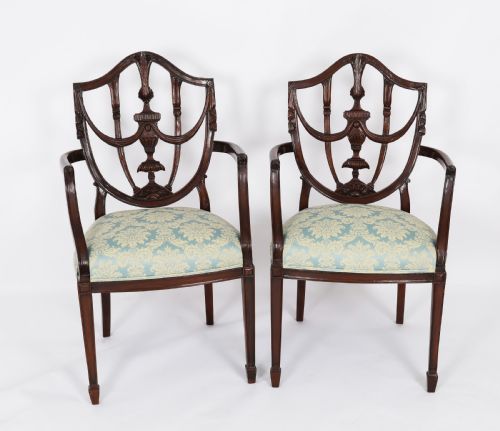
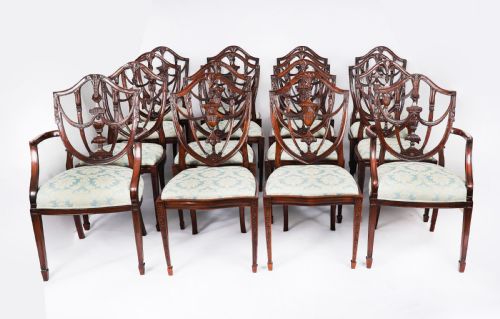
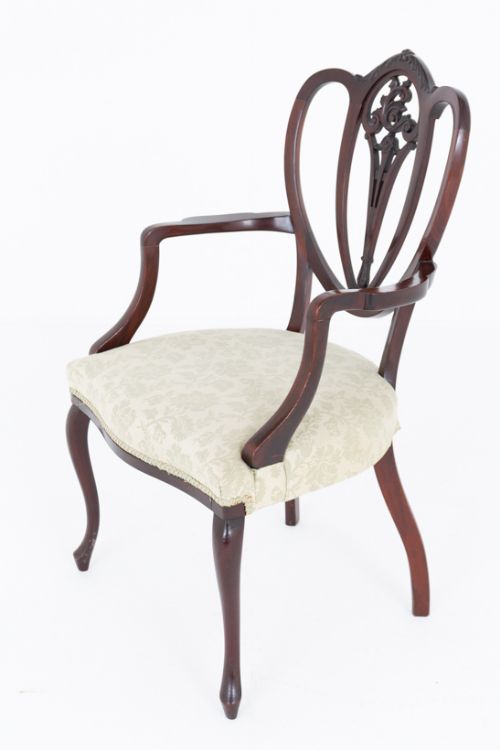
Hepplewhite Style Armchair
These hepplewhite style armchairs combine neoclassical elegance with sturdy timber framing, offering collectors refined seating rooted in eighteenth-century design.
Identifying Hepplewhite Style Armchairs
A hepplewhite style armchair draws inspiration from the neoclassical designs popularised during the georgian era and later revived in the nineteenth century. Buyers searching this phrase encounter forms ranging from late eighteenth-century originals to nineteenth-century revival pieces produced around eighteen-eighty.
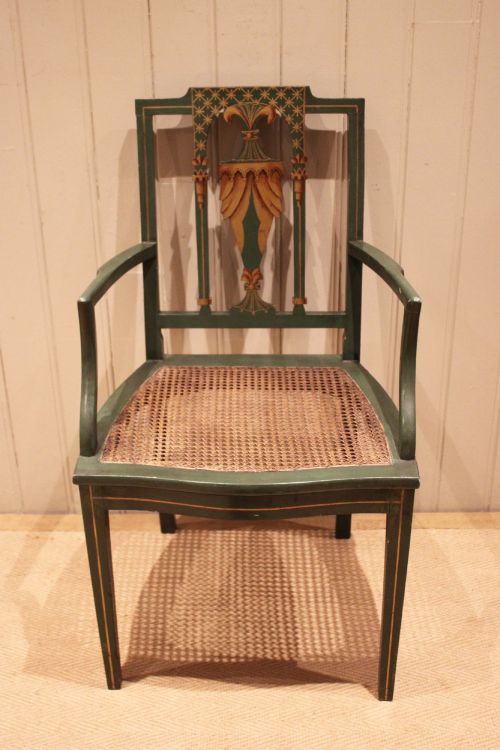
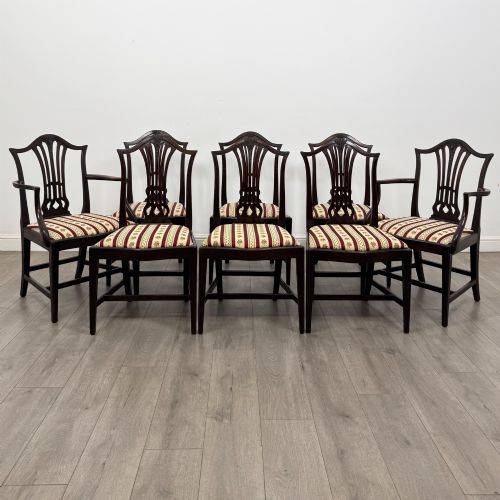
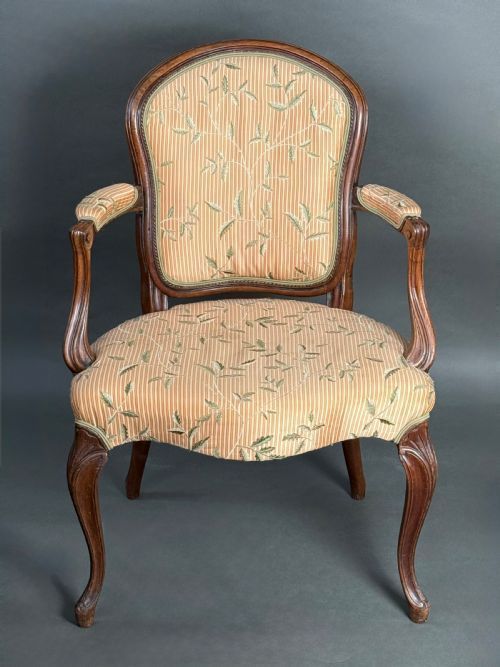
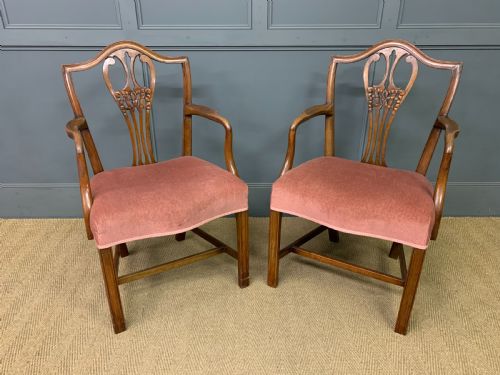
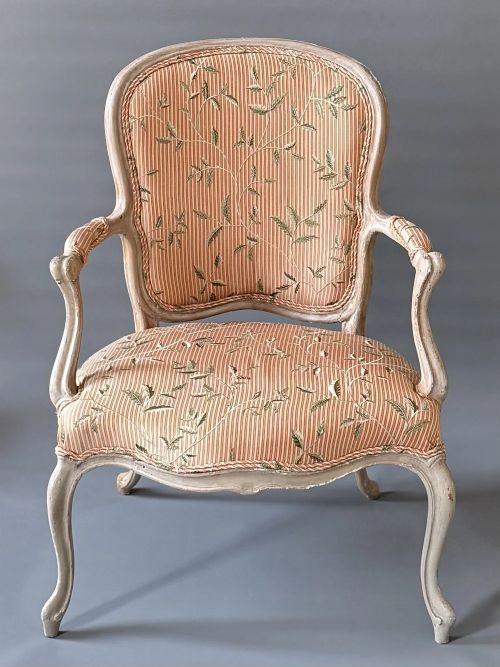
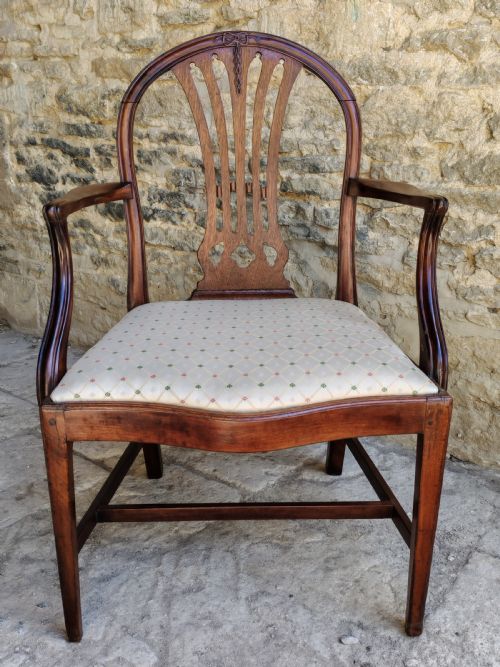
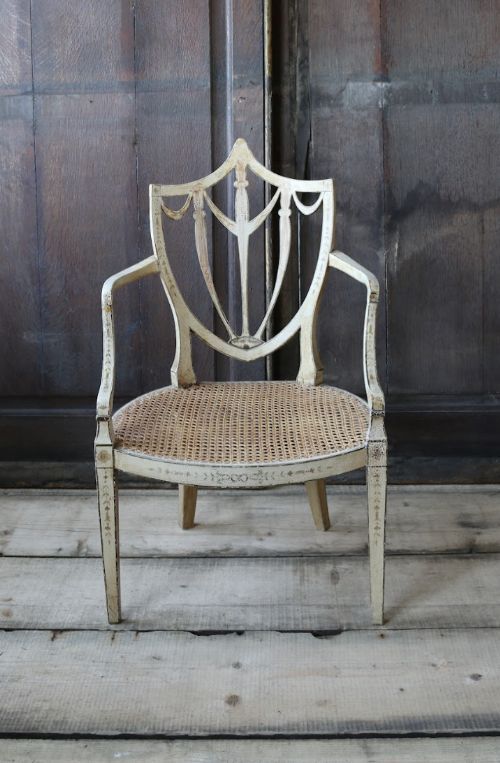
The most common formats on this page include carver armchairs, elbow chairs, and desk chairs featuring distinctive backrests. These seating options appear in mahogany, satinwood, and painted finishes, often paired with contemporary or period upholstery.
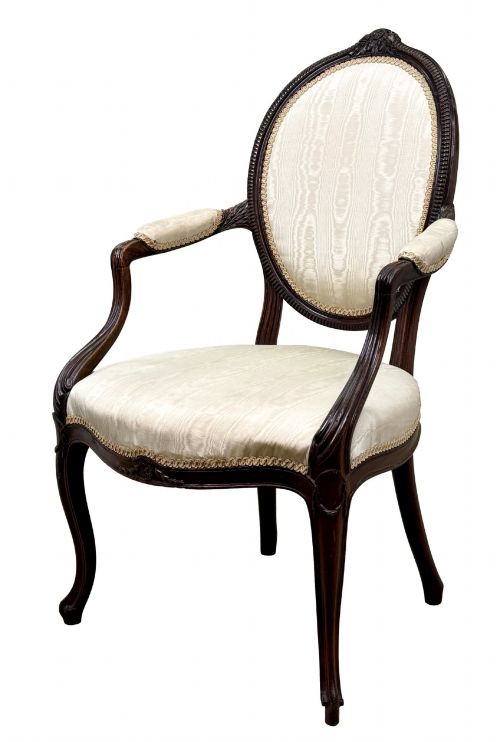
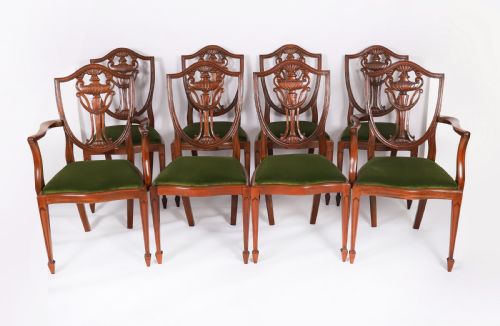
Originating from British and French cabinet-making traditions, these chairs frequently display shield-back or oval-back configurations. The structural design typically incorporates slender legs, open arms, and carved details aligned with george iii neoclassical aesthetics.
Standards of Execution
The degree of refinement in carved ornamentation separates standard examples from exceptional pieces. Crisp execution of motifs along the shield back and arm supports indicates superior cabinet-making skill.
Proportion and structural integrity define the overall tier of the chair. Heavier, clumsier timber dimensions contrast with the balanced, light appearance intended by the original neoclassical proportioning.
Retail Price Guide 2026
Typical UK retail prices for hepplewhite style armchair, calculated from the Sellingantiques database of over a million retail prices indexed since 2003. This retail price guide relies exclusively on Sellingantiques data; no external sources or auction records are used, so the figures do not describe the wider market.
Listings feature mahogany, satinwood, and painted finishes across eighteenth-century and nineteenth-century pieces.
The Hepplewhite Style Armchair Glossary
- Shield-back
- A chair back shaped like a heraldic shield, tapering down to a narrow base above the seat. This form remains a signature indicator of the design vocabulary associated with the period.
- Carver
- An armchair designed with elbow supports, traditionally placed at the heads of a dining table. These pieces match smaller side chairs within larger seating sets.
- Neoclassical
- A style spanning the eighteenth century that revived classical Greek and Roman motifs. Straight lines, symmetry, and carved urn or wheat-ear details typify this aesthetic.
- Satinwood
- A durable, hard timber yielding a golden sheen and smooth texture. Cabinet-makers used this wood for high-status furniture surfaces and contrasting veneers.
Frequently Asked Questions
What defines a hepplewhite style armchair?
These armchairs are defined by their neoclassical proportions, most notably the shield-shaped or oval-shaped backrests. They typically feature slender framework, curved arm supports, and carved woodwork.
The style bridges eighteenth-century georgian design and later nineteenth-century revival periods, encompassing both original antiques and later interpretations.
How were these armchairs used historically?
Historically, these pieces served as principal seating in formal dining rooms, libraries, and studies. Carver versions often sat at the ends of dining tables alongside matching side chairs.
Desk and office variants provided comfortable seating for writing and administrative tasks, combining structural stability with decorative presence.
Can I use these chairs daily?
Yes, these timber chairs remain structurally robust for regular seating when properly maintained. Their solid wood construction supports daily domestic use in modern interiors.
Updating the fabric upholstery allows the seating to integrate with contemporary rooms while preserving the antique timber frame.
How do I distinguish revival periods?
Distinguishing periods involves examining the timber patination, tool marks, and construction joints. Eighteenth-century pieces exhibit age-related wear and traditional joinery methods unique to their era.
Nineteenth-century revival items, such as those from eighteen-eighty, display slightly different manufacturing tolerances and timber preparation techniques typical of later workshops.