

Georgian Mahogany Bureau Desk
When you examine a georgian mahogany bureau desk, you handle a dual-purpose piece of writing furniture designed for private correspondence and secure storage.
Georgian Mahogany Bureau Desk
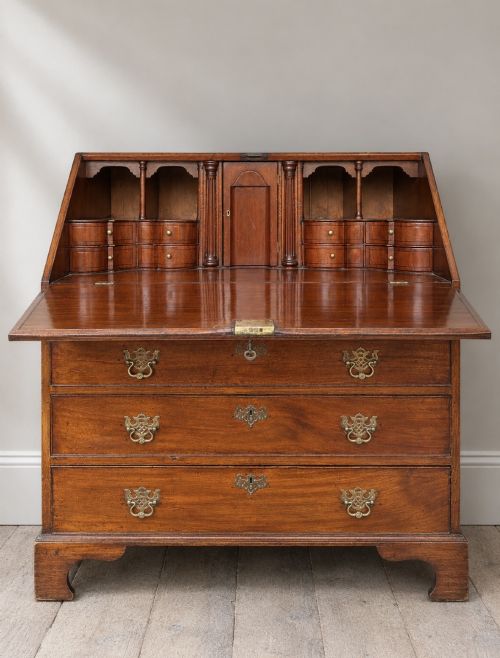
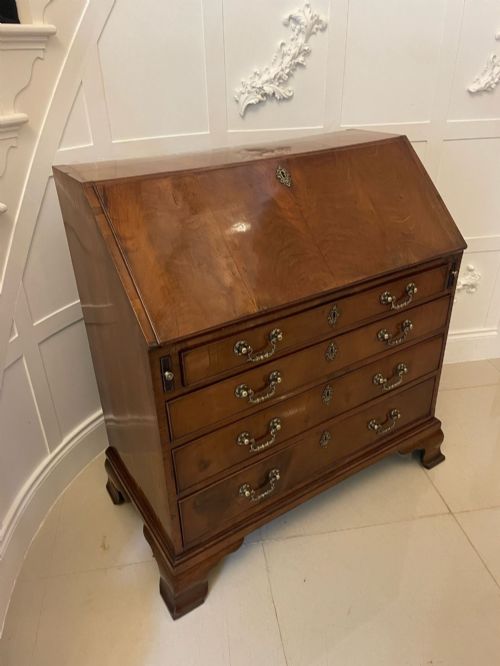
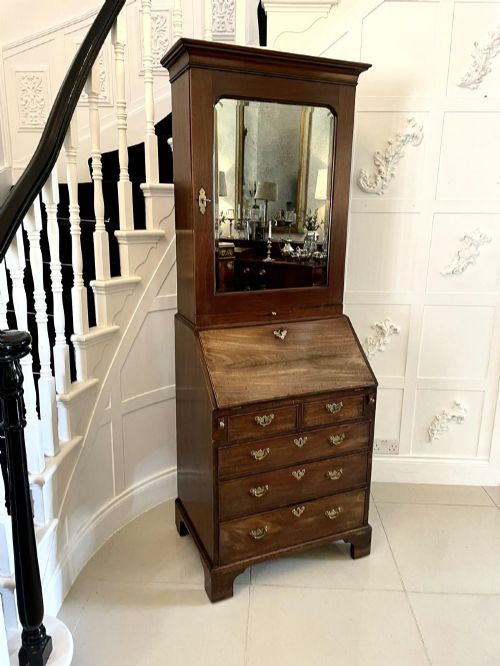
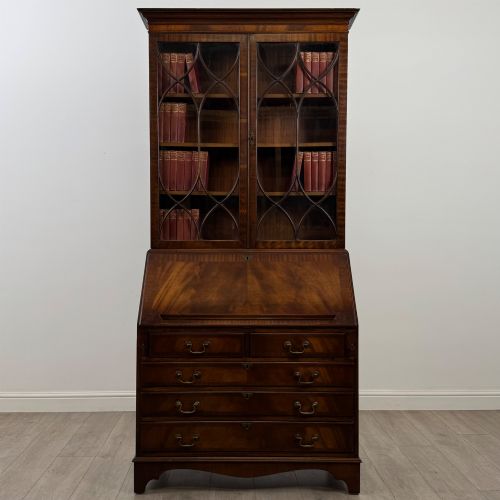
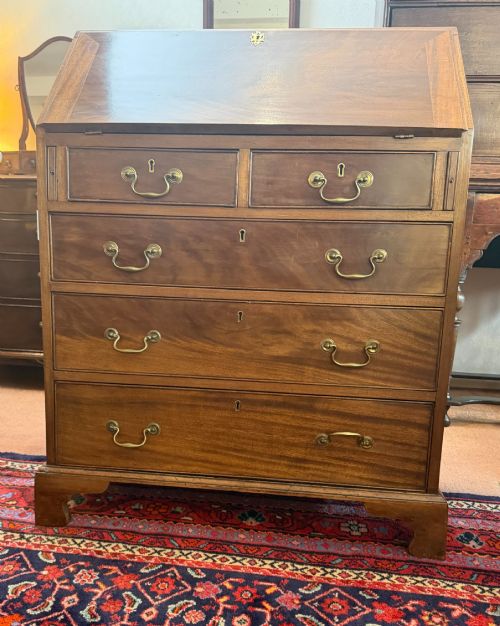
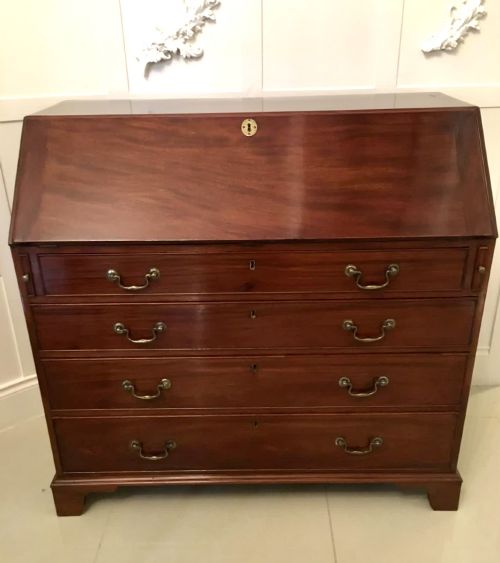
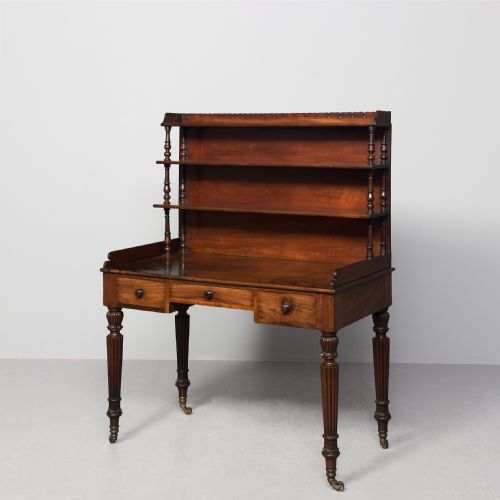
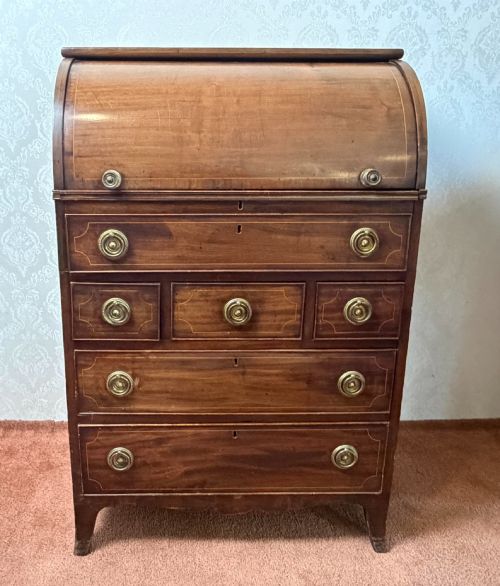
A georgian mahogany bureau desk typically comprises a sloping fall front that opens to reveal a fitted interior of small drawers and pigeonholes above several larger exterior drawers. These domestic writing pieces span the eighteenth and early nineteenth centuries, emerging from George II, George III, and Regency periods.
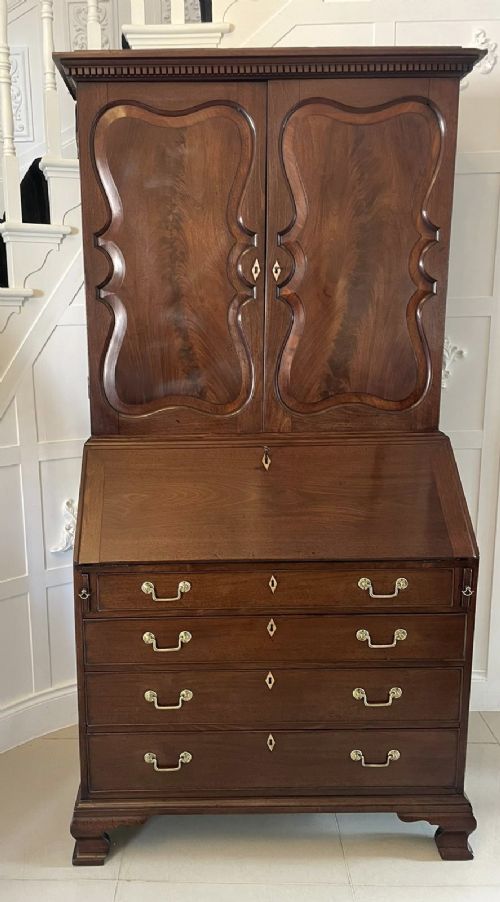
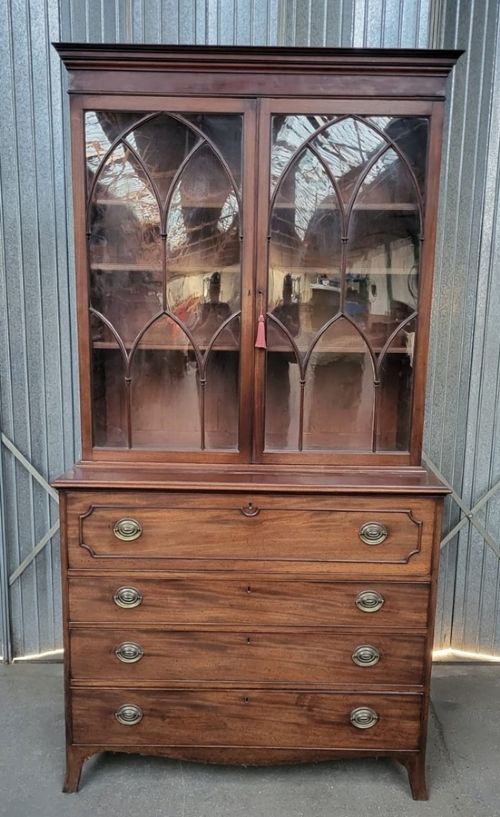
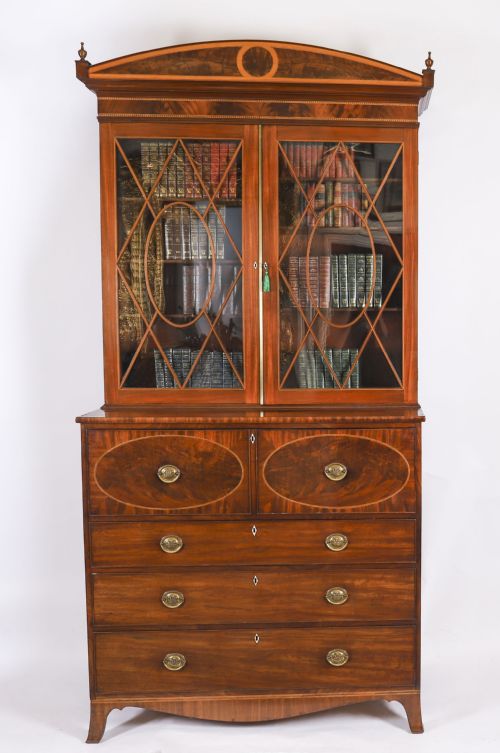
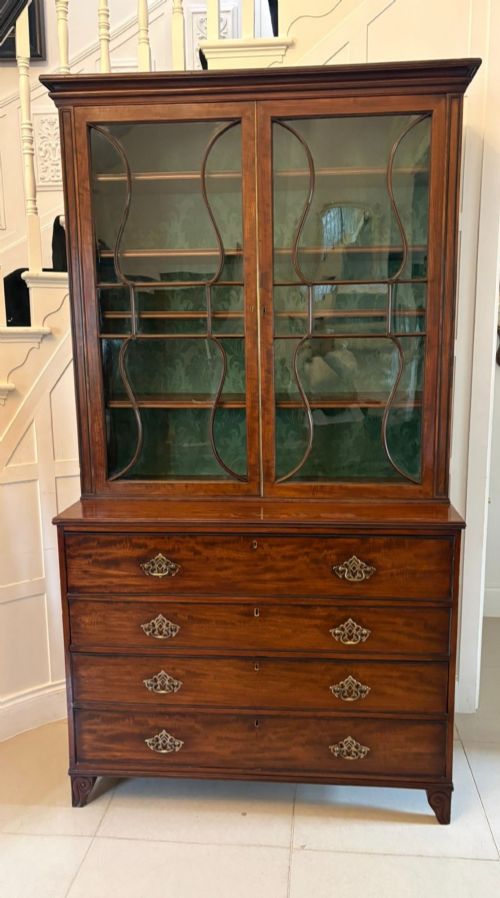
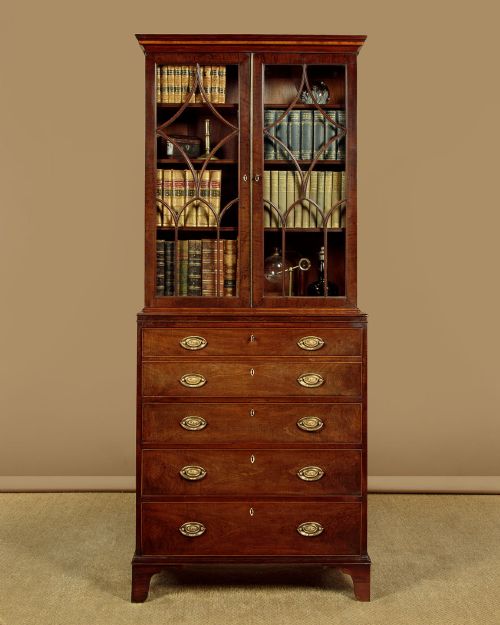
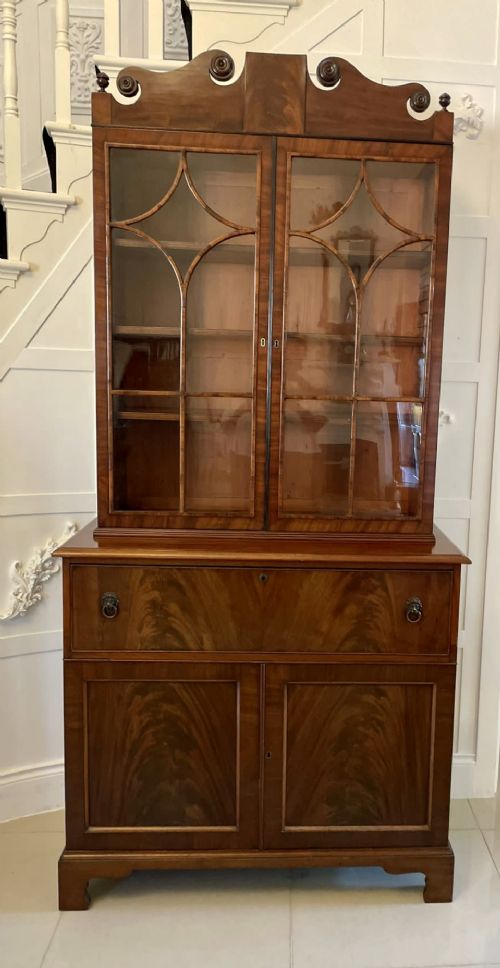
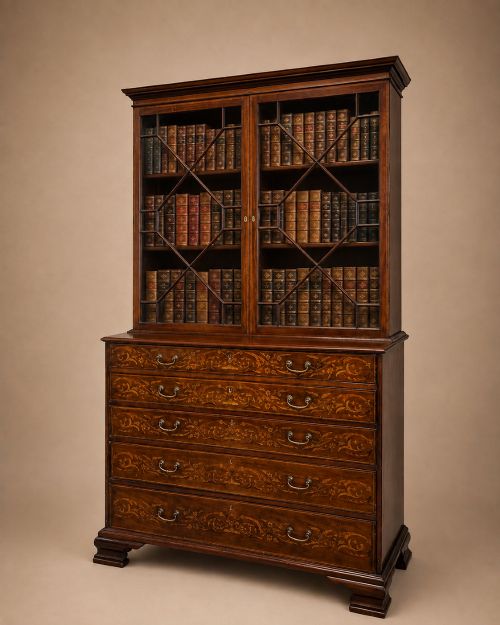
Makers also constructed taller variations known as bureau bookcases or secretaire bookcases, incorporating glazed upper shelving. Buyers encounter diverse scales, ranging from compact proportions suitable for modest chambers to larger library formats.
Later examples extend into the Edwardian era through revival styles, maintaining the traditional silhouette while employing twentieth-century manufacturing methods. The core function remains an enclosed writing surface paired with drawer storage.
Materials and Construction
Cabinet makers relied predominantly on solid mahogany and figured mahogany veneers, frequently supported by secondary timbers such as oak for drawer linings. Workshops utilised brass for handles, escutcheons, and bracket feet supports.
Surfaces often display satinwood inlay and contrasting stringing around drawer fronts and fall flaps. Glazed upper sections in taller bookcase variants incorporated hand-blown glass panes set within timber astragals.
Interior compartments featured hidden secret drawers and sliding wells constructed with dovetail joints. Leather inserts occasionally lined the drop-down writing surfaces of later writing tables and secretaires.
Georgian Mahogany Bureau Desk Retail Price Guide 2026
Typical asking prices for georgian mahogany bureau desk among the pieces listed under this phrase on Sellingantiques today, from the lower quarter to the upper quarter. They describe what is for sale here now, not the wider market.
Hidden spring-loaded secret compartments inside the pigeonholes kept stolen sugar lumps safe from eighteenth-century housekeeping staff.
Design and Execution
The sophistication of the internal fitments separates standard writing chests from exceptional examples. Superior pieces display intricate small drawers, pigeonholes, and concealed compartments behind the fall front.
Timber selection dictates visual depth, with figured or flame mahogany veneers achieving greater movement and reflection than plain stock. Secondary wood choices and dovetailing precision indicate workshop standards.
Proportion and foot configuration influence overall elegance, with original bracket feet or ogee bracket feet remaining integral to higher-grade furniture. Inlay work executed with fine satinwood stringing reflects superior craftsmanship.
James Mein of Kelso·Gillows·Tudor & Burrey
The Georgian Mahogany Bureau Desk Glossary
- Fall front
- The hinged writing flap that drops down to form a horizontal desk surface. It conceals the interior pigeonholes and small drawers when closed.
- Secretaire
- A piece of furniture containing a fitted writing drawer or pull-down desk compartment. It frequently combines wardrobe or bookcase storage with writing facilities.
- Astragal
- The moulded timber strip that holds individual glass panes within a bookcase door. Finer desks feature slender, complex profiles.
- Bracket foot
- A corner foot shape supporting case furniture, commonly styled as a shaped or ogee bracket on eighteenth-century desks.
- Escutcheon
- A protective metal plate surrounding a keyhole. Brass hardware of this type often dates the surrounding timber mount.
Georgian Mahogany Bureau Desk: Frequently Asked Questions
How do I use a bureau desk?
Lower the hinged fall front to access the fitted interior writing surface. Store stationery and writing implements within the internal pigeonholes and small drawers.
Keep valuable papers secured behind the locked fall flap when the desk is not in use. Utilise the lower graduated drawers for general household storage.
Where were bureau desks placed?
These pieces sat primarily in private parlours, libraries, and bedchambers of eighteenth-century homes. They provided a private space for managing correspondence and household accounts.
In modern rooms, they function well as compact hallway or living room writing stations. Their enclosed design hides paperwork effectively from view.
How do I date a mahogany bureau?
Examine the construction methods of the internal drawers, looking for hand-cut dovetails and solid oak linings. Early eighteenth-century examples feature simpler interior layouts and distinct bracket foot profiles.
Later Regency and Edwardian pieces introduce satinwood inlay, tambour cylinders, or machine-cut elements. Secondary timbers and handle styles provide further clues to the manufacturing decade.