


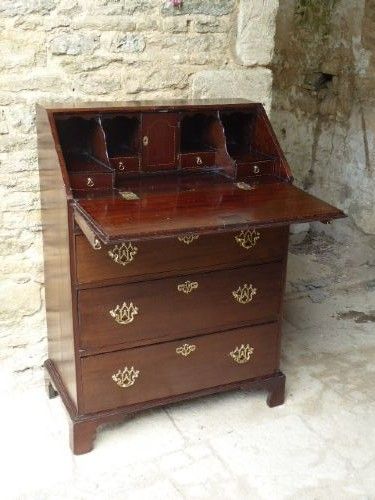
Slant Top Writing Bureau
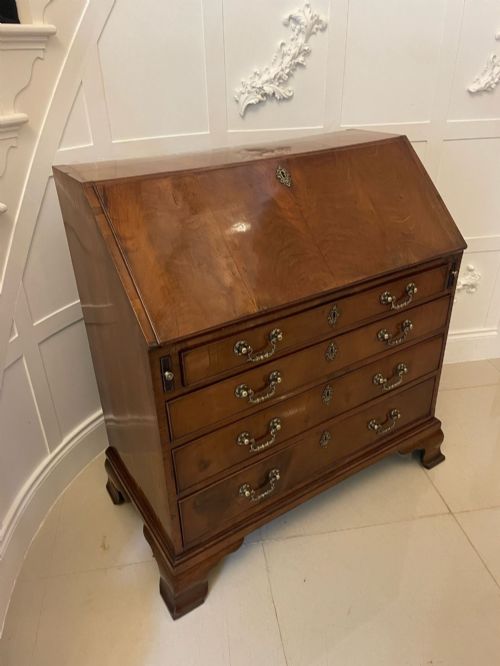
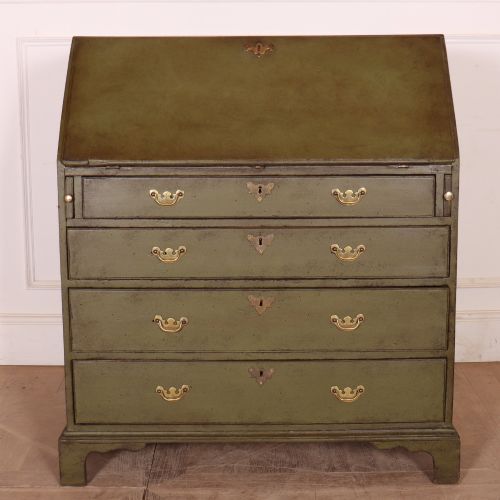
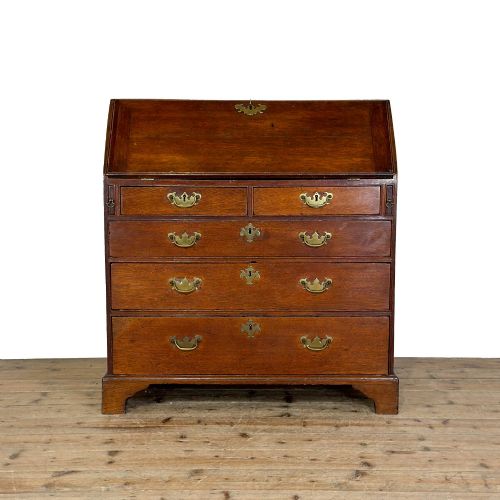
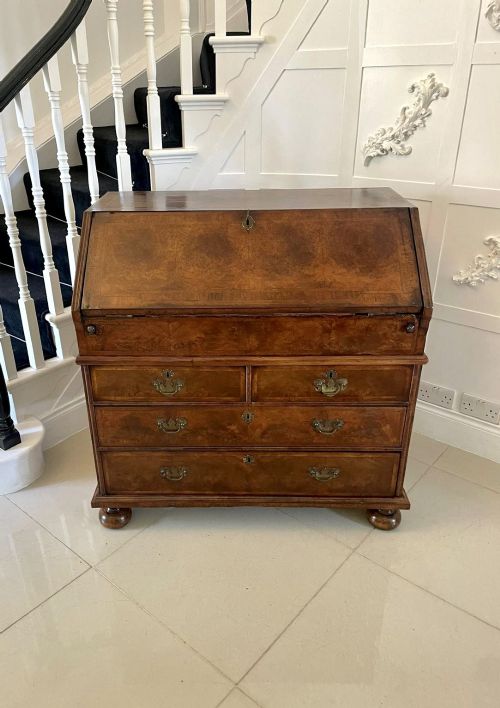
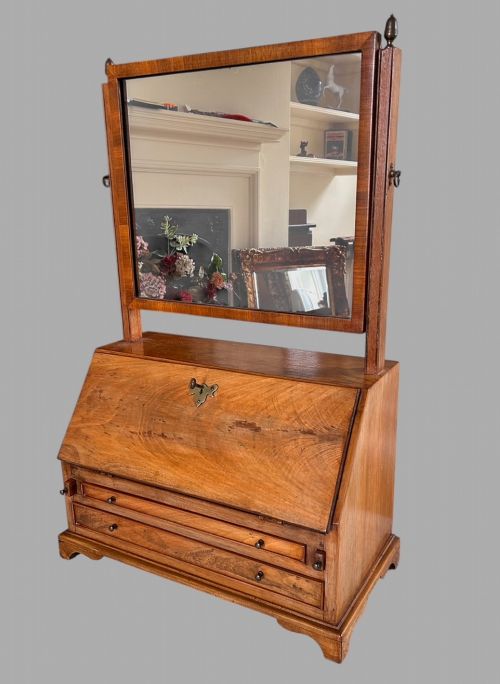
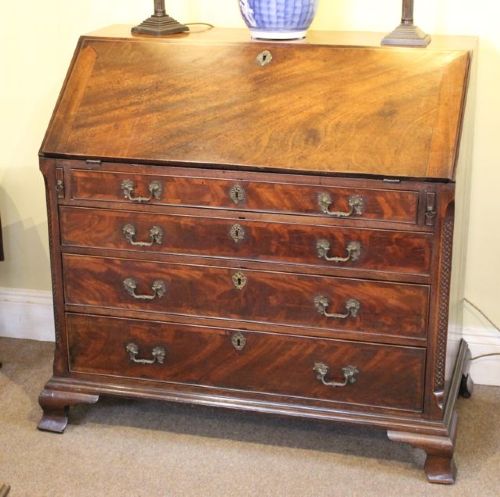
A slant top writing bureau offers a drop-down writing surface concealing a fitted interior of pigeonholes and small drawers.
Slant Top Writing Bureau
A slant top writing bureau provides a secure surface for correspondence that folds away when not in use. These pieces appear across several periods, including 17th century, 18th century, Victorian and Edwardian eras.
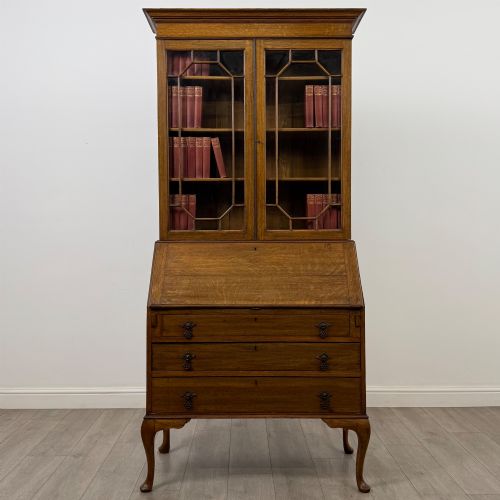
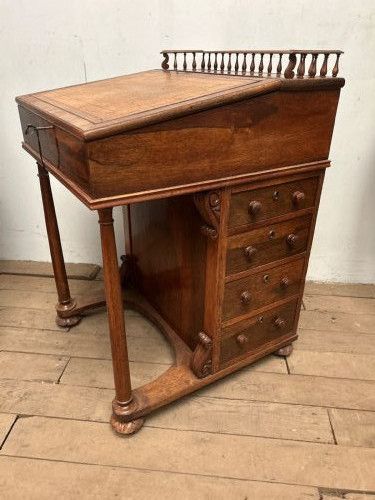
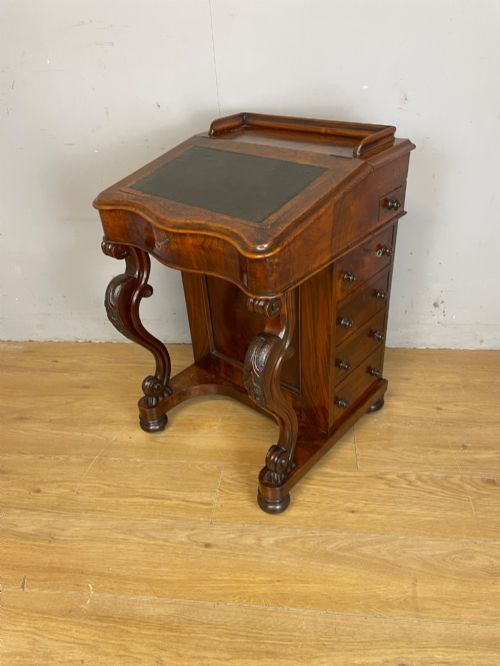
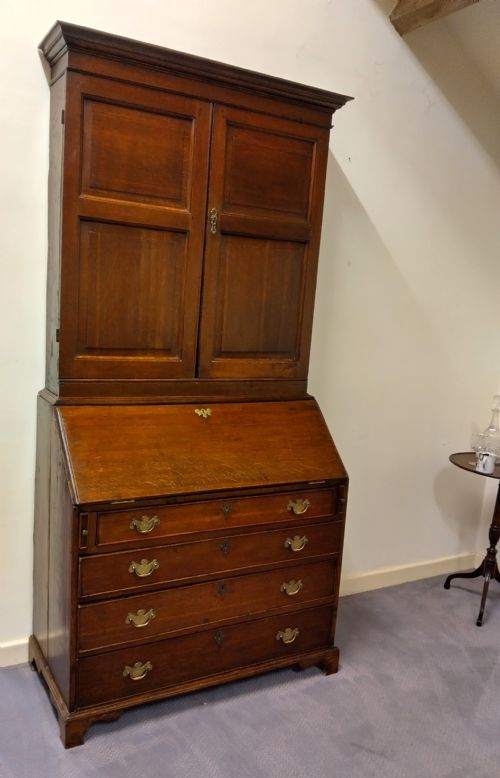
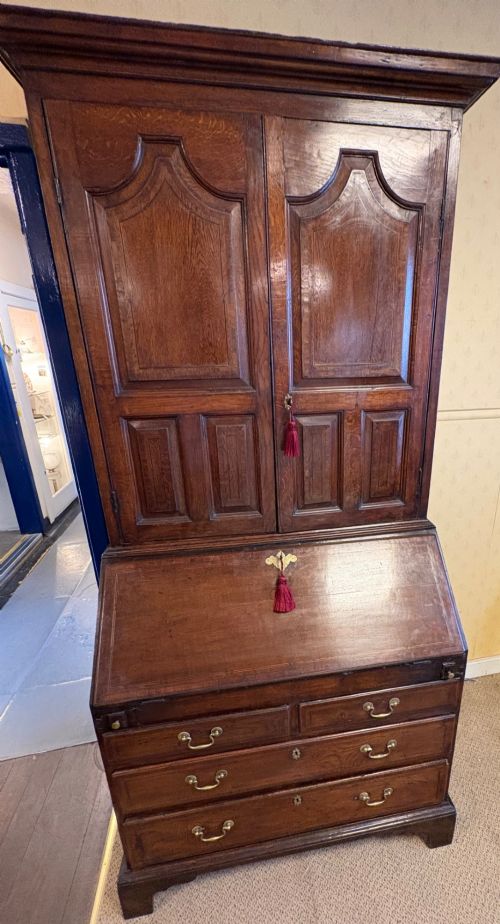
The most frequent form encountered on this page is the freestanding mahogany or oak desk with a sloping lid, alongside bureau bookcases and compact Davenport desks.
Origins span Georgian, Regency, Queen Anne and Jacobean Revival styles, reflecting shifts in domestic writing habits over three centuries.
Materials and construction methods
Cabinet makers utilised dense hardwoods such as mahogany, oak and walnut, frequently applying burr walnut or yew wood veneers to primary surfaces. Solid timbers formed the structural carcases, drawer linings and internal dividers.
Secondary decorative techniques include herringbone inlay, brass hardware, leather writing inserts and glazed upper sections for bookcase variants. Ironwork hinges and locks secure the fall-front writing flaps.
Listings feature woods including oak, mahogany, walnut, burr walnut, rosewood, satinwood and amboyna.
Judgements of quality
Quality rests upon the selection of timber veneers, the tightness of dovetail joints in the drawers, and the preservation of original internal fittings. Superior examples display thoughtful grain matching across the fall-front and drawer fronts.
The presence of original brass ironwork, functioning locks and untouched internal stepped compartments elevates a piece above standard domestic iterations.
Gillows
The Slant Top Writing Bureau Glossary
- Bureau bookcase
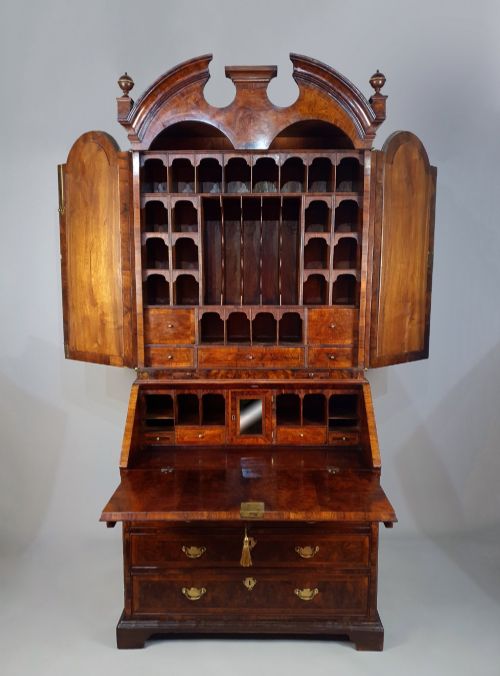
- A two-part form combining a slant top writing desk base with an upper shelving or glazed cabinet. This tall format maximises storage space within a room.
- Davenport desk
- A compact Victorian writing desk featuring a sloping top and side drawers. It typically incorporates a stationery compartment on the upper section.
- Fitted interior
- The arrangement of small drawers, pigeonholes and secret compartments revealed upon opening the fall-front. These compartments stored correspondence and valuables.
- Fall-front
- The hinged sloping lid that opens downward to form the writing surface. It rests upon pull-out lopers or brackets when lowered.
- Herringbone inlay
- A decorative banded veneer pattern arranged in V-shapes resembling fish bones. This detail borders drawer fronts on walnut pieces.
Slant Top Writing Bureau: Frequently Asked Questions
What is a slant top writing bureau?
A slant top writing bureau is a desk featuring an angled hinged lid that drops down to create a writing surface. Beneath this flap sits an internal arrangement of small compartments and drawers for stationery.
These items served as private administrative centres in period homes, allowing documents to be concealed and locked away when visitors arrived.
How do I date an antique bureau?
Dating relies on examining construction methods, timber choices and hardware styles. Early 18th century pieces often utilise walnut or oak with stepped internal compartments, whilst later Georgian versions favour mahogany.
Secondary details such as dovetail construction, handle types and veneer thickness provide further clues to the decade of manufacture.
What is a bureau bookcase?
A bureau bookcase joins a sloping-front desk to a tall upper cabinet enclosed by wooden or glazed doors. This combination provided both a workspace and a library in a single piece of furniture.
These grand items were typically positioned in principal reception rooms or libraries of large houses.
How do I care for walnut veneer?
Walnut veneer requires stable room humidity and protection from direct sunlight to prevent warping and fading. Regular dusting with a soft dry cloth maintains the finish without moisture damage.
Avoid placing these desks near heat sources or radiators, which dry out ancient timbers and cause veneers to lift.