

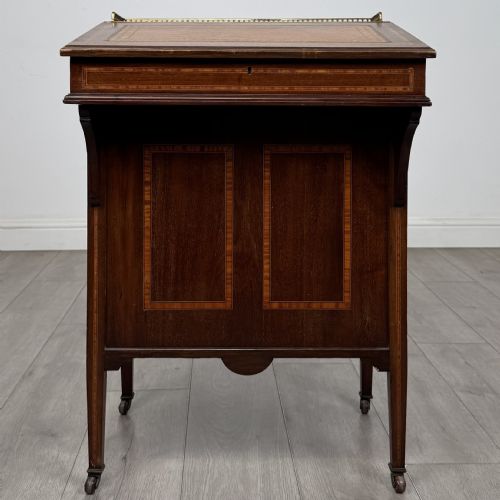


Small Satinwood Writing Cabinet
A small satinwood writing cabinet offers refined workspace and delicate timber figuring, prized for compact proportions and elegant detailing.
Small Satinwood Writing Cabinet
When you search for a small satinwood writing cabinet, you encounter compact writing furniture primarily originating from the eighteenth and nineteenth centuries, alongside Sheraton Revival and Edwardian interpretations. These pieces typically take the form of bonheur du jour desks, bureau cabinets, or secretaire writing cupboards designed for domestic writing and display. The examples on this page span George III, Regency, and Edwardian periods, showcasing lighter cabinet-making styles compared to heavier dark woods.
Most items combine satinwood as the principal timber with contrasting inlay or crossbanding in mahogany and rosewood. Forms range from simple bureau writing desks to elaborate display cabinets inset with porcelain plaques and gilt bronze mounts. Their compact scale suits modest interior spaces while maintaining traditional craftsmanship.
Materials and construction methods
Makers utilised figured satinwood veneers applied over secondary woods such as mahogany, supplemented by intricate marquetry and contrasting stringing lines. Brass hardware, including handles and escutcheons, provides functional and decorative accents across the drawer fronts and cabinet doors.
Advanced workshops integrated specialised writing compartments, drop-front flaps, and superstructure shelves known as a bonheur du jour. Selected pieces incorporate glass panels for display purposes or painted porcelain plaques set directly into the cabinet frame.
Small Satinwood Writing Cabinet Retail Price Guide 2026
Typical asking prices for small satinwood writing cabinet among the pieces listed under this phrase on Sellingantiques today, from the lower quarter to the upper quarter. They describe what is for sale here now, not the wider market.
Some nineteenth-century makers hid secret compartments inside these desks so cunningly that owners still lose their love letters in transit.
Assessing quality in writing cabinets
Quality rests primarily in the grain selection of the satinwood veneer and the precision of the contrasting inlay work. Finer cabinets display continuous grain patterns across drawer fronts and crisp execution in stringing and crossbanding.
The sophistication of the internal fittings, such as secret drawers, pigeonholes, and fitted writing surfaces, distinguishes standard production from exceptional cabinet-making. Original brass mounts and untouched surface patination elevate the standing of any piece.
Gillows·Druce & Co
The Small Satinwood Writing Cabinet Glossary
- Bonheur du jour
- A light lady's writing desk featuring a small superstructure of shelves and drawers above the main work surface. This form gained popularity during the eighteenth century and saw revivals in the Victorian and Edwardian eras.
- Satinwood
- A lustrous, yellowish-gold timber valued for its fine grain and reflective quality. It became prominent in high-end British cabinet-making during the Georgian period.
- Secretaire
- A piece of furniture containing a concealed writing drawer or a drop-down writing flap that encloses small compartments and pigeonholes. It combines storage with a dedicated writing surface.
- Crossbanding
- A decorative border of veneer laid around the perimeter of a panel or drawer front with the grain running perpendicular to the central field. This technique frames the primary timber.
- Sheraton Revival
- A late nineteenth and early twentieth century design movement that reinterpreted the lighter furniture styles associated with George Sheraton. It heavily utilised satinwood, painted details, and classical motifs.
Small Satinwood Writing Cabinet: Frequently Asked Questions
What is a bonheur du jour?
A bonheur du jour is a small, light writing desk featuring a raised cabinet or shelf section on the desktop. It emerged in France before becoming popular in British cabinet-making.
These pieces were designed for ladies to write letters and read in private sitting rooms rather than formal libraries.
How do I care for satinwood?
Satinwood requires stable indoor humidity and protection from direct sunlight to prevent the timber from fading and the veneer from lifting. Gentle dusting with a dry cloth maintains the polished surface without moisture damage.
Avoid placing these cabinets near heat sources or damp areas, as rapid temperature shifts affect antique veneers.
How to tell George III from Edwardian pieces?
George III pieces date from the eighteenth century, showing authentic period construction techniques, hand-cut dovetails, and older patination on the timber. Edwardian items date from around nineteen hundred, often reflecting revival styles with machine-assisted precision and lighter internal framing.
Examining the secondary woods inside the drawers helps clarify the period of manufacture.
Were these desks used for writing?
These cabinets served primarily for personal correspondence, keeping stationery, and storing private documents. The drop-front flaps and pull-out drawers provided temporary writing surfaces in domestic drawing rooms.
They function today as compact writing desks or decorative display surfaces in modern homes.