


Traditional Study Furniture
Traditional study furniture consists of desks, bookcases and writing tables designed for workspaces, offering practical surfaces and storage built to last.
Traditional Study Furniture
Traditional study furniture encompasses pieces designed for writing, reading and administrative work, spanning desks, bureaux, bookcases and writing tables. These items originate primarily from the Victorian and Edwardian periods, alongside examples from the nineteenth century.
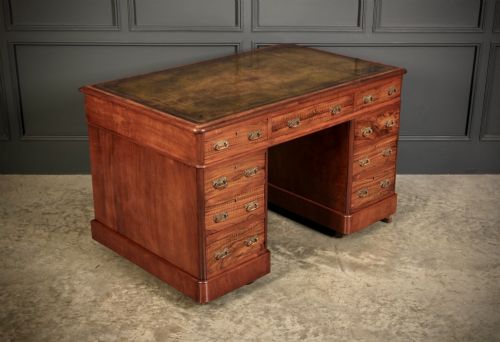
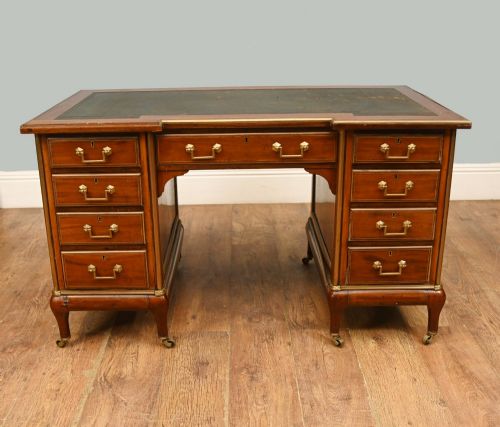
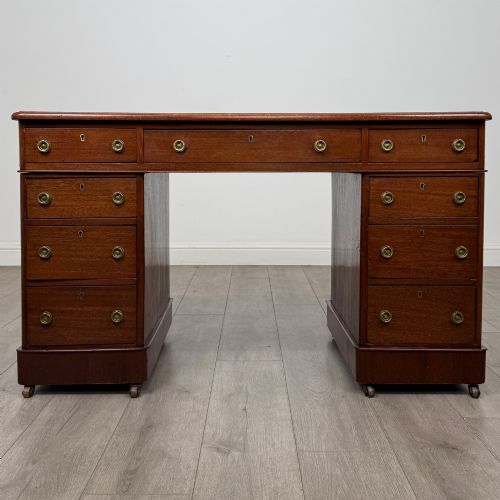
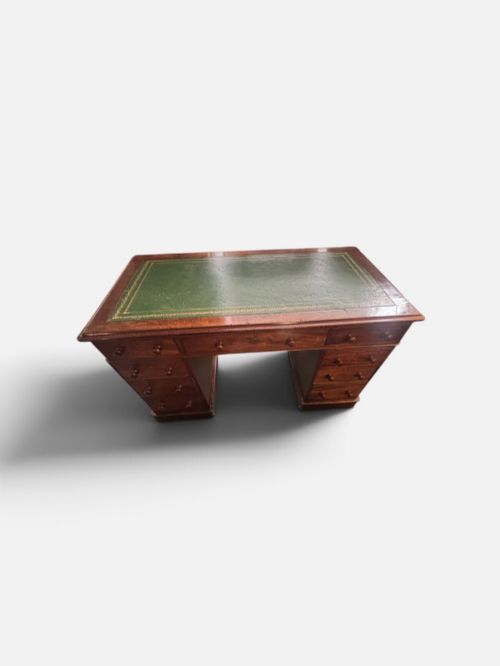
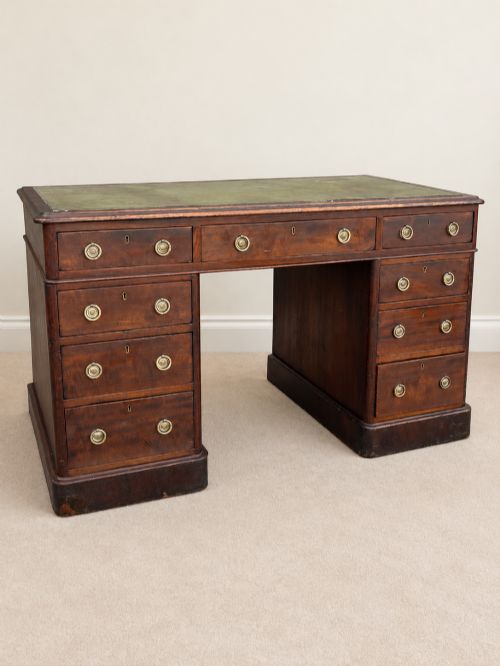
The most common form met on this page is the pedestal desk, typically fitted with multiple drawers arranged around a central kneehole. These desks appear frequently in mahogany, walnut and oak, reflecting the dominant woods of their eras.
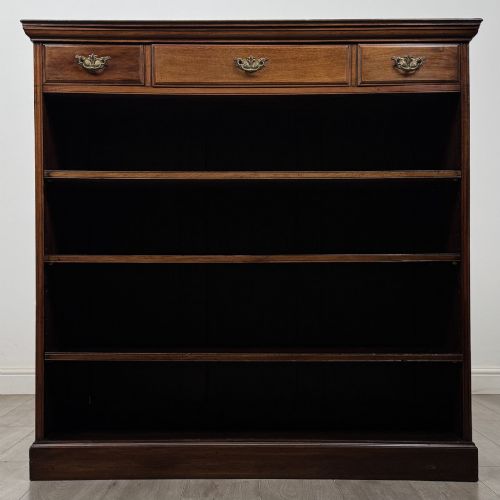
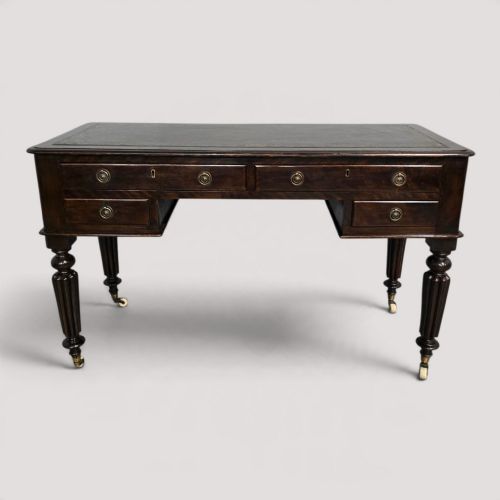
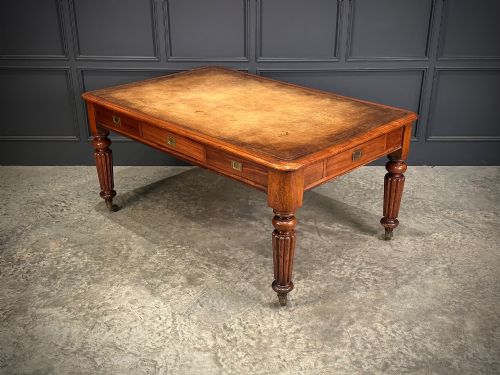
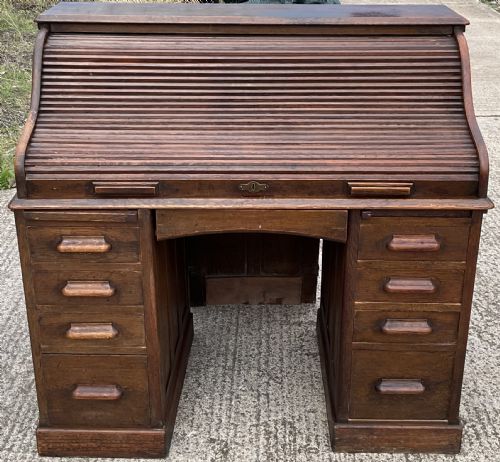
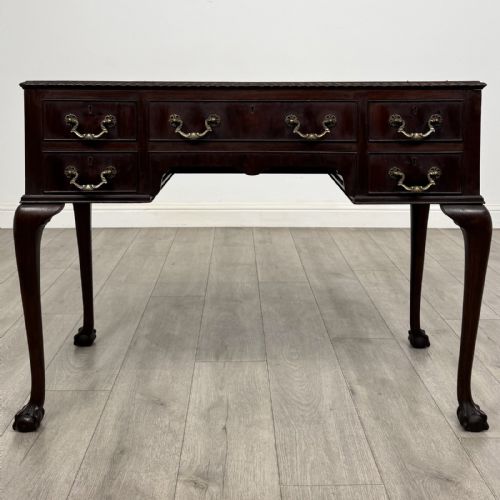
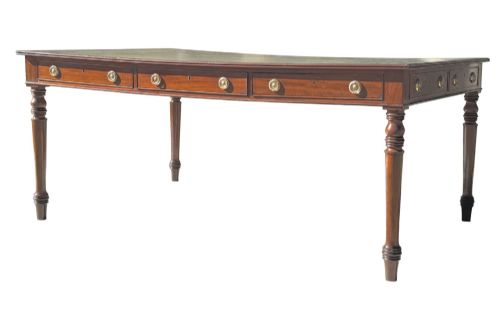
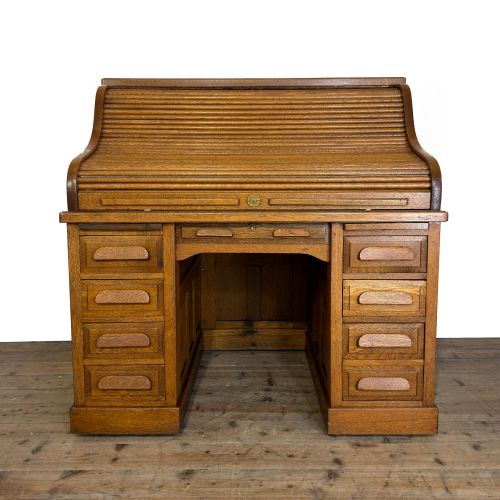
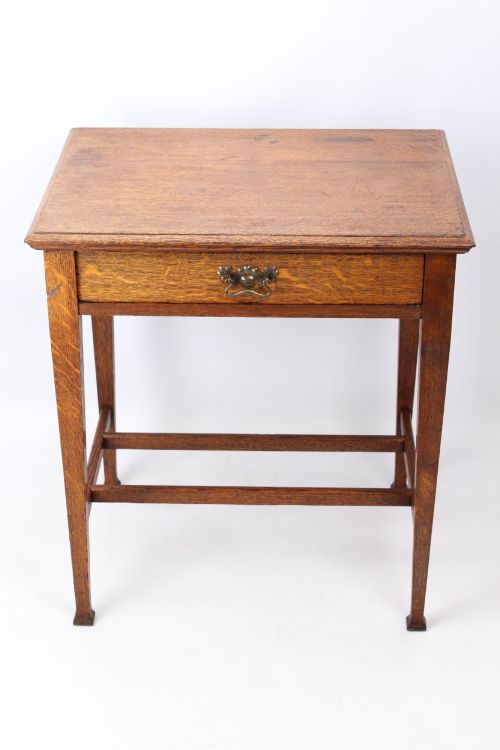
Beyond standard pedestal desks, buyers encounter partners desks, writing tables, roll top desks and open bookcases. These varied forms accommodate different room sizes and storage requirements while maintaining a formal study aesthetic.
How they were made
Cabinet makers utilised solid and veneered timbers, selecting mahogany, oak, walnut and burr walnut for their structural stability and rich grain patterns. Satinwood also appears on specialised writing furniture, providing a lighter aesthetic.
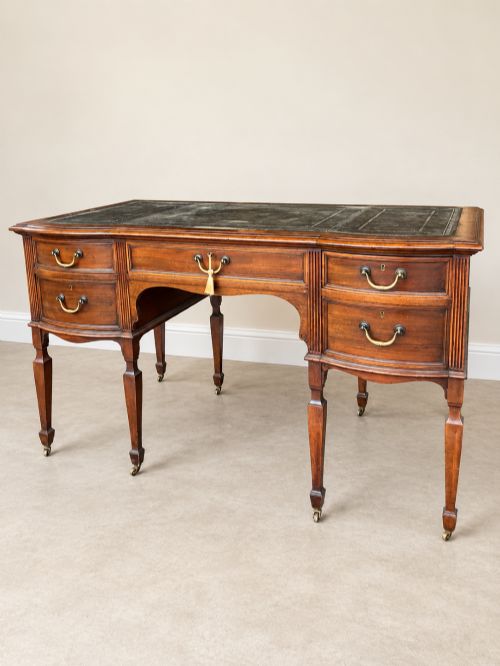
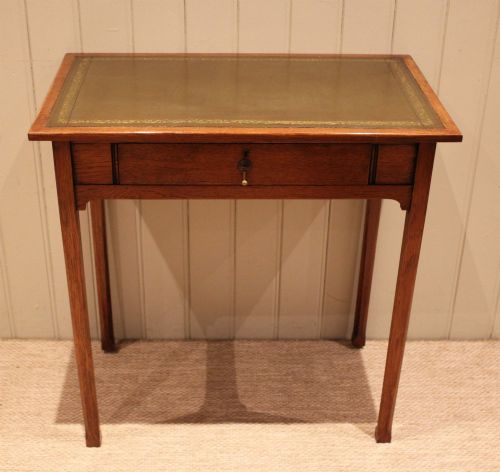
Leather inserts feature prominently on writing surfaces, often tooled with gold leaf borders to create a durable and refined writing area. Brass hardware, including drop handles and escutcheons, completes the construction of drawers and doors.
Inlay and crossbanding techniques decorate many surfaces, utilising contrasting woods to create geometric or floral patterns. Joinery relied on traditional methods such as dovetailing for drawer construction and mortise and tenon joints for frames.
Traditional Study Furniture Retail Price Guide 2026
Typical asking prices for traditional study furniture among the pieces listed under this phrase on Sellingantiques today, from the lower quarter to the upper quarter. They describe what is for sale here now, not the wider market.
Listings feature study furniture spanning the Victorian and Edwardian periods, constructed predominantly in mahogany, walnut and oak.
What varies in quality
Quality separates pieces through the selection of timber figures, such as highly figured flame mahogany or burr walnut veneers. Cabinet makers who matched veneers across drawer fronts and desk tops achieved a cohesive visual harmony absent in lesser examples.
The fineness of inlaid decoration and secondary woods indicates the level of craftsmanship invested in a piece. Hand-tooled leather writing surfaces and substantial brass fittings denote higher production standards compared to plain replacements.
Structural integrity depends on the precision of the joinery and the retention of original components, such as locks, keys and drawer linings. Pieces retaining maker labels or stamps provide documented evidence of workshop origin.
Trollope and sons·Heals of London·Wylie and Lochhead Glasgow·Whytock and Reid of Edinburgh·Gillows
The Traditional Study Furniture Glossary
- Pedestal desk
- A freestanding desk comprising two supporting banks of drawers with a central kneehole space between them. This form provides substantial storage capacity while allowing a chair to fit comfortably beneath the top.
- Partners desk
- A large double-sided pedestal desk designed for two people to sit opposite one another, featuring drawers and cupboards on both faces. These pieces were historically utilised in libraries and administrative offices.
- Burr walnut
- A specialised timber cut from the abnormal growth of a walnut tree, exhibiting intricate, swirling grain patterns. Cabinet makers prized this material for veneering prominent surfaces like desk tops and drawer fronts.
- Crossbanding
- A decorative border of veneer laid around the edge of a table top or drawer front so the grain runs perpendicular to the main panel. This technique frames the primary timber and adds visual depth.
- Tambour
- A flexible sliding shutter formed from narrow strips of wood glued to a canvas backing, used to conceal pigeonholes and small drawers on writing desks. It runs in curved grooves cut into the desk sides.
Traditional Study Furniture: Frequently Asked Questions
What is a partners desk?
A partners desk is a double-sided pedestal desk featuring drawer and cupboard storage accessible from both the front and the back. This design allowed two people to work face to face in a shared study or library.
These pieces typically date from the nineteenth century and offer substantial proportions. They serve as central statement pieces within large rooms rather than desks pushed against a wall.
How do I identify an Edwardian desk?
Edwardian desks date from the early twentieth century and frequently showcase lighter timbers or refined satinwood inlays. They often reflect revival styles, drawing inspiration from Georgian or Queen Anne designs while maintaining practical proportions.
Construction during this period utilised machinery alongside traditional hand joinery, resulting in clean lines and consistent finishes. Many examples bear stamps or paper labels from the retailers who commissioned them.
What is burr walnut?
Burr walnut is a decorative wood veneer harvested from the burl or growth excrescence of a walnut tree. It produces a dense, swirling pattern full of small knots and rich tonal variations.
Cabinet makers applied this prized veneer to the primary surfaces of desks and cabinets to create an opulent visual effect. It appears frequently on Victorian and Edwardian study pieces.
How were leather desk tops made?
Leather desk tops were created by setting dyed leather into a recessed wooden panel on the upper surface of a desk. The leather was often decorated around the perimeter with gold leaf tooling.
This material provided a smooth, slightly cushioned surface ideal for writing with ink pens. Original leathers show patination from use, while replacements offer a clean writing area.
Where were pedestal desks used?
Pedestal desks were utilised primarily in private studies, libraries, administrative offices and professional chambers. Their freestanding nature allowed them to sit in the middle of a room rather than strictly against a wall.
The enclosed banks of drawers provided secure storage for correspondence, ledgers and writing instruments. This configuration remains practical for modern home offices.