
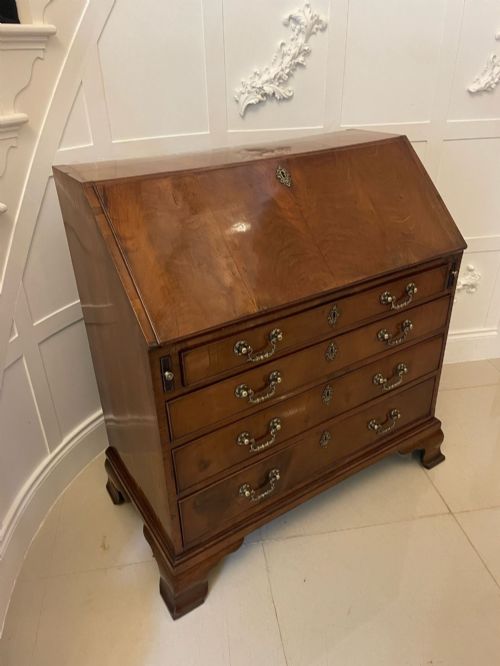
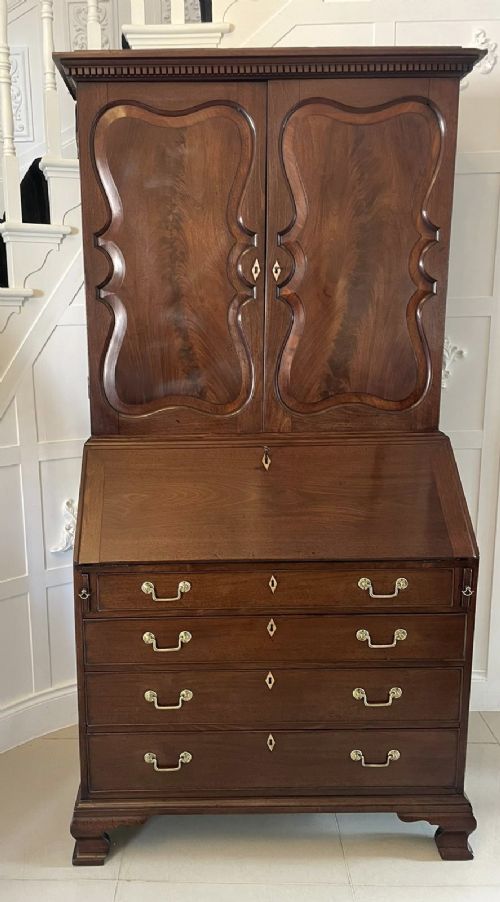
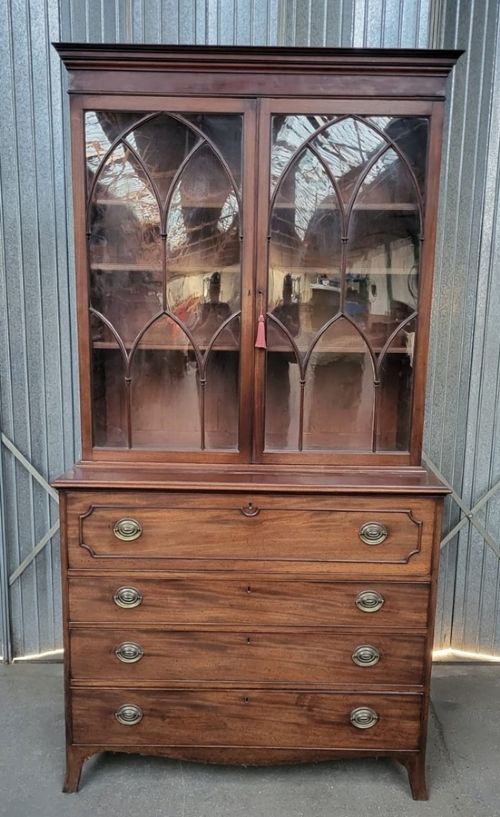
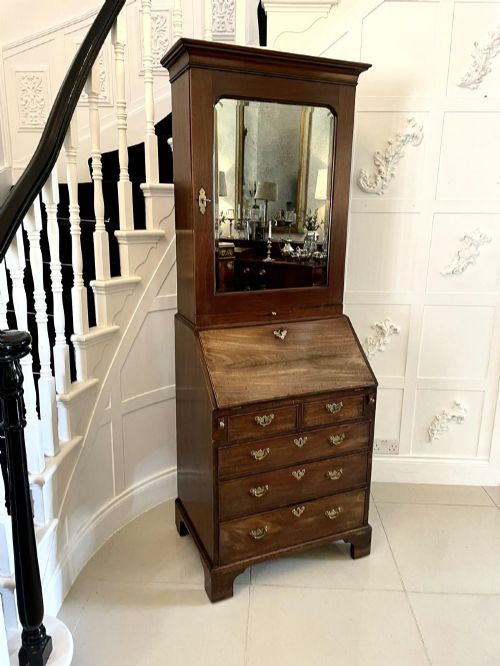
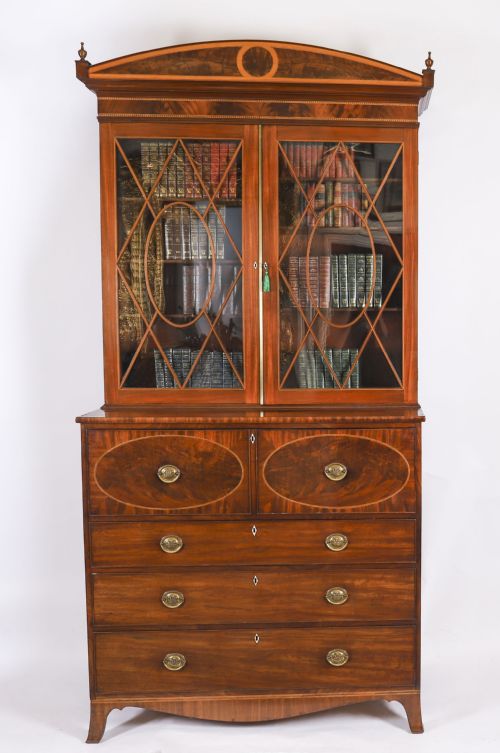

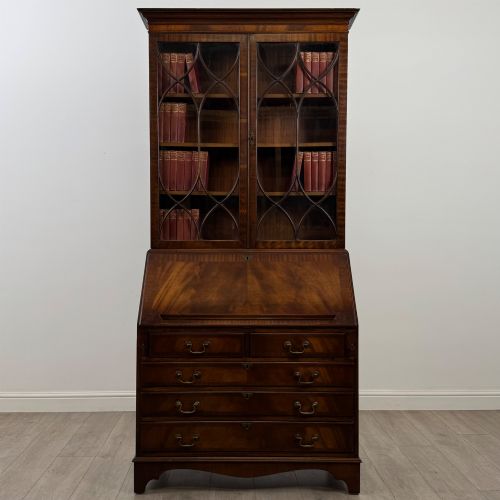
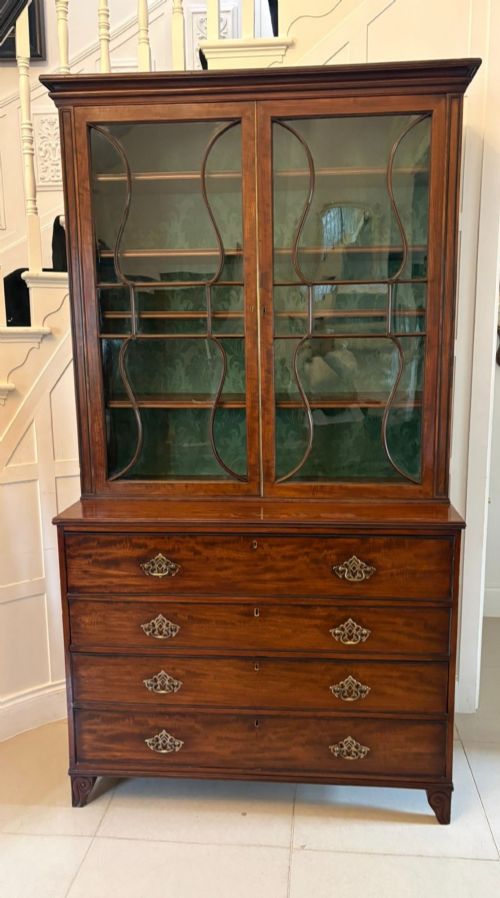
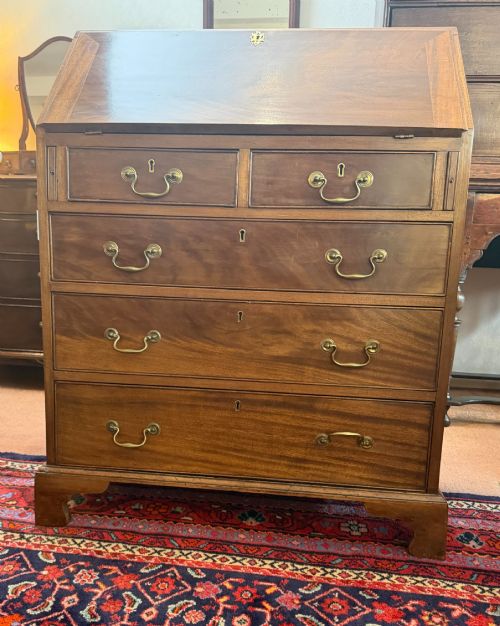
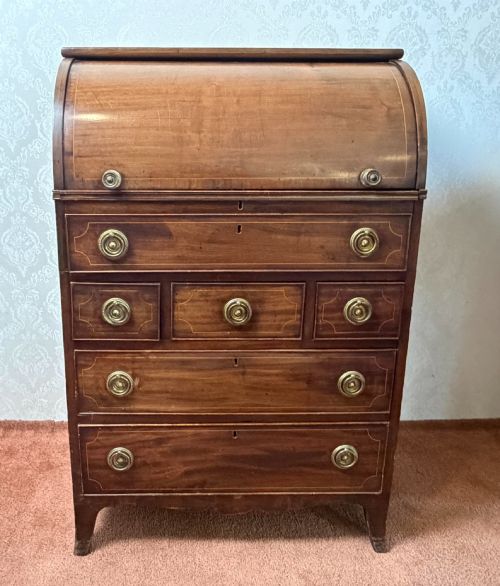
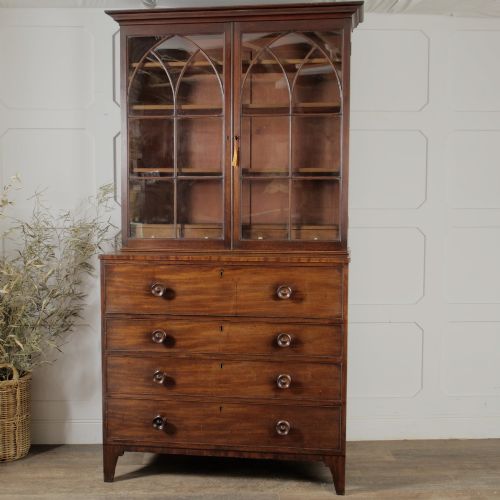
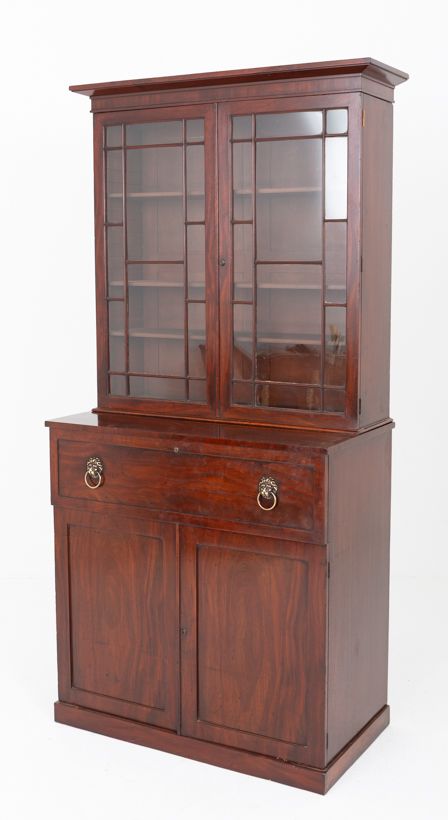
Georgian Mahogany Bureau Cabinet
These pieces unite a working desk with a tall bookcase, bringing solid mahogany and fitted interiors to any room.
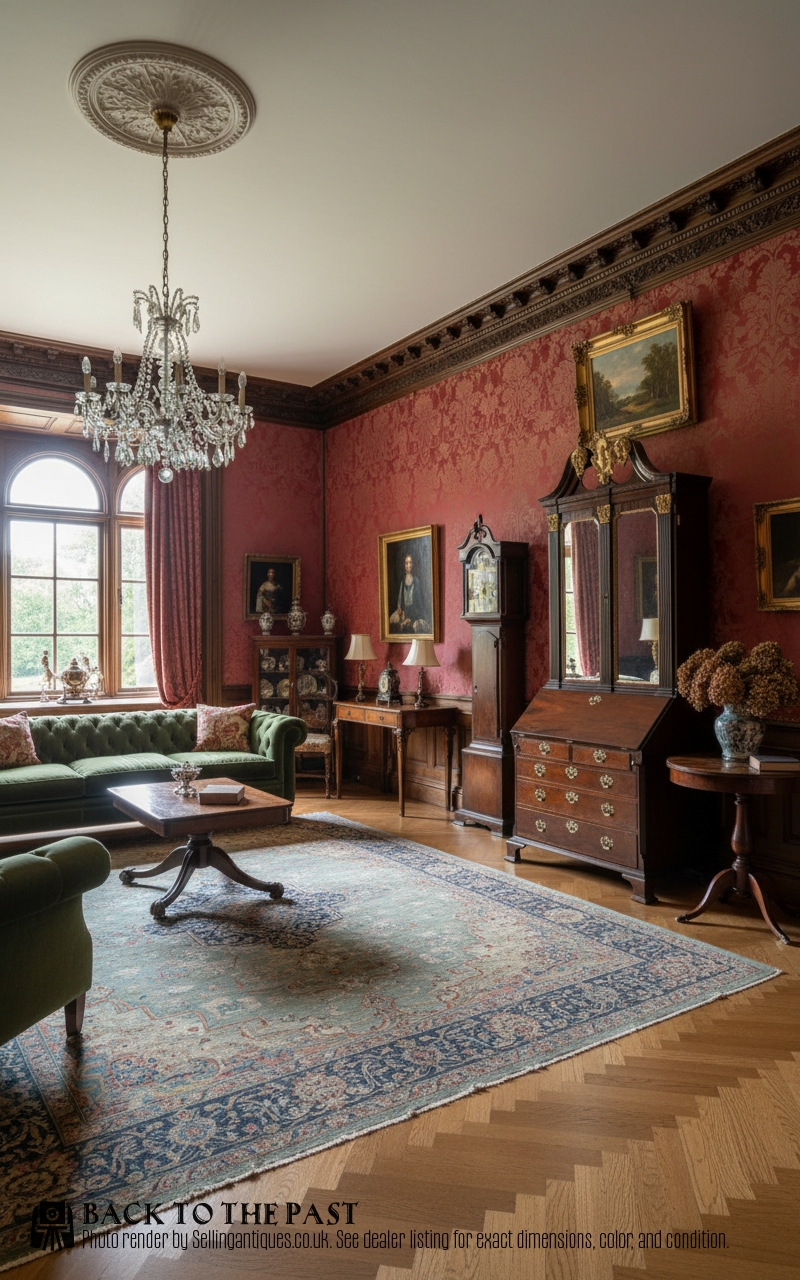
Georgian Mahogany Bureau Cabinet
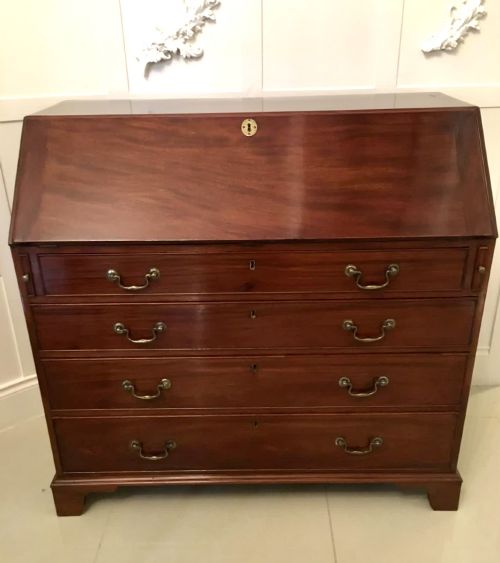
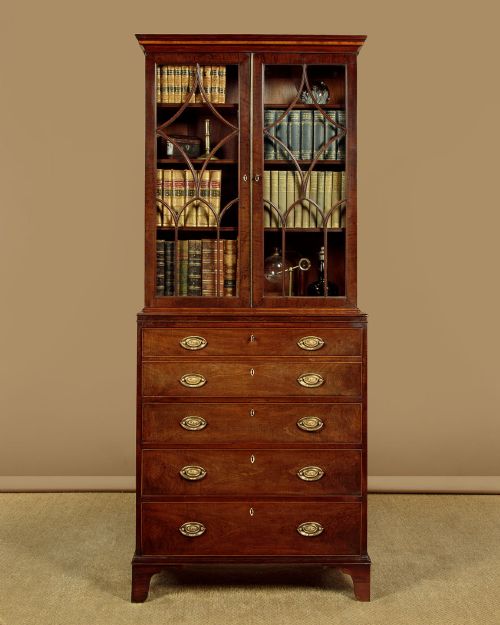
A georgian mahogany bureau cabinet combines a writing desk with a shelved upper library section, appearing primarily across the eighteenth and nineteenth centuries. Buyers encounter forms ranging from George II and George III bureau bookcases to Regency secretaire cabinets and later revival pieces.
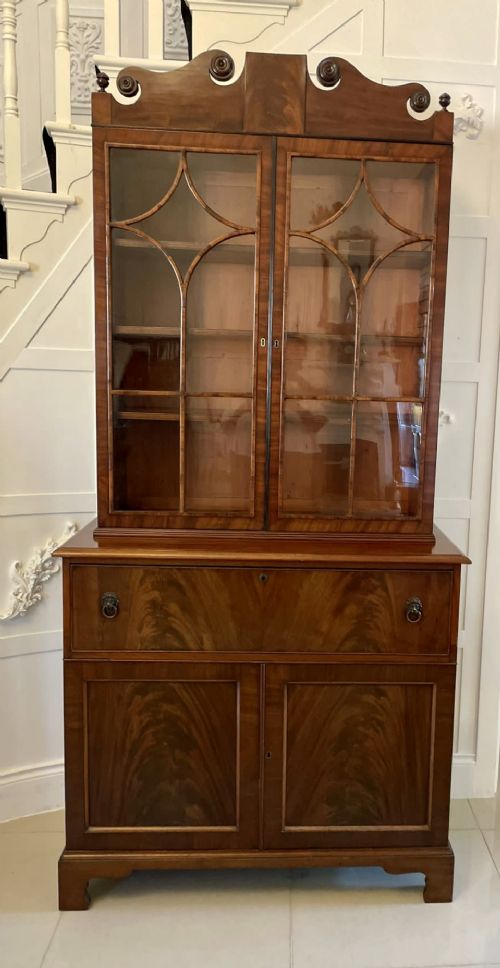
The lower section generally houses a drop-front fall or a pull-out drawer concealing pigeonholes and small drawers, while the upper section encloses shelves behind timber or glazed panel doors. Pieces span grand library heights down to smaller compact writing desks and miniature cabinet samples.
Assessing quality and craftsmanship
Quality rests upon the selection of timber, seen in the grain figure of flame mahogany veneers and the crispness of satinwood inlay. The depth of the colour and the handling of the polished finish determine the visual weight of the cabinet.
Internal joinery reveals the maker's hand through the precision of pigeonhole construction and secret compartment mechanisms. The proportion of the upper bookcase to the lower bureau section dictates the overall balance of the piece.
Listings span the eighteenth, nineteenth, and twentieth centuries, incorporating Georgian, Regency, William IV, and Edwardian periods in mahogany, oak, satinwood, and brass.
Thomas Chippendale·Gillows of Lancaster·Tudor and Burrey Shrewsbury
The Georgian Mahogany Bureau Cabinet Glossary
- Secretaire
- A desk or cabinet with a pull-out drawer or drop-front panel revealing a fitted writing interior. It serves the dual function of a chest of drawers or bookcase and a writing desk.
- Astragal glazed
- Glass doors divided into panes by narrow wooden bars. These frames protect the library contents while allowing books to remain visible.
- Flame mahogany
- Timber cut from the fork of the mahogany tree to create a distinctive flickering flame pattern. Cabinetmakers reserved this prized veneer for prominent drawer fronts and falls.
- Tambour
- A flexible shutter made of narrow vertical strips of wood glued to canvas. It slides along a groove to enclose a desk surface without swinging doors.
- Davenport
- A compact desk featuring a sloping writing top above a pedestal of drawers. Examples often incorporate hinged lids and stationary compartments.
Georgian Mahogany Bureau Cabinet: Frequently Asked Questions
How do I use a bureau cabinet daily?
Lower the fall-front or pull out the secretaire drawer to reveal the writing surface and pigeonholes. Store writing materials inside and use the upper shelves for books or display.
Keep the timber away from direct heat sources to prevent the mahogany and veneers from drying out. Polish the surfaces occasionally with a traditional wax to maintain the finish.
What is the difference between a bureau and a secretaire bookcase?
A bureau typically uses a slant-front flap that hinges downward to create a sloping desk surface. A secretaire bookcase usually conceals the desk within a horizontal drawer that pulls straight out.
Both types combine the writing function with an upper bookcase, but the internal mechanisms and exterior drawer lines differ significantly.
How do I identify a George III piece?
George III pieces date from the second half of the eighteenth century and often display restrained classical proportions, flame mahogany veneers, and astragal glazed doors. Look for hand-cut dovetails in the oak drawer linings.
Later nineteenth-century and Edwardian pieces often repeat these forms with heavier timbers or different secondary woods beneath the polish.
Are these cabinets suitable for small rooms?
Many examples are built to a compact scale, offering a tall footprint that occupies minimal floor space while providing significant storage in the upper bookcase.
Small-scale variations and miniature study pieces provide the same functional compartments without dominating a smaller interior.