

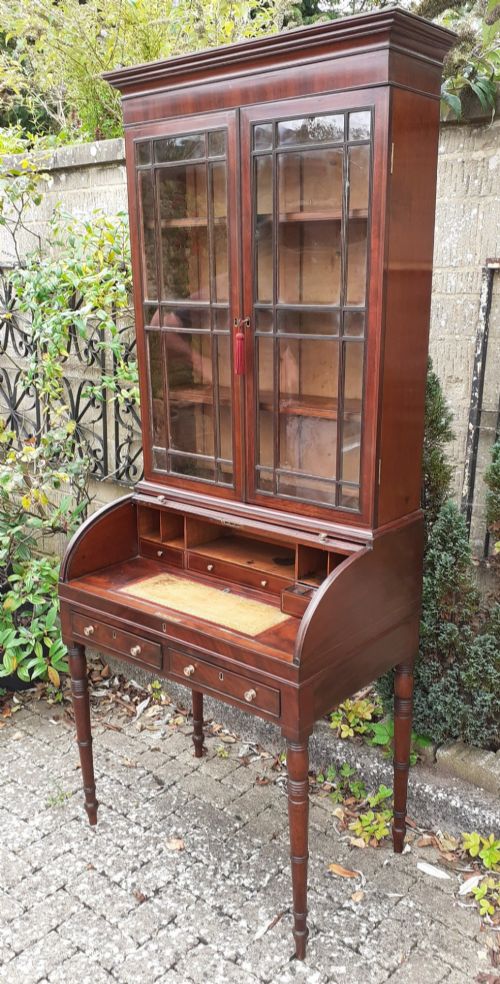
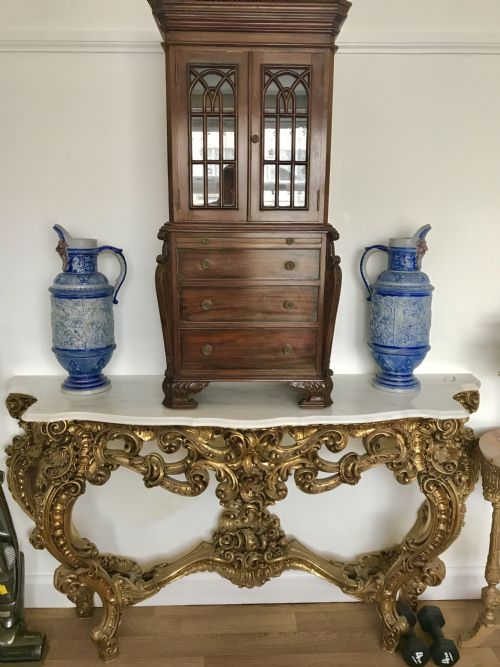


Georgian Style Bureau Bookcase
A georgian style bureau bookcase combines a writing desk and a shelved cabinet, offering fitted storage for papers and display space for books.
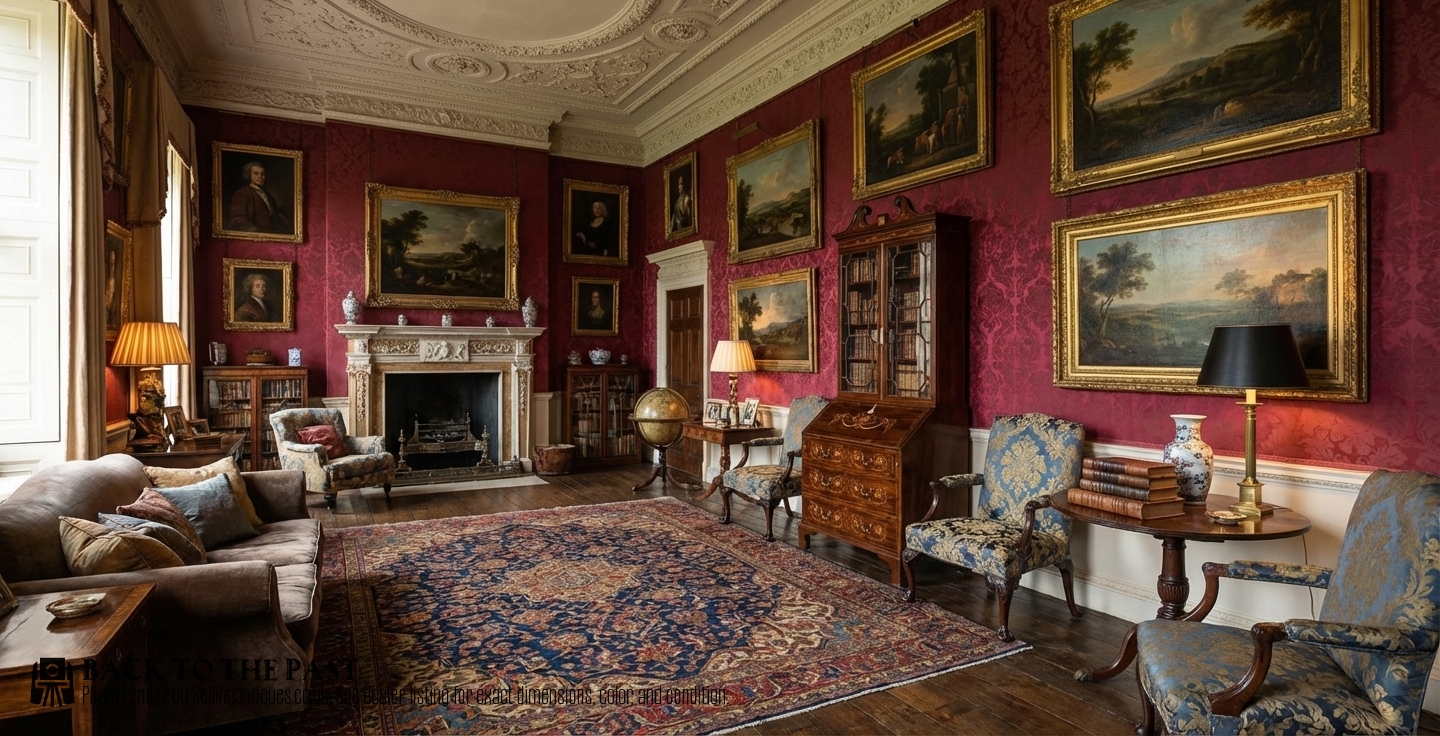
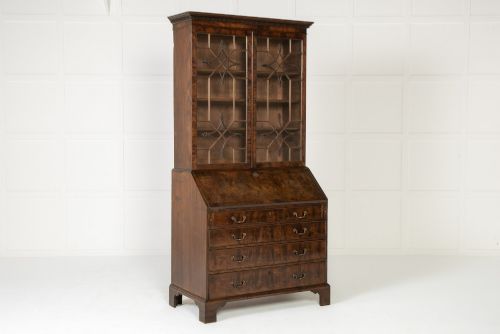
Georgian Style Bureau Bookcase
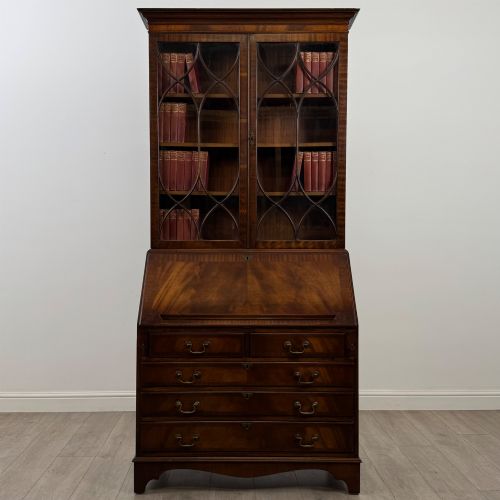
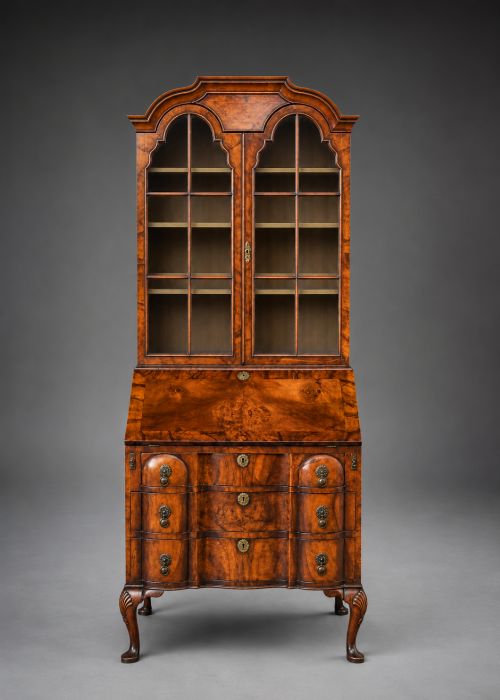
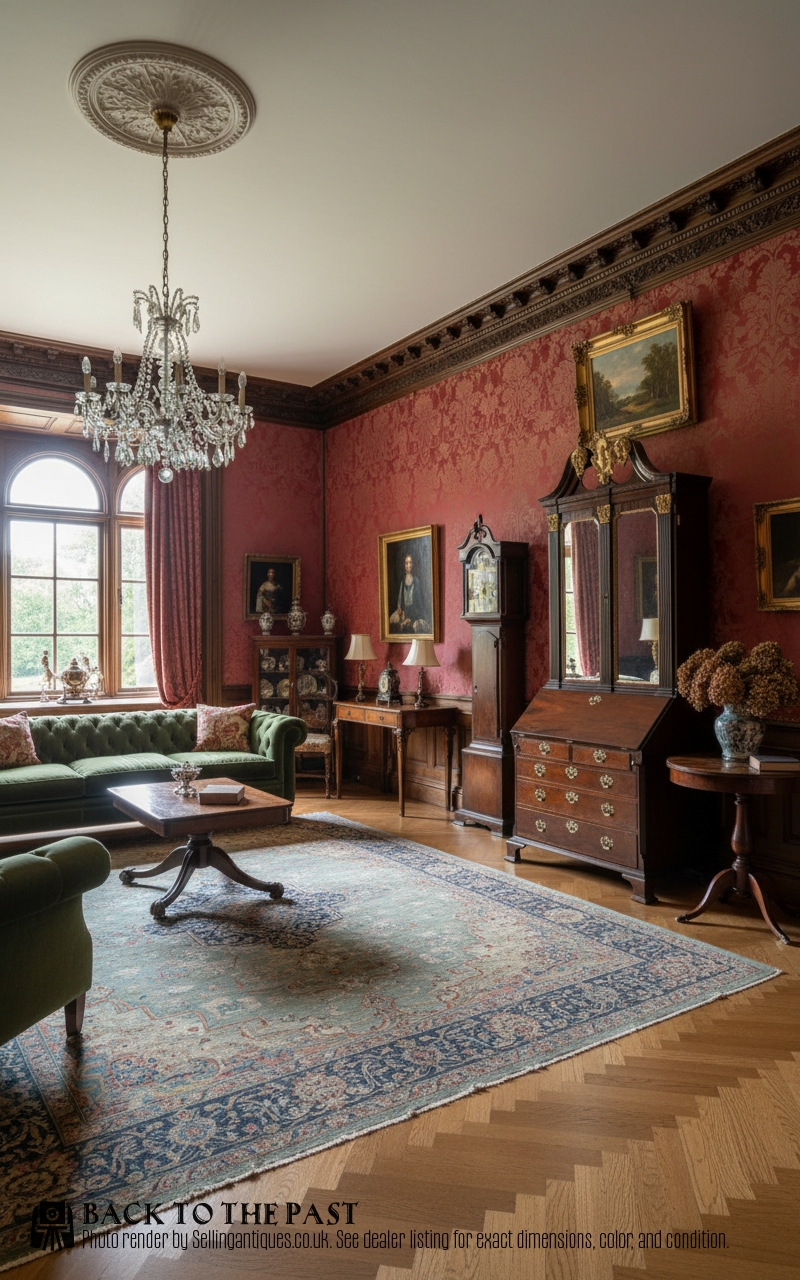
A georgian style bureau bookcase presents a two-part form comprising a lower writing desk with a fall-front or secretaire drawer and an upper glazed or panelled book cabinet. These pieces combine practical workspace with enclosed shelving, serving as significant storage furniture in a room.
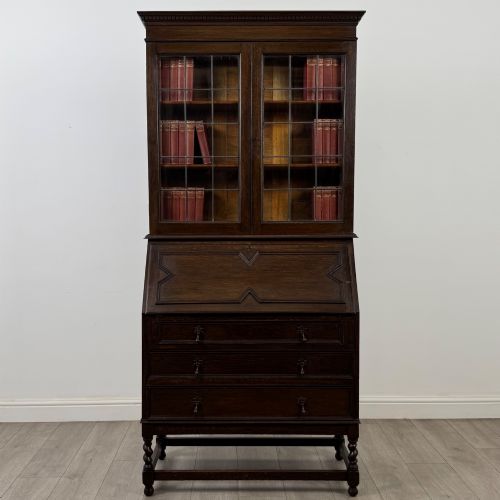
The versions most frequently encountered on this page date from the Edwardian era and the early twentieth century, constructed in the revival taste alongside original eighteenth-century examples. Makers during the later periods interpreted earlier proportions using mahogany, walnut and satinwood timbers.
Lower sections house fitted drawers, pigeonholes and small compartments behind the writing flap, whilst upper sections support adjustable book shelves. Proportions range from full-scale library editions down to compact pieces suited to smaller domestic interiors.

How they were made
Construction relies heavily on solid timber and supportive secondary woods, with cabinetmakers applying figured veneers of mahogany, walnut and satinwood across the primary surfaces. Crossbanding and marquetry inlays appear on revival and eighteenth-century examples to create decorative contrast on drawer fronts and cornices.
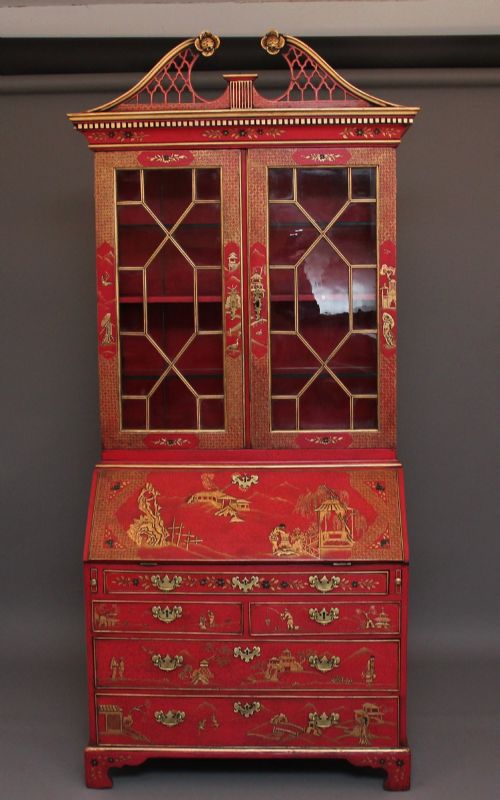
Glass doors use wooden astragals to form geometric glazing bars, enclosing upper display spaces designed to protect volumes from dust. Brass hardware, including drop handles, escutcheons and bracket feet or swan neck pediments, completes the structural assembly.
Georgian Style Bureau Bookcase Retail Price Guide 2026
Typical asking prices for georgian style bureau bookcase among the pieces listed under this phrase on Sellingantiques today, from the lower quarter to the upper quarter. They describe what is for sale here now, not the wider market.
A miniature apprentice piece appears among the larger library cabinets, demonstrating full-scale joinery techniques scaled down to a fraction of the normal size.
What varies in quality
Quality rests upon the selection of timber veneers and the precision of the cabinet work, particularly around the dovetailing of internal drawers and the crispness of inlaid details. Superior examples display continuous grain matching across primary surfaces and well-figured timber selection.
The architectural integrity of the upper cornice and the proportion of the glazing bars distinguish standard production from exceptional pieces. Original brassware, well-preserved interior fittings and fine patination indicate superior craftsmanship.
Tudor and Burrey·Giles Grendy·Edwards and Roberts
The Georgian Style Bureau Bookcase Glossary
- Secretaire
- A writing drawer containing a fitted interior of small drawers and pigeonholes that pulls out to form a desk surface. It replaces the traditional sloping fall-front flap.
- Astragal
- A small wooden moulding used in the glazing bars of the upper cabinet doors to divide panes of glass. These mouldings dictate the geometric pattern of the window framing.
- Swan neck pediment
- A broken arch pediment on the upper cornice terminating in inward-curving scrolls, frequently centred on a small plinth or finial. It is characteristic of larger formal cabinet work.
- Marquetry
- Decorative veneer work forming intricate patterns or pictures using different coloured woods, shells or ivory. Craftsmen cut these elements precisely to fit flush within the primary timber surface.
- Fall-front
- A hinged writing flap that drops down to a horizontal position supported by internal lopers or rule joints. When closed, it conceals the inner stationery compartments.
Georgian Style Bureau Bookcase: Frequently Asked Questions
What is inside the writing section?
The interior contains an arrangement of small pigeonholes, sliding compartments and miniature drawers designed for stationery and correspondence.
These fitted sections are often concealed behind a sloping fall-front or a pull-out secretaire drawer depending on the specific cabinet design.
How do I tell an original from a revival piece?
Original eighteenth-century pieces display period construction methods, timber shrinkage and hand-cut dovetails appropriate to their age. Secondary woods and tool marks offer key evidence for dating.
Revival pieces from the Edwardian era or the 1920s utilise machine-assisted techniques, standard commercial hardware and timbers consistent with twentieth-century production.
Are the upper shelves adjustable?
Most upper sections feature fixed wooden supports or traditional peg-and-hole systems to alter shelf heights for different book sizes.
Some early examples incorporate stationary shelving built directly into the structural frame of the cabinet interior.
How should I care for the polished wood?
Keep the timber away from direct heat sources and strong sunlight to prevent the veneers from drying, cracking or fading over time.
Apply traditional wax polish occasionally and buff gently with a soft cloth to maintain the surface sheen and protect the finish.