

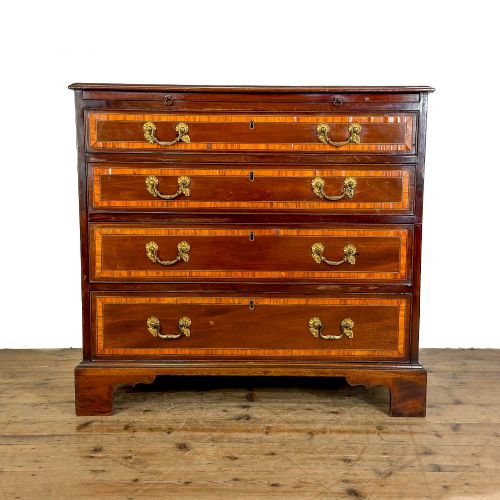

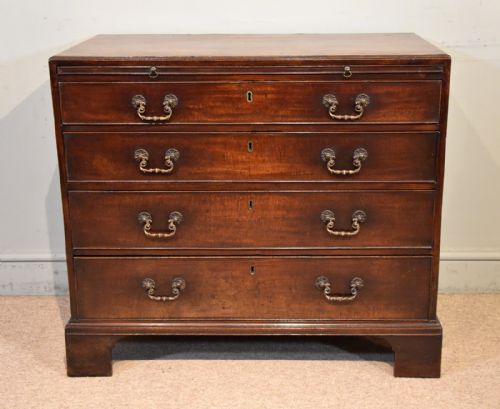
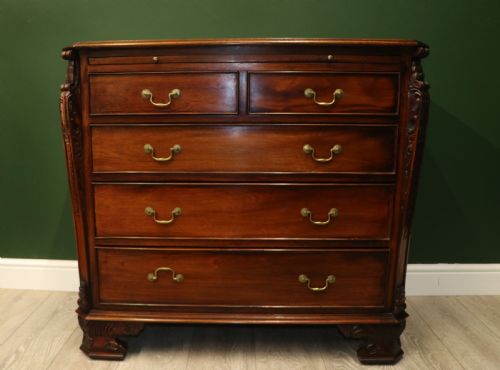

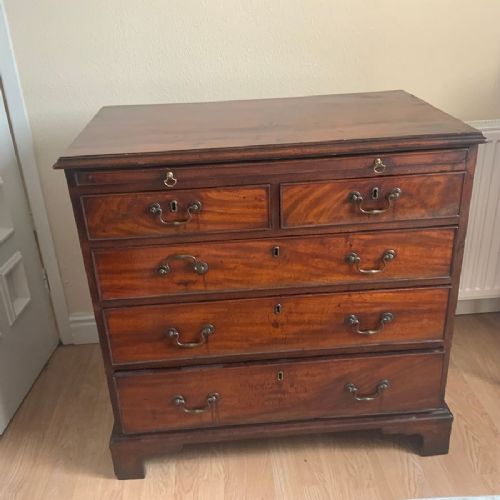

Georgian Mahogany Brushing Slide
A georgian mahogany brushing slide brings a pull-out shelf to a chest of drawers, offering a clever surface for writing or folding linen.

Georgian Mahogany Brushing Slide
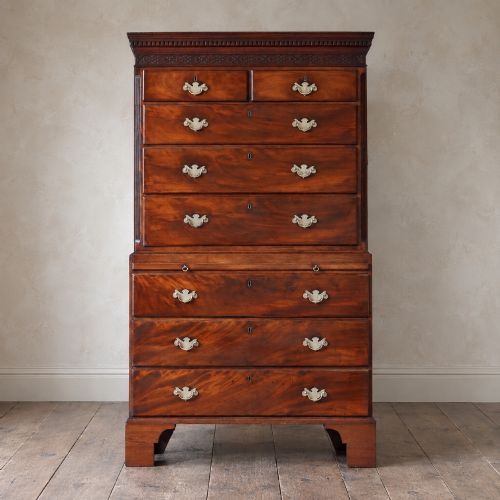
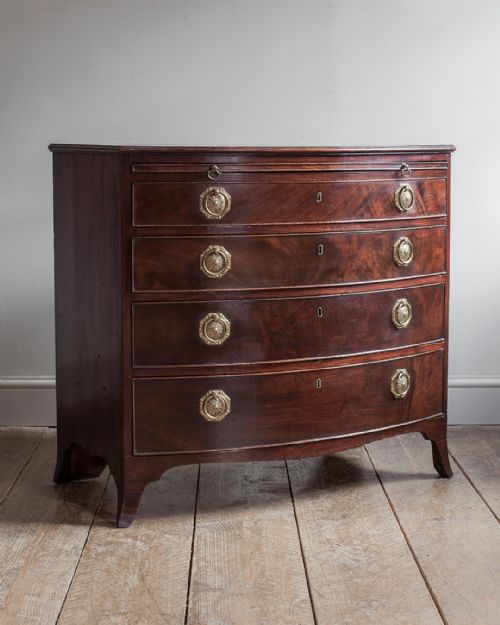
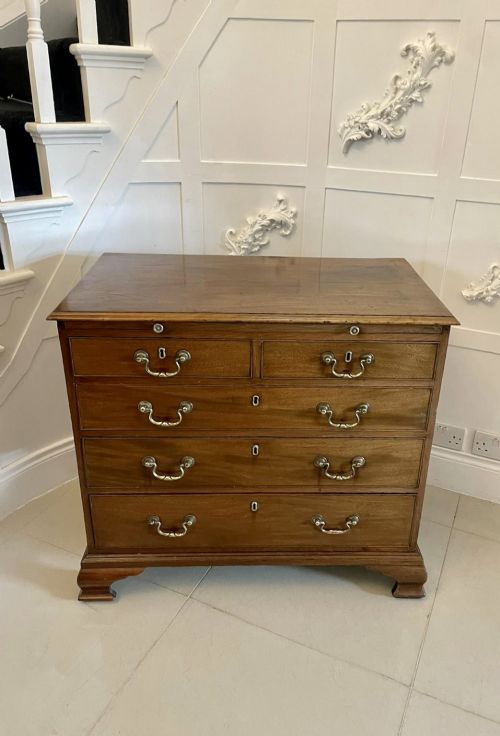
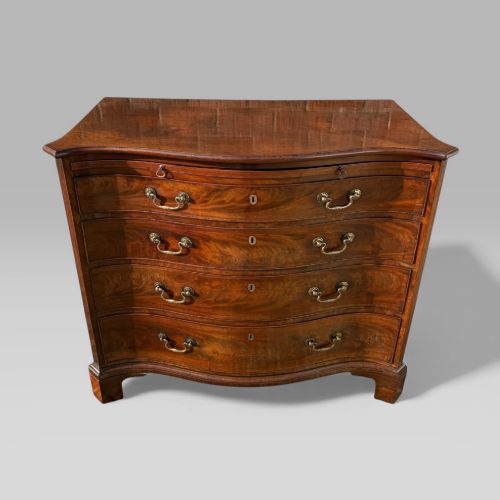
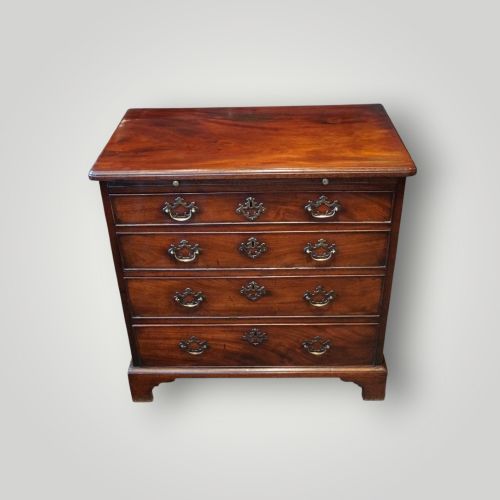
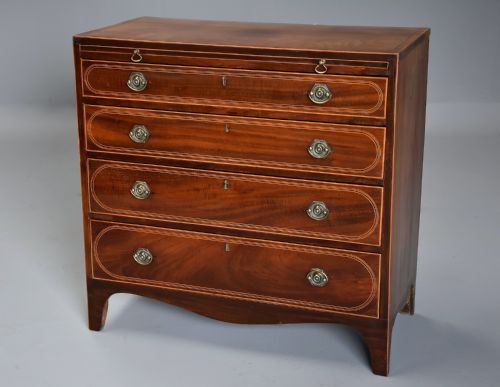
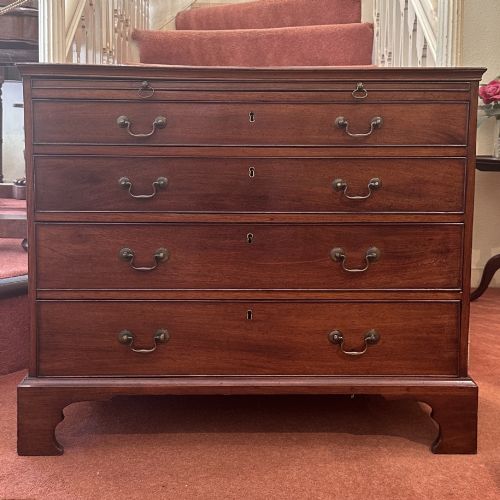
A georgian mahogany brushing slide combines a case of drawers with a pull-out wooden board positioned just beneath the top surface. These pieces appear primarily as compact bachelor chests, standard chests of drawers, and taller chest-on-chest configurations.
Most examples originate from the eighteenth and early nineteenth centuries, created during the Georgian and George III periods. Makers also produced later revival interpretations in the Victorian and Edwardian eras using the same traditional forms.

What Varies in Quality
The selection of timber dictates much of the visual merit, with finely figured grain and uniform colour marking superior examples. Premium chests display careful matching of wood panels across the drawer fronts and the brushing slide itself.
Structural integrity and original components distinguish better pieces from heavily restored items. The tightness of the drawer dovetails, the retention of original brass handles, and the smooth operation of the pull-out slide indicate careful past craftsmanship.
Georgian Mahogany Brushing Slide Retail Price Guide 2026
Typical asking prices for georgian mahogany brushing slide among the pieces listed under this phrase on Sellingantiques today, from the lower quarter to the upper quarter. They describe what is for sale here now, not the wider market.
Many a bachelor chest likely hid secret love letters on its sliding shelf just moments before unexpected visitors knocked.
Druce And Co·Giles Grendey
The Georgian Mahogany Brushing Slide Glossary
- Brushing slide
- A pull-out shelf housed within a chest of drawers, historically used for dusting clothes or writing letters. It sits directly beneath the top board above the upper drawers.
- Bachelor's chest
- A small chest of drawers equipped with a pull-out slide. These versatile pieces served personal dressing and writing functions in domestic bedchambers.
- Chest on chest
- A tall storage unit formed by stacking a smaller chest on top of a larger base section. This stacked form often incorporates a brushing slide in the waist moulding.
- Serpentine
- A curved cabinet front featuring a convex centre flanked by concave ends. This undulating shape requires advanced woodworking skill to execute on drawer fronts.
- Flame mahogany
- Timber cut from the fork of a mahogany tree to produce a distinctive flickering flame pattern. Cabinetmakers reserved this decorative veneer for prominent surfaces.
Georgian Mahogany Brushing Slide: Frequently Asked Questions
What is a brushing slide used for?
A brushing slide provides a convenient pull-out shelf located just beneath the top board of a chest. Historically, people utilised this surface for brushing garments, folding linen, or writing correspondence without disturbing the main top.
Today, the slide functions well as a temporary ledge for resting small items or holding a cup while browsing through stored clothing.
How do I identify a Georgian chest?
Georgian chests display specific construction traits, such as hand-cut dovetails on the drawer sides and solid oak secondary timbers. The proportions tend to remain restrained, featuring classical mouldings and bracket feet or ogee feet.
Examining the backboards and interior drawer construction reveals the hand tools utilised by period cabinetmakers, distinguishing genuine eighteenth-century pieces from later revivals.
Why are some called bachelor chests?
The term bachelor chest traditionally describes a smaller, more compact form of a chest of drawers featuring a pull-out slide. These items provided essential storage and a writing surface for gentlemen living in modest chambers.
Over time, the name became associated with any small-scale Georgian chest equipped with this versatile sliding shelf.
How do I care for antique mahogany?
Antique mahogany benefits from stable room temperatures and protection from direct sunlight, which can fade the natural reddish-brown pigment of the wood. Applying occasional natural wax preserves the finish and nourishes the dry timber.
Lifting rather than dragging the chest prevents strain on the joints and protects the bracket feet or ogee bases from fracture.