
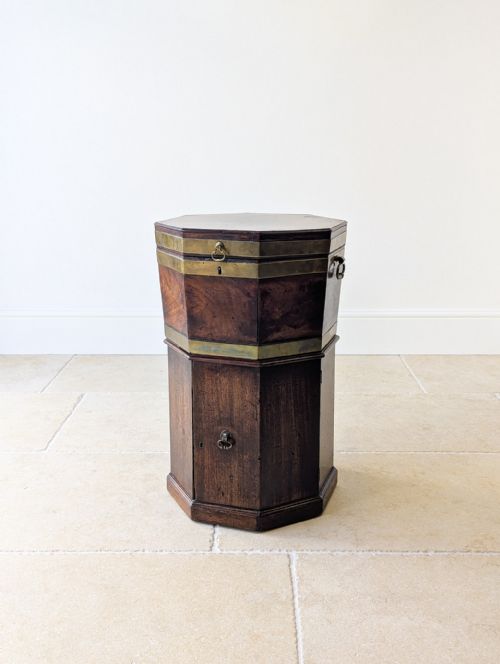
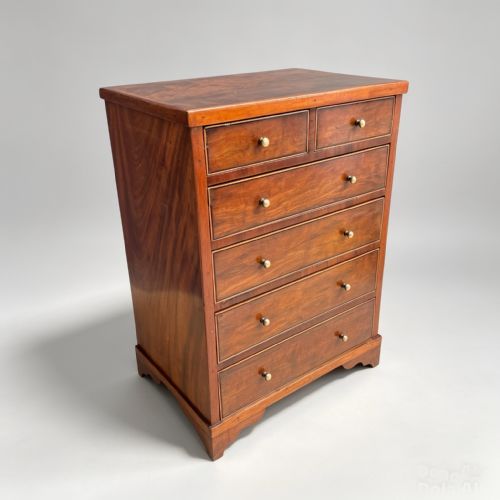
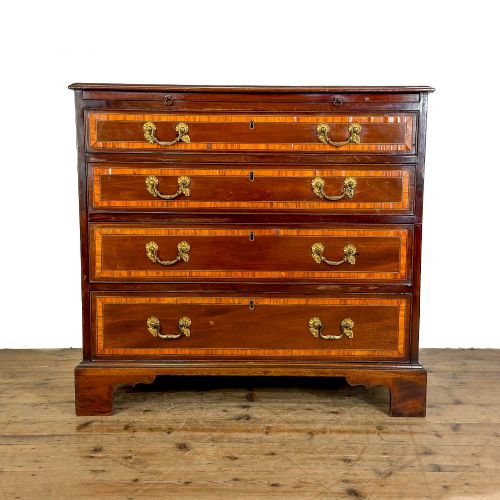
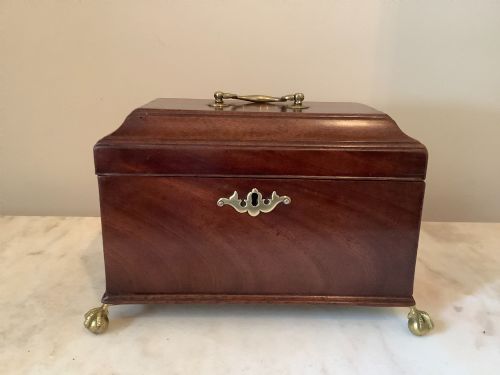


Eighteenth Century Mahogany Chest
An eighteenth century mahogany chest brings solid timber and proportion to a room, which is why collectors seek out these Georgian pieces.
What these pieces are
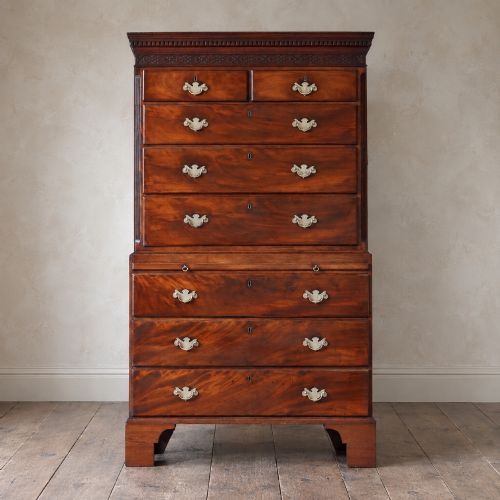
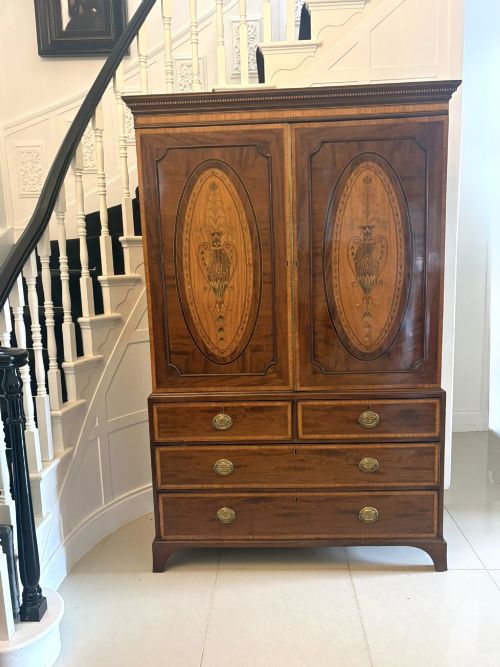
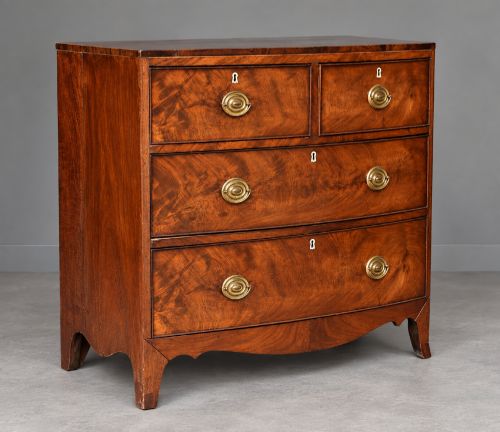
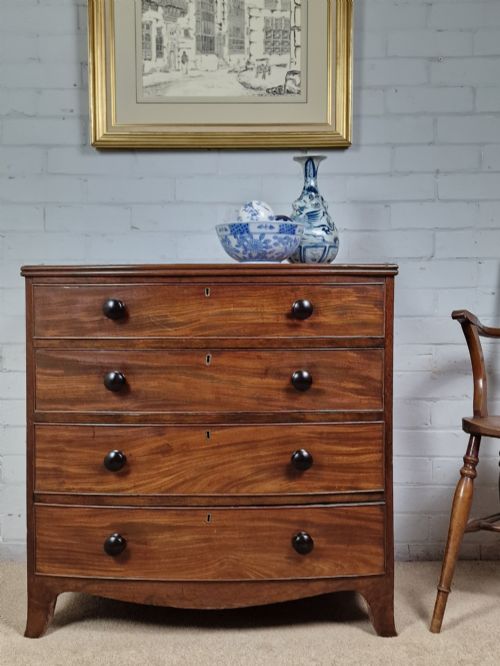
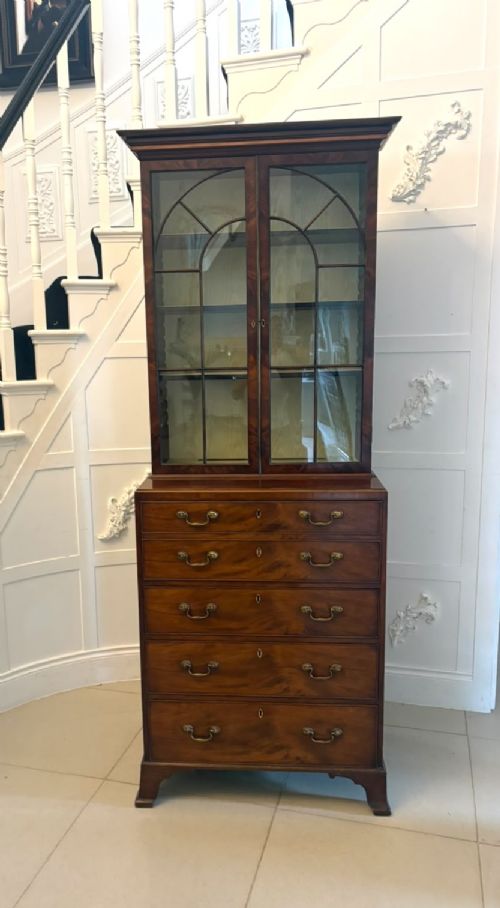
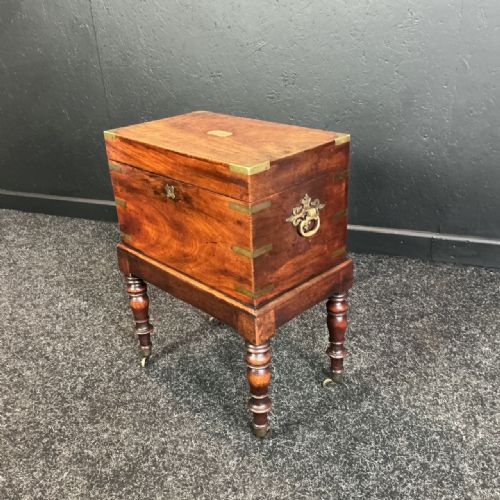
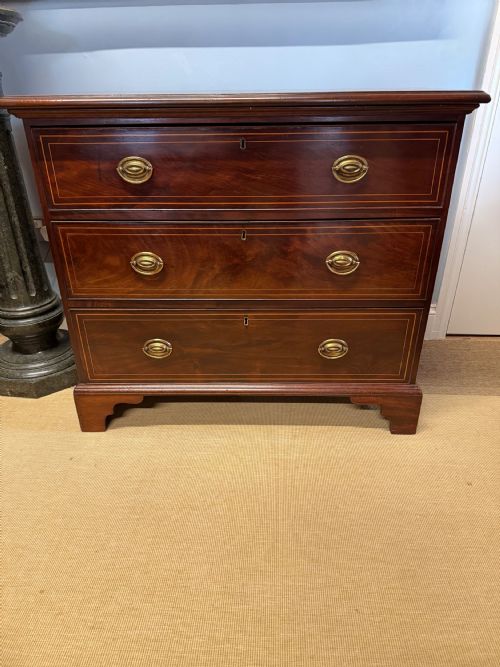
When you search for an eighteenth century mahogany chest, you encounter sturdy storage furniture built during the Georgian period. These items typically take the form of traditional chests of drawers or larger chest on chest designs.
The pieces listed on this page span the eighteenth century and the George III era. They appear in standard chest of drawers formats as well as more complex five-drawer and secretaire configurations.
How they were made
Cabinet makers constructed these items primarily using mahogany, often pairing the rich primary timber with secondary woods such as oak and pine for drawer linings and internal framing. Brass fittings provide hardware for handles and escutcheons.
Advanced examples incorporate decorative techniques like line inlay and cross banding to frame the drawer fronts. Workshops mounted certain chests on bracket feet or OG feet to elevate the base.
Retail Price Guide 2026
Typical UK retail prices for eighteenth century mahogany chest, calculated from the Sellingantiques database of over a million retail prices indexed since 2003. This retail price guide relies exclusively on Sellingantiques data; no external sources or auction records are used, so the figures do not describe the wider market.
What varies in quality
Quality rests in the handling of the timber and the complexity of the form. A standard chest of drawers sits at the baseline, whereas a tall chest on chest or a secretaire version demands greater joinery skill.
The presence of decorative treatments like cross banding and fine line inlay distinguishes standard utility furniture from more ambitious cabinet work. Original brass hardware and well-formed bracket or OG feet elevate the standing of a piece.
The Eighteenth Century Mahogany Chest Glossary
- Georgian
- The period spanning the reigns of the first four Georges, defining the prevailing architectural and furniture styles of the eighteenth century. This era produced the core of the mahogany chest forms seen today.
- Chest on Chest
- A tall storage unit formed by stacking a smaller set of drawers directly on top of a wider base chest. This configuration maximises vertical capacity.
- Secretaire
- A chest fitted with a dedicated writing drawer that pulls down to reveal a fitted interior of small compartments. It combines desk functionality with standard drawer storage.
- Cross Banding
- A decorative border technique where thin strips of veneer are laid with the grain running perpendicular to the surrounding wood. This frames drawer fronts with a contrasting margin.
- OG Feet
- An ogee bracket foot shaped with a characteristic double curve resembling an S-profile. This architectural support lifts the base of the chest.
Frequently Asked Questions
How do I date an eighteenth century mahogany chest?
Examine the secondary timbers, construction methods, and hardware styles to determine the likely decade of production. Look for stylistic clues such as bracket feet or line inlay that correspond to the Georgian era.
Compare the drawer linings and backboards with known examples from the eighteenth century. Changes in timber availability and joinery help narrow down the period.
What is a chest on chest?
A chest on chest is a tall, two-part storage unit where a smaller upper section sits atop a larger lower chest. This design provides significant drawer space while maintaining a compact footprint.
Cabinet makers of the eighteenth century favoured this form for bedchambers. The stacked arrangement allowed for multiple drawer tiers of varying depths.
How should I care for mahogany furniture?
Keep mahogany pieces away from direct sunlight and strong heat sources to prevent the timber from drying out or fading. Maintain a stable indoor climate to protect the wood and veneer.
Apply a traditional wax polish occasionally to nourish the surface and preserve the finish. Avoid using modern silicone sprays that can damage antique wood.
What is line inlay?
Line inlay is a decorative technique where narrow strips of a contrasting wood are embedded flush into the surface of the primary timber. It creates crisp geometric borders around drawer fronts.
This method adds visual definition without relying on heavy carving. It appears on select eighteenth century pieces to highlight the grain of the mahogany.