

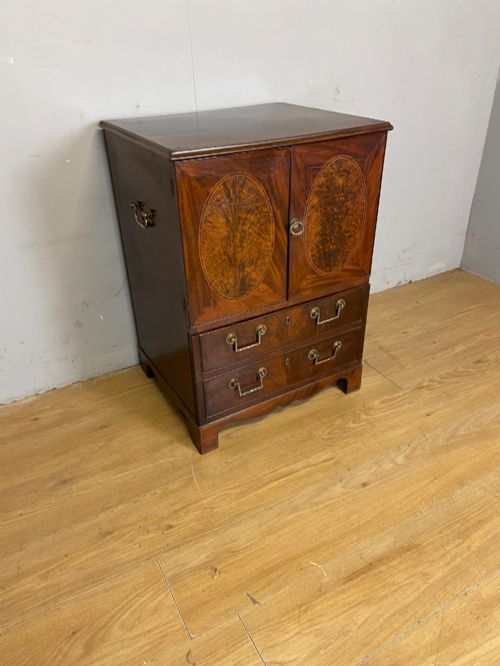
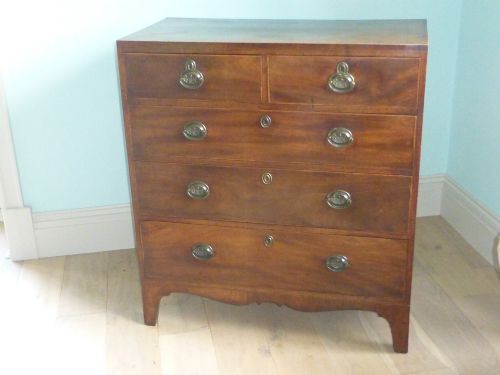


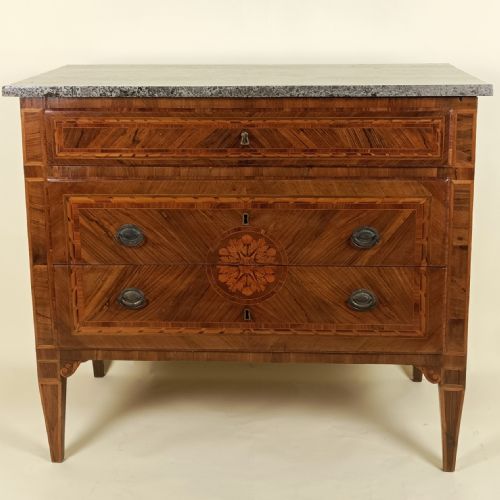


Late 18th Century Chest
A late 18th century chest offers solid joinery and deep timber grain, bringing period proportion and utility into a modern room.
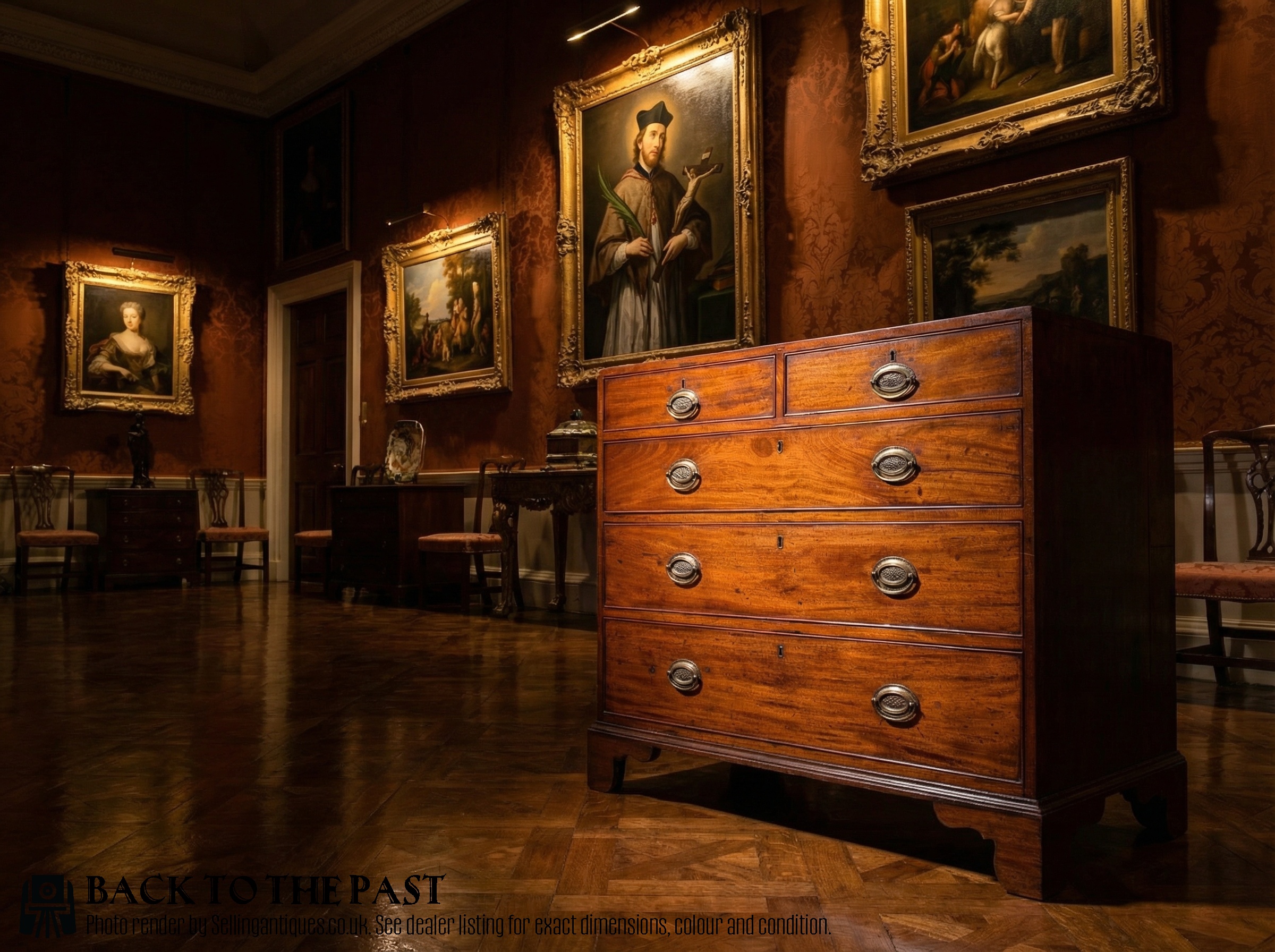
What They Are
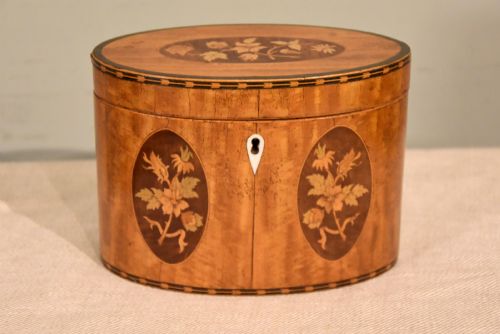
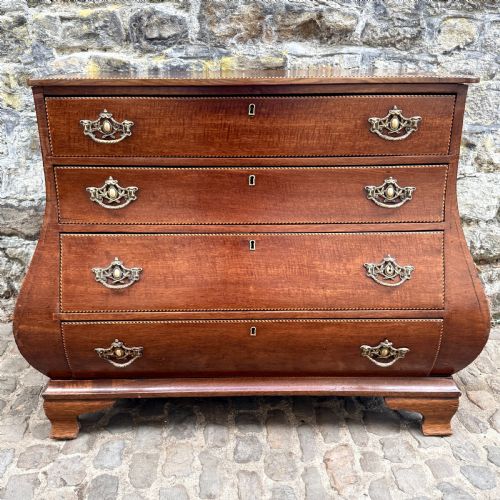
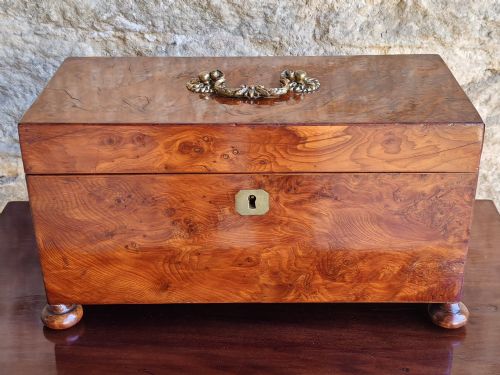
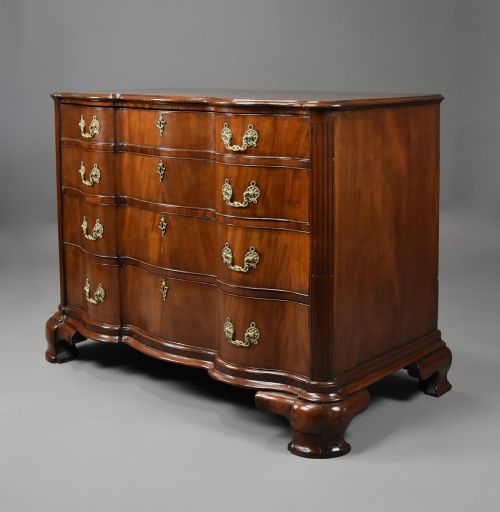
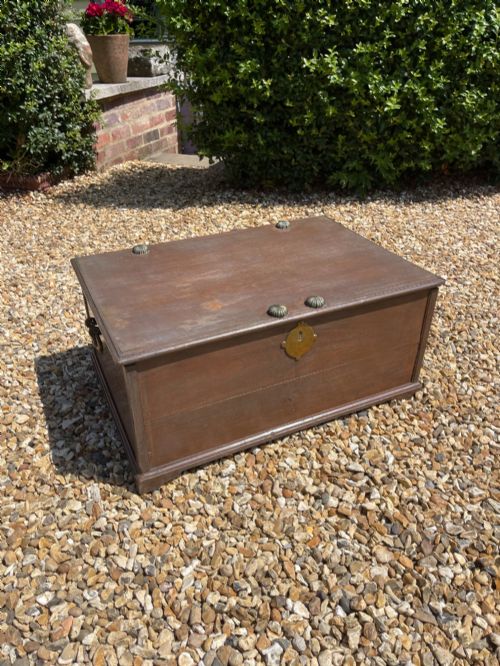
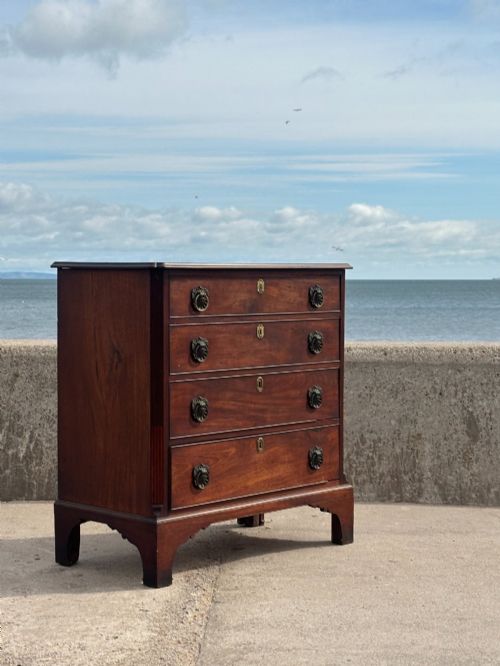
A late 18th century chest encompasses standard chests of drawers, tallboys, bow fronts, and serpentine formats alongside trunks, coffers, and miniature forms. The material record centres heavily on mahogany and oak, alongside elm, teak, pine, walnut, and satinwood.
Most examples originate from Georgian workshops, with additional representation from Dutch Baroque and Georgian Colonial traditions. Buyers encounter everything from compact gentleman's tallboys and batchelor's chests to dressing chests and blanket boxes.
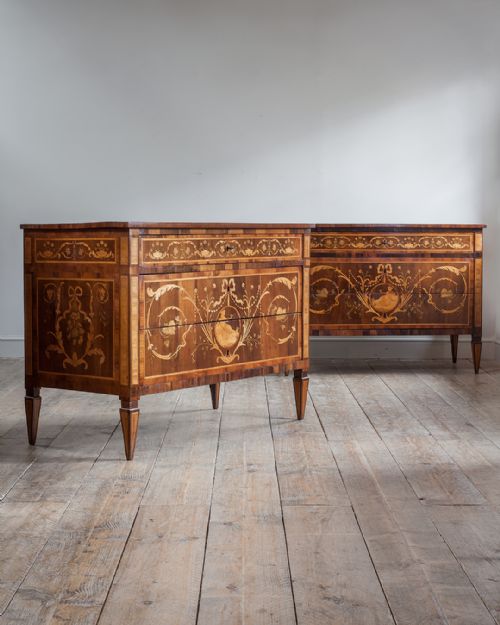
Forms span simple plank construction to elaborate chests on chests and marquetry tallboys. Variations include caddy tops, inlaid surfaces, and painted finishes.
How They Were Made
Cabinet makers built these pieces using primary hardwoods like mahogany, oak, and elm, often pairing them with secondary woods such as oak for drawer linings. Surfaces frequently display decorative treatments including veneer, oyster veneer, marquetry, and inlaid details.
Construction relied on traditional joinery methods, housing drawers within frames and securing panels with brass hardware and iron fittings. Timber selection dictated the structural integrity, while specialised finishing achieved the distinct patinas found on the wood.
Retail Price Guide 2026
Typical UK retail prices for late 18th century chest, calculated from the Sellingantiques database of over a million retail prices indexed since 2003. This retail price guide relies exclusively on Sellingantiques data; no external sources or auction records are used, so the figures do not describe the wider market.
Listings feature mahogany, oak, elm, teak, pine, and walnut across Georgian, Dutch Baroque, and Colonial styles.
What Varies in Quality
Quality rests on the selection of timber, the crispness of the carving or inlay, and the retention of original surfaces and patination. Graduating drawer proportions and refined secondary woods distinguish finer examples from standard utility pieces.
The integrity of the construction, such as intact oak drawer linings and original brass or iron hardware, elevates a piece. Subtle design elements like bow front or serpentine carcases require advanced carpentry skill compared to straight fronts.
The Late 18th Century Chest Glossary
- Bow front
- A convex curved cabinet front that swells outward in the centre. This shape became popular during the Georgian period.
- Serpentine
- A furniture front characterised by a central convex curve flanked by concave sweeps. It requires precise woodworking.
- Tallboy
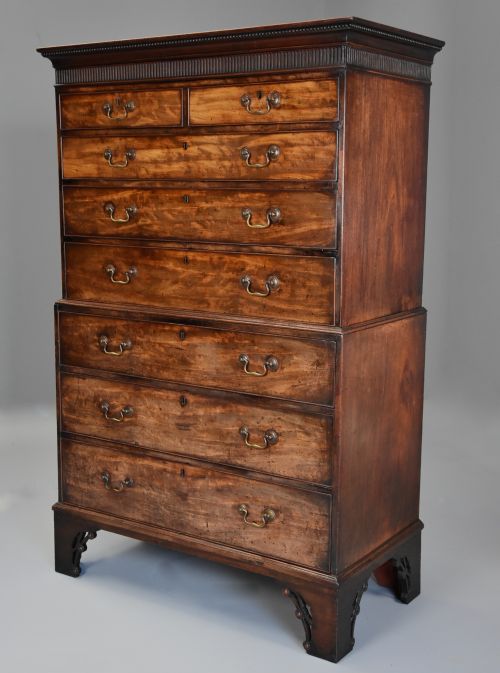
- A tall chest of drawers, often constructed as a chest stacked upon a second base chest or stand. They maximise storage footprint.
- Batchelor's chest
- A compact chest of drawers featuring a fold-over top or a brushing slide. They served dual purposes for writing and storage.
- Oyster veneer
- Branch wood sliced transversely to produce circular or oval patterns resembling oyster shells. It creates intricate decorative surfaces.
Frequently Asked Questions
What is a batchelor's chest?
A batchelor's chest is a compact storage piece featuring a folding top or a sliding board designed for writing. These versatile items combined surface workspace with standard drawer storage.
They appear frequently in Georgian mahogany and were tailored for smaller residential quarters. Their dual function makes them practical for contemporary use.
What woods were used?
Makers utilised dense hardwoods like mahogany, oak, and walnut, alongside regional timbers including elm, teak, and pine. Secondary woods such as oak frequently appeared inside drawer linings.
Surfaces were occasionally enhanced with satinwood or marquetry details. Each timber yields a distinct weight and colouration.
Where were these chests made?
The majority originate from British workshops operating during the Georgian period and the broader eighteenth century. Dutch variants also appear, showcasing distinct marquetry and regional Baroque styling.
Items range from country house workshops to urban cabinet makers. This geographic spread accounts for the variety in decorative technique.
What is a tallboy?
A tallboy is a high chest of drawers, often constructed as a double chest where a smaller upper unit sits on a larger base. This configuration provided substantial vertical storage without occupying excessive floor space.
Examples include plain oak formats as well as elaborate mahogany and marquetry versions. They served primary bedchambers in large houses.