

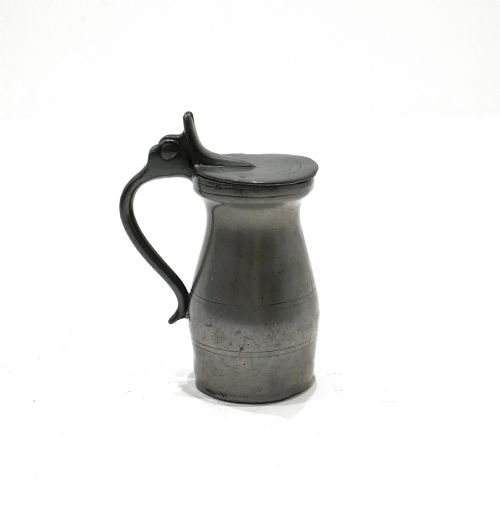
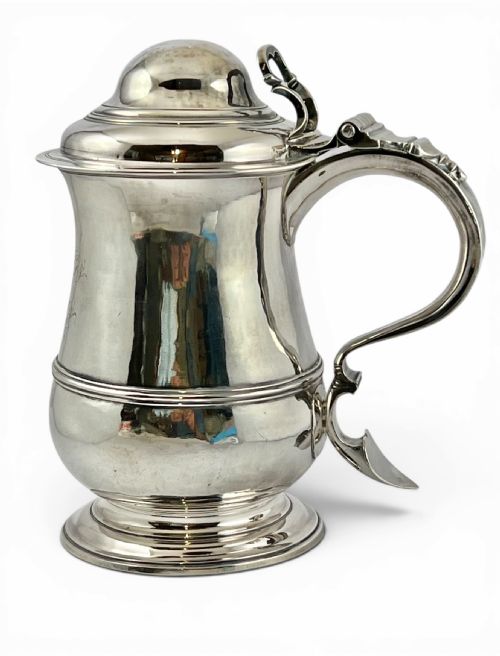


Georgian Lidded Tankard
A georgian lidded tankard brings heavy metal drinking vessels from the eighteenth and nineteenth centuries into modern spaces.
Georgian Lidded Tankard
The georgian lidded tankard encompasses heavy metal and ceramic drinking vessels designed with hinged covers during the eighteenth and nineteenth centuries. Buyers encounter sterling silver, pewter, and Old Sheffield Plate pieces originating from English, Scottish, Irish, and continental workshops.
Silver examples range from George II and George III sterling pieces to later silver plate, while base metal versions include pewter spirit measures and church flagons. Stoneware bodies mounted with metal lids also appear across the selection.
Materials and construction
Silversmiths hammered sheet silver or cast bodies in sterling silver, adding sturdy handles and hinged lids. Pewterers cast metal alloys into moulds to create flagons and spirit measures with flat or dome lids.
Old Sheffield Plate combined a thin layer of silver fused to a copper core, creating durable vessels with distinct edge wiring. Stoneware vessels utilised salt-glazed clay bodies fitted with metal lids.
Listings feature georgian lidded tankard examples in pewter, sterling silver, and Old Sheffield Plate dating from the eighteenth and nineteenth centuries.
Quality and proportion
Substance and balance define the better pieces, where heavy gauge metal provides a solid weight in the hand. Crisp maker marks and clear hallmarks indicate workshop origin and standard.
Proportion between the body, handle, and thumbpiece governs the visual appeal of a vessel. The snugness of the lid hinge and the preservation of original surfaces distinguish finer examples.
John Payne·John Heaney·Robert Iles·Burgum And Catcott·John De St Croix
The Georgian Lidded Tankard Glossary
- Tankard
- A tall drinking vessel featuring a single handle and a hinged lid. These pieces were primarily designed for ale and beer.
- Old Sheffield Plate
- A material made by fusing a thin sheet of silver to a thick copper base. This technique preceded modern electroplating.
- Flagon
- A large vessel with a handle and lid used for holding liquids. Church examples often display tall spired profiles.
- Spirit Measure
- A container certified to hold a specific volume of liquid. Smaller sizes include the half gill.
- Pewter
- A malleable metal alloy composed chiefly of tin mixed with copper and lead. It forms the body of many eighteenth-century flagons.
Georgian Lidded Tankard: Frequently Asked Questions
What is a lidded tankard?
A lidded tankard is a drinking vessel fitted with a hinged cover designed to keep contents covered during use.
These pieces range from silver drinking vessels to pewter measures and ceramic jugs produced across the eighteenth century.
How do I date a tankard?
Dating relies on maker marks, silver hallmarks, and stylistic details such as flat or domed lids.
Pewter touches and Old Sheffield Plate manufacturing techniques also help narrow down the period of production.
What metals were used?
Makers utilised sterling silver, pewter, copper, and Old Sheffield Plate to construct these vessels.
Some examples combined ceramic stoneware bodies with metal lids and mounts.
How were spirit measures used?
Spirit measures served to dispense exact quantities of liquid in taverns and households.
Pre-imperial sizes such as the half gill regulated portions before standardisation.