

Georgian Library Cabinet
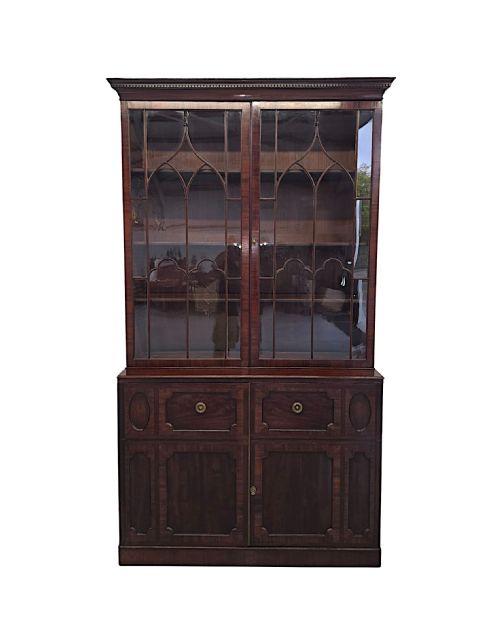
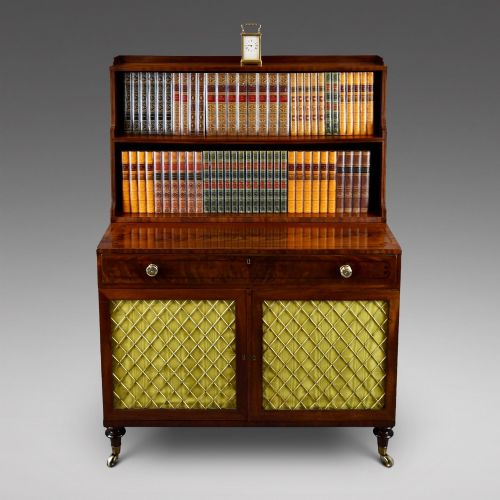
A georgian library cabinet brings substantial mahogany and glass into a room, offering serious presence for any serious book collection.
Identifying these pieces
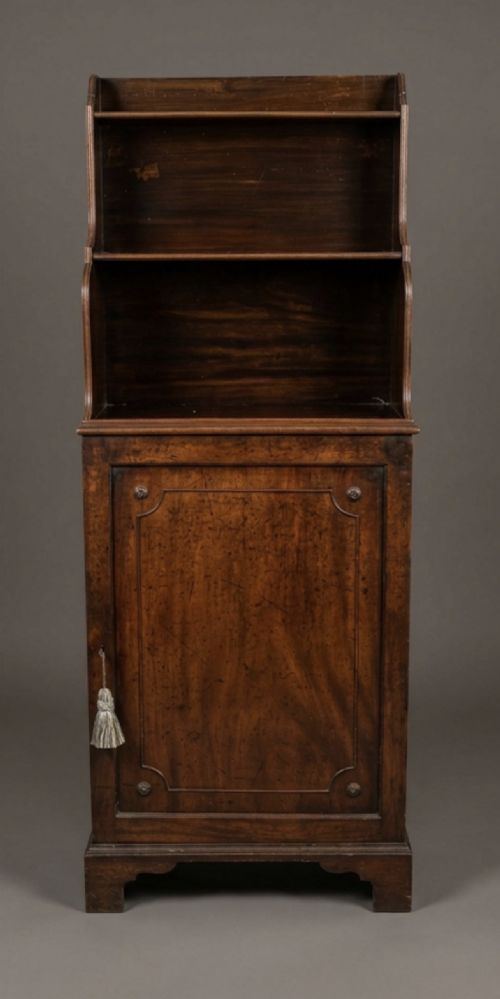
A georgian library cabinet combines architectural presence with practical storage, appearing as bookcases, shelving units, and formal cabinets. These items emerge from periods spanning the eighteenth and nineteenth centuries, including specific reigns like George II, George III, and William IV.
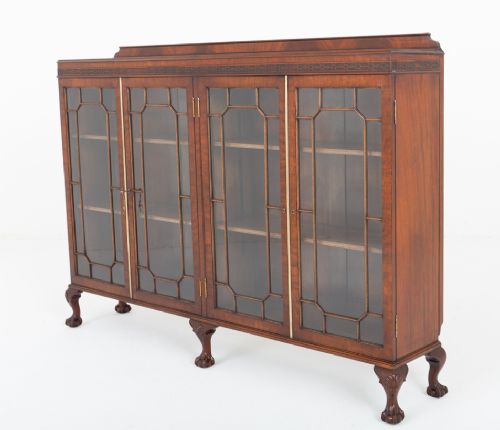
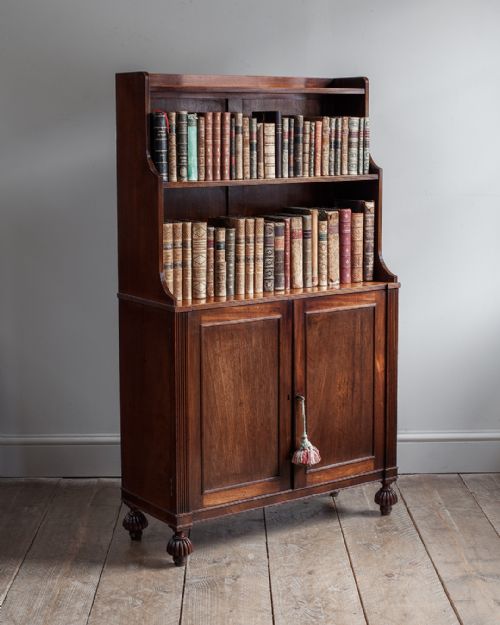
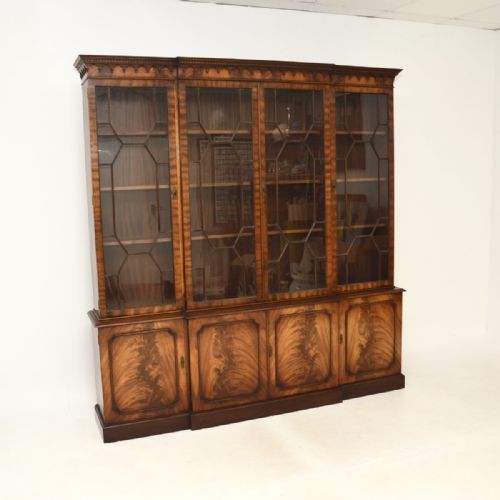
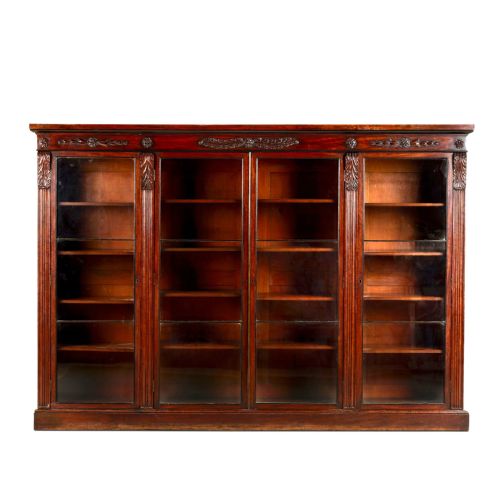
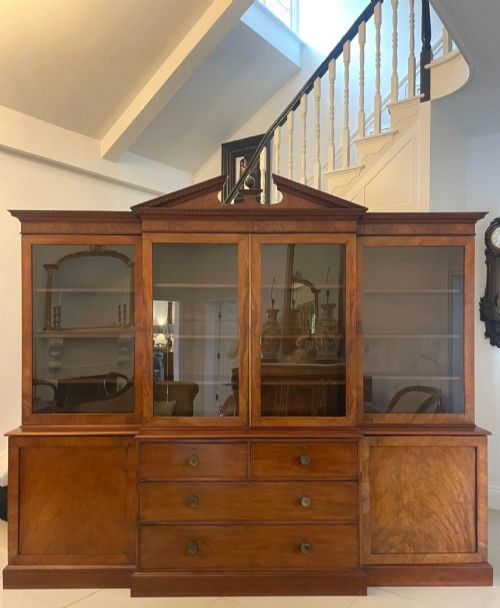
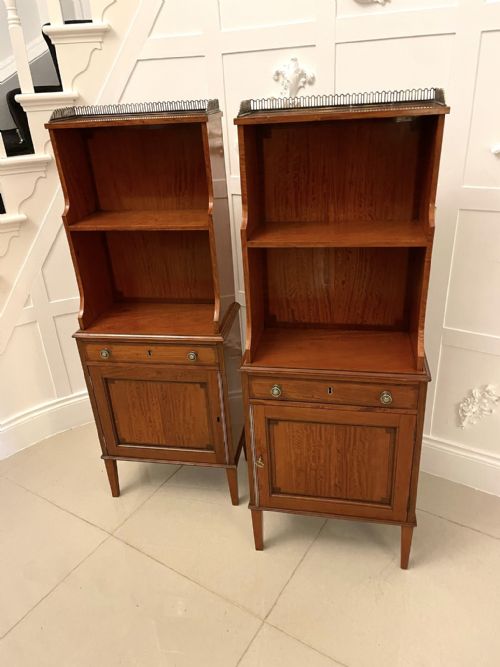
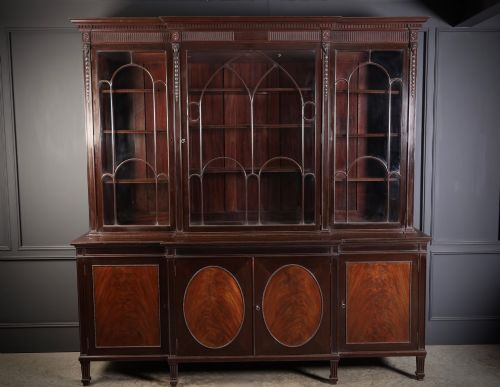
The most common versions met on this page are substantial mahogany breakfront bookcases and glazed library cabinets. Pieces range from large proportions to diminutive gentleman's cabinets in red walnut.
Materials and construction
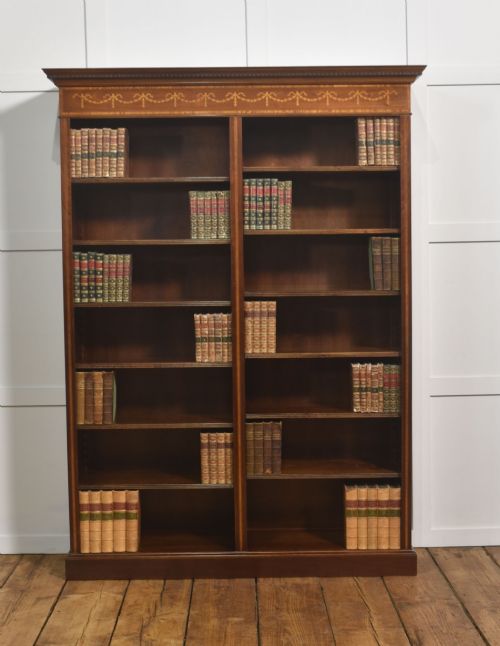
Makers utilised dense timbers, predominantly mahogany and walnut alongside oak, building large breakfront bodies and open library forms. These woods provide the structural strength required for massive multi-tier shelving.
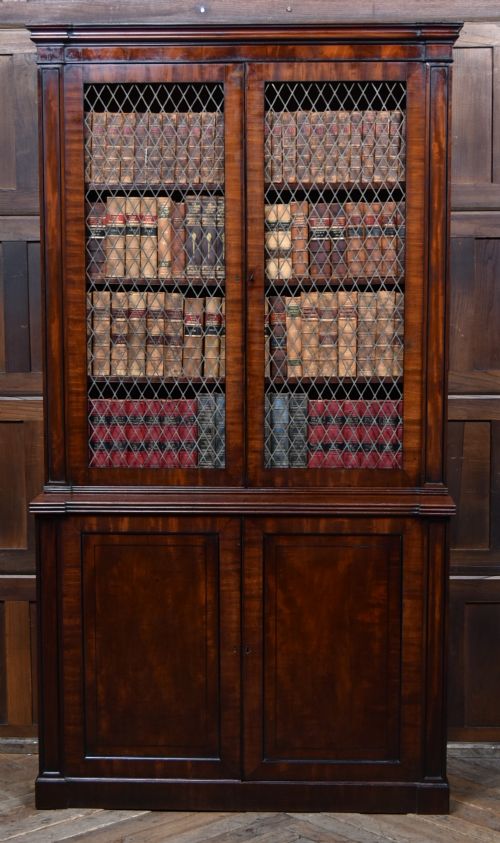
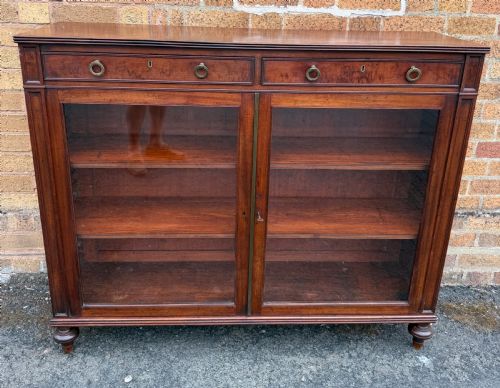
Glazing and fitted glass doors protect the interior contents, frequently complemented by brass hardware and wire mesh panels. Construction relies on traditional joinery techniques suitable for monumental furniture.
Retail Price Guide 2026
Typical UK retail prices for georgian library cabinet, calculated from the Sellingantiques database of over a million retail prices indexed since 2003. This retail price guide relies exclusively on Sellingantiques data; no external sources or auction records are used, so the figures do not describe the wider market.
The listings here feature pieces from the Georgian, George II, George III, William IV, and Regency periods in mahogany, walnut, and oak.
Assessing quality
Quality rests upon the selection of timber figures and the sophistication of the architectural detailing. Breakfront facades with well-proportioned glazing bars sit at the upper end of the range compared to simpler volumes.
Attribution to known workshops or documented provenance elevates certain pieces, distinguishing standard utilitarian shelving from high-status library furnishings.
The Georgian Library Cabinet Glossary
- Breakfront
- A cabinet design where the central section projects forward from the flanking wings. This configuration breaks up a flat wall and adds architectural depth.
- Glazed
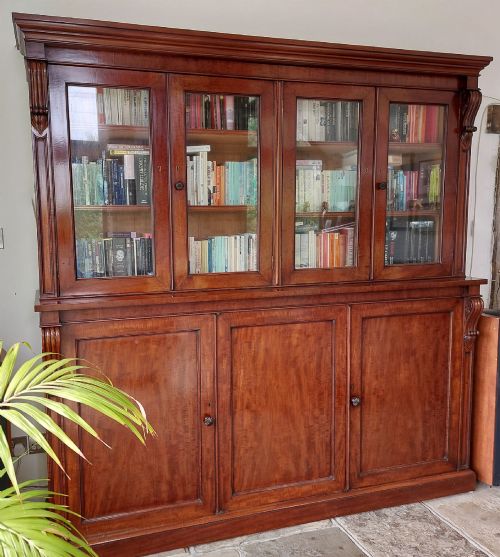
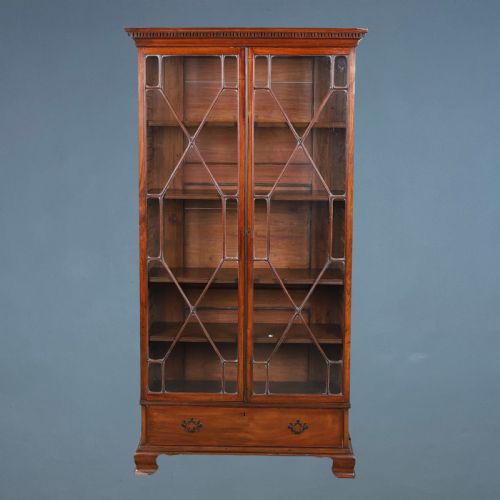
- Fitted with glass panels in the doors. This treatment allows books to remain visible while protected from dust.
- Wire mesh
- Woven metal panels used in place of glass on certain cabinet doors. It provides ventilation for the contents.
- Wellington base
- A heavy plinth or lower section supporting an open library bookcase. It grounds the vertical proportions of the piece.
Frequently Asked Questions
What is a georgian library cabinet?
A large wooden storage unit designed for books, featuring glass doors or open shelving.
These pieces originate from the eighteenth and nineteenth centuries in mahogany and walnut.
How do I date a library cabinet?
Dating relies on stylistic markers such as George III or Regency proportions and timber choices.
Construction methods and primary woods like mahogany or oak help place the piece in its era.
Where should I place one?
These large cabinets require significant wall space in studies, libraries, or spacious reception rooms.
Their substantial height and depth mean they command the scale of the entire room.
Are all these cabinets mahogany?
Mahogany is the dominant timber seen across these listings, but walnut and oak also appear.
Glass, brass, and wire mesh are common supplementary materials used in the doors.