

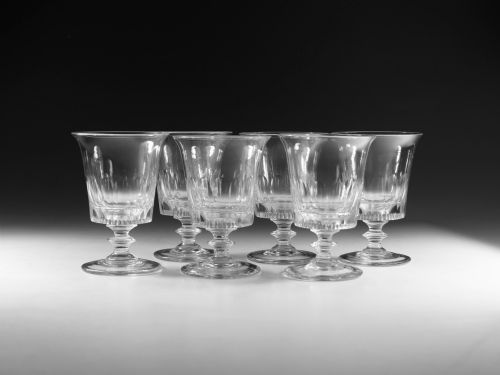
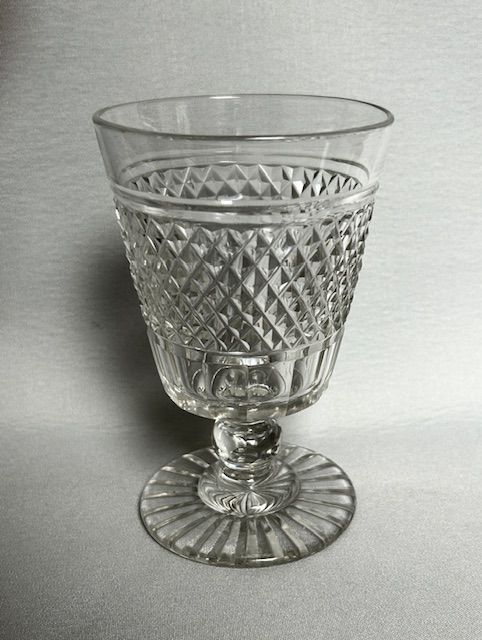


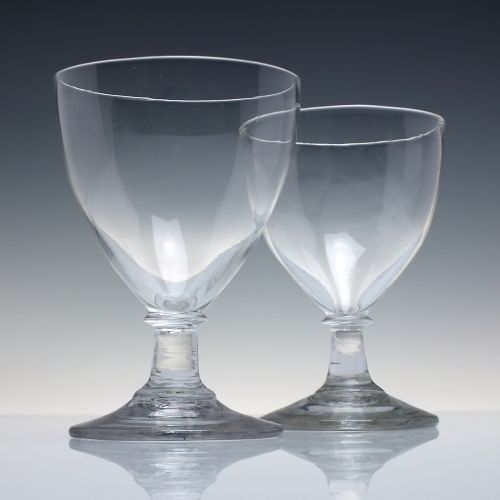

Georgian Lead Glass Rummer
A georgian lead glass rummer is a sturdy drinking vessel built for serious toasts, prized for its generous bowl and historic English character.
Georgian Lead Glass Rummer
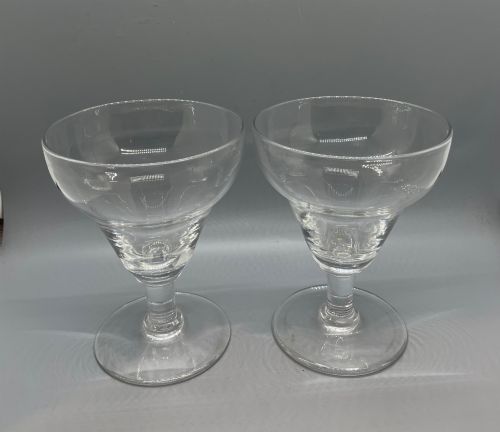
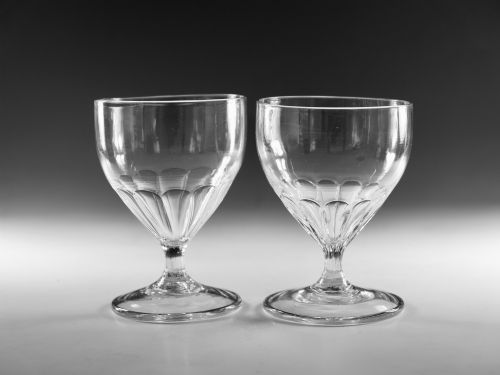
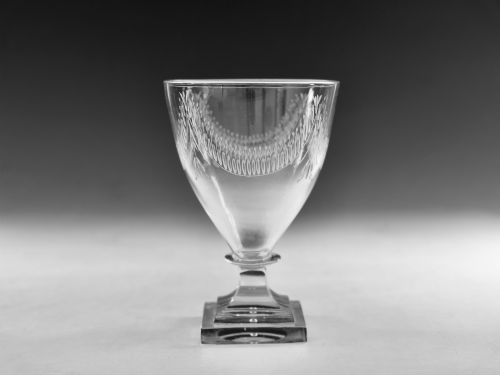
A georgian lead glass rummer sits before you as a sturdy drinking vessel designed for ale, wine or spirits during the late eighteenth and early nineteenth centuries. You will most frequently encounter English examples featuring heavy lead crystal, solid stems, and distinctive bowl forms like the ogee, pan top or ovoid shape.
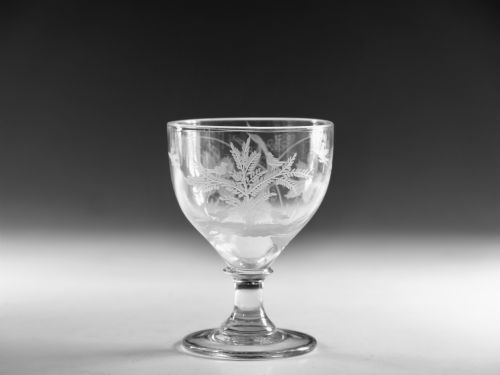
The specimens on this page span the Georgian, Regency and Victorian periods, often dated anywhere from seventeen-eighty to eighteen-thirty. These pieces range from simple, plain-stemmed goblets to elaborately cut or engraved table glass bearing hops, barley, armorial crests or commemorative ships.
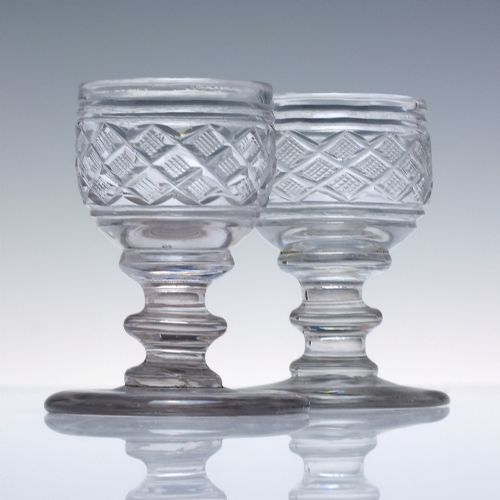
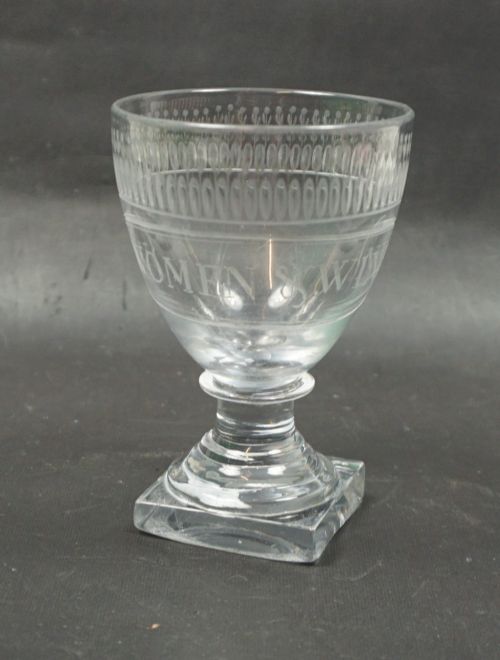
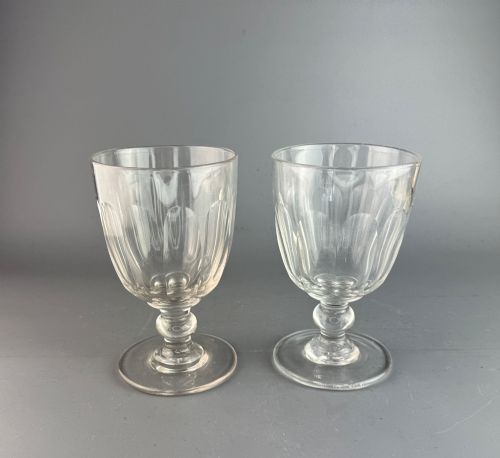
Makers and regional workshops produced these rummers in various formats, including pairs, matched sets, and occasional large serving vessels. Whether you examine a square lemon-squeezer foot or a simple round base, each item reflects the robust social drinking habits of the era.
Materials and methods
Master craftsmen shaped these objects using hand-blown clear lead glass, flint glass and occasional coloured glass, relying on the high density of lead content to achieve a brilliant lustre. This heavy material allowed artisans to cut deep facets, hobnail patterns and geometric designs directly into the thick walls of the vessel without compromising structural integrity.
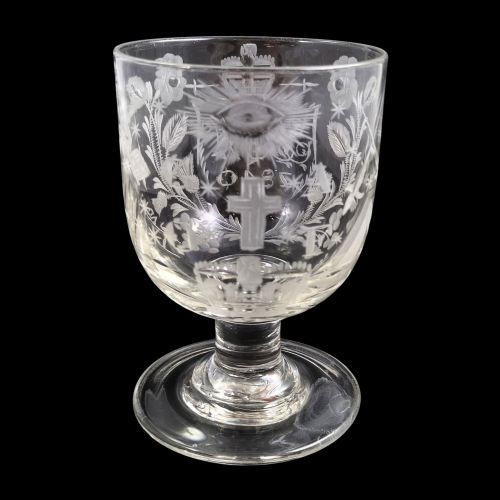
Surface decoration required skilled wheel engraving or etching, creating detailed motifs such as hunting scenes, Masonic symbols, and botanical elements like hops and barley. Bases were formed either as standard round feet or pressed into square lemon-squeezer shapes, while stems varied from plain formations to occasional air twists.
Listings feature lead crystal, clear glass, flint glass and coloured glass across Georgian, Regency and Victorian periods.
Assessing quality and character
Excellence in a georgian lead glass rummer rests on the clarity of the metal and the crispness of any wheel-cut or engraved decoration. Superior pieces display sharp, deep facets and finely detailed hand-engraving, such as armorial crests or topographical bridges, executed with steady artistic control.
The Georgian Lead Glass Rummer Glossary
- Lead crystal
- High-clarity glass containing metallic oxides that increase weight, brilliance, and refractive power. This heavy material is essential for deep wheel-cutting.
- Lemon-squeezer base
- A square, pressed glass foot with sloping sides resembling a kitchen juicer. It is typical of the Regency period and early nineteenth century.
- Ogee bowl
- A bell-shaped vessel profile curving concave above and convex below. This silhouette provides stability and concentrates aromas.
- Pan top rummer
- A drinking glass featuring a wide, flared rim resembling an open pan. It offers a generous aperture for ale and robust wines.
- Wheel engraving
- A surface decoration technique using small rotating metal or stone wheels. It produces intricate pictorial scenes and botanical motifs on thick glass.
Georgian Lead Glass Rummer: Frequently Asked Questions
What were rummers actually used for?
These vessels served as everyday and celebratory drinking glasses for heavy ales, wines, punch and spirits during social gatherings.
Their substantial weight and large capacity made them well-suited for toasts and communal drinking in taverns and homes.
Are these glasses safe to use?
While historic lead glass is chemically stable for brief contact, most collectors prefer to display these items rather than use them for modern dining.
Hand-washing in lukewarm water is mandatory if you choose to use them, as modern dishwashers will ruin the antique surface.
Why are some rummers coloured?
Coloured glass examples, such as turquoise green pieces, were produced by adding specific metallic oxides to the molten batch.
While clear lead glass remains far more common, coloured variations offered a decorative alternative favoured by wealthier households.