



Georgian Lead Crystal Rummer
A georgian lead crystal rummer is a sturdy, capacious drinking vessel designed for punch, ale or spirits that brings immediate period character to any table.
Georgian Lead Crystal Rummer
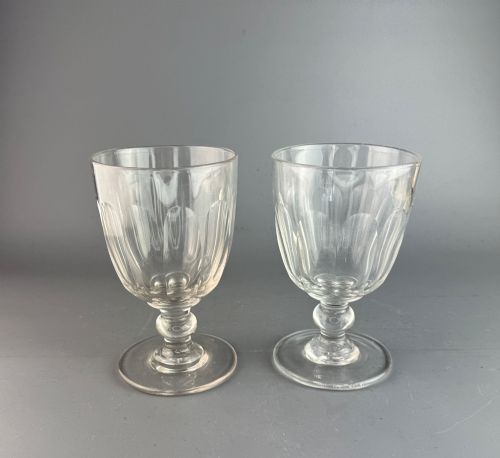
A georgian lead crystal rummer is a robust drinking glass originating from the late eighteenth and early nineteenth centuries, built with a deep bowl to handle heavy everyday toasts. You will most frequently encounter English examples featuring heavy stems, ovoid bowls and substantial footed bases suited for domestic conviviality.
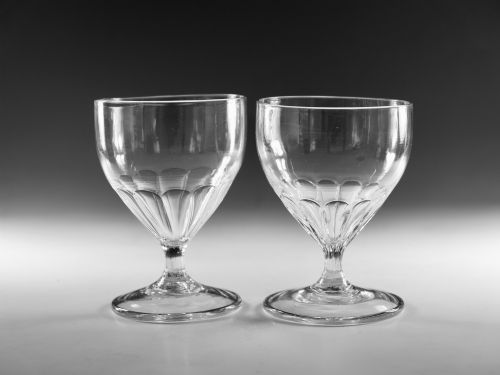
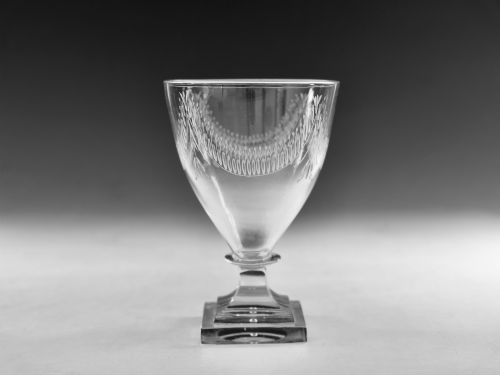
The form spans the Georgian, Regency and early Victorian eras, shifting from plain ovoid shapes to faceted or cut variants. Whether styled with square lemon squeezer feet or simple conical bases, these pieces reflect the drinking habits of the period.
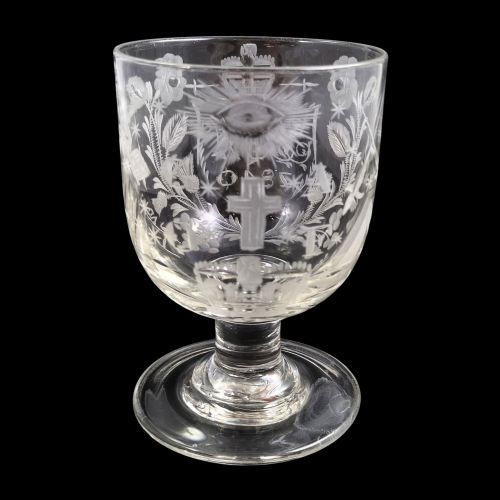
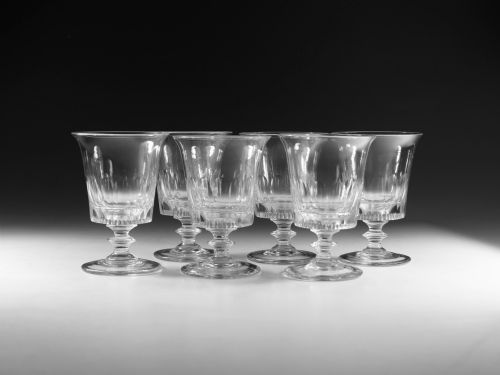
Makers produced these glasses across English glasshouses, often ornamenting them with wheel-engraved motifs such as hops, barley, armorials or ships. The selection available ranges from single large serving vessels to matched pairs and small sets.
Assessing Quality and Execution
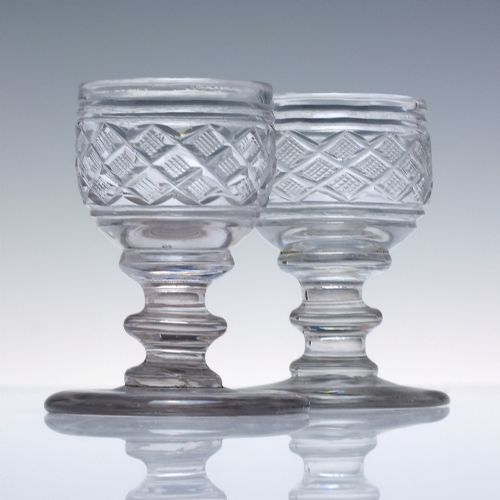
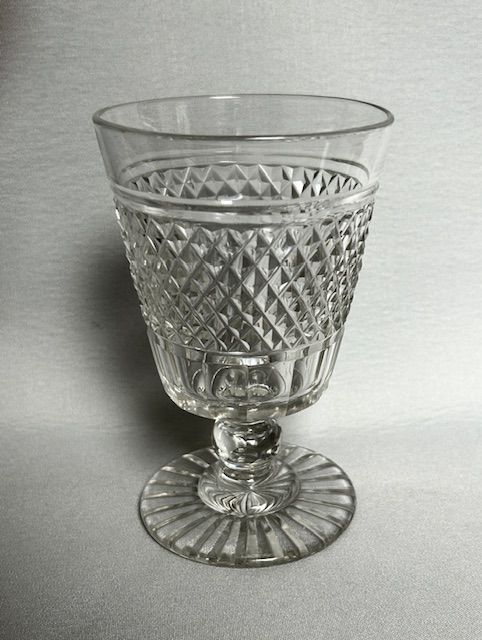
The weight and clarity of the lead crystal set superior examples apart from ordinary glassware, dictating the resonance and sparkle of the bowl. Master cutters achieved crisp facets and deep optical effects that catch candle or daylight far more effectively than shallow work.
Engraving quality marks another distinction, ranging from simple monograms to finely detailed wheel-engraved agricultural scenes, ships or armorial crests executed by skilled hands. Proportion also governs excellence, where heavy bucket bowls balance harmoniously against sturdy stems and well-formed feet.
Some nineteenth-century drinkers toasted maritime engineering with rummers engraved with the Sunderland Bridge.
The Georgian Lead Crystal Rummer Glossary
- Rummer
- A large drinking glass used for ale, wine, spirits or punch during the eighteenth and nineteenth centuries. The name likely derives from the continental word roemer, though the English form evolved into a distinct heavy-stemmed goblet.
- Lemon squeezer foot
- A square glass base moulded with sharp corners that mimics the shape of a kitchen lemon squeezer. This style appeared frequently on English rummers and dram glasses around eighteen hundred.
- Hobnail cut
- A pattern of raised diamond facets resembling the hobnails used in heavy boots. Glass cutters applied this texture to add grip and brilliant light reflection to the lower bowls.
- Wheel engraving
- A method of decorating glass by holding the vessel against a small rotating metal or stone wheel fed with abrasive grit. This technique produced detailed motifs like hops, barley and commemorative ships.
Georgian Lead Crystal Rummer: Frequently Asked Questions
What were rummers used for?
These large vessels were primarily utilised for serving punch, ale, wine or spirits during social gatherings and formal toasts. Their substantial size and sturdy build made them practical for communal tables and lively dining.
Over time, they transitioned from everyday tavern and home use into collectible display pieces. Their generous bowls accommodated generous pours of strong drinks common in the period.
How do I date a rummer?
Dating relies on examining the manufacturing traits, bowl forms, foot styles and decorative motifs recorded in the piece. Earlier examples from around eighteen hundred tend to feature square lemon squeezer bases and simpler ovoid profiles.
Later Regency and Victorian iterations often display heavier cut glass patterns, bucket shapes or faceted stems. Comparing the engraving style and pontil mark assists in narrowing down the decade of production.
Are these glasses safe to use?
While historic lead crystal contains lead, many collectors enjoy using antique drinkware occasionally for special toasts. Hand washing in lukewarm water protects the fragile historic material from thermal shock and modern detergents.
Harsh dishwashers will ruin the surface polish and cloud the lead crystal over time. Careful handling ensures these sturdy vessels can still hold beverages as they did centuries ago.
How should I display them?
Displaying these pieces where natural light can strike the lead crystal highlights the clarity and cut facets. Placing them on sturdy sideboards or within secure cabinets lets the heavy bases and engraved details stand out.
Grouping pairs or sets creates an appealing period display that showcases the subtle variations in hand-blown manufacture. Adequate shelf depth is essential given the generous proportions of large serving rummers.