
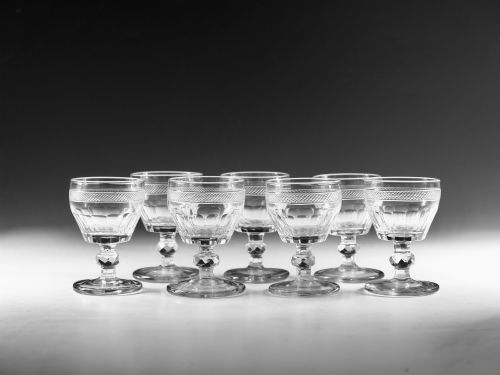
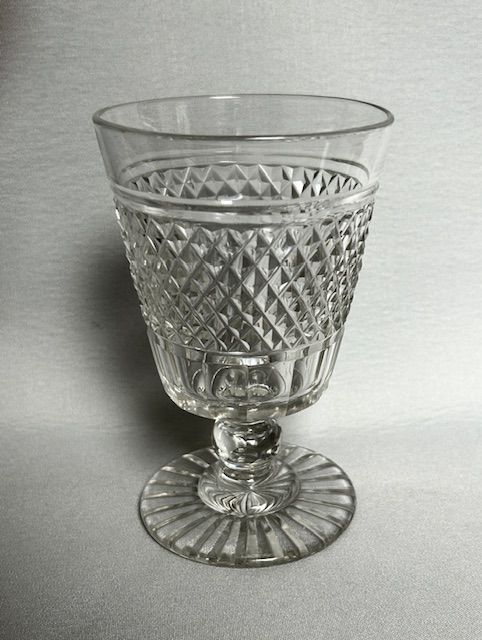


Georgian Cut Glass Goblet
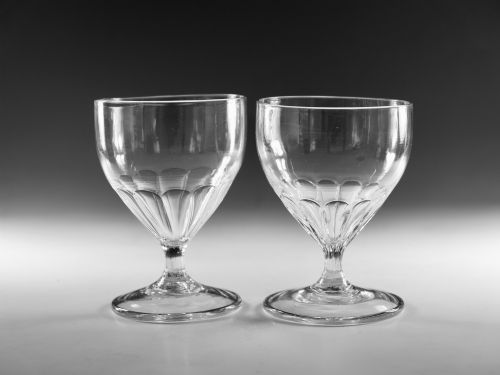
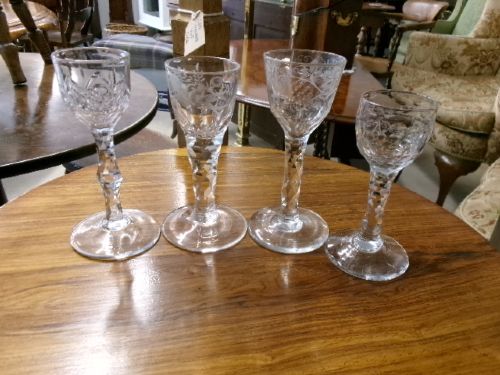
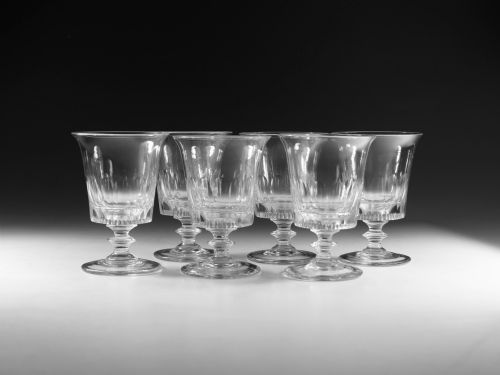
A georgian cut glass goblet brings weight and brilliance to a table, combining lead crystal clarity with deep wheel-cut decoration.
Georgian Cut Glass Goblet
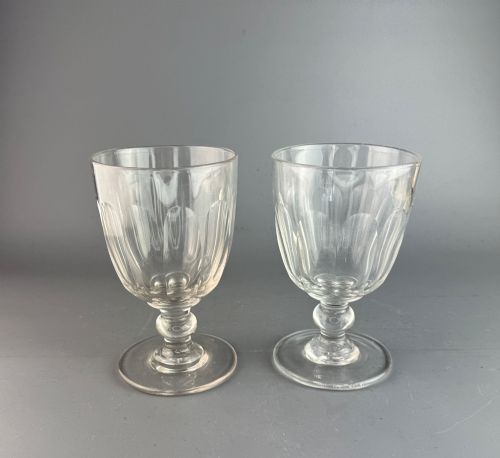
A georgian cut glass goblet encompasses substantial table rummers, faceted stem wine glasses, and port glasses originating from the eighteenth and early nineteenth centuries. Buyers encounter heavy drinking vessels featuring deep facet cuts, engraved bowls, and distinctive bases.
The selection on this page relies heavily on English and Irish productions spanning the Georgian, Regency, and early Victorian periods. Examples range from small stemware intended for wine and port to large rummers designed for punch or ale.
Materials and methods
Maker's workshops utilised heavy lead glass and flint glass, which provided the dense substance required for deep wheel-cutting and light refraction. The resulting material allowed artisans to cut crisp facets and elaborate decorative motifs into the thick walls of each vessel.
The listings on this page span the Georgian, Regency, and Victorian periods, utilising lead crystal, flint glass, and gold leaf.
Evaluating the standard
Quality rests upon the crispness of the cutting and the depth of the metal, where sharper wheel-work and heavier lead crystal create superior weight and brilliance. The proportion between bowl, stem, and foot dictates the visual balance of the piece.
James Giles
The Georgian Cut Glass Goblet Glossary
- Rummer
- A large, sturdy drinking glass popular in the Georgian period, often used for ale, wine, or punch. These vessels typically possess thick walls and short stems.
- Facet cut
- A decorative surface treatment consisting of multiple flat, polished planes ground into the glass. This technique maximises the refraction of light through lead crystal.
- Lemon squeezer foot
- A square, pressed glass base with indented corners resembling the utensil of the same name. Found frequently on heavy rummers from around eighteen hundred.
- Flint glass
- An early British term for high-quality lead glass containing potash and lead oxide. It offers superior clarity and weight compared to standard soda glass.
- Jacobite engraving
- Decorative motifs including roses and oak leaves applied to glasses as covert political symbols. These designs expressed loyalty to the exiled Stuart dynasty.
Georgian Cut Glass Goblet: Frequently Asked Questions
What were rummers used for?
These large vessels served for drinking ale, wine, and punch during social gatherings and tavern dinners. Their substantial weight and capacity suited the hearty toasts of the period.
Over time, smaller forms took over for formal dining, but the rummer remained a staple of domestic hospitality through the Regency era.
How do I date a Georgian glass?
Dating relies on combining stylistic evidence such as stem formation, bowl shape, and the type of cutting used. Facet-cut stems and square feet point towards the late eighteenth and early nineteenth centuries.
Handling the piece also helps, as the heavy lead metal and pontil mark characteristics shift perceptibly across different decades.
Are these glasses safe for daily use?
Many collectors prefer to display these fragile antiques rather than use them at the modern dining table. Hand washing in lukewarm water is essential if you choose to use them.
Thermal shock and modern dishwashers will damage lead crystal and historical glass surfaces beyond repair.
What is the difference between flint glass and lead crystal?
Flint glass and lead crystal both refer to heavy, high-clarity glass formulations containing lead oxide. The terminology often reflects the period and region of manufacture rather than a distinct chemical recipe.
Both materials yield the ringing tone and refractive brilliance prized by collectors of antique stemware.