



Emerald Green Stemware
Emerald green stemware brings rich colour and striking form to the table through pieces spanning the eighteenth century to the twentieth.
Emerald Green Stemware
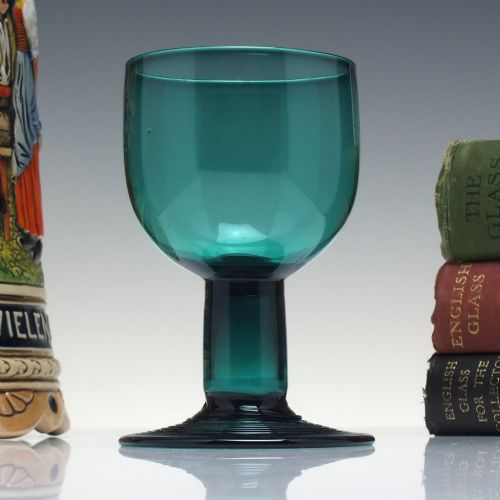
When you search for emerald green stemware, you enter a field of drinking vessels shaped by Georgian, Victorian, and later hands. The selection focuses heavily on wine glasses, hock glasses, dram glasses, and champagne coupes.
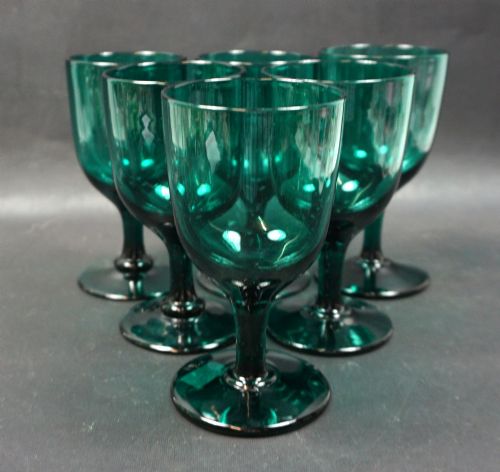
You are most likely to meet English Bristol green examples alongside continental pieces from French and German workshops. These range from single eighteenth-century wine glasses to sets of six or eight made in the nineteenth and early twentieth centuries.
The forms vary from simple tulip-shaped bowls to cut crystal and cased glass designs. Each era brings a distinct weight and silhouette to the table, connecting modern dining with historical glassware traditions.
How they were made
Makers shaped these vessels using glass, coloured glass, and green glass, often employing hand-blown techniques or heavy lead crystal. The manipulation of molten material allowed craftsmen to create deep emerald tones and clear optical effects.
Techniques evolved from eighteenth-century hand-blown methods to nineteenth-century cutting and cased glass production. Cased glass involves fusing a layer of green glass over clear crystal before cutting back the surface to reveal contrasting depths of colour.
Early dram glass drinkers required very small measures, proving that eighteenth-century evenings could start with surprising restraint.
What varies in quality
Quality rests upon the depth and saturation of the green colour alongside the precision of the glassmaker's hand. Early hand-blown vessels show subtle variations in tone and weight that distinguish them from later production.
Cut crystal examples depend on the crispness of the wheel-cut facets and the clarity of the underlying metal. Sets of multiple glasses rely on consistency across the entire group in height, bowl shape, and colour intensity.
Baccarat·St Louis Massenet
The Emerald Green Stemware Glossary
- Bristol green
- A dark, vibrant shade of green traditionally associated with English glasshouses around the Bristol area. It became popular for wine glasses and hock glasses during the Georgian and Victorian periods.
- Hock glass
- A tall-stemmed glass originally designed for hock, the traditional British term for German white wine. These often feature coloured bowls to showcase the wine or simply to add decoration to the table.
- Cased glass
- Glass made by fusing two or more distinct layers of different colours together while molten. Craftsmen then cut through the outer layer to expose the contrasting colour beneath.
- Dram glass
- A small drinking vessel used for spirits during the eighteenth and nineteenth centuries. Their diminutive size makes them distinct from standard wine glasses.
- Champagne coupe
- A shallow, broad-bowled stemmed glass designed for sparkling wine. Twentieth-century examples frequently utilise cased crystal and geometric cutting styles.
Emerald Green Stemware: Frequently Asked Questions
How do I clean antique green glass?
Wash these pieces by hand using warm water and a mild detergent rather than placing them in a dishwasher. Sudden temperature changes can crack old glass.
Dry them gently with a soft linen cloth to preserve the surface and prevent water spots from forming on the lead crystal or hand-blown bowls.
Can I use these glasses for daily dining?
Many collectors enjoy using their stemware for special dinners and formal gatherings. Sturdier Victorian and Edwardian examples handle careful use well.
Hand-blown eighteenth-century pieces deserve more caution due to their age and delicate walls. Store them securely away from heavy foot traffic.
What is the difference between Georgian and Victorian green glass?
Georgian glassware often displays the slightly thicker walls and irregular pontil marks characteristic of hand-blown production. The green hues tend to be deep and varied.
Victorian pieces frequently benefit from advanced cutting techniques and heavier lead crystal compositions. Matching sets become more common in the nineteenth century.
Why are some glasses called Bristol green?
The term traditionally describes the rich, dark green tone produced by English glasshouses operating around Bristol. It remains a standard descriptor for coloured English stemware from the Georgian era.
Later makers across Europe adopted similar rich shades for wine and hock glasses. The name now applies broadly to deep green glass of that aesthetic.