


Clear Cut Glass Rummer
These clear cut glass rummer pieces offer heavy historical drinking vessels suited to serious collectors and practical display alike.
Clear Cut Glass Rummer
A clear cut glass rummer represents a sturdy historical drinking vessel designed for everyday use and communal toast drinking in British homes. Buyers searching for a clear cut glass rummer encounter substantial forms ranging from Georgian Anglo-Irish examples to Victorian table rummers.
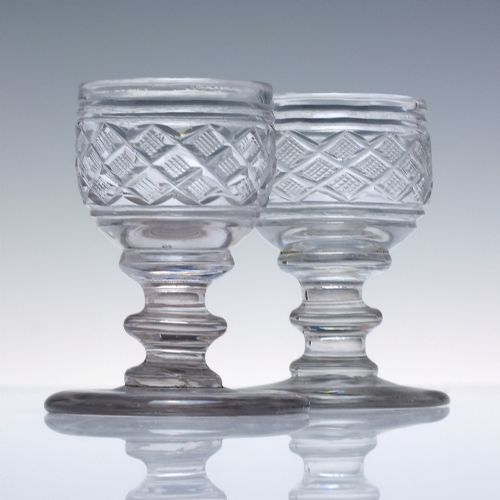
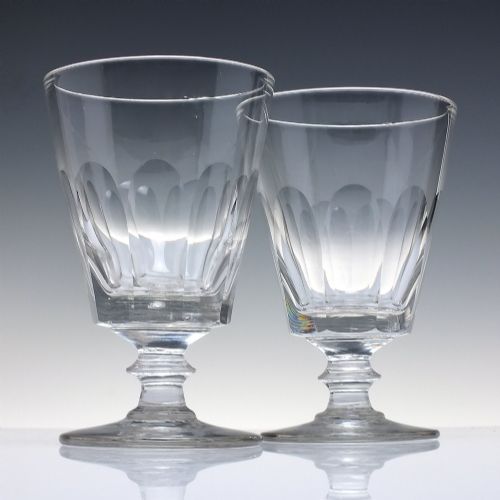
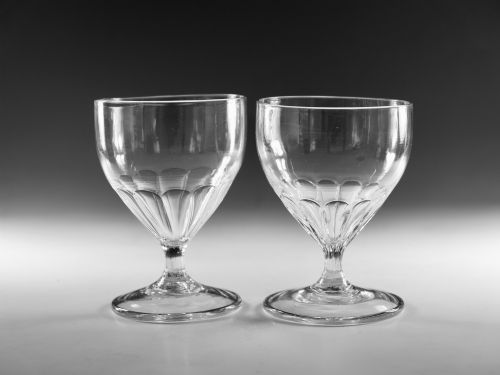
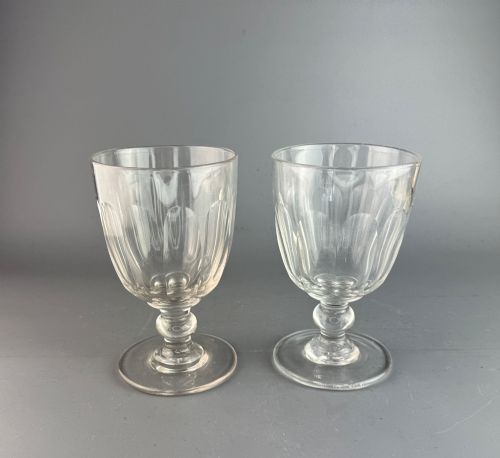
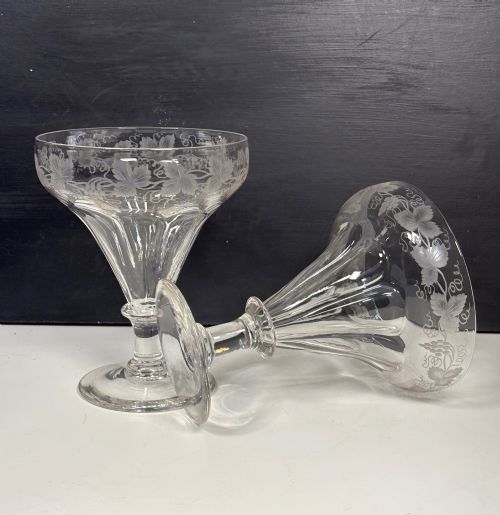
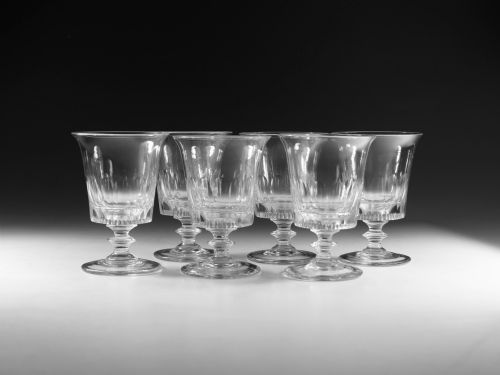
The pieces appearing on this page span several distinct eras, including Georgian, Regency, Victorian, and Edwardian periods. Forms include large individual table rummers, pairs of whiskey dram glasses, and sets of six with square lemon squeezer feet or baluster stems.
Materials and construction methods
Maker operations relied heavily upon lead crystal, flint glass, and heavy clear glass to achieve substantial weight and brilliant light refraction. Artisans shaped these heavy metal compositions while hot before applying deep surface cuts.
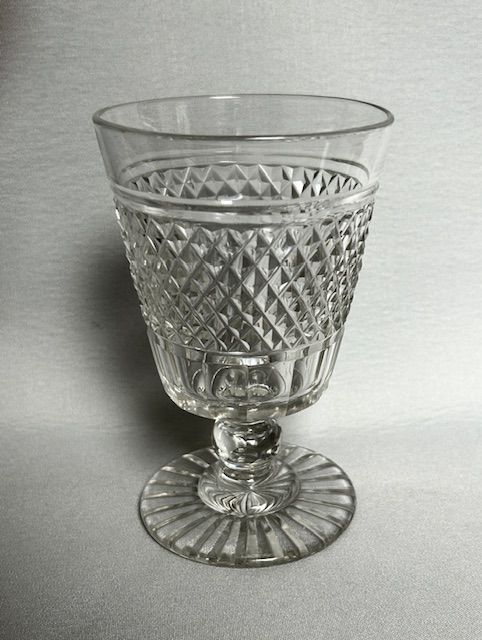
Cutting techniques produced specific decorative motifs such as hobnail patterns and broad panel cuts across the bowl. Bases frequently incorporated square lemon squeezer feet or turned baluster stems to anchor the heavy vessels securely.
Listings feature four distinct historical eras: Georgian, Regency, Victorian, and Edwardian.
Distinctions in craftsmanship and form
Superior examples demonstrate crisp execution in the wheel-cut facets and generous wall thickness in the lead crystal body. Weight and optical clarity distinguish the most robust historical vessels from lighter, later productions.
Proportion and scale dictate desirability, with unusually large or matched pairs commanding greater attention from collectors. The sharpness of the hobnail or panel cutting directly reflects the skill of the original glasscutter.
The Clear Cut Glass Rummer Glossary
- Rummer
- A large, sturdy drinking glass popular in Britain during the eighteenth and nineteenth centuries for ale, wine, and punch. They typically feature a short stem and a capacious bowl.
- Hobnail cut
- A decorative surface pattern consisting of small, raised pyramidal facets resembling the hobnails on traditional boots. It creates intense light refraction on lead crystal.
- Lemon squeezer base
- A square, pressed glass foot with sloping sides that resembles a citrus juicer. This form appeared frequently on Georgian and Regency tableware.
- Baluster stem
- A thick, turned stem shape reminiscent of an architectural baluster. It adds significant weight and stability to larger drinking vessels.
- Flint glass
- An early British term for heavy, high-clarity glass containing lead oxide. It provided the brilliant refractive index required for deep cutting.
Clear Cut Glass Rummer: Frequently Asked Questions
What were rummers used for?
These vessels served as general-purpose drinking glasses for ale, beer, wine, and mixed punches in British households. Their generous capacity made them central to communal toasts and social gatherings.
Over time, their sturdy build allowed them to transition from tavern tables to formal dining rooms. Today, collectors appreciate their dual nature as historical artefacts and functional objects.
How do I date a rummer?
Dating relies on examining the combination of foot shape, stem design, and cutting style recorded across periods like the Georgian and Victorian eras. For instance, square lemon squeezer feet and heavy hobnail cutting often point toward the early nineteenth century.
Later Victorian and Edwardian examples tend to show different proportions and smoother lead crystal surfaces. Comparing the weight and manufacturing traits helps narrow down the decade of production.
Are these glasses safe to use?
Historical lead crystal and flint glass vessels remain structurally stable for occasional use, though modern hand washing is strictly required. Sudden thermal changes should be avoided to prevent stress fractures in the aged material.
Most buyers prefer to use them for display or gentle celebratory toasts rather than daily dining. Treating the heavy glass with care preserves the integrity of the antique material.
Why are some rummers so heavy?
The inclusion of lead oxide in the glass batch increased the overall density and created a brilliant refractive index for deep cutting. This high lead content was intentional to give the vessel a reassuring heft and resonant ring.
Maker workshops utilised this heavy metal composition specifically for large drinking vessels that needed to withstand robust handling. This weight remains a primary indicator of quality among collectors.