
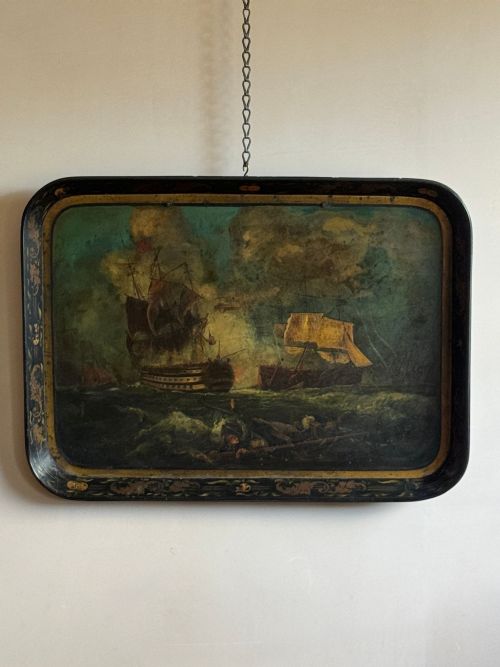

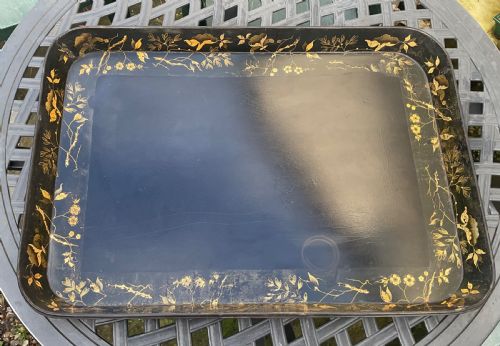


Georgian Lacquer Tray
These georgian lacquer tray pieces are robust serving and display items finished in polished dark varnish, prized for their durable surfaces and hand-painted detail.
Georgian Lacquer Tray
A georgian lacquer tray comprises serving trays, decorative trays, and specialised game boards fashioned during the Georgian and Regency periods. Buyers typically encounter oval, octagonal, or large rectangular formats designed for hospitality or display.
Makers utilised sturdy base materials such as papier-mâché and wood, often adapting these forms later into tray tables or mounting them upon stands. The selection ranges from naive fishing scenes to formal gilded ornamentation reflecting Queen Anne and Regency tastes.
Materials and construction
Makers built these pieces using layers of paper pulp pressed into papier-mâché or solid wood foundations, which provided a rigid base for subsequent finishing. Artisans then applied successive coats of lacquer to seal the surface.
Decoration relied upon gold leaf, hand painting, gilding, and inlaid mother of pearl to create intricate motifs across the black or scarlet ground. These combined techniques produced a hard-wearing finish resistant to moisture during everyday use.
Current listings span the Georgian and Regency periods alongside a nineteenth-century walnut table, incorporating papier-mâché, wood, and tole materials.
Judging quality and execution
The sophistication of the painted detail and the crispness of the gilt decoration separate finer examples from more naive or utilitarian pieces. Greater refinement appears in the precision of the borders and the depth of the lacquer finish.
Structural integrity of the papier-mâché or timber foundation dictates longevity, with superior items maintaining their original form without warping or surface lifting. The presence of specialised formats, such as game boards or fitted stands, also elevates the stature of an individual piece.
Henry Clay
The Georgian Lacquer Tray Glossary
- Papier-mâché
- A composite material made from paper pulp or layers of paper mixed with glue and pressed into shape. This substance provided a lightweight yet remarkably strong foundation for decorative trays.
- Japanned
- European craftsmanship that imitated East Asian lacquerwork by applying dark varnishes and metallic decoration. Artisans baked these coats to achieve a hard, glossy surface.
- Gilding
- The application of gold leaf or gold dust onto a surface to create decorative highlights. This technique illuminated the borders and central motifs of formal serving pieces.
- Pope Joan
- A traditional card game played on a specialised board with compartments for stakes. Such boards formed part of the broader range of functional gaming items produced in the period.
Georgian Lacquer Tray: Frequently Asked Questions
What were these trays used for?
These pieces served practical roles in wealthy households for carrying silver teapots, cups, and decanters between rooms.
Larger versions also functioned as display surfaces or transformed into occasional tables when mounted upon collapsible stands.
How do I care for lacquer?
Keep these items away from direct sunlight and damp environments to protect the fragile surface layers from cracking or fading.
Dust gently with a dry, soft cloth and avoid chemical cleaners or excessive moisture entirely.
Are papier-mâché trays durable?
The layered construction creates a surprisingly tough material that withstands normal handling and moderate weight.
Care must still be taken to avoid heavy impacts that might chip the hard varnish coating.
How do I distinguish Regency styles?
Regency items often feature bolder neoclassical motifs, brighter gilding, and distinct scarlet or black colourways.
Earlier eighteenth-century examples lean towards simpler formats or more naive pictorial scenes.