


Mother of Pearl Inlaid Tray
A mother of pearl inlaid tray brings a dark, lustrous surface into a room, catching candle or window light on iridescent shell.
Mother of Pearl Inlaid Tray
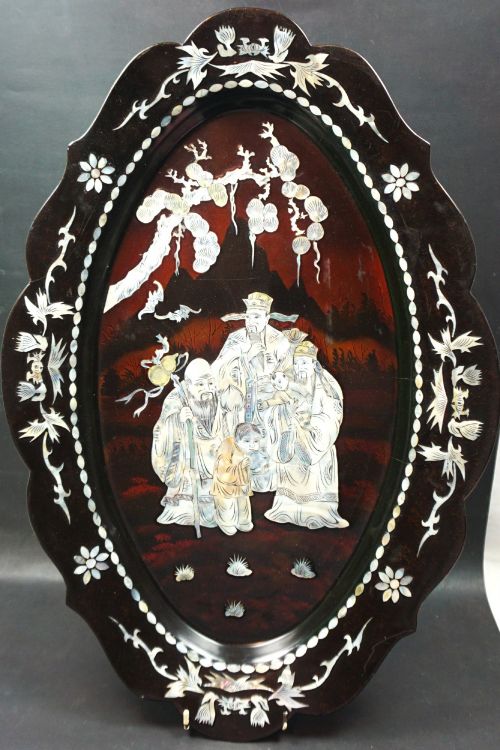
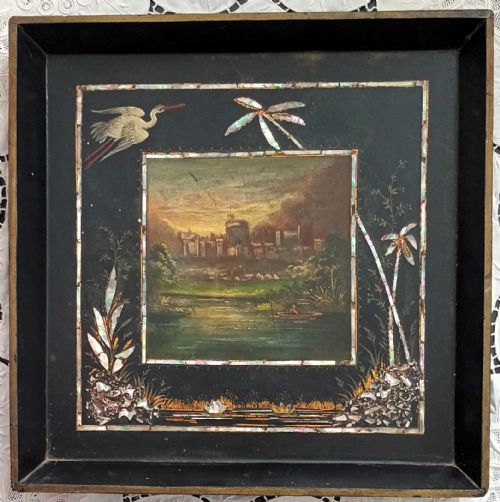
A mother of pearl inlaid tray combines dark lacquered or wooden grounds with shimmering fragments of shell, forming floral, geometric, or figurative motifs. These objects appear in forms ranging from large serving platters and butler's trays to card baskets and desk accessories.
The pieces on this page span the Georgian and Regency eras, the Victorian period with its Chinoiserie and Gothic revivals, and Chinese Qing Dynasty workshops. Papier-mâché and various hardwoods serve as the primary foundations for the intricate shell work.
How they were made
Papier-mâché serves as a core material for many English examples, built up from layers of paper pulp and glue pressed in moulds before receiving layers of dark lacquer. Artisans cut thin flakes of iridescent nacre from shells and set them flush into the wet lacquer or wood surfaces.
Hardwoods such as rosewood and coromandel provide sturdy foundations for Chinese and English desk accessories, where craftsmen recess pieces of mother of pearl into hand-carved channels. Gold leafing and fine brushwork often supplement the shell inlay to define details on leaves, garments, or borders.
The site records nineteenth-century production alongside earlier Georgian items and Chinese Qing Dynasty export pieces.
What varies in quality
The precision of the shell cutting and the depth of the background finish determine the standing of a piece. Finer examples display tightly fitted shell segments with minimal filler, while simpler items rely on thicker adhesive lines around larger, less refined pieces of nacre.
The complexity of the surrounding decoration, such as hand-painted gold leaf or carved wooden borders, separates standard utilitarian wares from substantial display pieces. Material choice also plays a role, with dense exotic timbers and sturdy papier-mâché foundations commanding greater attention.
The Mother of Pearl Inlaid Tray Glossary
- Papier-mâché
- A composite material formed from paper pulp mixed with glue and dark resin, pressed into heavy, durable shapes suitable for smooth lacquering. This base provides a lightweight yet rigid surface for detailed inlay work.
- Coromandel wood
- A dense, dark tropical timber featuring striking contrasting grain patterns, frequently utilised for nineteenth-century desk stands and luxury accessories. It provides a rich natural dark ground for inlaid shell.
- Nacre
- The inner layer of mollusc shells, commonly known as mother of pearl, prized for its iridescent play of colours. Craftsmen slice this material thinly to fit decorative surface designs.
- Chinoiserie
- A European artistic style reflecting Chinese aesthetic motifs, prominent during the Regency and Victorian periods on lacquerware and trays. It often incorporates pavilions, figures, and landscapes rendered in gold leaf and shell.
- Toleware
- Metalware painted and japanned to resemble traditional lacquer items, often produced in sets of graduating sizes. These pieces provide durable domestic surfaces with dark decorative finishes.
Mother of Pearl Inlaid Tray: Frequently Asked Questions
How do I clean a papier-mâché tray?
Dust these surfaces gently with a dry, soft cloth to prevent scratching the delicate lacquer and shell inlay. Avoid using water, alcohol, or chemical polishes, as moisture damages the compressed paper foundation.
Keep the item away from direct sunlight and damp environments to preserve the integrity of the finish and prevent warping of the core material.
Can I use an antique tray for serving food?
Most antique papier-mâché and lacquered trays suit decorative display or dry storage rather than wet service. Moisture and heat from hot dishes can soften old lacquer and weaken the adhesive holding the shell inlay.
For daily practical use, choose robust modern alternatives and reserve these historical pieces for holding letters, cards, or stationary.
How do I distinguish Victorian from Georgian trays?
Georgian trays often favour restrained geometric forms and simple japanned finishes on heavy papier-mâché bases. Victorian pieces frequently embrace ornate revival styles, including Gothic motifs and elaborate Chinoiserie scenes.
The complexity of the mother of pearl work and the presence of stamped maker marks on the underside can also help narrow down the production era.
What caused the craze for mother of pearl in the nineteenth century?
Improved manufacturing techniques and expanded global trade routes made exotic shells and fine lacquer ingredients more accessible to European workshops. Artisans adopted these materials to satisfy a growing domestic appetite for dark, reflective decorative objects.
Industrial advancements in papier-mâché production further allowed factories to mass-produce sturdy blanks ready for skilled hand-inlayers.