




Georgian Knife Boxes
Georgian knife boxes are elegant dining room receptacles designed to hold tableware, bringing period charm and structured order to a sideboard.
Georgian Knife Boxes
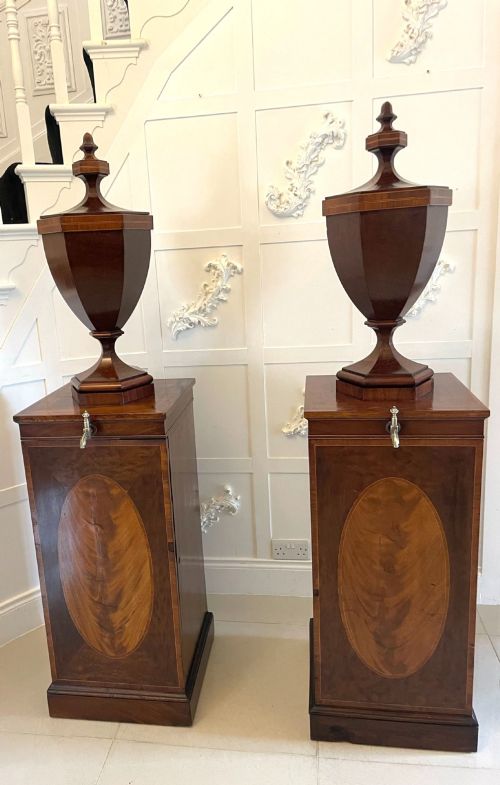
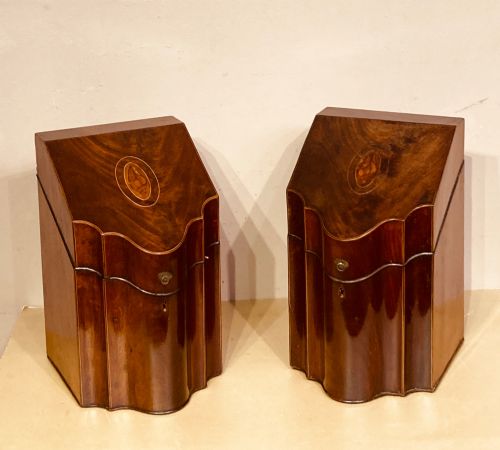
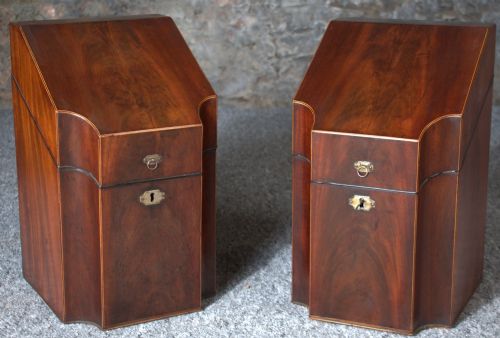
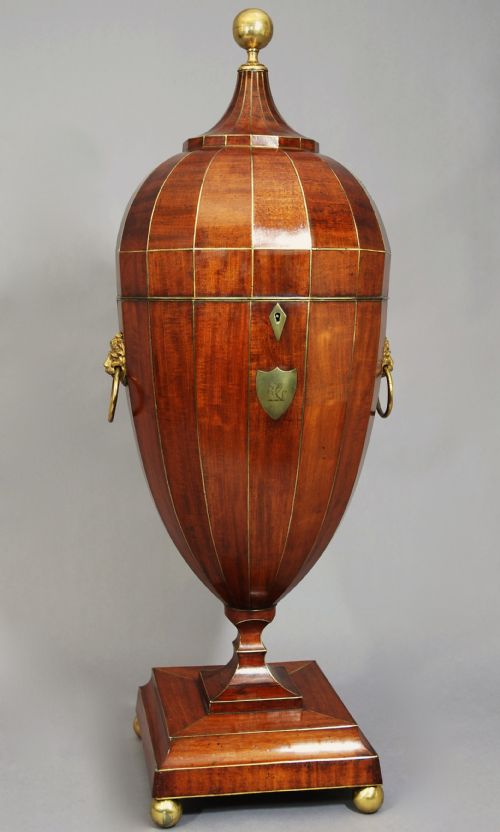
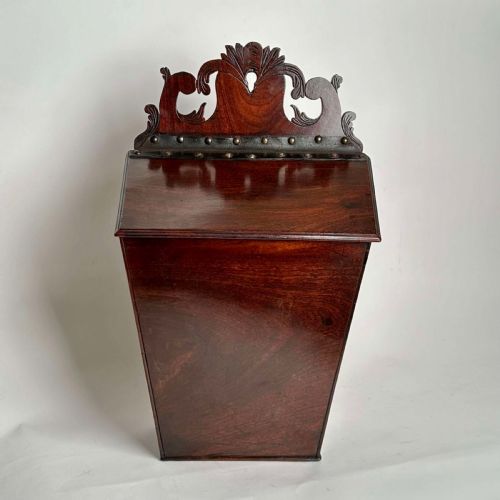
When you search for georgian knife boxes, you encounter sophisticated table furniture created to safeguard steel blades and table silver from moisture in the dining room. These pieces appear as sloping lidded sloping containers, serpentine fronts, or neoclassical urns designed to stand upon sideboards.
The versions most common on this page date from the eighteenth century, spanning the Georgian and George III eras alongside regional vernacular interpretations. Makers fashioned these wooden containers to sit in matching pairs, framing the dining space with balanced symmetry.
Beyond standard cutlery storage, surviving examples take the form of stationery boxes or letter holders following later conversion. Regional pieces from Wales introduce alternative forms including painted pine knife sharpeners, knife trays, and oak cutlery trays.
Materials and construction
Cabinet makers relied primarily on dense mahogany, frequently selected for rich figured grains and enhanced through contrasting boxwood inlay or delicate wood stringing. Selected examples utilise satinwood, walnut, or local pine and oak for regional Welsh country pieces.
Construction techniques incorporated solid timber framing paired with curved serpentine shaping and bow fronts. Brass fittings such as carrying handles, escutcheons, and latches provided functional reinforcement alongside solid silver mounts on select high-status pieces.
Listings feature mahogany, satinwood, walnut, brass, and sterling silver across eighteenth and nineteenth-century periods.
What separates the finest examples
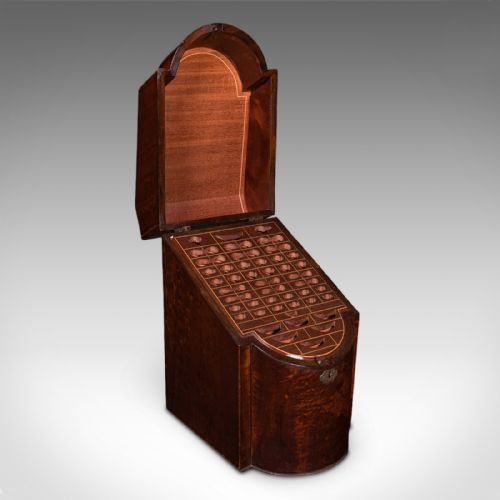
Quality rests upon the selection of timber figure and the precision of the cabinet work, particularly around the complex curves of serpentine fronts and sloping lids. Superior pieces display crisp boxwood inlay and retained internal fittings rather than stripped interiors.
The presence of matching pairs elevates an object significantly above a single survivor, especially when accompanied by original brass hardware or solid silver mounts. Condition of the timber patina and originality of the internal partitions dictate the standing of the piece.
The Georgian Knife Boxes Glossary
- Serpentine front
- A curved furniture front featuring a convex centre flanked by concave wings. This sophisticated shaping requires advanced woodworking skill.
- Cutlery urn
- A classical vase-shaped wooden vessel used on dining pedestals for holding knives and forks. These tall structures mirror neoclassical architecture.
- Stringing
- Thin inlaid lines of contrasting timber used to outline panels and lid edges. It defines the geometric borders on neoclassical furniture.
- Escutcheon
- A protective metal plate surrounding a keyhole. On these boxes, brass or silver escutcheons often double as decorative centrepieces.
Georgian Knife Boxes: Frequently Asked Questions
What were georgian knife boxes used for?
These lidded receptacles kept dining knives and forks organised and protected from tarnishing in the damp air of eighteenth-century dining rooms. Servants placed them on sideboards or dedicated pedestals before dinner commenced.
Over time, many interiors lost their original fitted wooden knife slots. This led to later conversions for holding stationery, letters, or modern collections.
How do I identify a george iii piece?
George III pieces typically date between seventeen sixty and eighteen twenty, showing characteristic proportions and timber choices like rich mahogany. Look for classical symmetry, fine dovetail joints, and restrained inlay work.
Neoclassical influences appear in urn forms and symmetrical satinwood decoration. Maker choices and brass hardware styling also help anchor objects firmly within this reign.
What is the difference between boxes and urns?
Knife boxes present a sloping lid and upright back, designed to stand directly upon a sideboard surface. Cutlery urns adopt a tall, classical vase silhouette that requires a matching pedestal.
Urns represent a grander architectural style favoured in formal Georgian dining rooms. Both forms served the same primary function of storing tableware securely.