
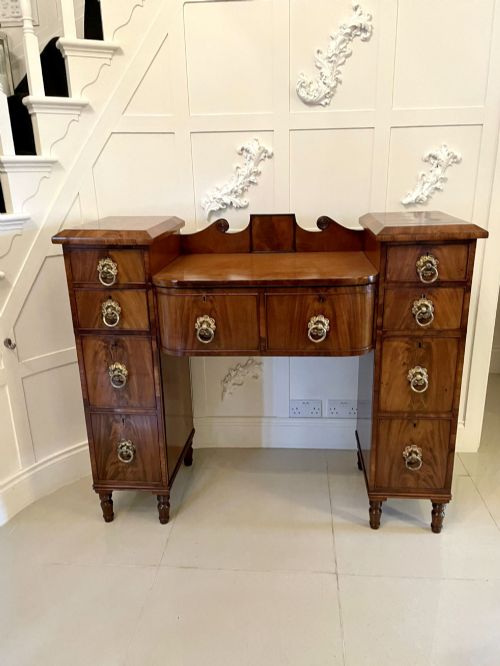
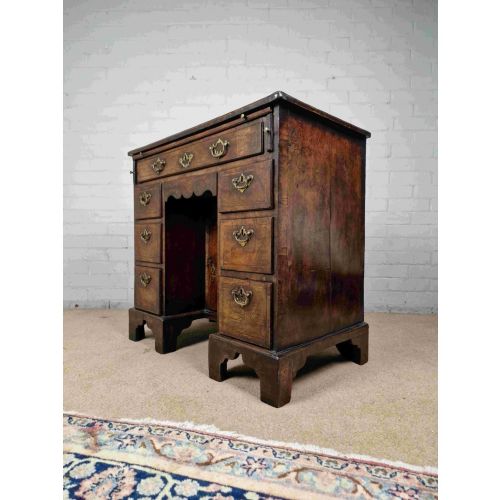
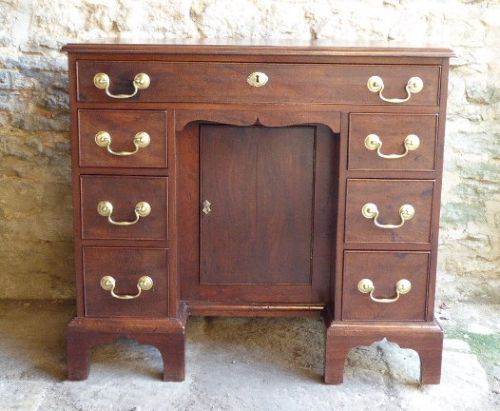
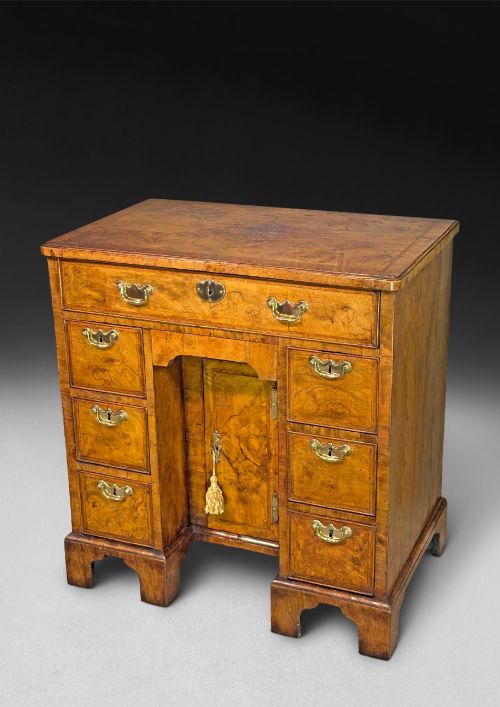
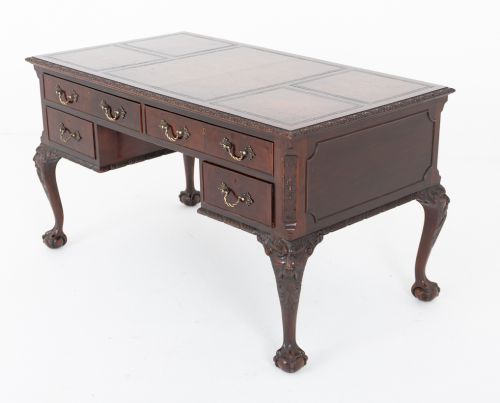
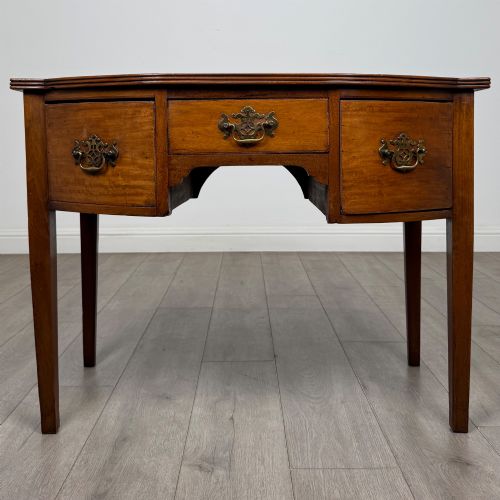
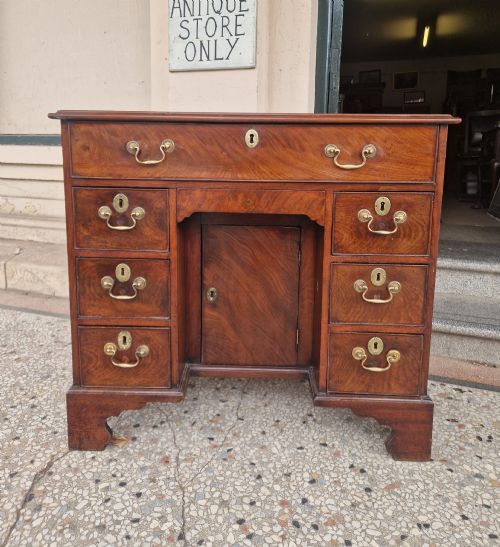
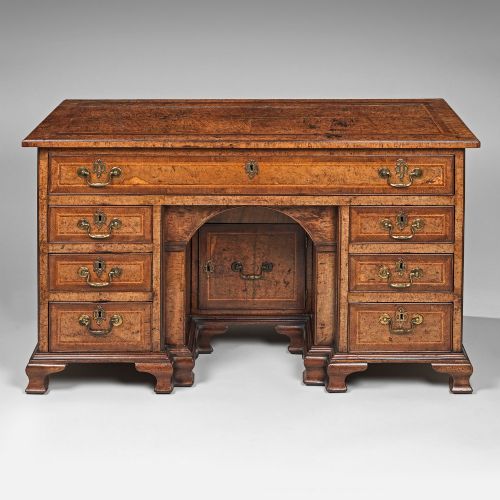
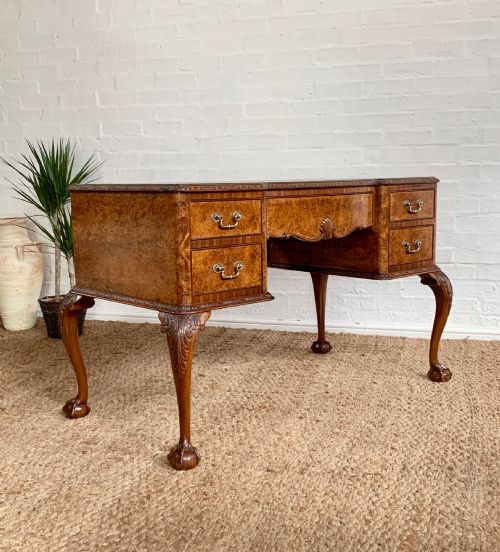

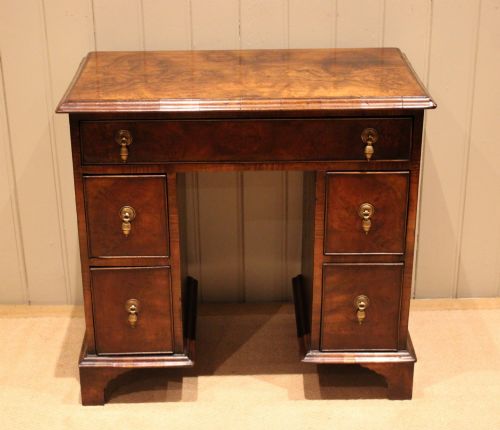
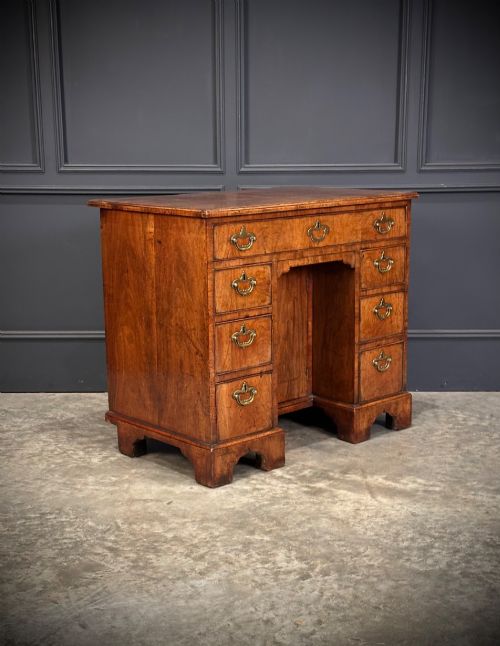
Georgian Kneehole Bureau Desk
A georgian kneehole bureau desk offers compact writing storage with concealed drawers, bringing period timber and proportion to a study.
Georgian Kneehole Bureau Desk
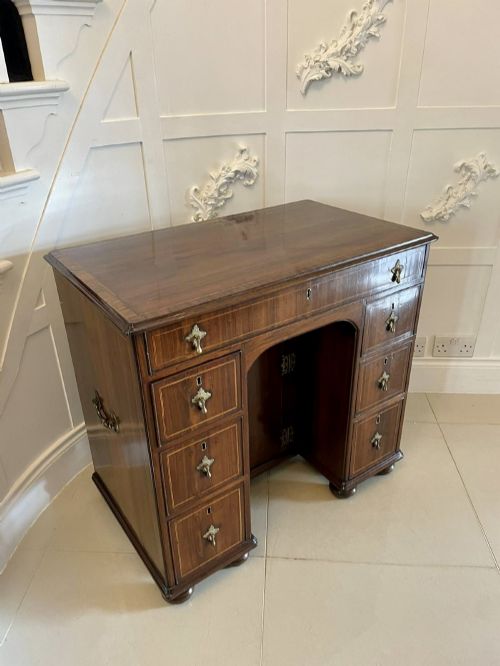
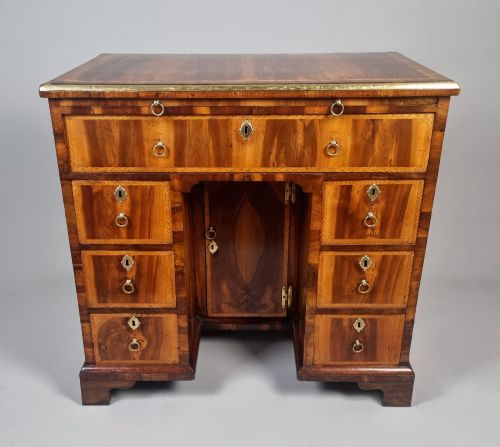
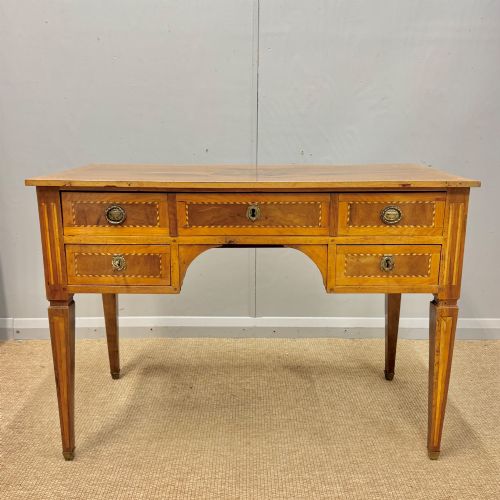
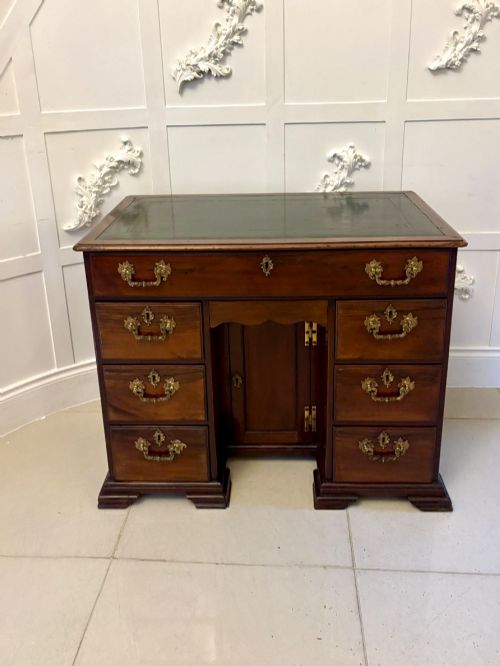
A georgian kneehole bureau desk brings together compact writing compartments and pedestals of drawers flanking a central recess, often fitted with a small cupboard door behind the knee space. These pieces span the eighteenth century and encompass subsequent revivals, appearing in walnut, mahogany, and yew wood.
The versions most commonly met on this page date from the Georgian era, featuring figured veneers or solid timbers with brass drop handles. Alongside authentic eighteenth-century examples, the listings include later revival pieces produced in the nineteenth and early twentieth centuries using similar forms.
Materials and Construction
Cabinet makers utilised dense native and imported timbers, selecting figured walnut, burr walnut, mahogany, and yew wood to display rich grain patterns across flat surfaces and drawer fronts. Carved details and brass hardware complete the primary construction.
Secondary timbers support the carcase and drawer linings, whilst specialised techniques such as crossbanding and veneering create geometric decoration on drawer fronts and top panels.
Listings feature mahogany, walnut, burr walnut, and yew wood alongside brass hardware and green tooled leather writing surfaces.
Judging Quality
Quality rests upon the choice of timber and the handling of veneers, where carefully matched grain patterns elevate a desk above simpler construction. The crispness of internal drawer work and the retention of original brass handles further distinguish finer examples.
Proportion and timber selection dictate the standing of a piece, with figured walnut and burr elm variations showing particular depth of colour. Consistency in the timber grain across the top and drawer fronts marks the work of skilled cabinet makers.
Maples of London
The Georgian Kneehole Bureau Desk Glossary
- Kneehole
- A recessed space beneath the central part of a desk, designed to accommodate the user's legs when seated. It is flanked by pedestals containing multiple small drawers.
- Bureau
- A desk fitted with a sloping writing flap that drops down to reveal a tier of small pigeonholes and concealed drawers. This form provides a secure writing surface.
- Crossbanding
- A narrow strip of veneer applied to the border of a larger panel with the grain running at right angles to the centre. This technique frames the primary timber.
Georgian Kneehole Bureau Desk: Frequently Asked Questions
What is a kneehole desk?
A kneehole desk is a pedestal form featuring two banks of drawers separated by a central recess. This layout provides a compact writing station with substantial storage capacity.
Many examples include a recessed cupboard door at the back of the knee space, concealing a small compartment for papers or valuables.
How do I date a Georgian desk?
Dating relies on timber choices, construction methods, and hardware styles. Eighteenth-century pieces frequently employ solid mahogany or walnut veneers over oak linings.
Revival pieces from the twentieth century often utilise different secondary woods and display standardised internal construction techniques.
Where were these desks used?
These desks served as private writing tables in closets, libraries, and bedrooms of substantial homes. Their compact proportions made them suitable for smaller private chambers.
They functioned both as writing desks and dressing tables, depending on the internal fittings and the presence of a mirror attachment.
How do I care for walnut veneer?
Walnut veneer requires protection from direct sunlight and excessive temperature fluctuations to prevent timber movement and lifting. Regular dusting with a dry cloth maintains the surface sheen.
Occasional application of appropriate wax polish preserves the moisture and depth of figure in historic timber.