
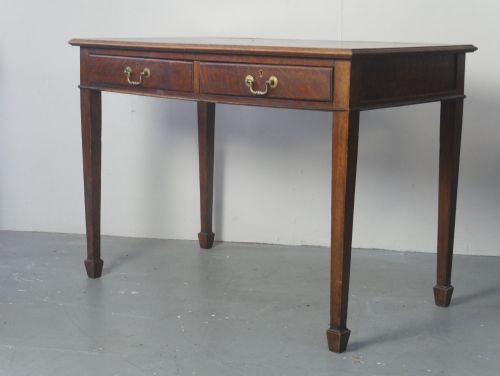
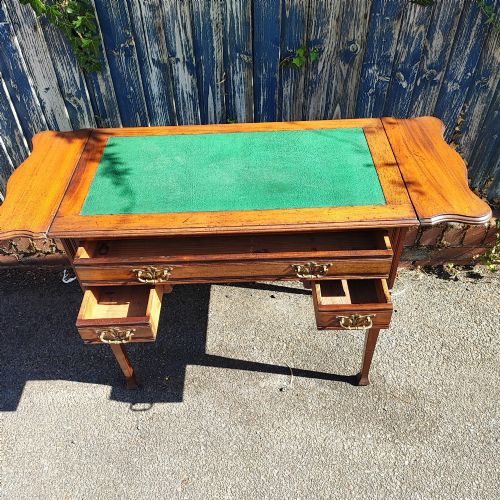
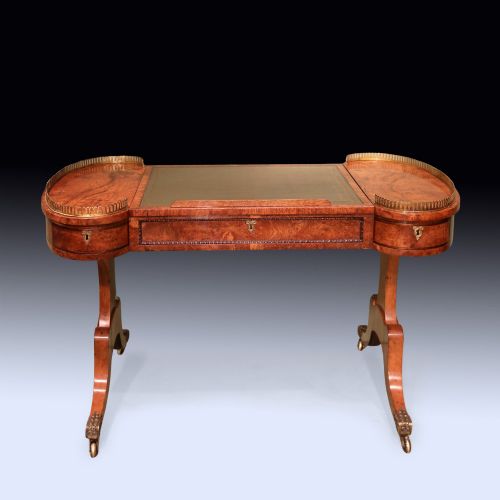


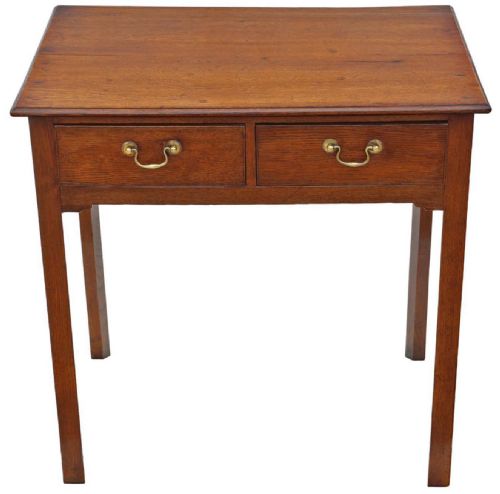


Georgian Oak Study Desk
A georgian oak study desk provides a durable, honest workspace rooted in eighteenth-century craftsmanship.
Georgian Oak Study Desk
A georgian oak study desk encompasses writing tables, clerks desks, bureaux, and kneehole desks originating from the eighteenth century through to later revival periods. Buyers seeking a georgian oak study desk typically encounter robust timber constructions designed for practical administrative or literary tasks.
How they were made
Construction relies primarily on solid oak, frequently paired with secondary woods and enriched by burr oak, pollard oak, or walnut veneers. Metal hardware such as brass handles and iron fittings provide structural reinforcement and functional operation.
Surface treatments include polished finishes that highlight the natural grain of the timber, alongside inserted leather writing panels. Cabinetmakers utilised traditional joinery techniques to build sturdy pedestals, drop-front bureau compartments, and hinged flaps.
Some desks come with their original keys, offering a satisfying click in an antique lock.
What varies in quality
Quality separates through the selection of timber figures, such as the use of highly decorative burr or pollard oak veneers rather than plain planks. Superior examples display refined proportions, precise cabinet joinery, and well-executed secondary details like original keys or fitted interior compartments.
The integrity of the construction, the retention of original brass or iron hardware, and the condition of the polished wood surface dictate the overall standing of each piece. Finer desks demonstrate careful attention to structural stability alongside harmonious grain matching across the exterior surfaces.
The Georgian Oak Study Desk Glossary
- Bureau
- A writing cabinet featuring a sloping hinged flap that opens to reveal a fitted interior of small drawers and pigeonholes. This form provides a concealed workspace that can be closed when not in use.
- Kneehole desk
- A compact desk featuring a central recessed space for the legs, flanked by pedestals of small drawers. This design allows the user to sit comfortably directly in front of the writing surface.
- Davenport desk
- A small compact desk featuring a sloping desktop above a set of side drawers. It typically includes a lift-up compartment for stationery at the top.
- Pollard oak
- Oak timber taken from trees that have been pollarded, resulting in a dense, knotted grain pattern with distinctive circular markings. Cabinetmakers valued this wood for decorative veneers.
- Drop side
- Hinged flaps attached to the sides of a table that can be raised to extend the surface area or lowered when space is restricted.
Georgian Oak Study Desk: Frequently Asked Questions
What is a kneehole desk?
A kneehole desk is a compact form featuring a recessed central space for the sitter, flanked by stacks of drawers on both sides. This layout offers generous storage while maintaining a manageable footprint in a study.
Such desks often include a central cupboard behind the kneehole space, adding further utility for storing papers and writing equipment.
How do I care for an oak desk?
Maintaining an oak desk involves keeping the timber away from direct heat sources and strong sunlight to prevent the wood from drying out or warping. Regular dusting with a soft, dry cloth preserves the polished finish.
Applying a suitable wax polish periodically helps nourish the grain and protects the surface from minor scuffs and daily wear.
Are these desks suitable for daily work?
Many of these desks provide practical writing surfaces and drawer storage that accommodate contemporary laptops and stationery. Their sturdy construction ensures they withstand regular use.
Buyers should check the working height and knee clearance of individual pieces to ensure comfort during extended periods of work.
What is the difference between a bureau and a writing table?
A bureau incorporates a sloping drop-front flap that conceals an interior arrangement of small compartments and pigeonholes for correspondence. When closed, it securely hides the working papers.
A writing table offers an open, flat surface supported by legs or pedestals, sometimes featuring pull-out slides or shallow drawers beneath the top.
How can I identify the period of an oak desk?
Dating an oak desk involves examining the construction methods, drawer linings, and timber characteristics. Eighteenth-century pieces often display hand-cut dovetails and vernacular joinery typical of the period.
Revival pieces from later centuries frequently adopt earlier Georgian proportions and decorative veneers while retaining distinct nineteenth- or twentieth-century structural traits.