
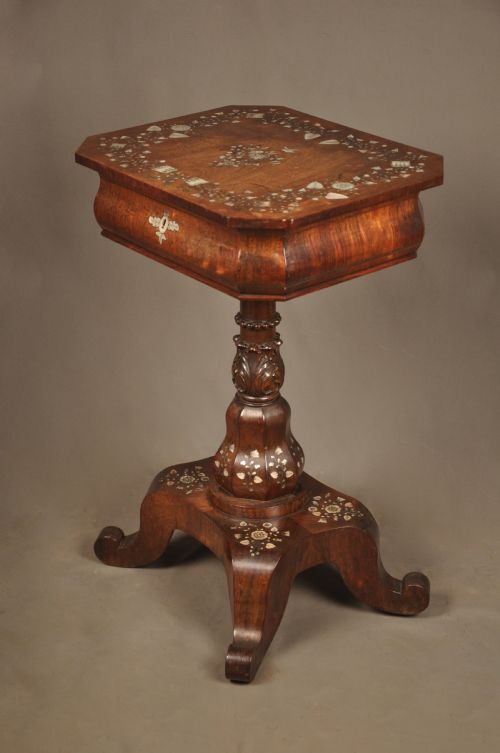


Georgian Inlaid Sewing Box
A georgian inlaid sewing box brings fine cabinet-making and tidy domestic craft together on a table, prized for rich timber and meticulous detail.
Georgian Inlaid Sewing Box
When you search for a georgian inlaid sewing box, you enter a world of compact desktop containers and larger freestanding work tables designed for needlework and small treasures.
You will encounter smaller lidded desktop boxes alongside occasional tables fitted with internal compartments and silk-lined wells for thread and pins.
How they were made
Cabinet-makers constructed these pieces from dense tropical hardwoods like rosewood and mahogany, frequently applying contrasting veneers of satinwood and boxwood.
Complex wood inlay and mother of pearl additions formed geometric patterns or delicate motifs across the lids and drawer fronts.
Interiors often featured clever compartments, bone fittings, and hinged lids lined with pleated silk.
A tiny bone pincushion hides quietly inside the lid.
What varies in quality
The distinction between standard examples and superior work lies in the crispness of the timber selection and the precision of the inlay.
Finer boxes display sophisticated interior arrangements with original bone or ivory fitments rather than simplified partitions.
Gillows of Lancaster
The Georgian Inlaid Sewing Box Glossary
- Work table
- A freestanding piece of furniture incorporating a bag or box beneath the top for sewing materials. These items served both decorative and practical functions in the parlour.
- Inlay
- A technique where pieces of contrasting wood, shell, or bone are inserted into depressions in the base wood to form a pattern. This ornamentation defines the surface decoration of the period.
- Satinwood
- A durable timber with a golden sheen and mottled grain used extensively for veneers and banding. Cabinet-makers favoured it for its bright contrast against darker woods.
- Rosewood
- A heavy, dark timber with distinct dark figuring prized for high-end cabinet work. It forms the primary carcass of many Regency examples.
Georgian Inlaid Sewing Box: Frequently Asked Questions
What fits inside a sewing box?
These containers held needles, thread spools, pins, and small scissors within tailored internal compartments.
Many also accommodated jewellery or writing accessories alongside the primary sewing gear.
Where were they placed?
Smaller lidded boxes sat upon dressing tables, sideboards, or writing desks within the private rooms of the house.
Larger work tables stood beside chairs in drawing rooms where needlework took place.
How do I date a box?
Dating relies on timber choices, leg styles, and the complexity of the internal layout.
Earlier Georgian pieces often feature simpler mahogany forms, while Regency and later examples introduce dramatic rosewood grain and elaborate Tunbridge Ware or mother of pearl.
Are the silk linings original?
Silk interiors suffered heavy wear from daily use and pins, so many surviving pieces have replacement linings.
Original linings remain uncommon and show gentle fading consistent with age.