



Brown Wooden Work Box
A brown wooden work box is a practical container designed for sewing and needlework, prized for its fitted interior compartments and timeless cabinetmaking.
Brown Wooden Work Box
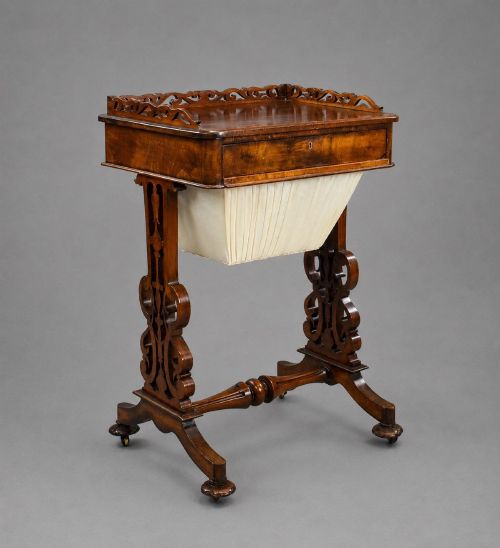
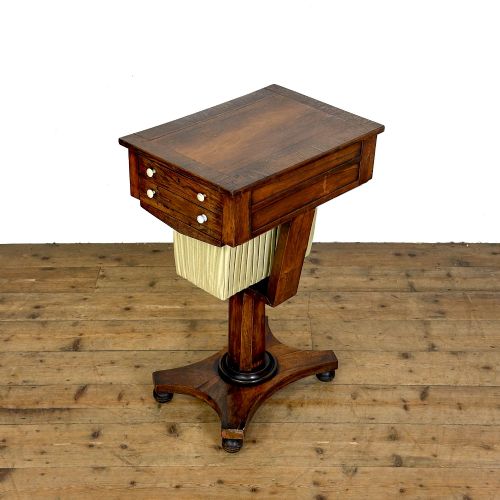
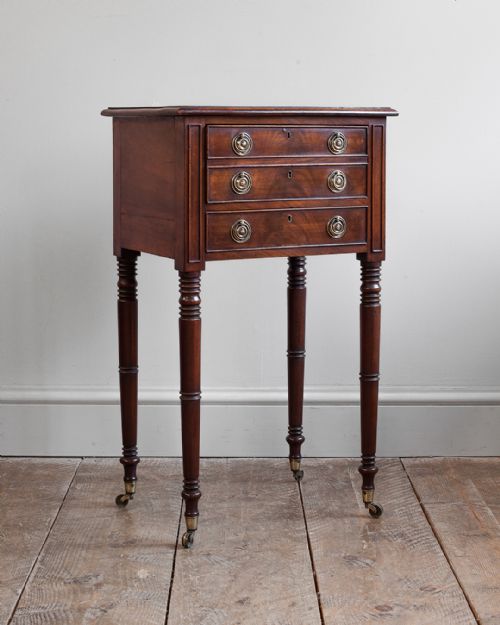
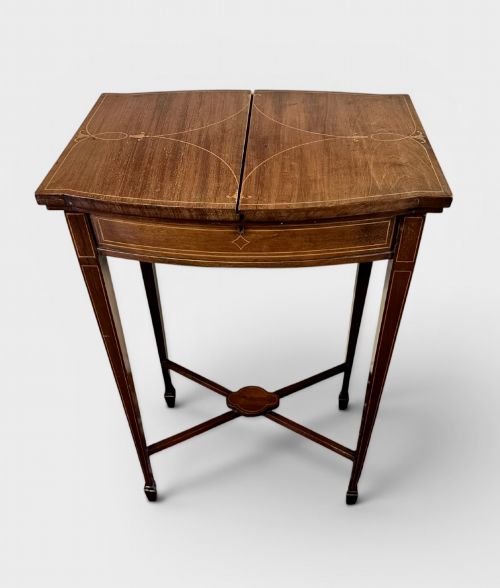
A brown wooden work box encompasses small tabletop caskets, fitted lap chests, and larger freestanding sewing tables intended for domestic utility. These objects originate from several periods, including the Georgian, Regency, and Victorian eras, as well as the Edwardian years.
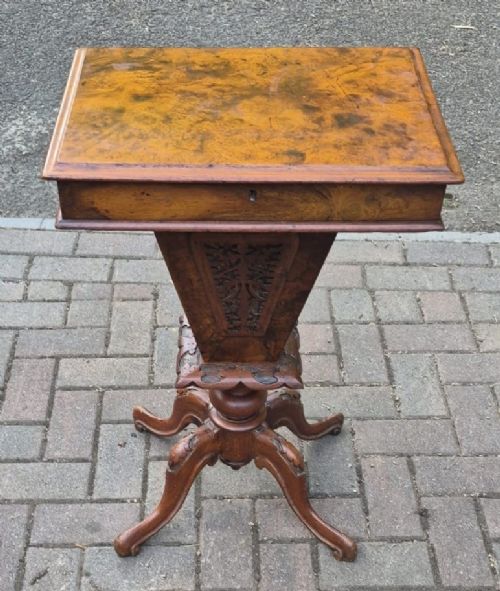
The version most commonly met on this page is the Victorian or 19th-century tabletop box or sewing table constructed from dark timbers. Many retain fitted interiors designed to organise threads, needles, and small tools.
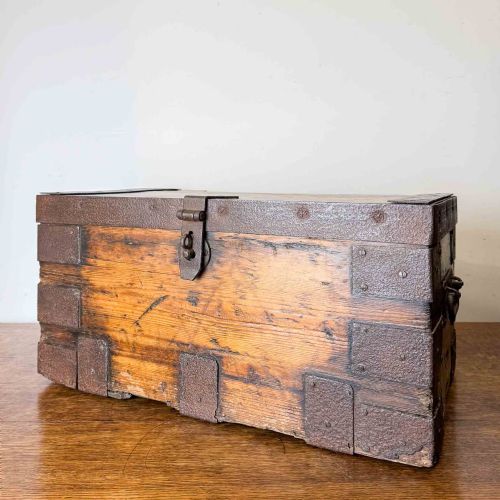
Makers utilised various regional timbers and stylistic influences, ranging from straightforward English country oak and elm to decorative walnut and rosewood veneered pieces. Forms extend from simple utilitarian strongboxes to intricate Tunbridge ware and Sorrento ware caskets.
How they were made
Cabinetmakers constructed these boxes using solid hardwoods and decorative veneers applied to secondary woods. Mahogany, walnut, burr walnut, and rosewood provide the primary dark brown surfaces seen across the selection.
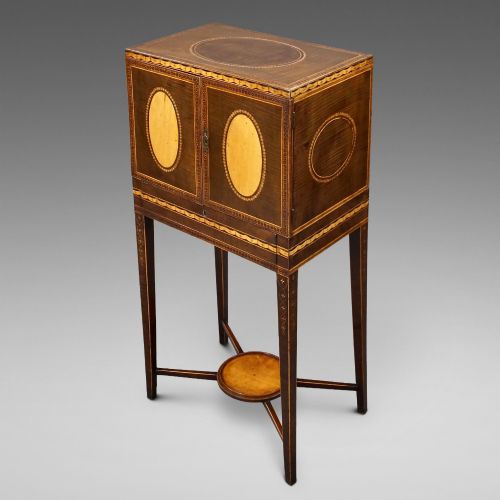
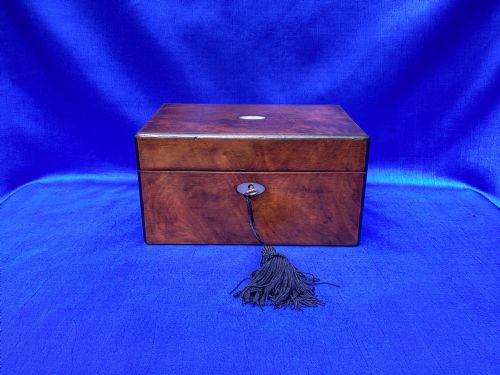
Many examples incorporate contrasting boxwood stringing, mother-of-pearl inlay, or Tunbridge ware mosaics to ornament the exterior lids and sides. Brass mounts, escutcheons, carrying handles, and iron bindings reinforce the structural joints and secure the contents.
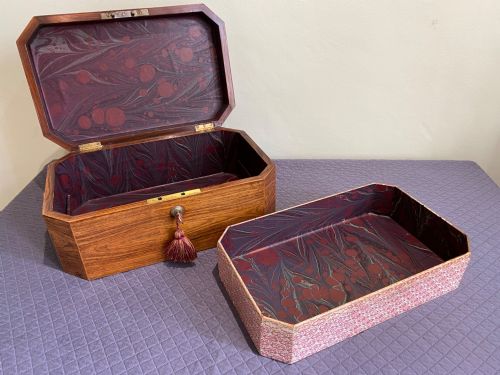
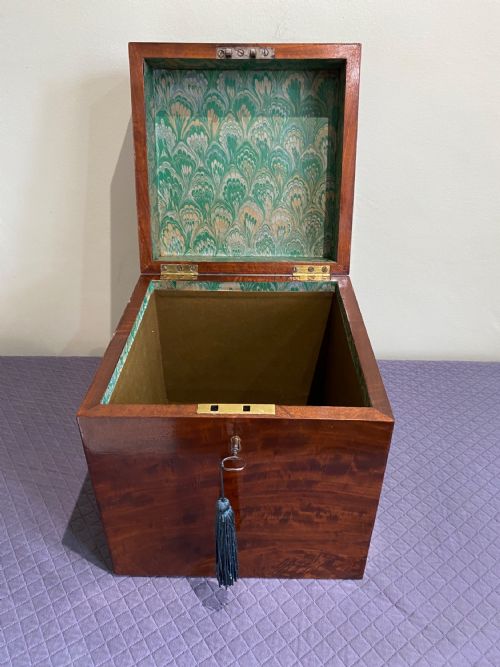
Interiors frequently feature lift-out trays, lidded compartments, and velvet or fabric linings tailored for needlework accessories. Joinery techniques rely on tight corner joints, dovetailed drawer construction, and fitted lids designed to protect delicate items.
Object forms range from tea caddies and strongboxes to fitted writing slopes, lap chests, and freestanding occasional sewing tables.
What varies in quality
The standard of timber selection and veneer matching defines the visual appeal of each box. Finely figured burr walnut, rich rosewood, and carefully matched mahogany show greater care in workshop preparation than plain utility timbers.
The complexity and completeness of the interior fittings separate standard containers from finer examples. Boxes retaining original velvet linings, compartmentalised trays, working locks with keys, and intact decorative inlay command higher regard.
The precision of decorative details, such as inlaid Tunbridge ware or hand-applied penwork, indicates the skill of the original maker. Subtly moulded edges, well-fitted lids, and robust brass hardware demonstrate superior construction standards.
The Brown Wooden Work Box Glossary
- Tunbridge ware
- A form of British woodwork characterised by small mosaic tiles assembled from different coloured woods to form geometric or pictorial scenes. It appears frequently on Victorian boxes.
- Escutcheon
- A flat plate of brass or metal surrounding a keyhole to protect the surrounding wood from wear. These fittings often display subtle engraved decoration.
- Burr walnut
- A prized timber harvested from growth irregularities on walnut trees, yielding swirling grain patterns rich in texture. Cabinetmakers utilised it for high-status veneered surfaces.
- Stringing
- Thin bands of contrasting wood inlay used to outline panels, drawer fronts, and box lids. Boxwood is frequently employed for this decorative border technique.
- Sarcophagus-shaped
- A distinct cabinet form featuring a stepped, domed lid and sloping sides reminiscent of classical monumental tombs. This profile appears on several 19th-century rosewood boxes.
Brown Wooden Work Box: Frequently Asked Questions
What is a work box?
A work box is a portable container designed to hold sewing gear, threads, and small personal items. They range from simple tabletop chests to compartmentalized lap cases.
Historically, these boxes kept domestic needlework organised in the parlor or bedchamber. Many feature lift-out trays and specialised compartments for spools and pins.
How do I date a wooden box?
Dating relies on observing timber choices, construction methods, and hardware styles. Georgian and Regency pieces often feature simpler mahogany grains and brass drop handles, while Victorian boxes frequently display burr walnut and intricate inlay.
Examining internal construction, such as dovetails and secondary woods, helps narrow the period. Regional styles and decorative motifs like Tunbridge ware also point to specific decades.
Are these boxes still functional?
Most antique work boxes remain entirely suitable for storing jewellery, stationery, or sewing supplies. Their internal compartments and fitted trays offer practical organisation for modern desk or dressing table use.
Care should be taken with antique hinges, locks, and delicate veneers. Placing them away from direct heat sources preserves the wood and interior fabric linings.
What is the difference between a box and a sewing table?
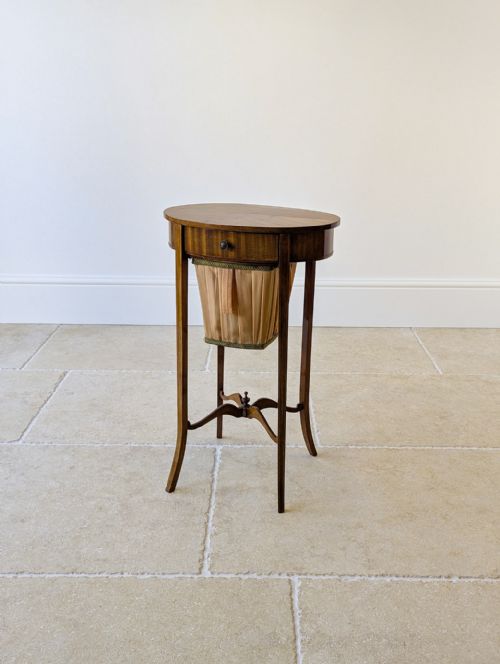
A box is a portable container meant for tabletops or travel, whereas a sewing table is a freestanding piece of furniture with legs. Both serve the same primary purpose of housing needlework.
Tables often incorporate fabric work bags suspended beneath the drawer to catch scraps and wool. Tabletop boxes focus on compartmentalized trays and portable security with a lock and key.