



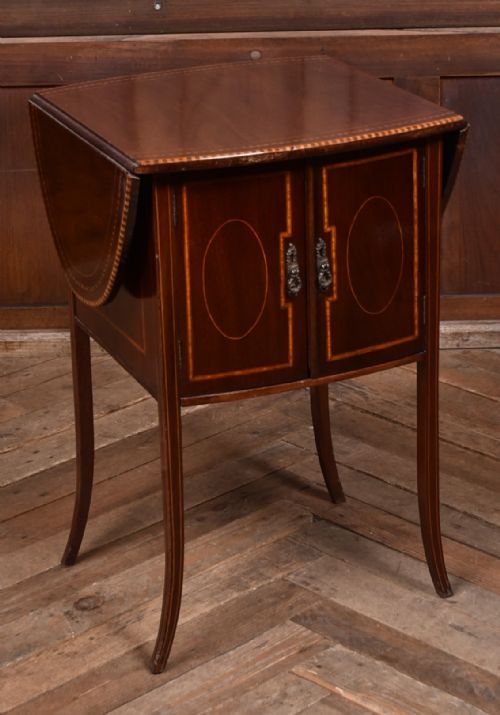


Inlaid Mahogany Work Table
When you search for an inlaid mahogany work table, you enter a world of refined 18th, 19th, and early 20th century craftsmanship designed for needlework and correspondence.
Inlaid Mahogany Work Table
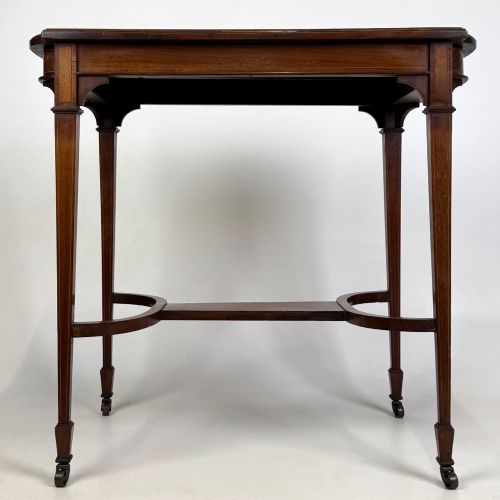
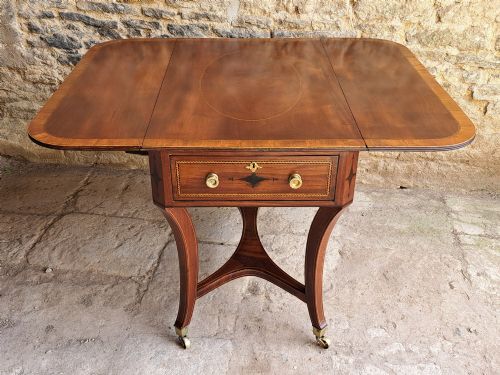
An inlaid mahogany work table is a multifunctional antique piece designed primarily for domestic sewing, needlework, and writing tasks. These versatile tables span the Georgian, Regency, Victorian, and Edwardian periods, appearing in forms such as Pembroke, drop-leaf, sewing, and writing tables.
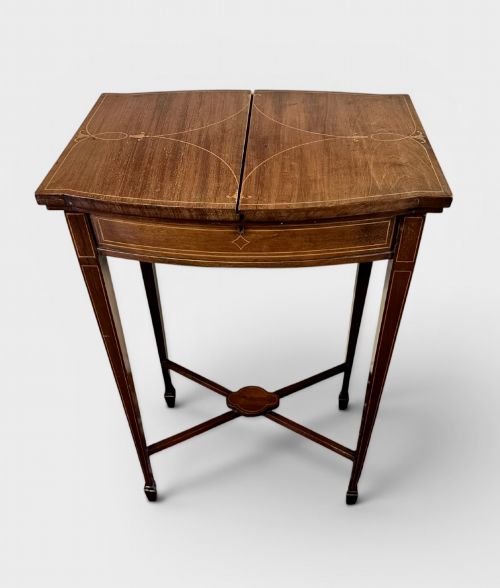
You are most likely to encounter Edwardian and Regency examples on this page, often featuring delicate satinwood or boxwood inlay. Many incorporate specialised internal compartments, fitted drawers, or silk hanging baskets beneath the top.
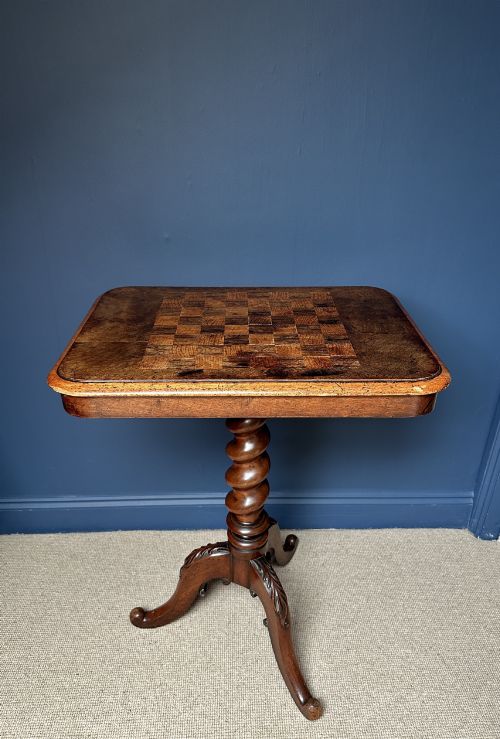
The selection ranges from simple occasional tables to complex combination pieces that double as chess boards or writing desks. Their compact proportions make them adaptable for modern rooms while retaining their original utilitarian charm.
How they were made
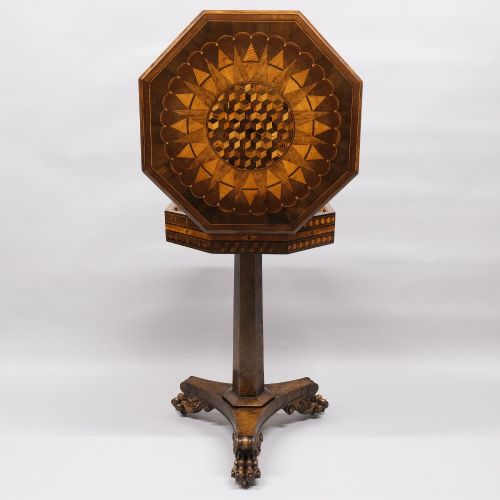
Cabinet makers built these tables using solid and veneered mahogany, enhanced with contrasting stringing and banding in satinwood, boxwood, and ebony. Timber selection prioritised rich grain patterns, which provided a dark canvas for intricate marquetry and inlay work.
Structural joints typically employed traditional dovetailing for drawers and mortise-and-tenon framing for stability. Secondary woods such as pine or oak frequently form the interior linings of the small compartments and hidden wells.
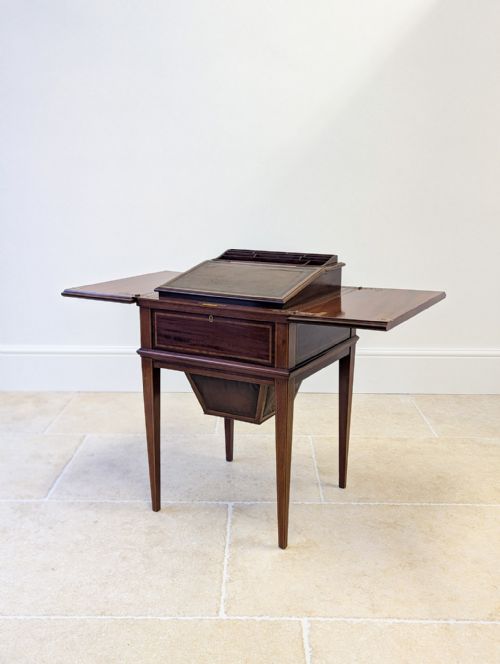
Makers integrated functional mechanics like drop leaves, sliding writing surfaces, and pivoting silk bags. Brass hardware, including castors and small knobs, frequently completed the assembly of Regency and Georgian pieces.
Listings feature mahogany work tables spanning the Georgian, Regency, Victorian, and Edwardian eras, incorporating satinwood, boxwood, and brass materials.
What varies in quality
The precision and complexity of the inlay separate standard production from superior pieces. Crisp, tightly fitted boxwood and satinwood banding reflect higher workshop standards than painted substitutes or loose veneers.
Internal complexity dictates the tier of the piece; tables featuring multiple secret rising compartments, fitted sewing trays, and well-designed mechanical drawers demand greater joinery skill. The condition and originality of these internal fittings influence the overall standard.
Proportion and wood selection also play a decisive role. Finer examples display carefully matched mahogany flame veneers and balanced, slender dimensions rather than heavy, clumsy framing.
Ralph Turnbull·Gillows·Wilkinson Leicester·Barrett London
The Inlaid Mahogany Work Table Glossary
- Inlay
- A technique where pieces of contrasting wood, such as satinwood or boxwood, are inserted into recessed cavities in the mahogany surface to create decorative patterns.
- Pembroke table
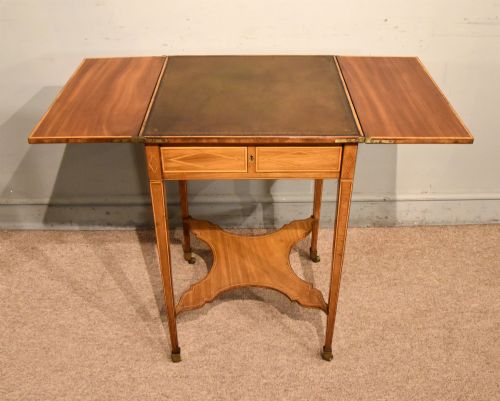
- A small rectangular table featuring two hinged drop leaves on opposing sides, often equipped with a single drawer.
- Marquetry
- Elaborate veneer work arranged in pictorial or geometric patterns across the top or panels of the table.
- Stringing
- Thin lines of contrasting timber inlaid into channels in the mahogany to outline the edges of tabletops and drawer fronts.
- Drop-leaf
- A hinged flap on a table that can be raised to extend the surface area or lowered when space is restricted.
Inlaid Mahogany Work Table: Frequently Asked Questions
What is a work table used for?
A work table served historical domestic purposes centred on textiles, needlework, and correspondence. Ladies utilised the internal wells and fitted compartments to organise threads, needles, and letters while sitting in the parlour.
Today, these tables function well as bedside units, lamp tables, or compact desks. Their historical compartments provide convenient storage for modern household items without occupying excess floor space.
How do I tell a Georgian work table from an Edwardian one?
Georgian and Regency work tables, dating from the late 18th and early 19th centuries, typically display heavier architectural proportions, dense mahogany timbers, and restrained brass or ebony stringing. Their construction relies on hand-cut joinery and heavy pedestals or tapering legs.
Edwardian pieces, dating around 1900, often feature lighter frames, delicate satinwood or shell marquetry, and slender tapered legs. They frequently incorporate Edwardian revival styles that lean towards brighter mahogany finishes and silk drop-bags.
Can I use an antique work table as a desk?
Many work tables incorporate writing surfaces or pull-out leather-lined slides designed specifically for correspondence. While their kneehole clearance can be narrower than a standard modern desk, they accommodate laptop use or ledger writing.
When using one for daily writing, ensure the height matches your seating and protect the antique polished mahogany top with a suitable blotter.
What is a silk basket on a work table?
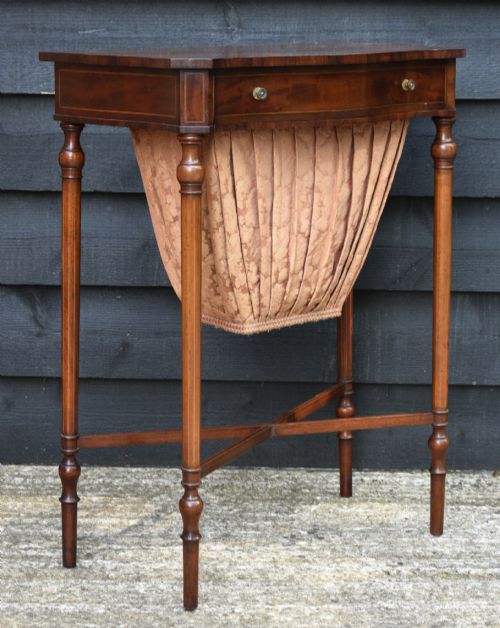
The silk basket is a fabric pouch suspended beneath the drawer or main body of a sewing table. Historically, it held spools of thread, scraps of fabric, and unfinished needlework projects.
Most surviving tables feature replacement fabric lining, as the original silk perished over the centuries. Recreating these bags using traditional gathered textiles is a common conservation practice.