

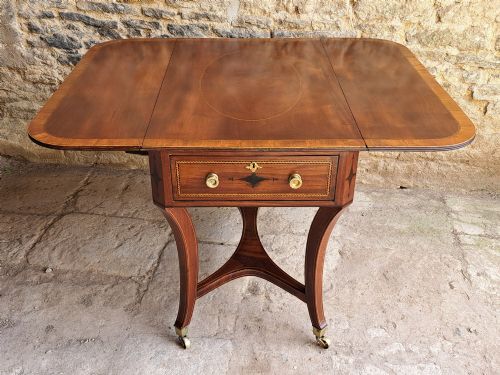
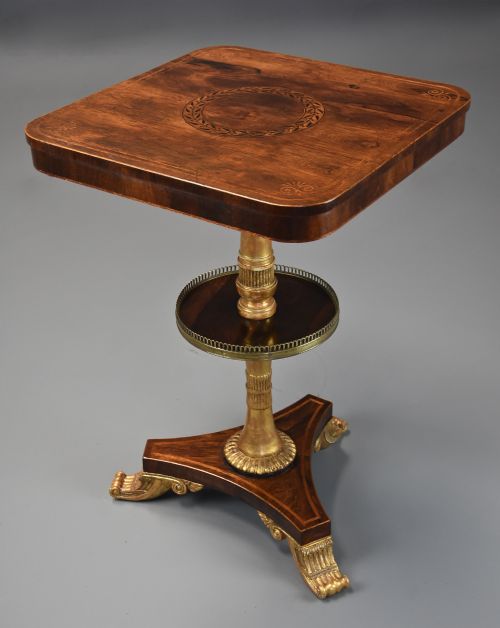


Regency Inlaid Work Table
A regency inlaid work table combines domestic utility with refined decorative cabinet-making, offering a versatile surface and fitted storage for sewing or reading.
Regency Inlaid Work Table
A regency inlaid work table is a multifunctional antique primarily designed for needlework, writing, and light leisure pursuits such as games. When searching this phrase, the pieces encountered span the broader Regency period through to later nineteenth-century revivals.
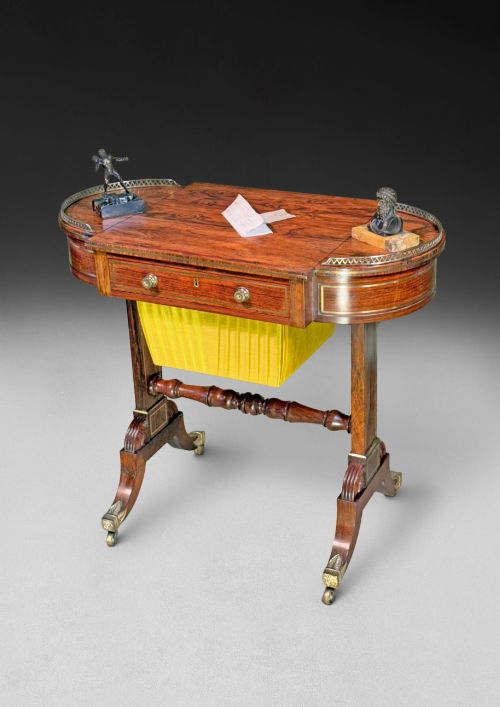
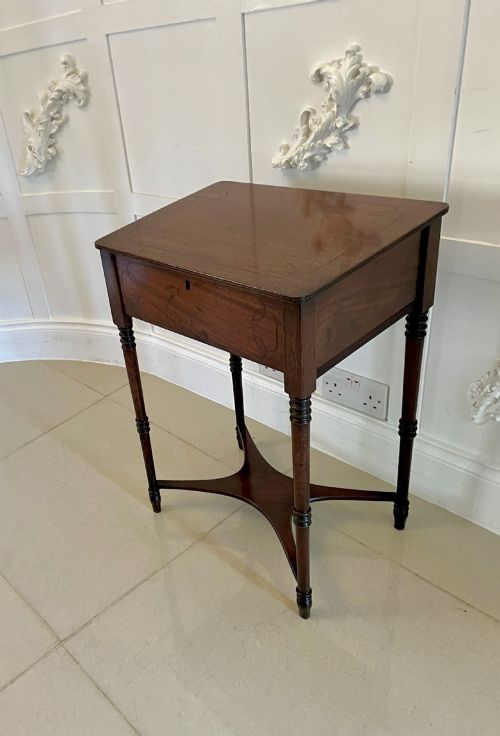
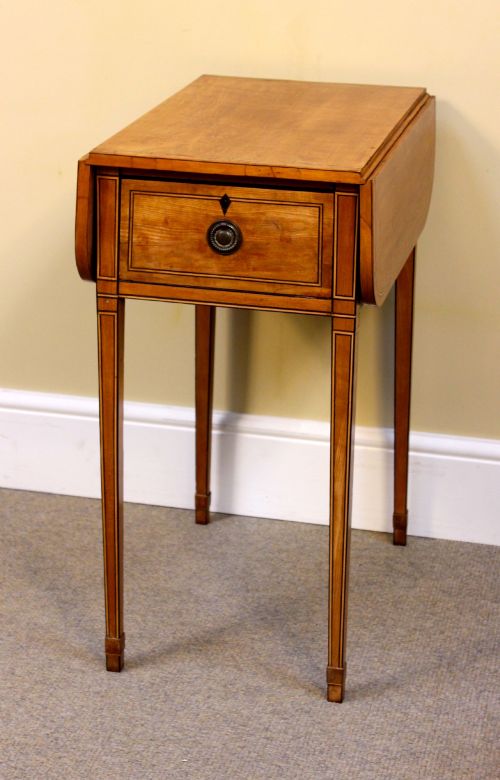
The dominant forms are compact occasional pieces constructed with drop flaps, single drawers, or suspended fabric bags for yarn and textiles. Mahogany and rosewood serve as the principal timbers, frequently enhanced with contrasting stringing and geometric details.
Many examples double as chess or backgammon boards, reflecting the era's taste for convertible furniture. They appear alongside related side, lamp, and pembroke forms that share similar proportions and inlaid surface decoration.
Materials and construction methods
Cabinet-makers built these tables using dense tropical hardwoods like mahogany and rosewood, often selected for rich grain patterns and flame figures. Satinwood, birch, and burr elm supplied lighter contrast for borders and central panels.
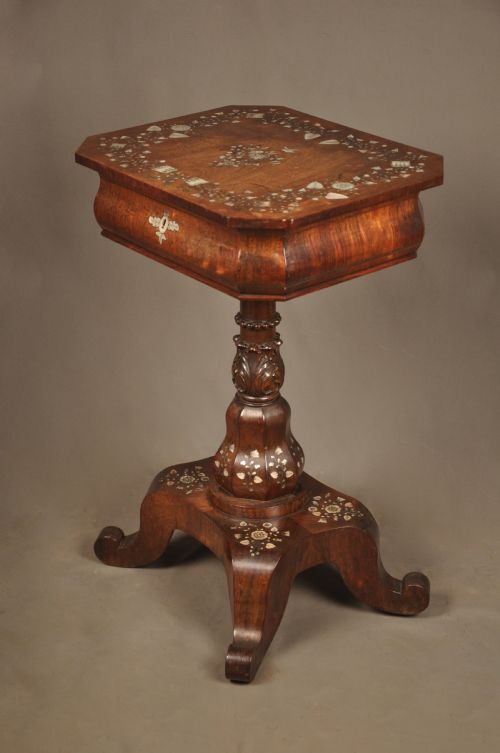
Inlay work relied on contrasting strips of ebony, boxwood, and pale satinwood fitted into precision-cut channels within the primary timber. Brass stringing and cast mounts were also utilised to articulate the structural lines and table edges.
Regency Inlaid Work Table Retail Price Guide 2026
Typical asking prices for regency inlaid work table among the pieces listed under this phrase on Sellingantiques today, from the lower quarter to the upper quarter. They describe what is for sale here now, not the wider market.
Silk sewing bags suspended beneath these tables rarely survive intact, making surviving fabric linings delightful time capsules of Regency needlework habits.
Distinguishing quality in cabinet-making
Quality rests upon the precision of the timber selection and the integration of the inlay. Finer examples display crisp, unbroken lines of contrasting wood or brass without filler, showing meticulous hand-cutting by the artisan.
The sophistication of the internal fittings defines the upper tier of these pieces. Well-organised writing slides, original compartmented trays, and smoothly operating drawers distinguish bespoke workshop output from standard production.
Gillows of Lancaster·George Bullock·John MaClean·Wilkinson Leicester·Barrett London
The Regency Inlaid Work Table Glossary
- Work table
- A small domestic table fitted with drawers or a fabric bag for holding sewing materials and needlework.
- Inlay
- A decorative technique where contrasting woods or metals are embedded flush into the surface of a primary timber.
- Drop flap
- A hinged leaf on the side of a table that can be raised to extend the surface area.
- Stringing
- Thin, linear strips of contrasting wood or brass used to outline panels, drawers, and table tops.
- Pembroke
- A table design featuring two hinged drop leaves supported by folding brackets or wooden rule joints.
Regency Inlaid Work Table: Frequently Asked Questions
What was a regency inlaid work table used for?
These tables served primarily as portable desks and stations for ladies' needlework, embroidery, and small crafts. Their fitted interiors kept threads, needles, and writing implements organised near the hearth or window.
Many examples also incorporated removable boards or reversible tops for card games and chess. This dual purpose made them central fixtures in Regency drawing rooms and parlours.
How do I spot a genuine period piece?
Examine the timber shrinkage, secondary woods used inside the drawers, and the hand-cut dovetails joining the drawer sides. Period pieces display natural wear and patination appropriate to early nineteenth-century cabinet-making.
The quality of the inlay should show tight joints rather than modern synthetic adhesives or machine-routed precision. Structural elements beneath the top should align with traditional workshop practices of the era.
Where should I place one in a modern home?
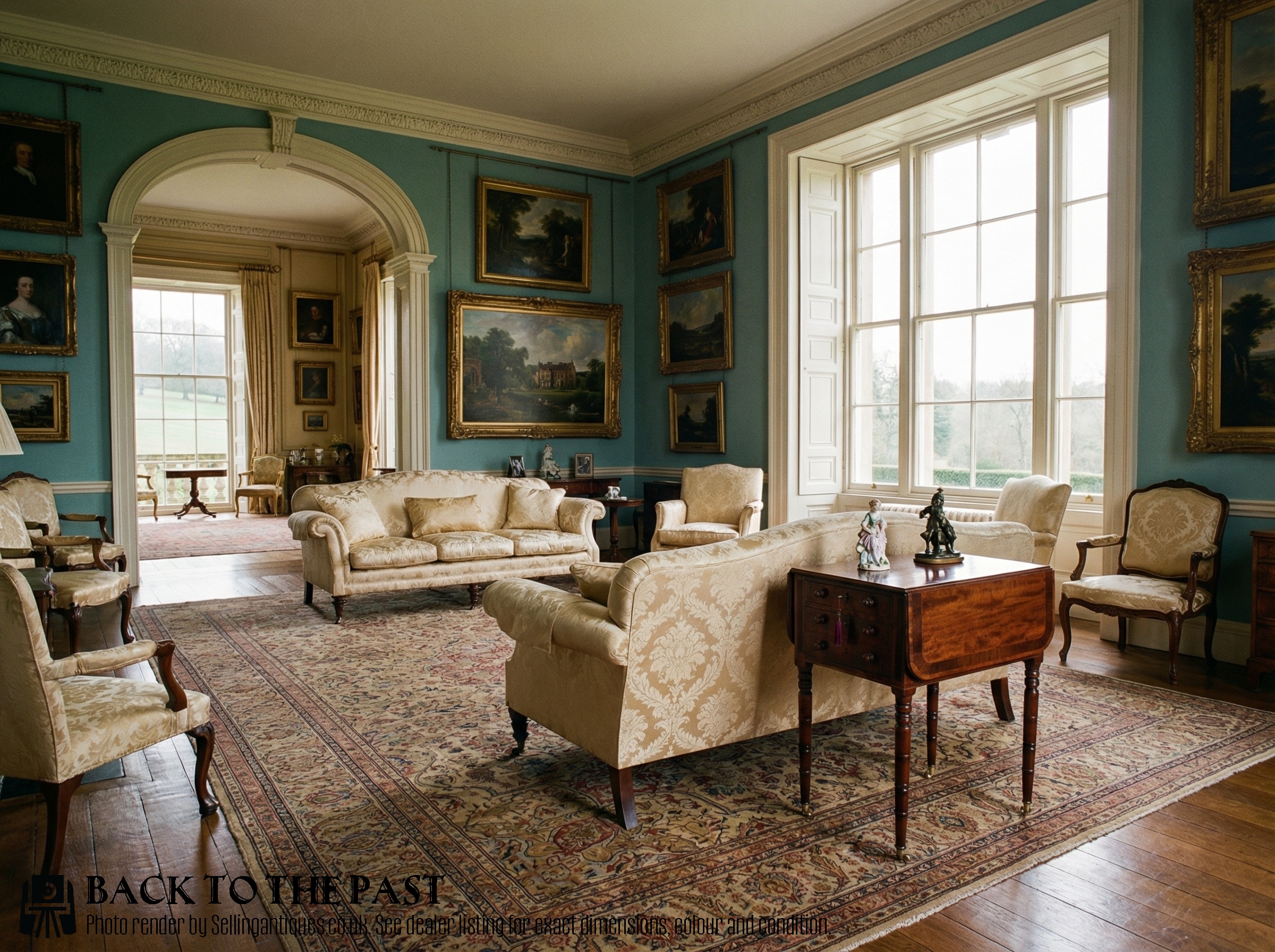
Their compact dimensions make them ideal as bedside surfaces, lamp tables, or occasional pieces beside a sofa. The finished backs on freestanding examples allow them to sit centrally within a room rather than strictly against a wall.
The enclosed storage within drawers and bag frames proves useful for tidying small contemporary items while maintaining a decorative focal point.