




Regency Mahogany Sewing Table
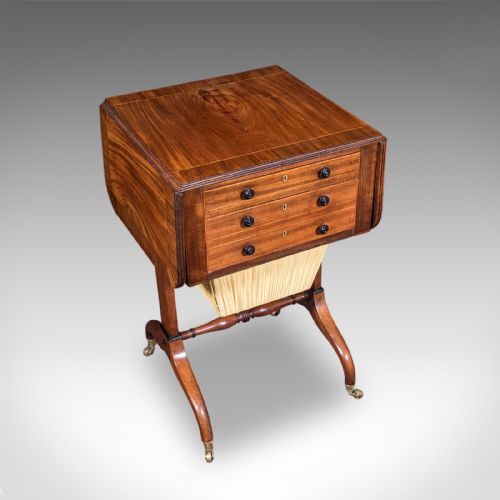
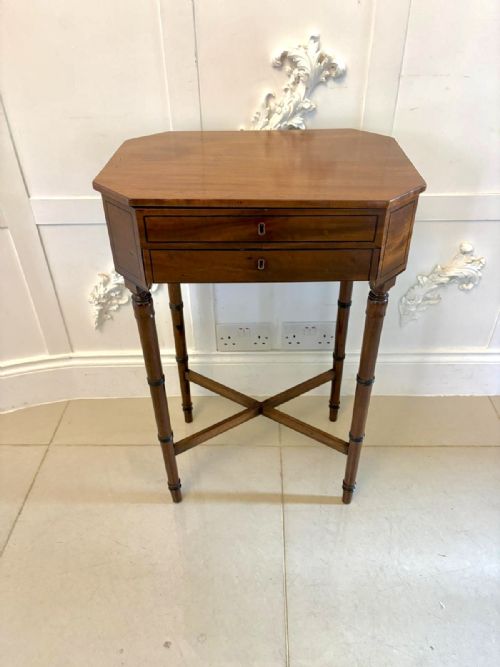
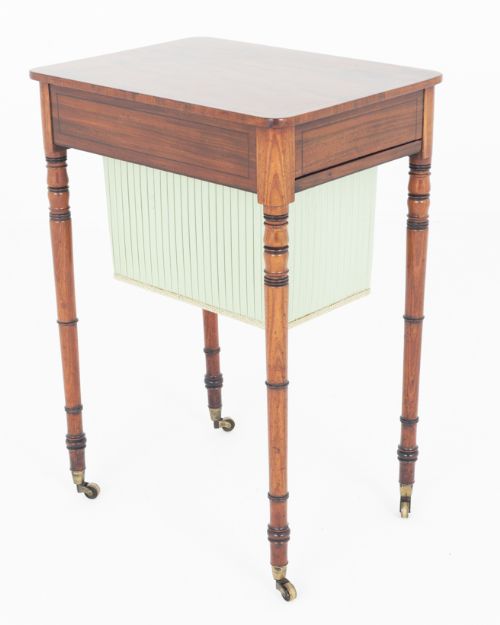
A regency mahogany sewing table combines domestic utility with refined cabinet-making, offering a compact workspace designed for needlework and small crafts.
Regency Mahogany Sewing Table
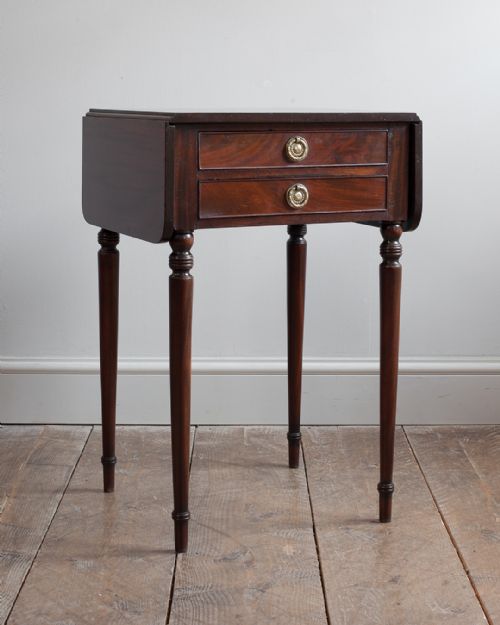
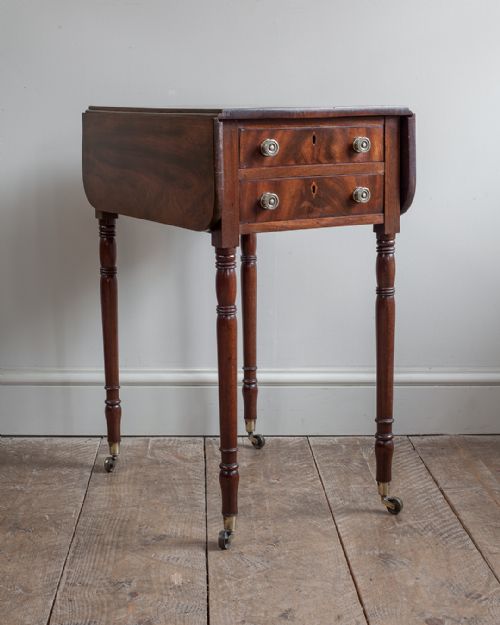
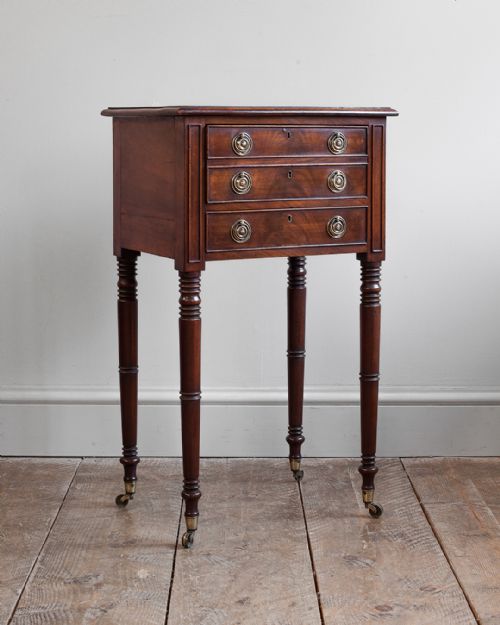
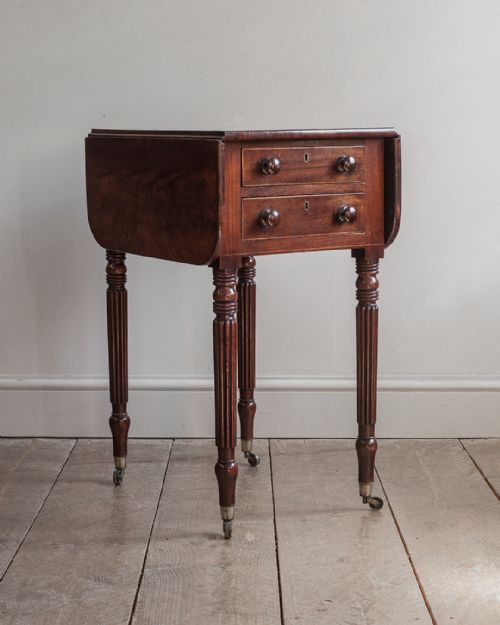
When searching for a regency mahogany sewing table, buyers encounter functional pieces intended for domestic needlework, writing, and occasional use. These items appear primarily under forms such as work tables, drop-leaf pembroke tables, and compact side tables.
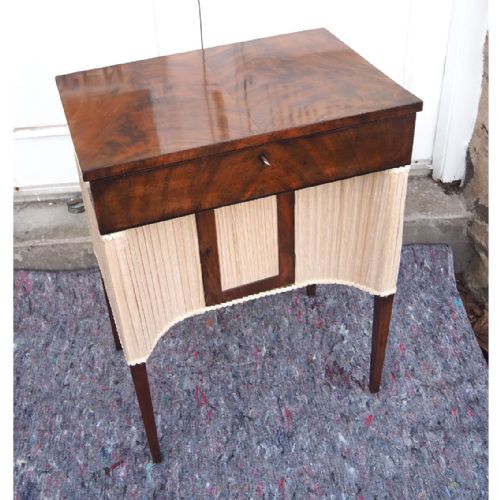
The majority of pieces date from the Regency and William IV periods, alongside examples spanning the broader nineteenth century and Georgian eras. They combine storage drawers with hanging fabric bags for textiles.
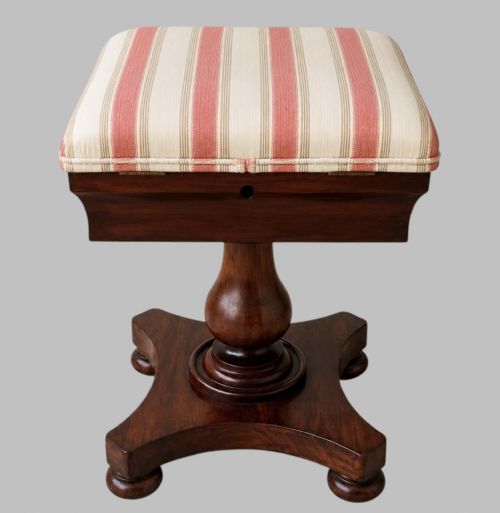
Many incorporate specialised compartments, fitted writing drawers, and removable sewing baskets designed to organise threads, needles, and small personal items.
How They Were Made
Cabinet-makers relied on solid mahogany and flame mahogany veneers to construct the main bodies, supported by brass mounts, castors, and turned pedestals. Timber selection brought out deep grain patterns through polishing.
Detailing often included ebony, boxwood, and contrasting string inlay around drawer fronts and tabletops. Silk and other fabrics lined the hanging work bags suspended beneath the main framework.
Regency Mahogany Sewing Table Retail Price Guide 2026
Typical asking prices for regency mahogany sewing table among the pieces listed under this phrase on Sellingantiques today, from the lower quarter to the upper quarter. They describe what is for sale here now, not the wider market.
Many surviving work tables retain tiny original bone or ivory pulls designed to coax open stubborn thread compartments.
What Varies in Quality
Quality depends upon the choice of timber and the precision of the cabinet-work. Finely figured flame mahogany veneer and subtle boxwood or ebony stringing distinguish superior examples.
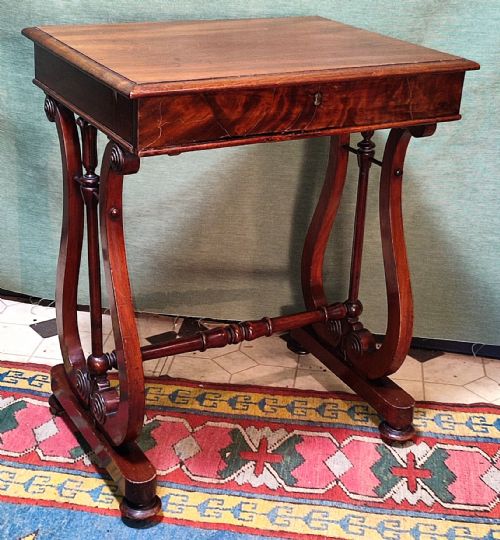
Internal organisation reveals the maker's hand through fitted trays, bone or ivory pulls, and smoothly running drawers. Structural stability, especially in lyre-ended or pedestal supports, marks the distinction between standard and exceptional pieces.
Gillows
The Regency Mahogany Sewing Table Glossary
- Flame mahogany
- A veneer cut from timber fork joints that produces a distinctive flame-like ripple pattern across the surface. This timber was favoured for top-tier Regency cabinet work.
- Pembroke table
- A small table with hinged drop flaps on opposing sides supported by folding brackets. They served varied roles as breakfast, side, or sewing tables.
- Lyre-ended
- A form of table support shaped like an ancient Greek lyre instrument. It appeared frequently on the pedestals of Regency work tables.
- Stringing
- Thin inlaid lines of contrasting wood such as boxwood or ebony set flush into the surface of the mahogany. This technique created delicate geometric borders.
- Work table
- A multi-functional small table equipped with drawers and a suspended fabric bag for needlework. They became essential items in nineteenth-century domestic interiors.
Regency Mahogany Sewing Table: Frequently Asked Questions
What is a regency mahogany sewing table?
A regency mahogany sewing table is a compact nineteenth-century piece of furniture designed for needlework, featuring fitted drawers and a hanging fabric bag.
Cabinet-makers constructed them from mahogany and flame mahogany, often incorporating drop leaves and specialised compartments for sewing tools.
How were sewing tables used in period homes?
These tables served domestic spaces as mobile workstations for ladies undertaking embroidery, knitting, and correspondence.
Drawers often contained divided trays for threads and writing implements, while the hanging silk or fabric bag held unworked textiles.
How do you distinguish Regency from William IV pieces?
Regency pieces typically display leaner proportions, refined string inlay, and elegant pedestal or lyre-ended supports. They date from the early decades of the nineteenth century.
William IV examples, emerging towards the middle of the century, often feature heavier scrolling woodwork, bolder mahogany grain, and sturdier turned legs.
Where should you place a sewing table in a room?
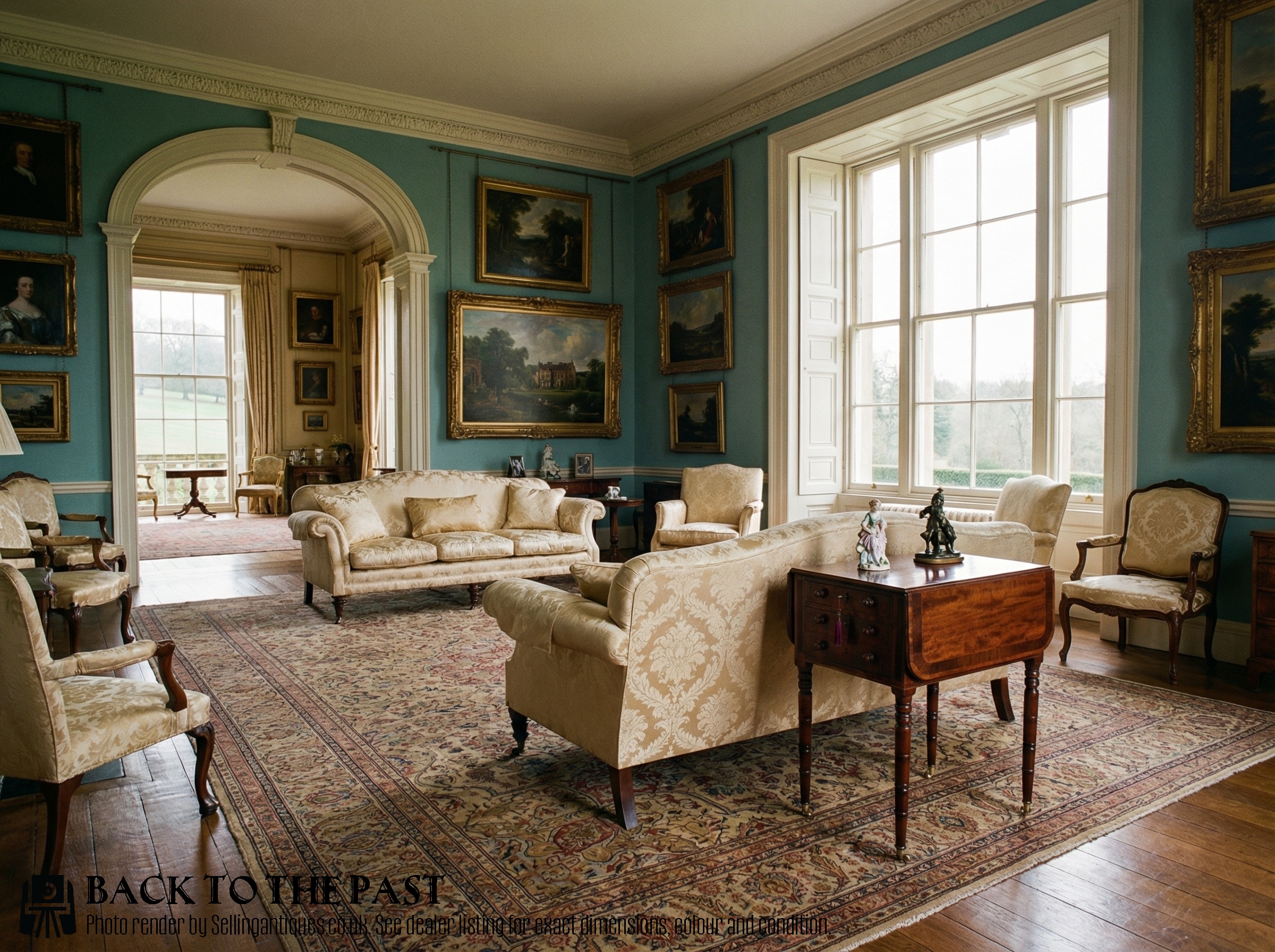
Because these tables are compact and freestanding, they suit placement beside a sofa, armchair, or as an occasional lamp table.
Their finished backs and polished mahogany surfaces allow them to sit away from walls in the centre of a room.