

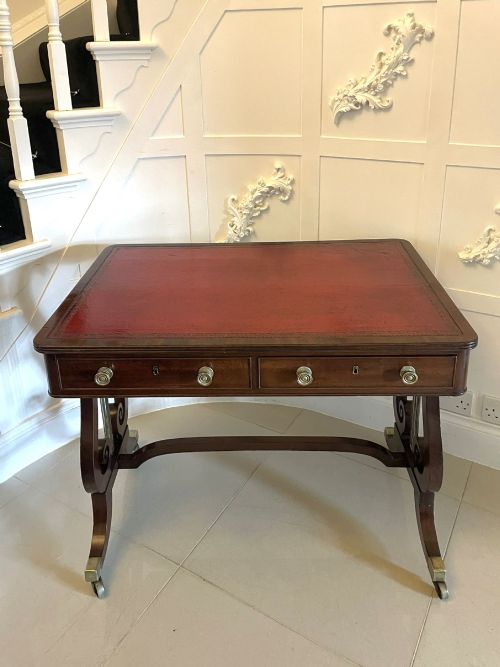
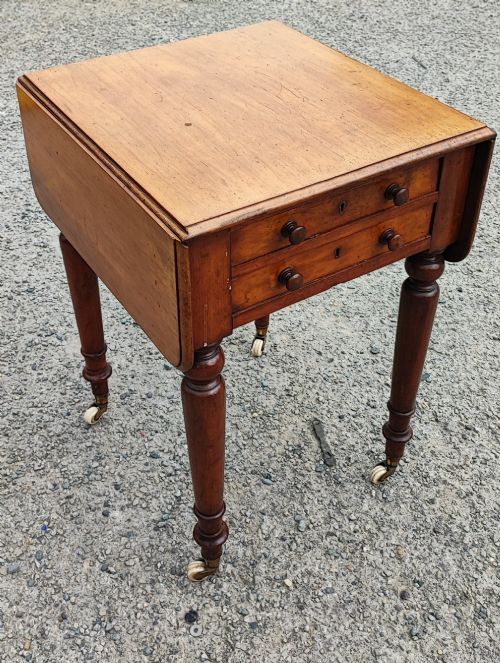
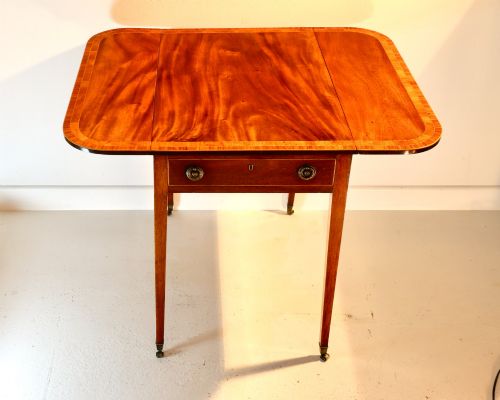
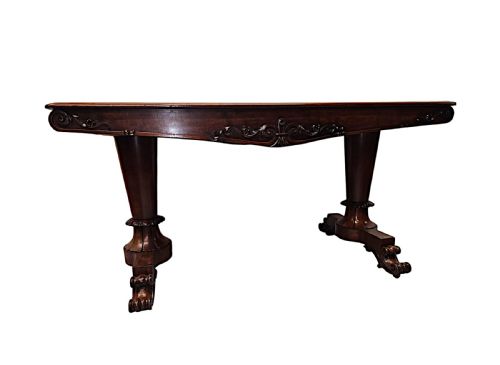





Regency Sofa End Table
A regency sofa end table provides a versatile surface beside seating, most commonly met in mahogany or rosewood from the nineteenth century.
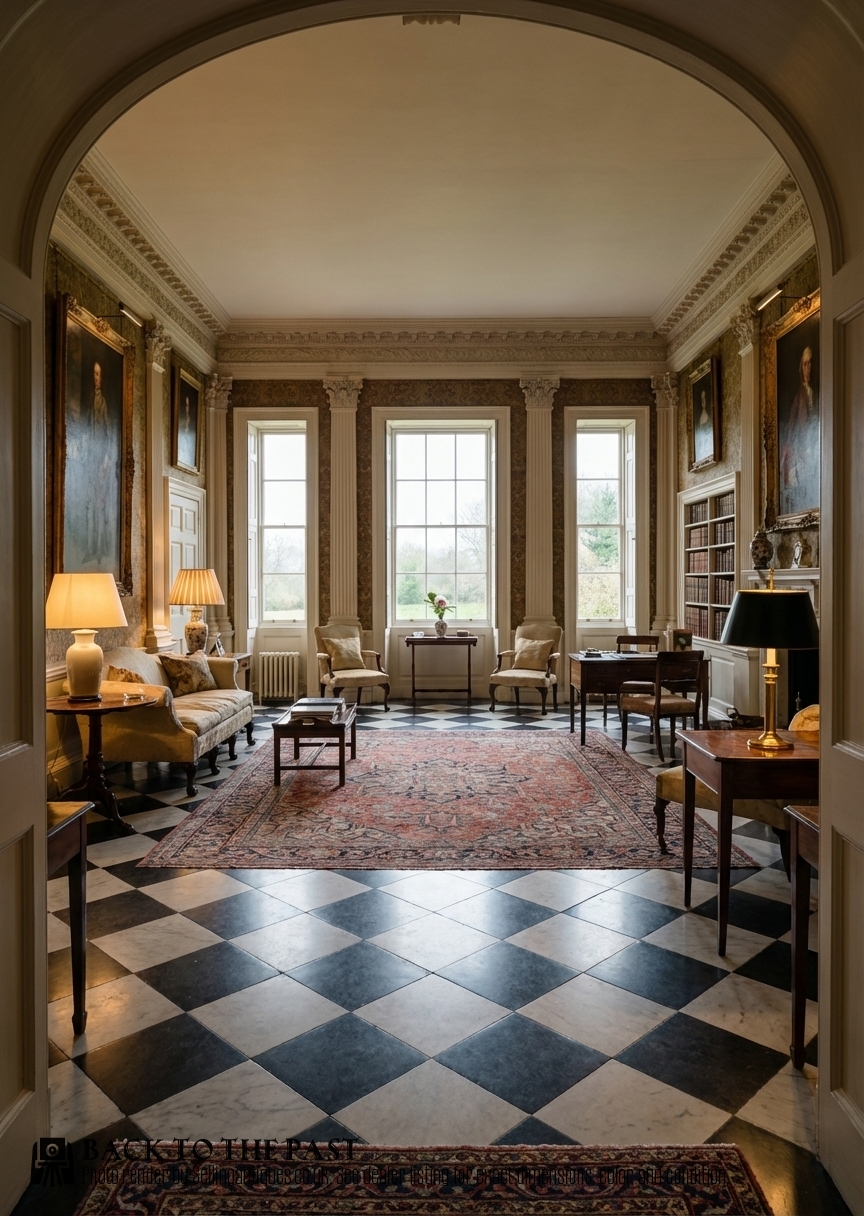
Regency Sofa End Table
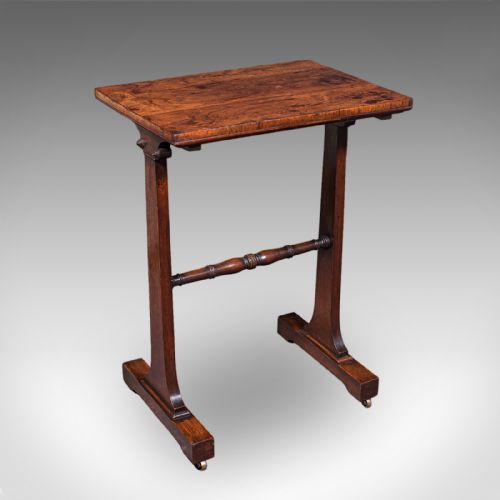
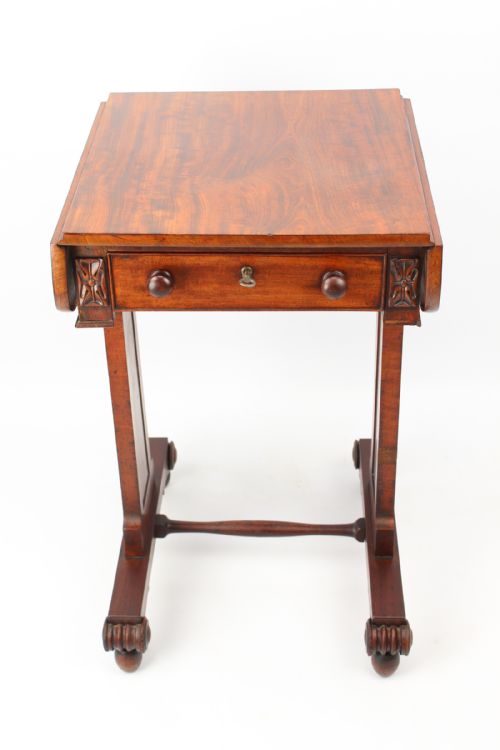
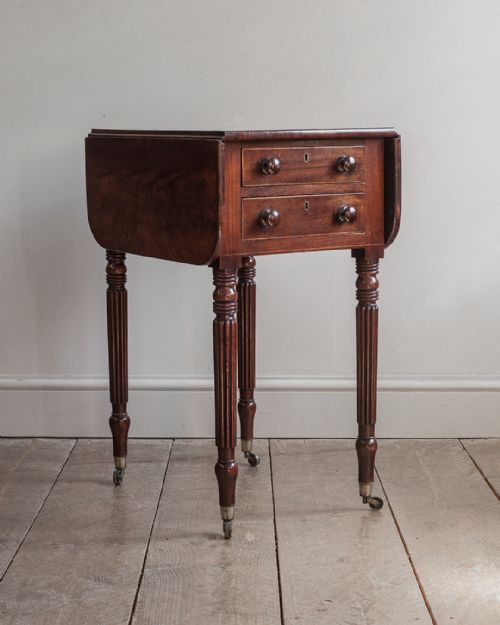
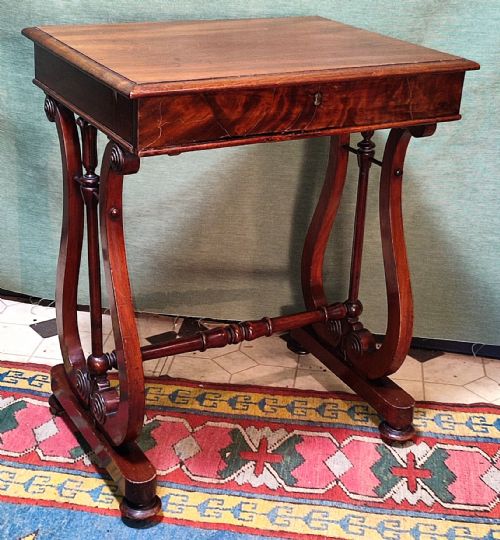
A regency sofa end table encompasses a range of low occasional, lamp, and writing tables designed to sit beside seating or freestanding in a room. Buyers searching for a regency sofa end table will frequently encounter drop-flap pembroke forms, lyre-ended supports, and twin-drawer library designs dating from the early nineteenth century.
The material palette spans rich dark timbers like mahogany and rosewood, often accented with satinwood, boxwood, and brass inlay. Pieces span strict Regency periods through to later Edwardian and Regency Revival reproductions.
Formations vary from small occasional lamp tables to larger writing desks and library tables, reflecting the domestic needs of nineteenth-century rooms.
Materials and Construction
Cabinet makers utilised solid and veneered timbers, predominantly figured mahogany and rich rosewood, supported by brass details and leather inserts. Structural stability relied on turned pedestals, reeded splay legs, and end supports.
Drop-flap mechanisms and pembroke leaves were engineered with hinges to allow surfaces to expand when needed. Inlaid stringing in boxwood and satinwood created geometric decoration across table tops.
Some ingenious pembroke variations are labelled deception tables, hiding small compartments for letters and sewing.
Assessing Quality and Execution
Quality rests in the choice of timber figuring, such as highly grained rosewood or figured mahogany, paired with crispness in brass inlay and carved details like lyre supports. Superior examples display precise joinery in drawer construction and balanced proportions across pedestal or splay leg bases.
Later revivals from the twentieth century differ in timber density and patination from authentic nineteenth-century production.
Williams and Gibton·Wilkinson, Ludgate Hill
The Regency Sofa End Table Glossary
- Pembroke table
- A small table with hinged drop flaps on either side, often fitted with a single drawer.
- Lyre end
- A pair of trestle supports shaped in the form of a classical musical lyre, typical of the Regency period.
- Crossbanding
- A border strip of veneer laid around the edge of a table top with the grain running at right angles to the centre.
- Satinwood
- A pale, hard timber used for contrasting stringing and inlay work on dark cabinet furniture.
- Reeded legs
- Legs carved with parallel convex mouldings resembling bundled reeds, common in nineteenth-century design.
Regency Sofa End Table: Frequently Asked Questions
What is a regency sofa end table used for?
These tables served as portable surfaces for lamps, reading materials, or writing instruments beside seating areas in nineteenth-century reception rooms.
Today, they function as versatile lamp or side tables in modern interiors, fitting easily beside sofas or beds.
How do I identify a genuine period piece?
Look for hand-cut dovetails in drawers, natural timber shrinkage, and patination that develops over generations of use.
Construction methods and wood species provide clues to whether an item originates from the Regency era or a later revival.
What is the difference between a pembroke and a sofa table?
Pembroke tables typically feature two drop leaves on opposing sides and often a single drawer, designed for general occasional use.
Sofa tables are traditionally longer, designed to stand directly against the back of a sofa, and frequently feature end supports with stretchers.
Are these tables suitable for small rooms?
Many drop-flap and compact occasional designs were specifically created to occupy minimal floor space while offering expandable surfaces.
Their slender proportions and open leg arrangements prevent them from visually crowding smaller spaces.