
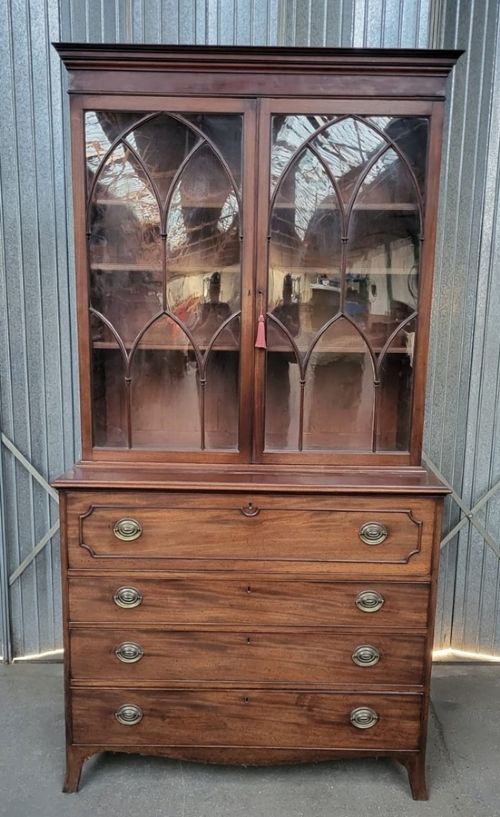
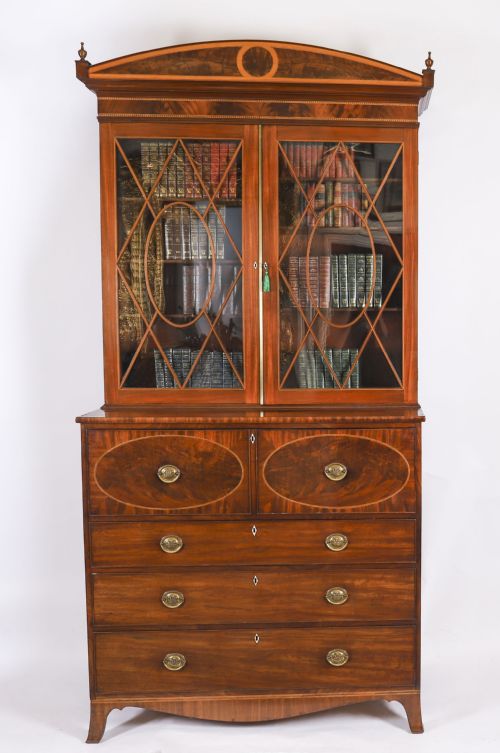
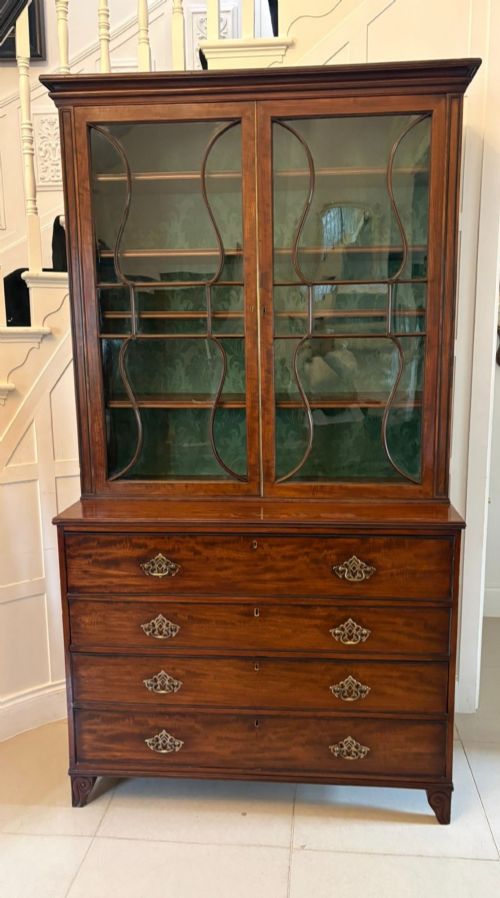
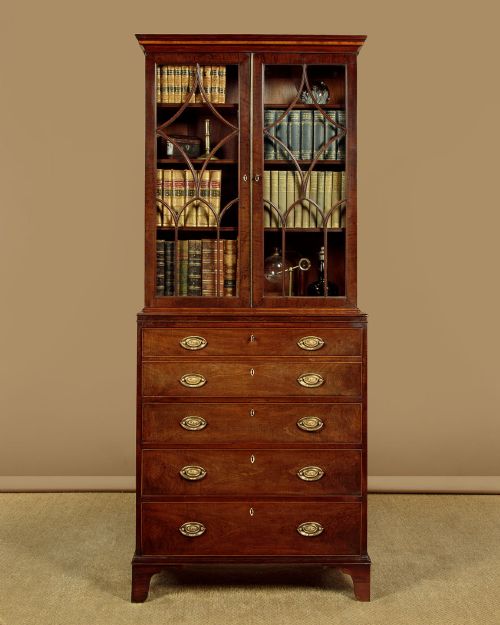
Georgian Glazed Secretaire Cabinet
A georgian glazed secretaire cabinet combines a library bookcase with a fitted writing drawer, offering enclosed display and a practical writing surface.
Georgian Glazed Secretaire Cabinet
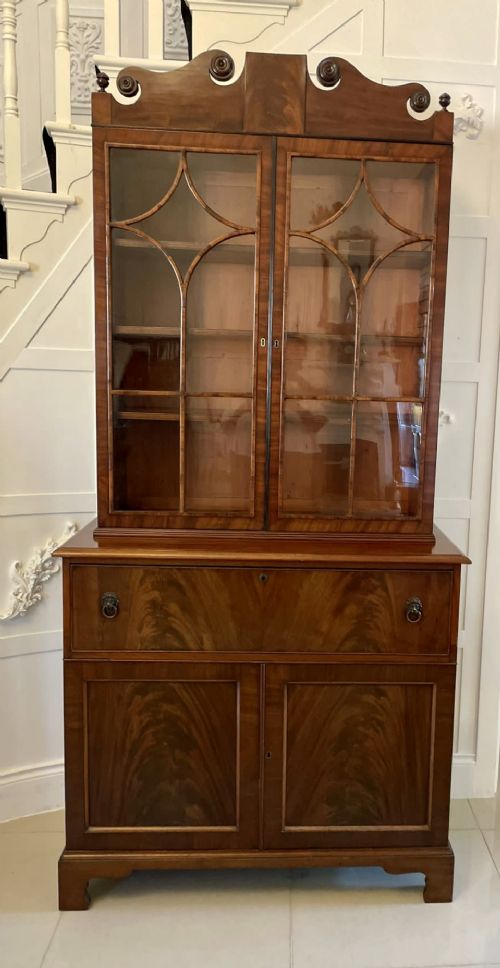
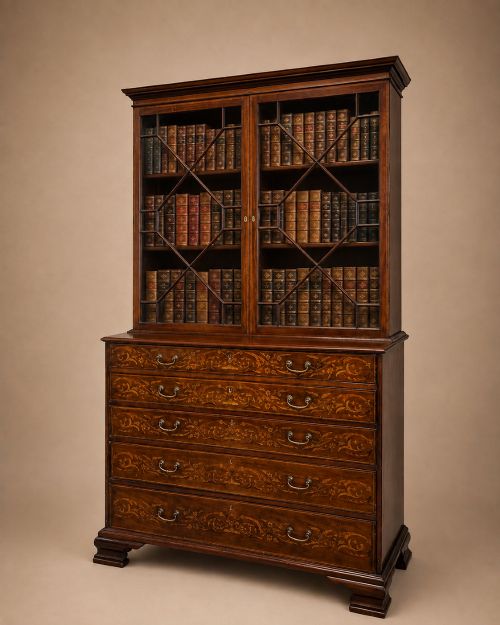
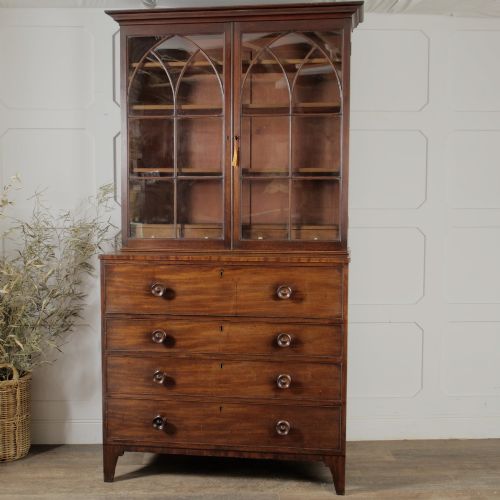
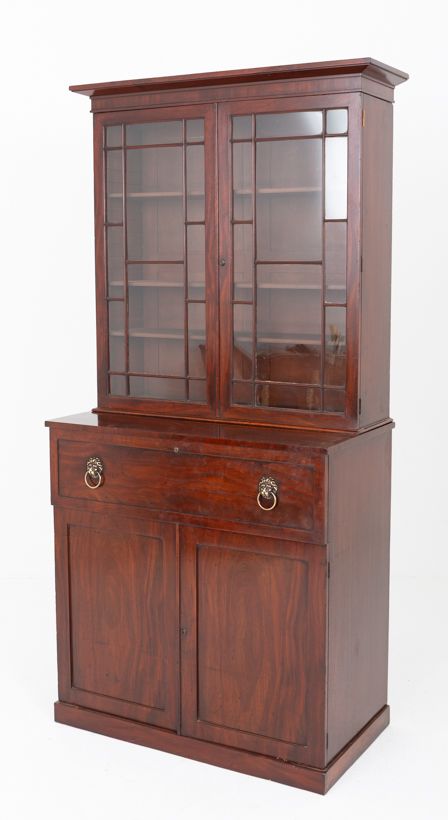
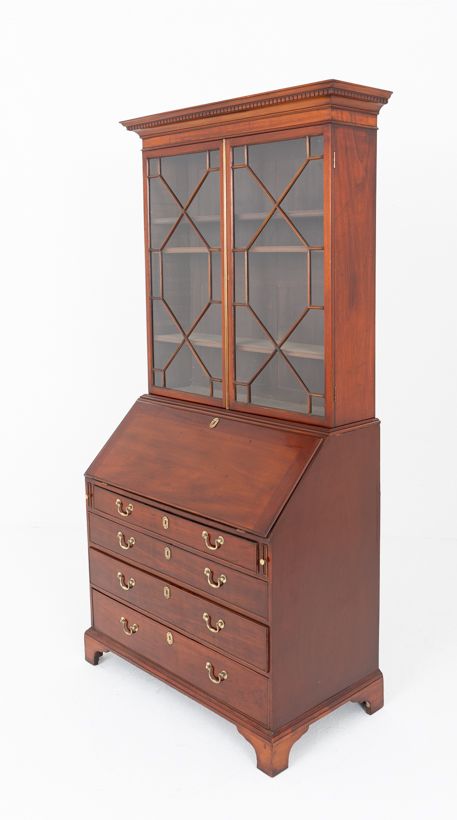
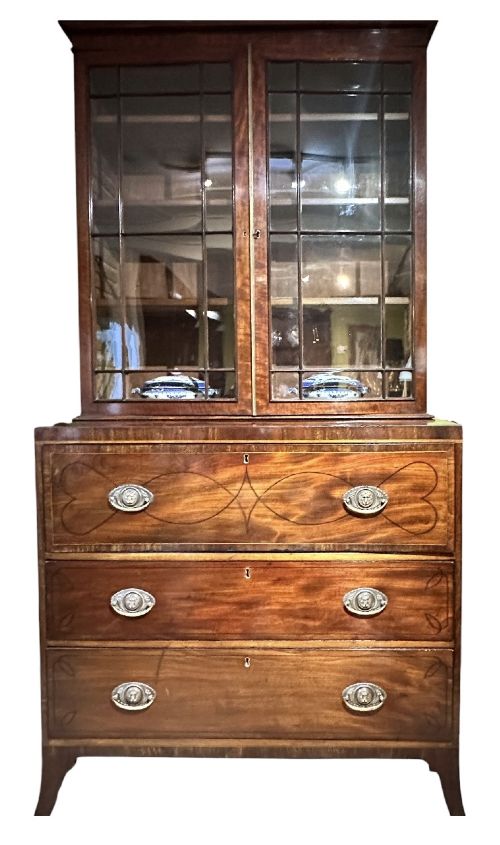
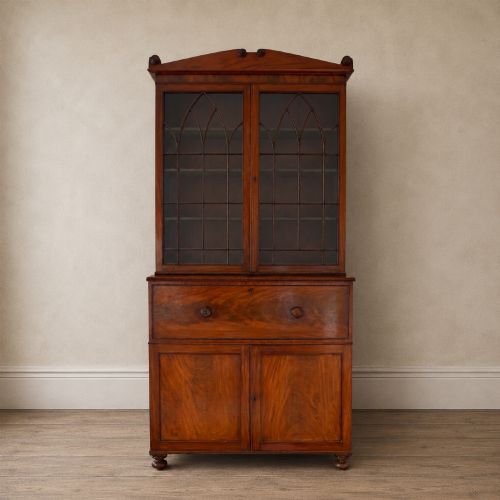
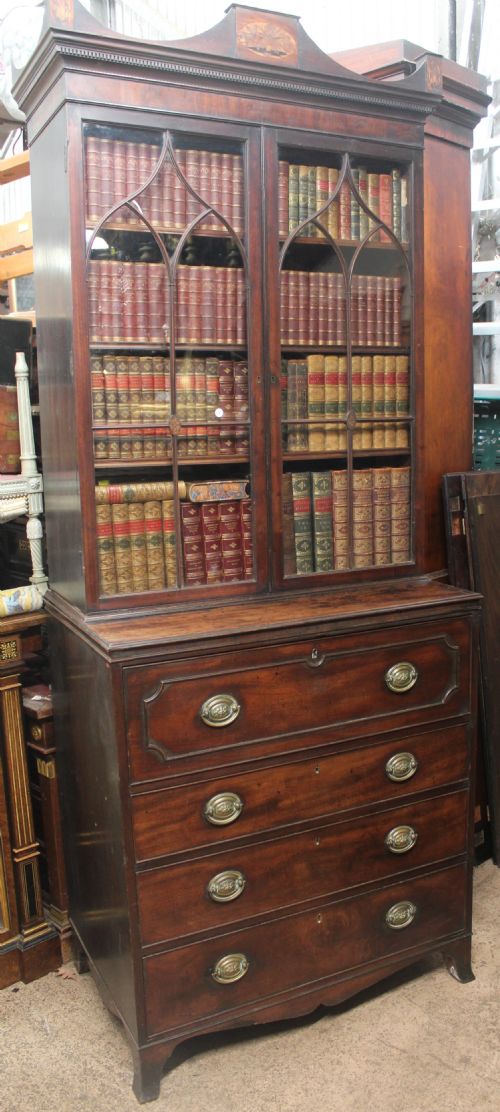
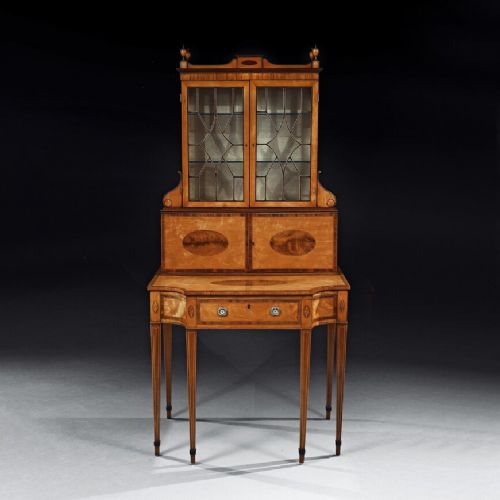
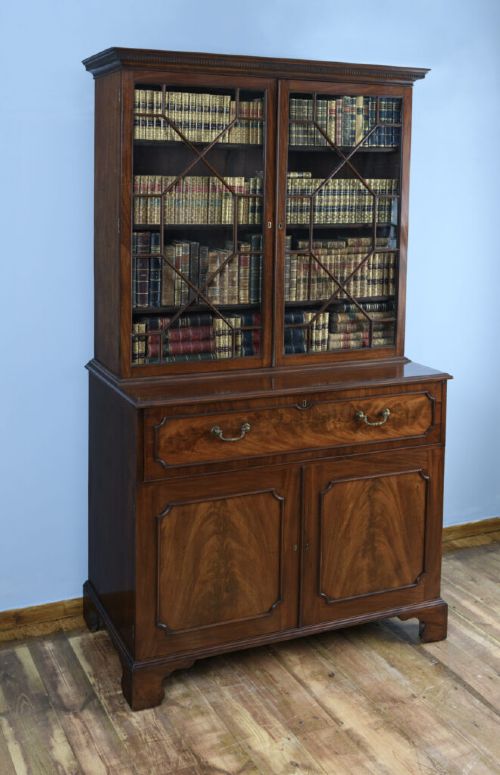
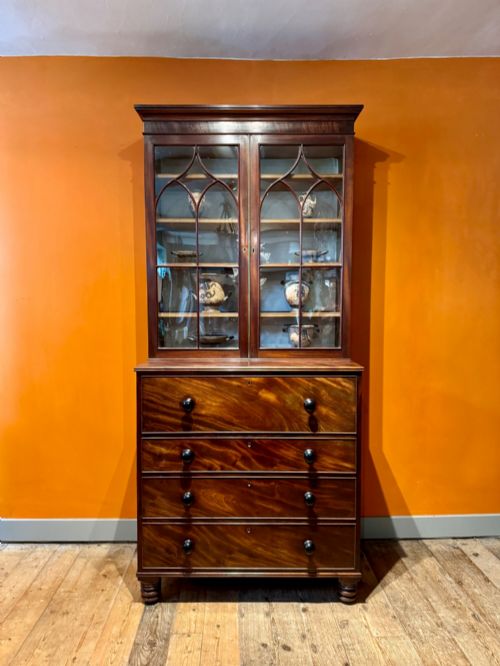
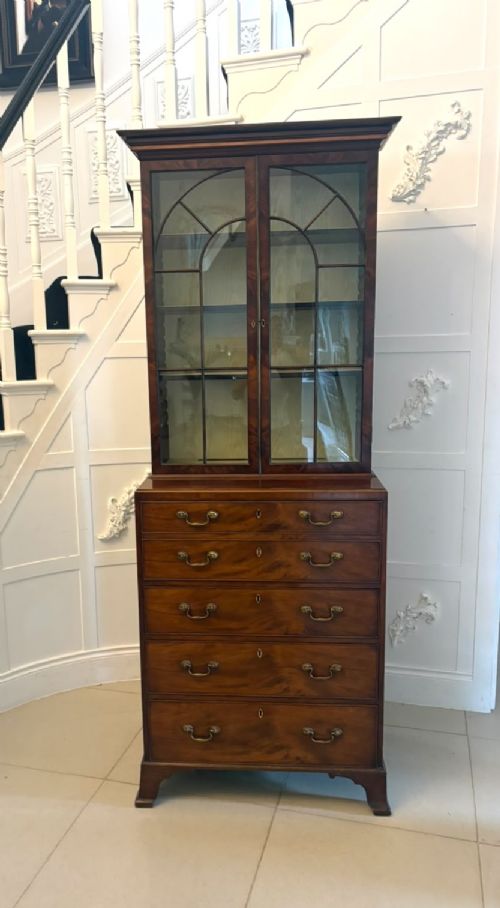
A georgian glazed secretaire cabinet is a tall case furniture piece uniting upper glass-fronted shelving with a lower writing compartment. The form spans the Georgian, Regency, and early Victorian periods, appearing frequently in mahogany and satinwood.
Most examples on this page are upright secretaire bookcases featuring glazed upper doors and fitted interior drawers behind a drop-front writing desk. Variations include bureau bookcases and writing cabinets originating from the eighteenth and nineteenth centuries.
Materials and Technique
Cabinetmakers utilised solid timbers and veneers of mahogany, flame mahogany, and satinwood, often enhanced with contrasting stringing and inlay. Secondary woods like oak provide structural stability to the carcass and drawer linings.
Upper doors incorporate individual glass panes held by timber glazing bars, while the fall-front writing drawer conceals small pigeonholes and letter drawers in fitted interiors. Brass hardware secures the doors and drawers.
Hidden spring-loaded secret compartments inside the fitted interior drawers kept private letters safe from prying eyes.
Design and Execution
Quality rests in the selection of figured timber veneers and the precision of the cabinetwork, particularly the joinery of the fitted interior and the delicacy of the glazing bars. Subtle architectural details and proportion separate standard workshop production from finer cabinet work.
The integration of the fall-front mechanism and the condition of original brass fittings and glass panes influence the overall integrity of the piece.
Gillows of Lancaster
The Georgian Glazed Secretaire Cabinet Glossary
- Secretaire
- A desk or drawer with a fall-front that opens to reveal a fitted interior of small drawers and pigeonholes. It provides a writing surface at a comfortable height.
- Astragal glazed
- Glass doors divided into smaller panes by narrow wooden mouldings called astragals. This technique was standard for eighteenth and nineteenth century bookcases.
- Flame mahogany
- Timber cut from the fork of the mahogany tree to produce a distinctive, flickering grain pattern. Cabinetmakers reserved this wood for drawer fronts and prominent surfaces.
- Sabicu
- A dense tropical hardwood resembling mahogany, utilised in high-end eighteenth-century cabinetmaking. It offers exceptional durability and a rich dark tone.
Georgian Glazed Secretaire Cabinet: Frequently Asked Questions
How do I use the secretaire drawer?
The front of the top drawer pulls down on hinges or slides forward to form a writing desk. Inside, a collection of small drawers and pigeonholes provides storage for correspondence and writing materials.
When closed, the drawer locks securely, concealing the desk interior and maintaining the appearance of a standard bookcase.
What is the difference between a bookcase and a bureau bookcase?
A standard bookcase consists of open shelves or cabinet doors placed above a base cabinet. A bureau bookcase incorporates a slanted desk flap or a pull-down secretaire drawer within the lower section.
Both forms often feature glazed upper doors to protect library books from dust.
How do I date a mahogany secretaire cabinet?
Dating relies on timber selection, handle styles, and construction techniques. Eighteenth-century pieces often feature solid mahogany or fine satinwood veneers with hand-cut dovetails.
Nineteenth-century examples frequently display bolder flame mahogany veneers and machine-processed components.
Can these cabinets be separated for transport?
Most examples are constructed in two distinct sections, separating the upper glazed bookcase from the lower secretaire base. This modular design assists with moving the heavy furniture through doorways and up stairs.
Larger grand scale pieces remain heavy and require careful handling during transport.