
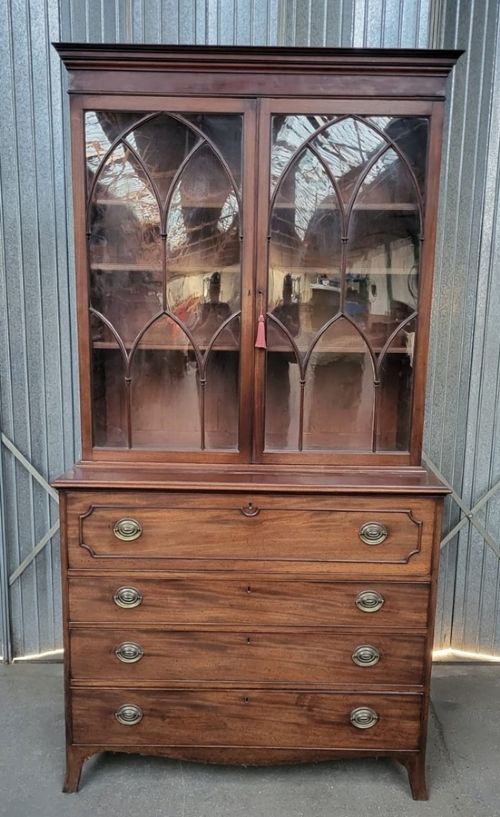
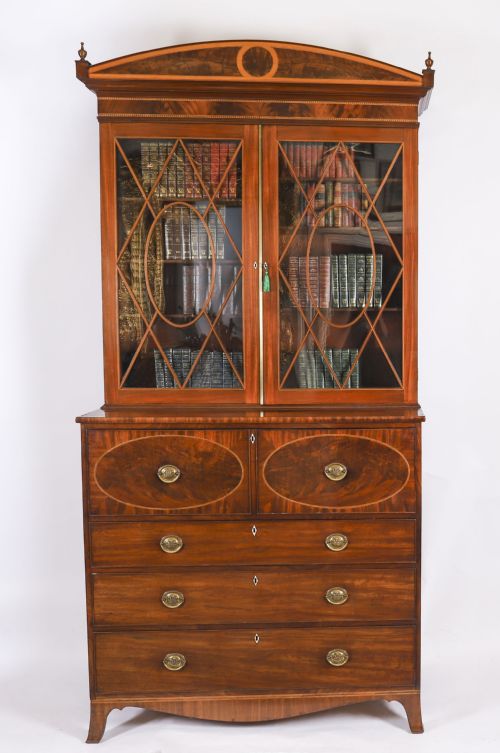

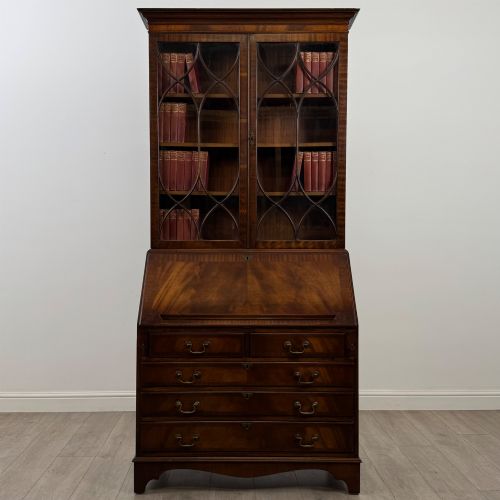
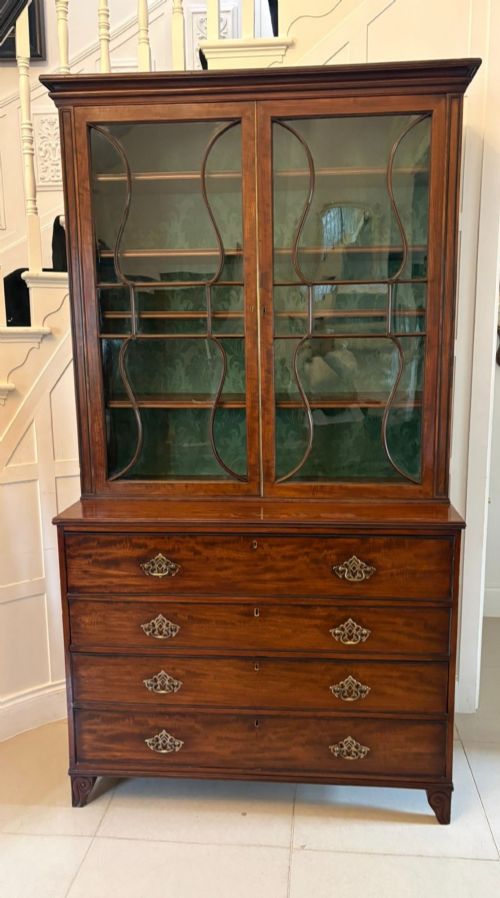
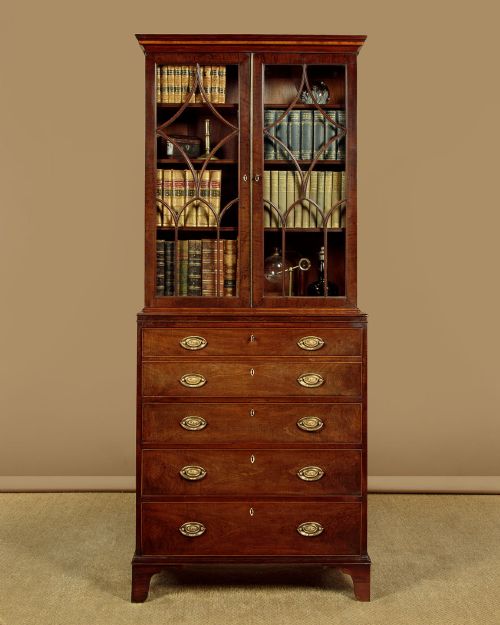
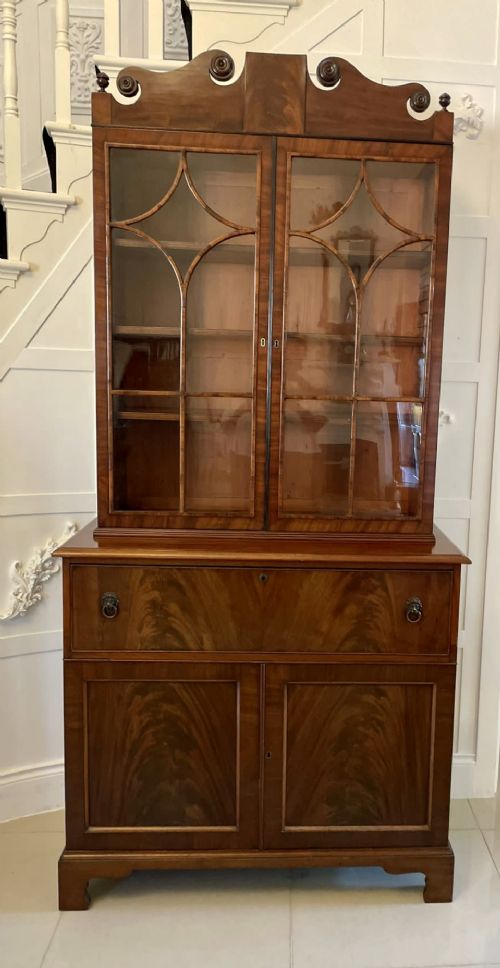
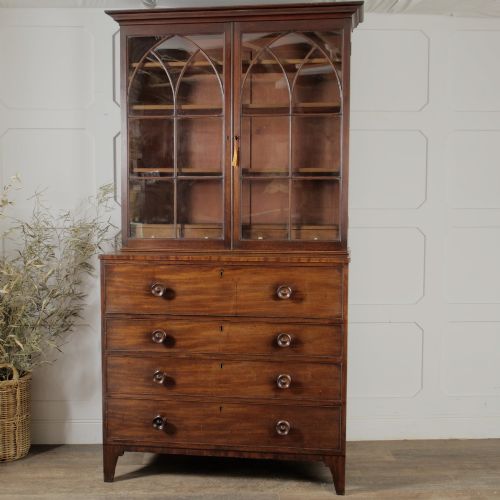
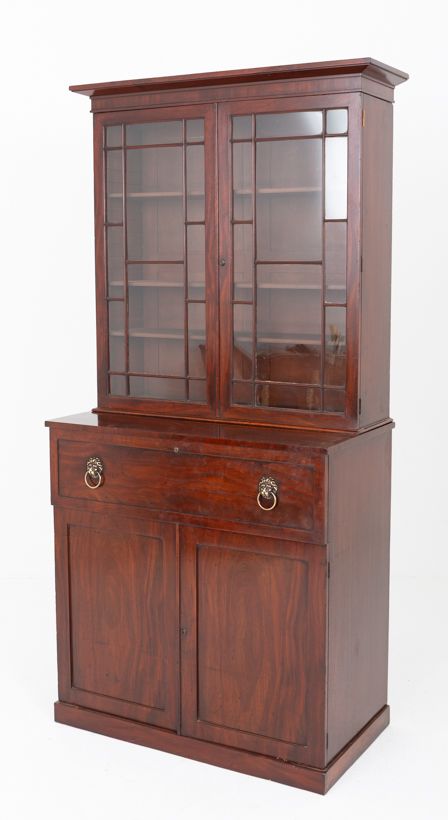
Georgian Glazed Bookcase Desk
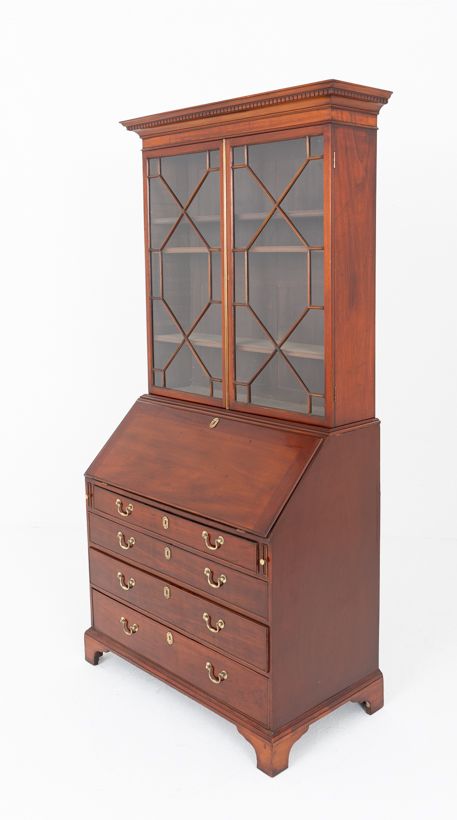
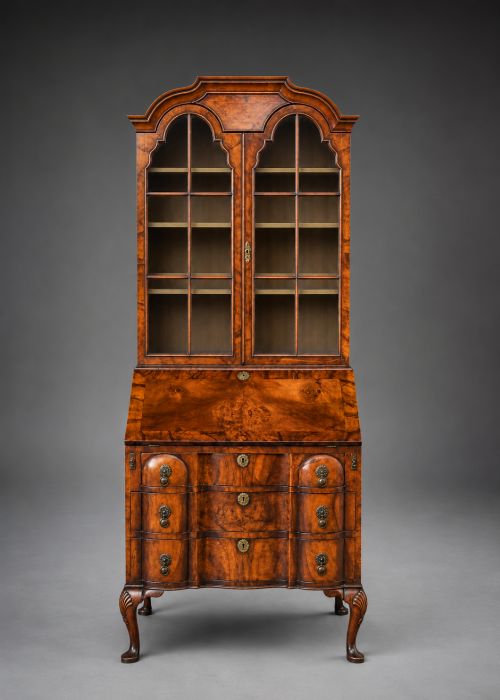
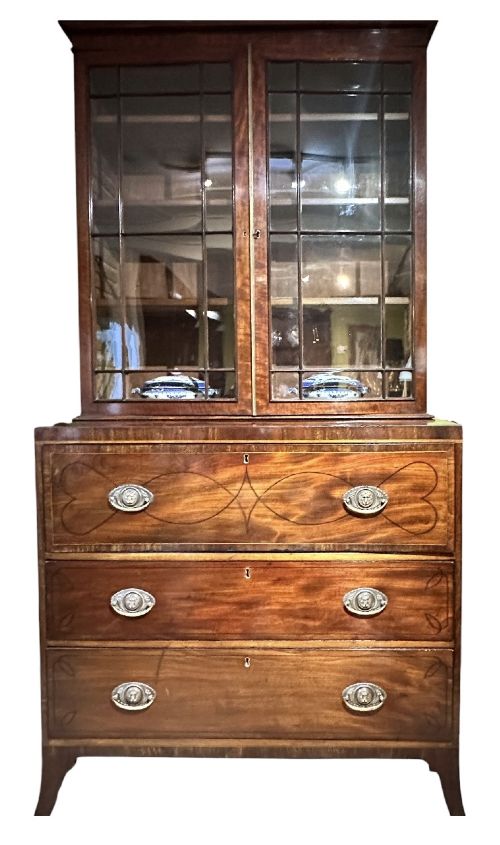
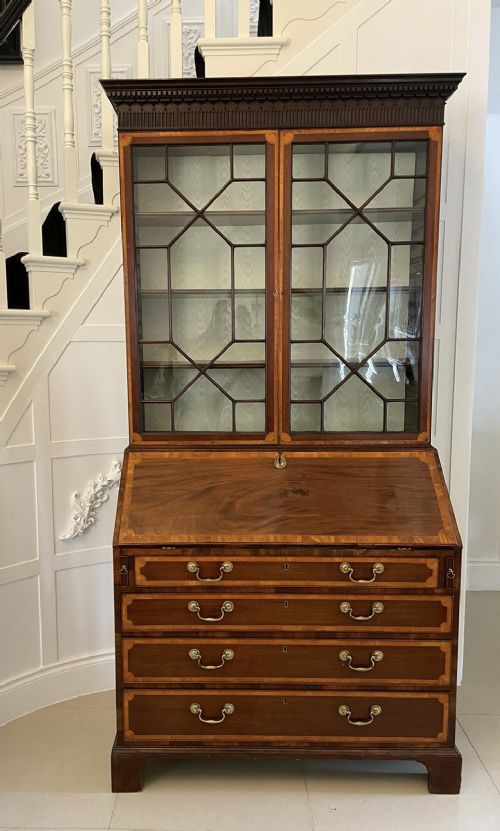
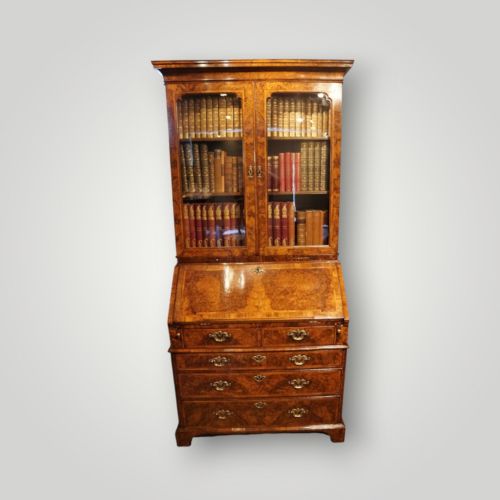
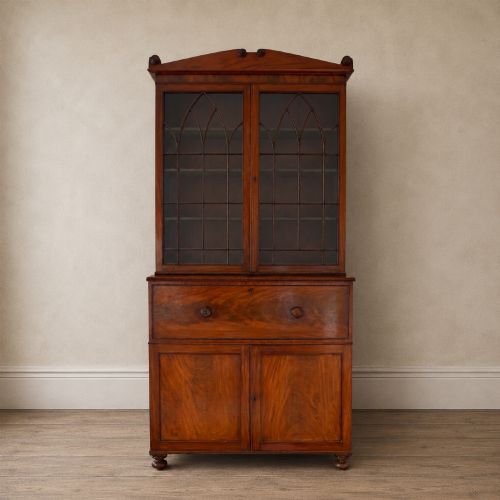
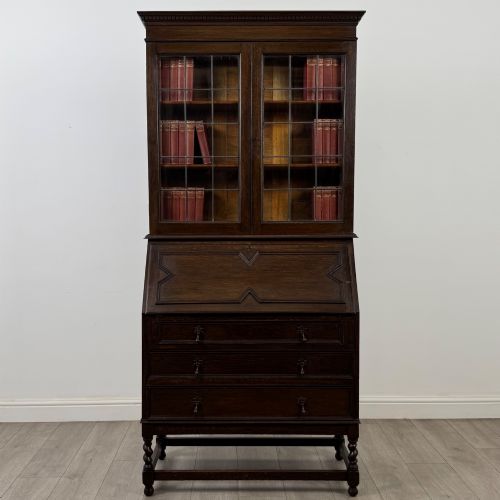
A georgian glazed bookcase desk combines upper display shelving behind glass with a drop-front writing surface for practical storage.
Georgian Glazed Bookcase Desk
A georgian glazed bookcase desk unites upper display storage with a functional writing surface in taller cabinet forms. These pieces appear across the eighteenth and nineteenth centuries, spanning distinct stylistic phases from George III designs down to Edwardian revivals.
The most common examples on this page utilise mahogany timbers, often featuring astragal glazed upper doors that reveal fitted desk interiors with small drawers and pigeonholes. Bureau bookcases and secretaire variants dominate the available forms.
Materials and construction methods
Cabinetmakers constructed these pieces primarily from solid and veneered timbers including mahogany, walnut, oak, and satinwood, frequently selecting figured flame mahogany and inlaid veneers for prominent exterior surfaces. Brass hardware secures doors and interior fittings.
Upper sections incorporate glass panes held within wooden glazing bars, while desk compartments utilise complex internal joinery for small drawers, hidden compartments, and drop-down writing flaps lined with leather.
Listings feature woods including mahogany, satinwood, walnut, and oak across Georgian, Regency, and Edwardian periods.
Assessing quality and craftsmanship
Quality rests upon the selection of timbers and the precision of veneer work, where superior examples exhibit continuous grain matching across drawer fronts and cabinet doors. Finer pieces demonstrate meticulous hand-cut dovetailing in the internal drawers and refined shaping in the astragal glazing bars.
The sophistication of the internal fittings defines the tier of execution, with top-tier examples incorporating secondary woods of high grade, intricate pigeonhole layouts, and superior brasswork that integrates seamlessly into the overall design.
Gillows of Lancaster·Tudor and Burrey
The Georgian Glazed Bookcase Desk Glossary
- Astragal glazed
- Glass doors divided by slender wooden mouldings into small individual panes. These bars provide structural division for the upper bookcase section.
- Secretaire
- A writing drawer or compartment featuring a drop-front panel that conceals a fitted interior of small drawers and pigeonholes. This drawer pulls out at desk height.
- Bureau bookcase
- A two-part cabinet featuring a slanted writing flap that opens forward over drawers, paired with an upper glazed shelving unit. The lower section serves as a compact writing desk.
- Flame mahogany
- Timber cut from the fork of the mahogany tree to produce a distinctive flickering flame pattern. Cabinetmakers reserved these highly figured veneers for primary display surfaces.
- Fitted interior
- The arrangement of small drawers, pigeonholes, and central compartments concealed behind a fall-front desk or secretaire drawer. These internal spaces organise writing materials and correspondence.
Georgian Glazed Bookcase Desk: Frequently Asked Questions
How do I use a secretaire drawer?
The front of the drawer pulls forward on hinges to create a flat writing surface at chest height. Inside, you find a collection of small pigeonholes and miniature drawers for storage.
Pronounced friction arms or support brackets slide out automatically to hold the weight of the writing flap while in use.
What is the difference between a bureau and a secretaire?
A bureau utilises a sloping slanted flap that folds down towards you to reveal the interior writing space. A secretaire employs a drawer front that pulls straight out before dropping open horizontally.
Both designs conceal identical arrangements of small drawers and pigeonholes behind their respective writing surfaces.
Where were these cabinets placed in a home?
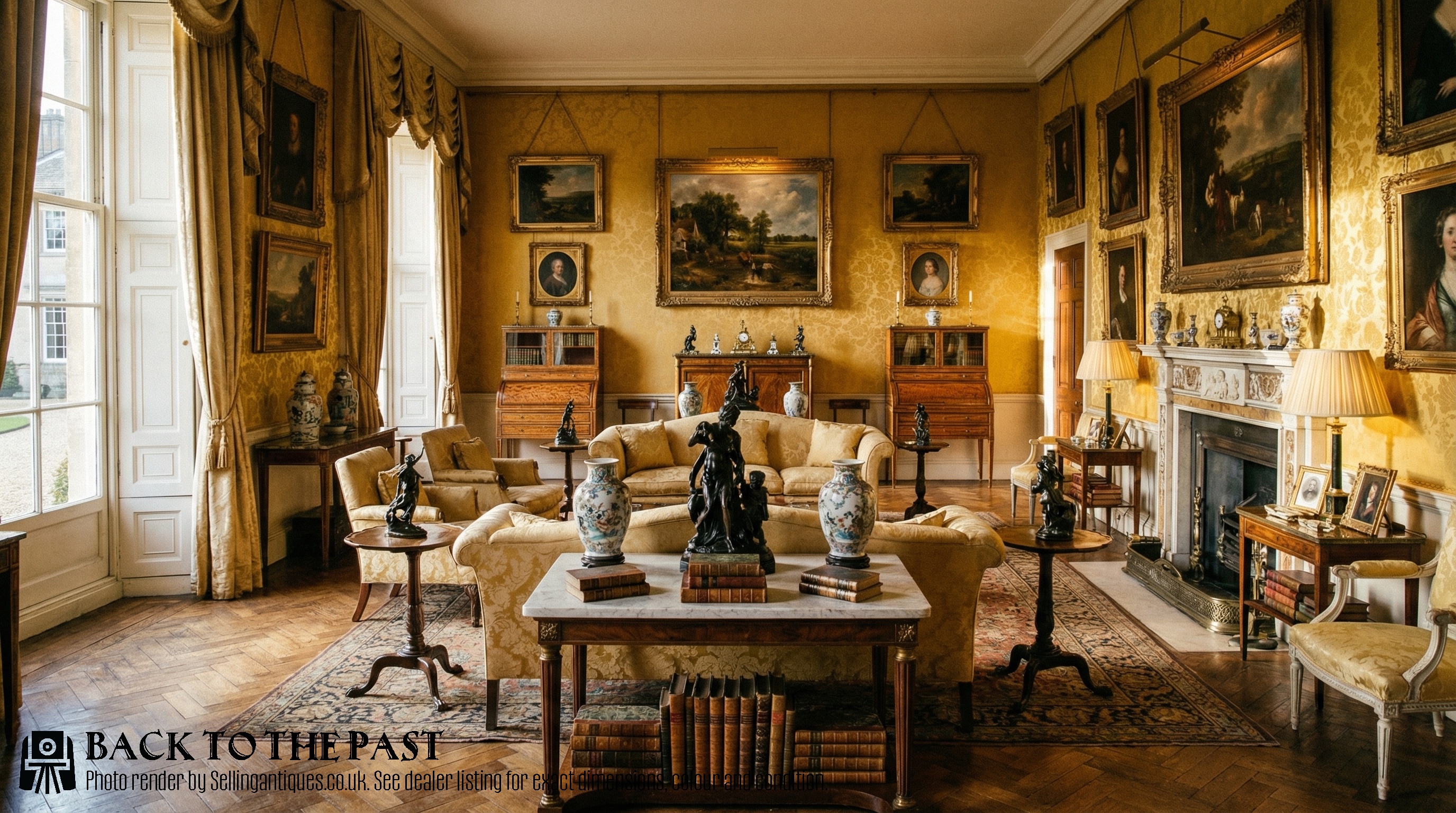
These tall cabinets stood in libraries, private studies, and principal parlours to house leather-bound volumes and provide a private writing station. Their upright proportions maximised vertical storage floor space.
The upper glazed doors kept dust away from valuable books while displaying bindings to visitors.
How do I distinguish between original and revival periods?
Eighteenth-century pieces display timber shrinkage, hand-cut joinery marks, and specific secondary woods native to the period of manufacture. Revival pieces from the Edwardian era often show uniform machine-cut construction methods and cleaner interior surfaces.
Stylistic cues also point to the era, with Sheraton revival work adopting lighter satinwood finishes compared to earlier dark mahogany.