




Georgian Satinwood Secretary
A georgian satinwood secretary brings luminous timber and concealed writing surfaces into a room, offering both display and utility.
Georgian Satinwood Secretary
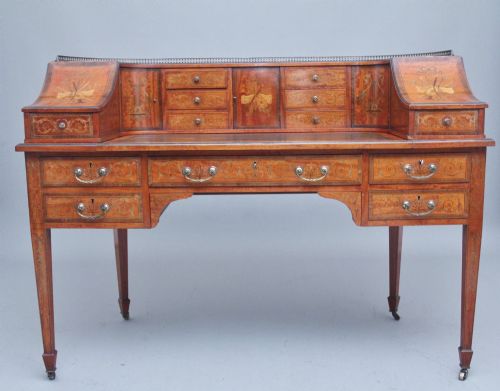
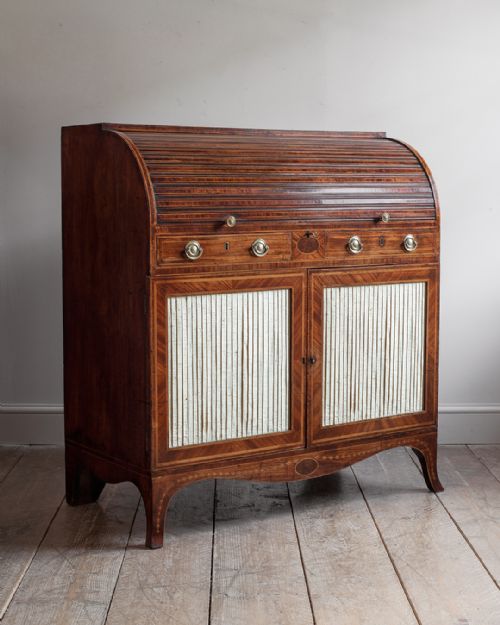
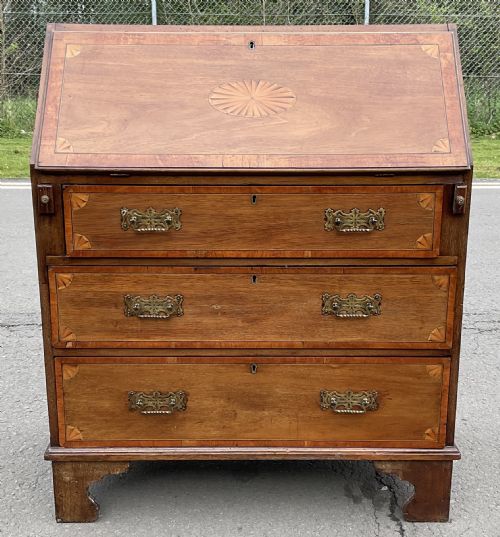
A georgian satinwood secretary combines a fitted writing drawer or drop-front desk with upper bookcase sections or lower cabinet storage, created during the eighteenth and nineteenth centuries. These pieces encompass bureau bookcases, cylinder desks, and compact bonheur du jour forms that utilise pale timbers for sophisticated domestic interiors.
The versions most frequently met on this page span George III origins through to Sheraton Revival interpretations of the later nineteenth and early twentieth centuries. They range from grand glazed bookcases with intricate marquetry to smaller ladies desks and cylinder cabinets executed in figured woods.
How they were made
Cabinetmakers constructed these pieces using dense structural timbers like mahogany as carcasses, overlaid with finely figured satinwood veneers and contrasting bandings. Marquetry inlay, brass hardware, and glass panes completed the glazed upper doors and internal writing compartments.
The joinery involves precise dovetailing for drawers and specialised pivoting mechanisms for cylinder fronts and fall-front writing surfaces. Artisans matched veneers carefully across drawer fronts to create symmetrical geometric patterns and decorative borders.
The listings on this page span the 18th century, 19th century, and Edwardian periods, uniting satinwood, mahogany, brass, and glass.
What varies in quality
Quality rests upon the selection and figuration of the satinwood veneer, the crispness of the marquetry inlay, and the integration of secondary timbers. Pieces at the upper end display highly figured grain, harmonious contrasting bandings, and original brass fittings.
Proportion and structural integrity also separate standard examples from exceptional ones. Refined cabinetwork shows in the smooth operation of sliding cylinders, fitted interior compartments with secret drawers, and the delicate balance of glazing bars on upper bookcase doors.
The Georgian Satinwood Secretary Glossary
- Satinwood
- A dense, lustrous timber native to tropical regions, prized for its pale golden colour and silky sheen when polished. It forms the primary decorative surface on these cabinets.
- Secretaire bookcase
- A tall cabinet featuring a dedicated writing drawer with a drop-front panel that conceals pigeonholes and small drawers, paired with shelving above. The upper section is typically enclosed by glazed doors.
- Cylinder bureau
- A writing desk featuring a quarter-circle rotating wooden shutter that pulls down to cover the fitted writing surface and pigeonholes. This mechanism glides smoothly into the body of the desk.
- Bonheur du jour
- A light, portable ladies writing desk featuring a small cabinet or set of drawers superstructure upon slender legs. These delicate pieces became popular during the George III and Sheraton periods.
- Marquetry
- The art of forming decorative patterns by fitting together thin veneers of various coloured woods and other materials. It creates pictorial or geometric designs across large cabinet surfaces.
Georgian Satinwood Secretary: Frequently Asked Questions
How do I date a secretary?
Dating relies on examining construction methods, secondary timbers, hardware, and stylistic details such as the presence of George III classical motifs or Sheraton Revival revivals.
Earlier pieces from the eighteenth century typically feature hand-cut dovetailing and solid oak or mahogany secondary woods, whereas later nineteenth-century revivals display different interior joinery.
Where were these pieces used?
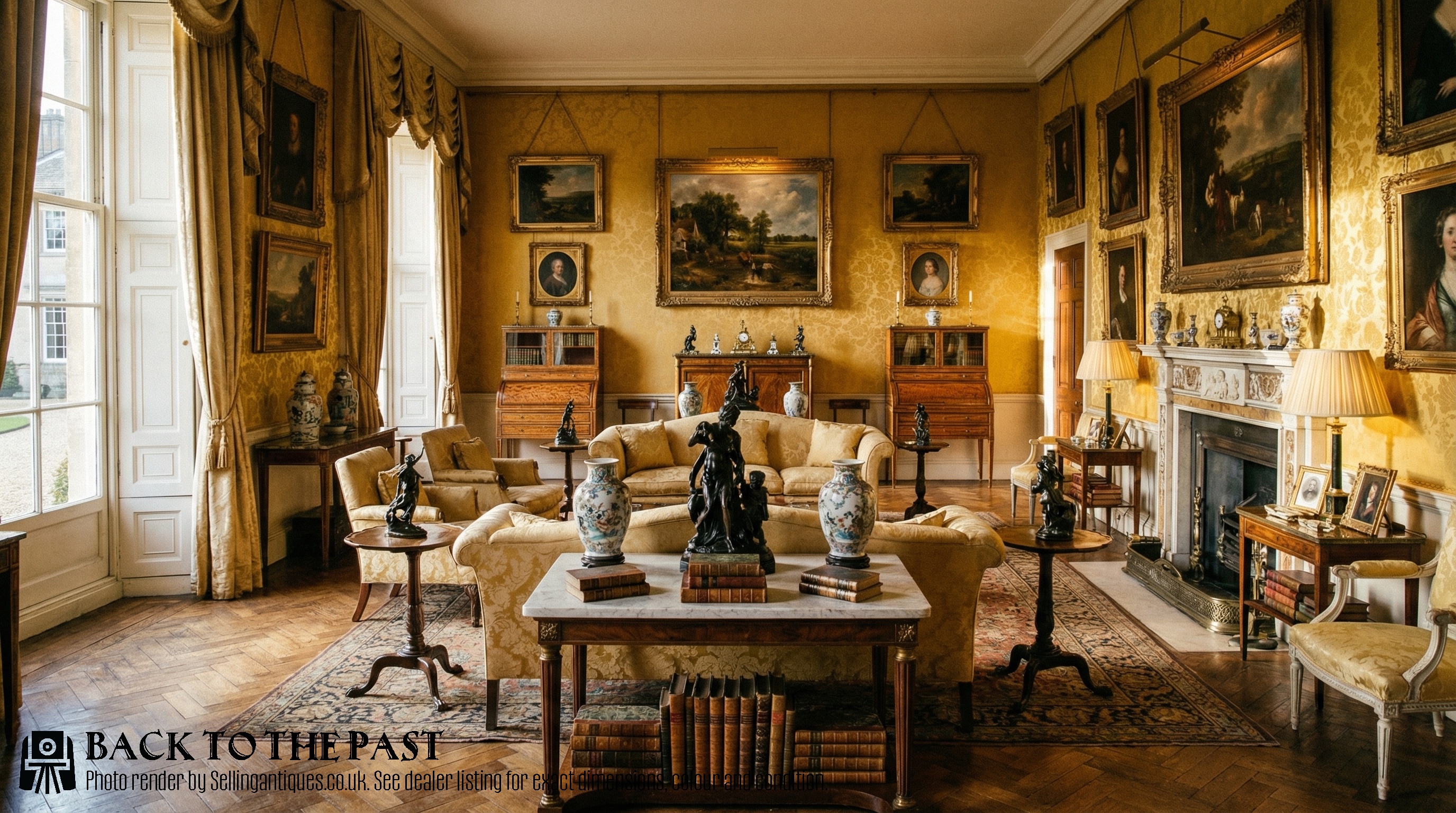
These secretaries were originally placed in private libraries, formal drawing rooms, and private sitting rooms of substantial townhouses and country estates.
They served as private spaces for correspondence, account keeping, and the display of prized leather-bound volumes behind glass doors.
How do I care for satinwood?
Satinwood furniture requires protection from direct sunlight and extreme humidity fluctuations to prevent veneer cracking and fading of its natural golden colour.
Regular gentle dusting with a soft dry cloth and occasional application of appropriate conservation wax keeps the timber nourished and maintains the historic polish.