
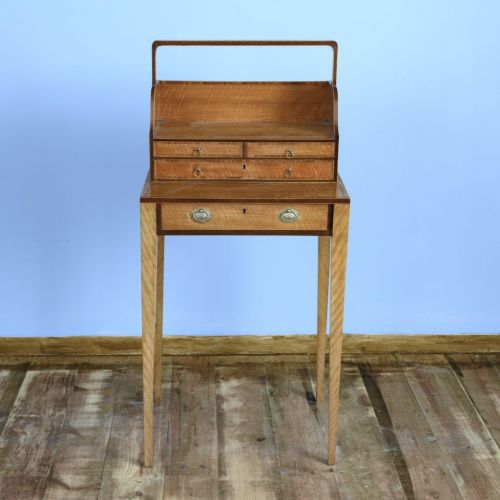


18th Century Satinwood Desk
An 18th century satinwood desk brings luminous timber and refined writing furniture into a room.
18th Century Satinwood Desk
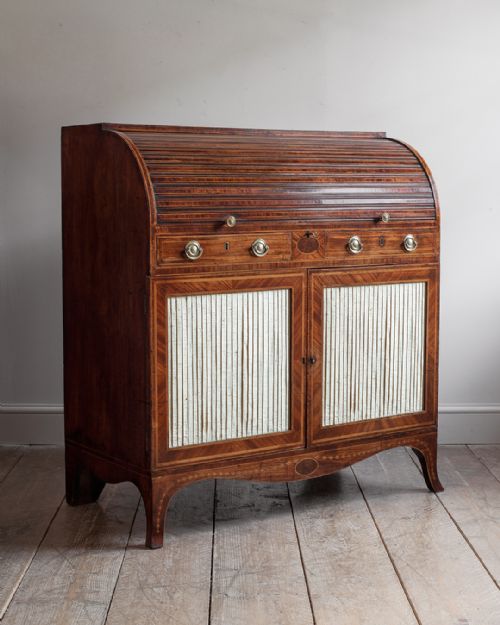
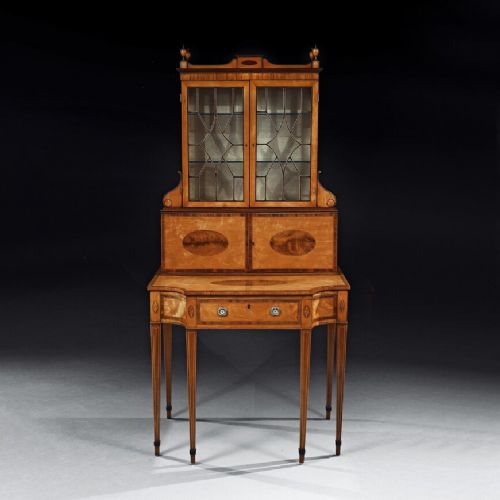
When searching for an 18th century satinwood desk, a buyer encounters sophisticated writing furniture dating from the Georgian and Sheraton periods. These pieces range from cylinder tambour bureaux and writing cabinets to compact bonheur du jour writing tables.
The versions met most frequently on this page include George III writing tables and secretaire bookcases featuring delicate satinwood veneers. Makers of the period utilised this exotic timber to create functional writing spaces for refined interiors.
Materials and Construction Techniques
Craftsmen built these desks using exotic satinwood veneers laid over secondary timbers such as mahogany and oak. Fine inlay work often combined contrasting woods like rosewood with brass mounts and glass panels.
Joinery techniques included precise marquetry and banded edges, supporting complex writing surfaces like cylinder rolls and sliding writing slides. Interiors frequently incorporated multiple secret compartments and leather writing inserts.
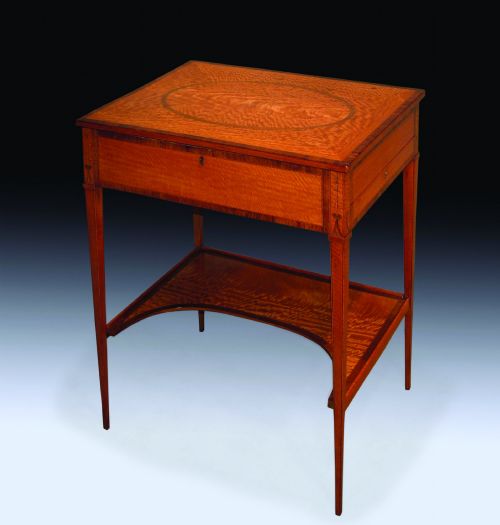
Some ladies' worktables conceal multiple secret rising compartments for confidential notes and small treasures.
Assessing Quality and Execution
The distinction between standard and superior pieces rests upon the fineness of the satinwood figure and the precision of the marquetry inlay. Exceptional examples display meticulous matching of grain across complex curves and serpentine shapes.
Design integrity and the retention of original brass hardware, glass doors, and fitted internal drawers elevate a piece. Superior execution is visible in the smooth operation of writing slides, tambour cylinders, and secret compartments.
Gillows of Lancaster
The 18th Century Satinwood Desk Glossary
- Satinwood
- A lustrous, yellowish-orange tropical timber prized in the eighteenth century for cabinetmaking. It takes a high polish and provides a bright, reflective surface for fine veneers.
- Cheveret
- A small portable writing table featuring a tiered shelf superstructure and a writing drawer. This form often includes a removable writing slide.
- Bonheur du Jour
- A small lady's writing desk with a set of drawers and shelves on top. The style emerged during the eighteenth century for boudoir use.
- Secretaire
- A desk incorporating a writing flap or drawer that conceals pigeonholes and small drawers. This form combines storage with a dedicated writing surface.
- Tambour
- A flexible shutter made of narrow strips of wood glued to canvas, allowing a desk cylinder to slide open in a track.
18th Century Satinwood Desk: Frequently Asked Questions
What is an 18th century satinwood desk?
An 18th century satinwood desk is a piece of antique writing furniture constructed primarily or decoratively from yellowish tropical satinwood during the Georgian era. These desks include forms such as cylinder bureaux, writing cabinets, and bonheur du jour tables.
They were designed for refined correspondence and record-keeping in period homes. The use of bright satinwood veneer distinguished them from darker mahogany furniture.
How do I identify a Sheraton period desk?
Sheraton period desks display classical symmetry, straight tapering legs, and delicate contrasting wood inlays. They frequently utilise satinwood veneers combined with mahogany and rosewood banding.
Cabinetmakers of this style favoured light, elegant proportions rather than heavy baroque forms. Look for geometric stringing and oval patera details.
How should I care for satinwood furniture?
Satinwood furniture requires a stable environment away from direct sunlight and extreme humidity fluctuations to protect fragile veneers. Gentle dusting with a dry, soft cloth maintains the polished surface without harsh chemical polishes.
Leather writing surfaces benefit from occasional neutral wax conditioning. Protecting the wood from moisture prevents the lifting of delicate marquetry banding.