
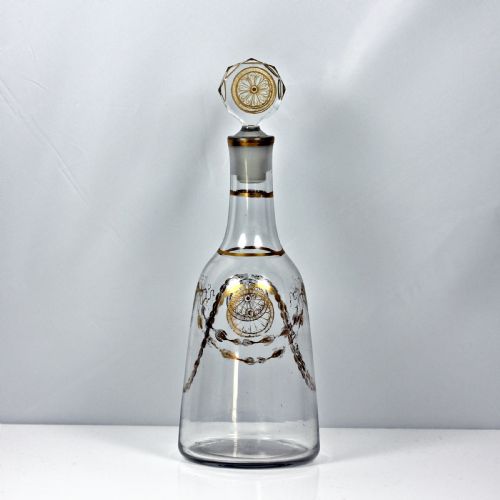


Georgian Glass Decanter
When buying a georgian glass decanter, you acquire functional table vessels shaped by eighteenth and nineteenth century glasshouses for spirits, wine and water.
Georgian Glass Decanter
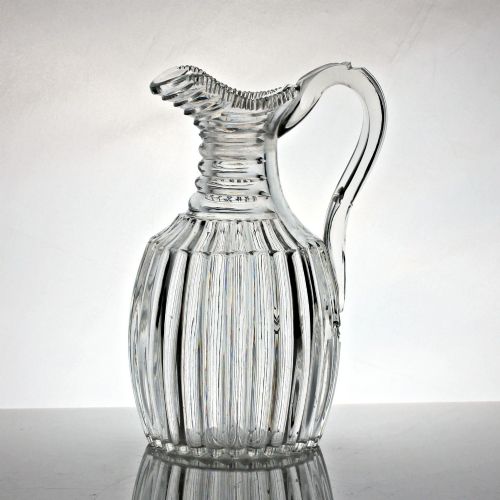
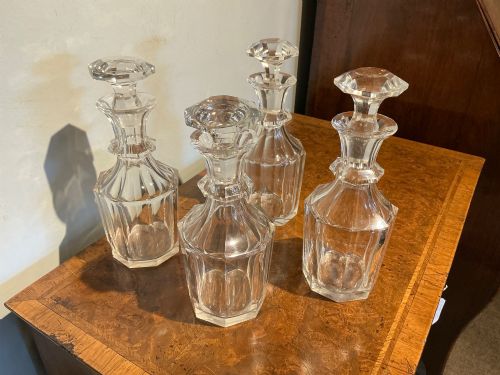
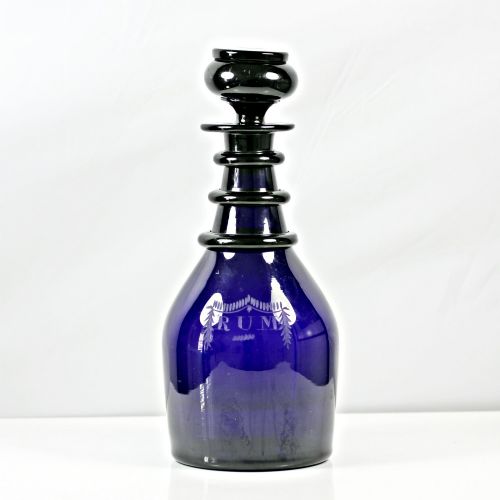
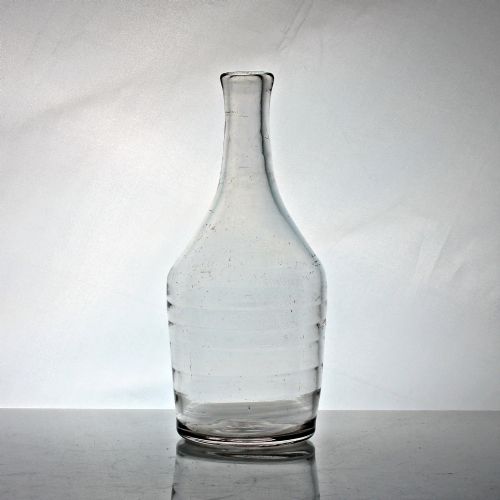
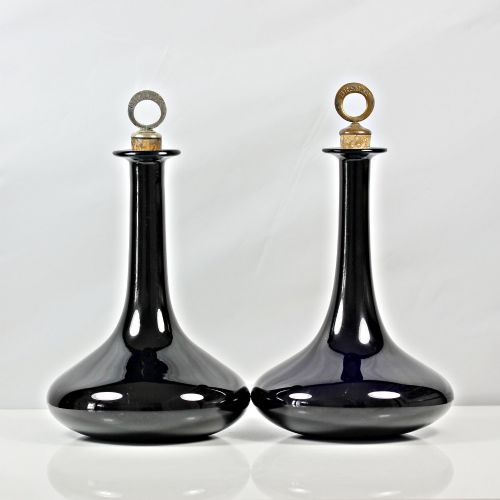
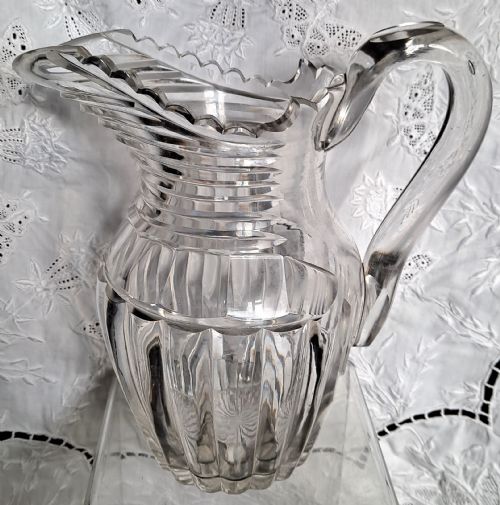
A georgian glass decanter appears in numerous configurations across this page, ranging from heavy shoulder carafes and tapered sugarloaf beer vessels to broad-based ship's decanters designed to remain stable at sea.
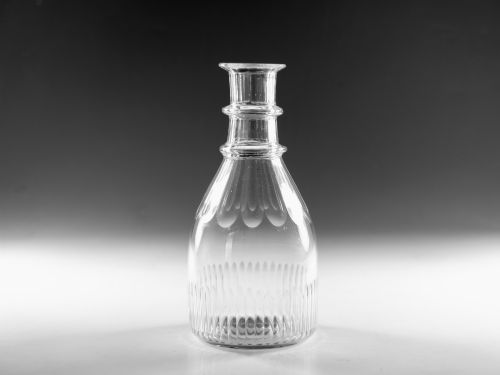
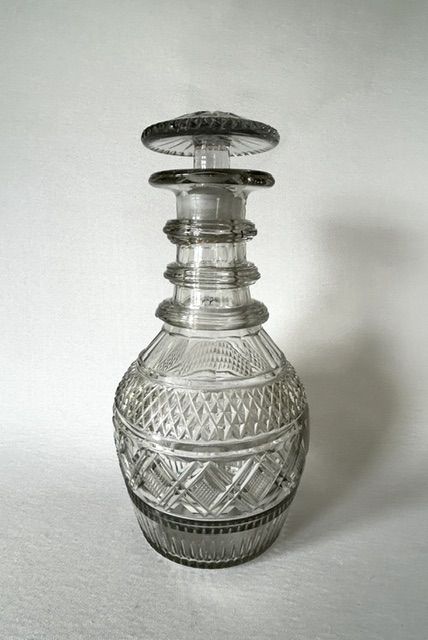
Mell decanters, Prussian shapes with distinct neck rings, and straight-sided cylindrical bottles form the core of the selection.
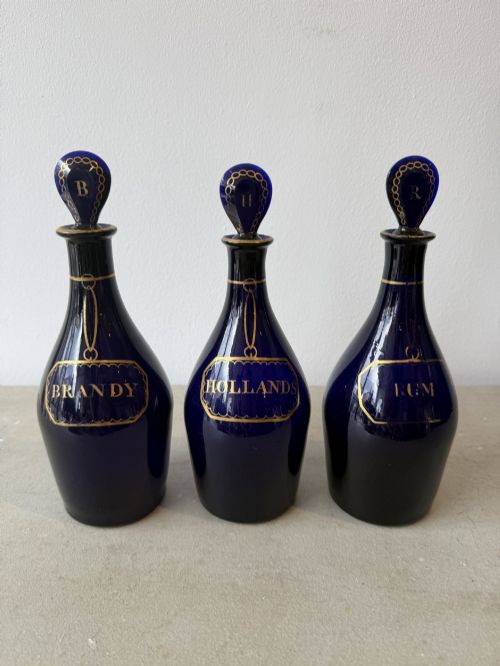
Many examples emerge from English and Irish glassworks, alongside coloured glass variants in Bristol blue, green, amethyst and opaque white opaline from continental kilns.
Materials and Techniques
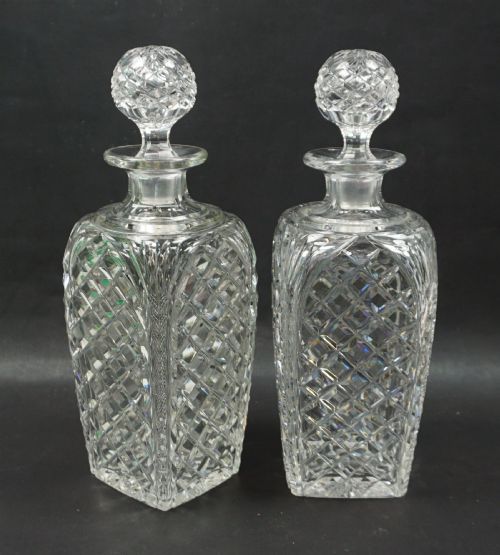
Master glassmakers utilised lead glass and heavy lead crystal, blown by hand into moulds or free-blown before undergoing deep wheel-cutting to create facets, flutes and pillar patterns.
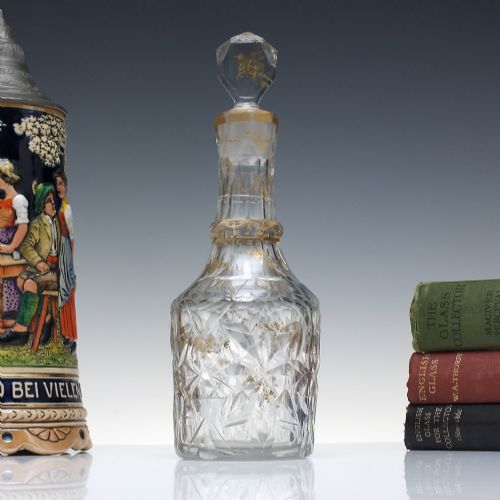
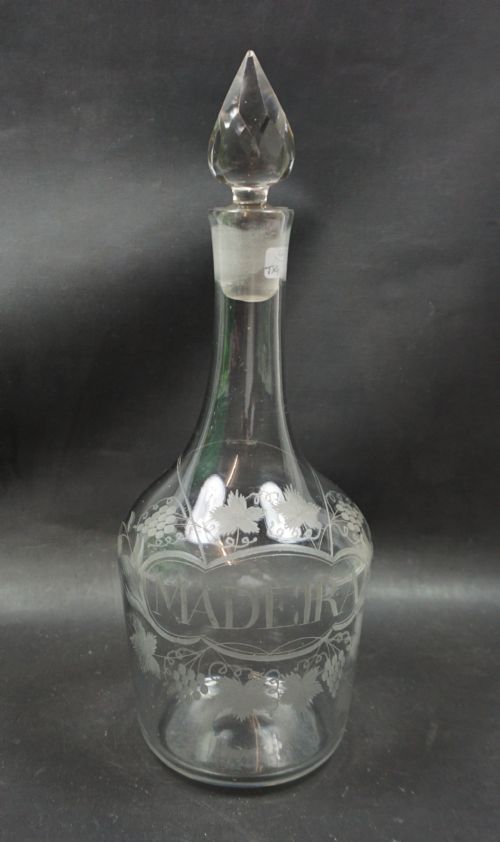
Decoration often involved intricate diamond point engraving, copper-wheel engraving, and gilding applied by specialist workshops like that of James Giles, sometimes complemented by applied enamel details and painted labels.
Georgian Glass Decanter Retail Price Guide 2026
Typical asking prices for georgian glass decanter among the pieces listed under this phrase on Sellingantiques today, from the lower quarter to the upper quarter. They describe what is for sale here now, not the wider market.
Certain green decanters feature enamelled portraits of putti riding dolphins, proving Georgian hosts loved a playful table.
Gradations of Excellence
The standard of a georgian glass decanter depends upon the clarity and weight of the metal itself, alongside the crispness and depth of the wheel-cut facets.
Pieces possessing their original matching stoppers, intact gilding, and finely formed neck rings command higher regard among collectors than altered or marriage items.
James Giles·John Ford·Charles Thomas Fox·Hester Bateman·Joseph Angell I
The Georgian Glass Decanter Glossary
- Prussian decanter
- A bottle shape featuring a tapering body and a wide base, popular during the late eighteenth and early nineteenth centuries. These vessels often incorporate multiple neck rings for secure handling.
- Mell decanter
- A mallet-shaped vessel with a rounded body and a flat or slightly concave base. They frequently appear in rich coloured glass varieties such as Bristol blue or green.
- Neck ring
- Raised horizontal ribs encircling the neck of the bottle. They provided a firm grip for pouring when hands were wet or slippery.
- Lead crystal
- A heavy glass composition containing lead oxide that increases brilliance and refractive index. This material allowed cutters to achieve sharp, deep facets without chipping.
- Ship's decanter
- A low, wide-bodied bottle designed with a broad base to prevent tipping aboard a moving vessel. They are characteristic of the Regency period.
Georgian Glass Decanter: Frequently Asked Questions
How were ship's decanters used?
Ship's decanters were built with exceptionally wide bases and low centres of gravity. This prevented the bottles from rolling or spilling across dining tables during turbulent sea voyages.
Officers and passengers utilised them to serve wine safely while travelling. Their sturdy profile made them practical for daily use on naval vessels and merchant ships.
What are Bristol blue decanters?
Bristol blue decanters are deep cobalt-coloured glass vessels produced in imitation of precious lapis lazuli. Glasshouses added cobalt oxide to the molten metal to achieve this intense shade.
These coloured bottles became fashionable for serving spirits during the late Georgian period. Collectors prize them today for their vibrant hue and strong visual contrast against mahogany sideboards.
How do I identify a Georgian stopper?
Georgian stoppers were individually ground to fit the neck of each specific decanter by hand. Look for matching tool marks, identical wear patterns, and corresponding numbers cut into both the base of the stopper and the interior of the rim.
Original stoppers enhance the historical integrity of the vessel. Replacement stoppers often sit unevenly or show mismatched glass colour.
Where were Irish decanters made?
Irish decanters originated from prominent glass-cutting centres such as Waterford, Cork and Dublin. These factories benefited from abundant local fuel and relaxed tax laws during the late eighteenth century.
Irish pieces are typically recognised by their heavy weight, exceptional metal clarity, and deeply cut geometric patterns. They frequently feature elaborate diamond cross-cutting across the body.