
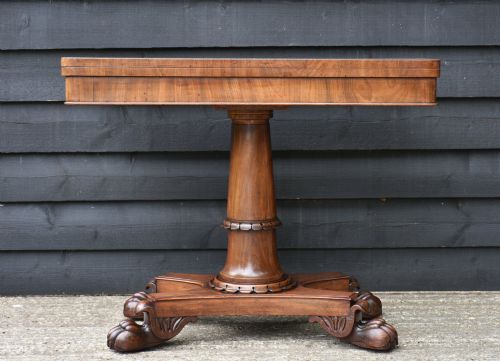
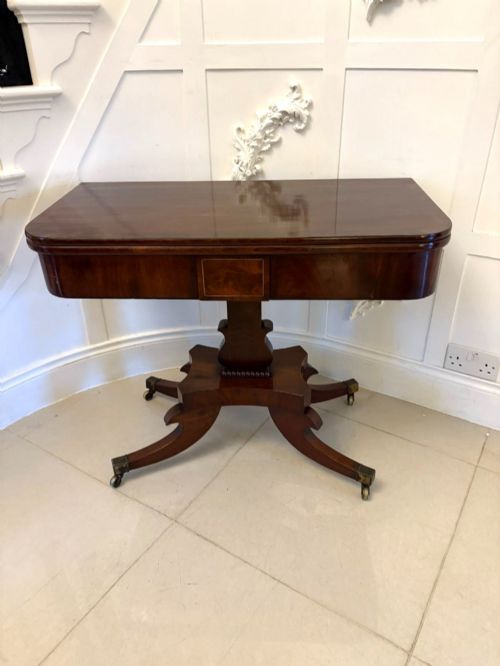
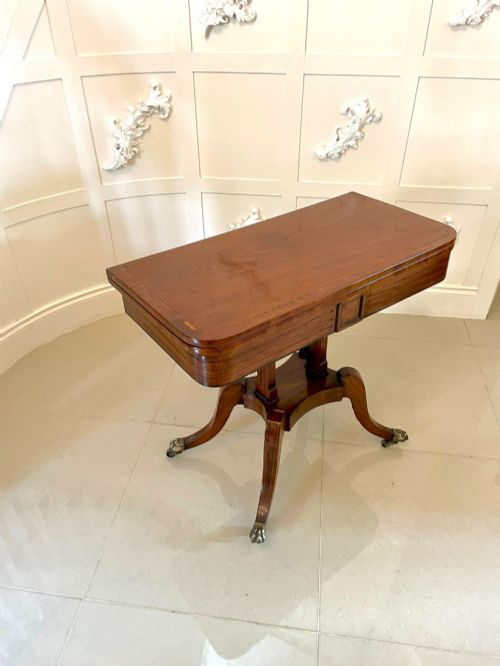
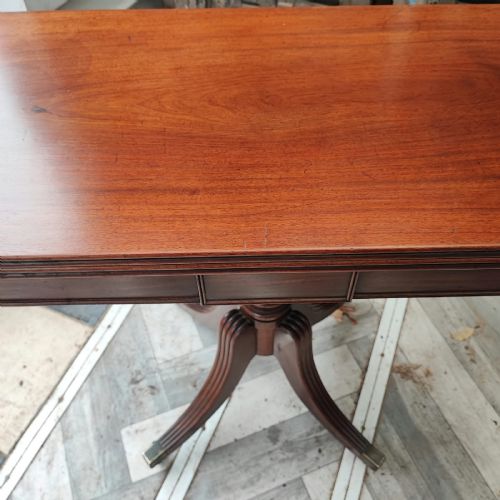
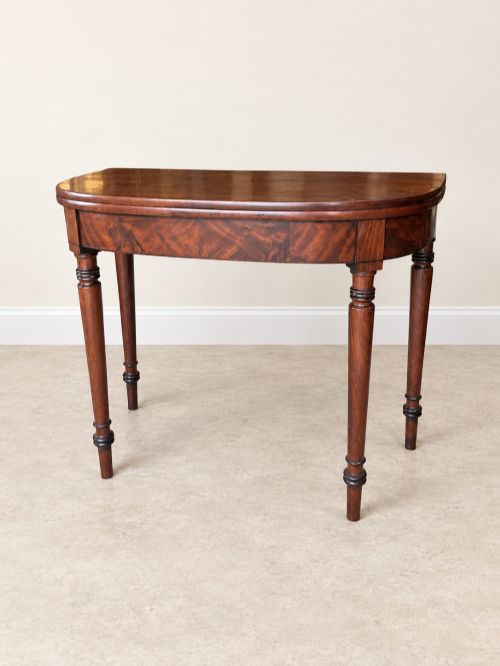

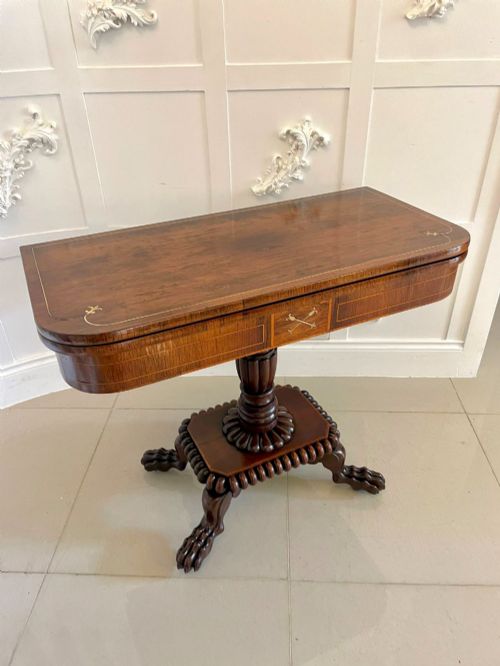
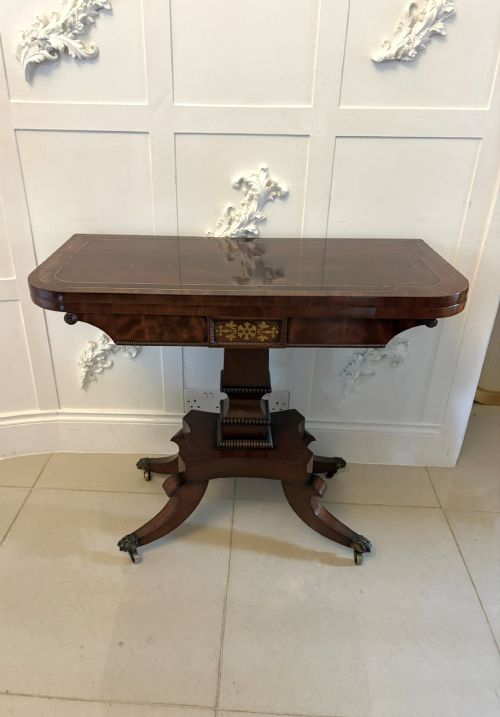
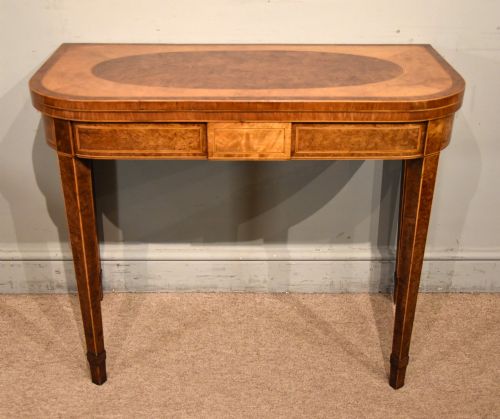
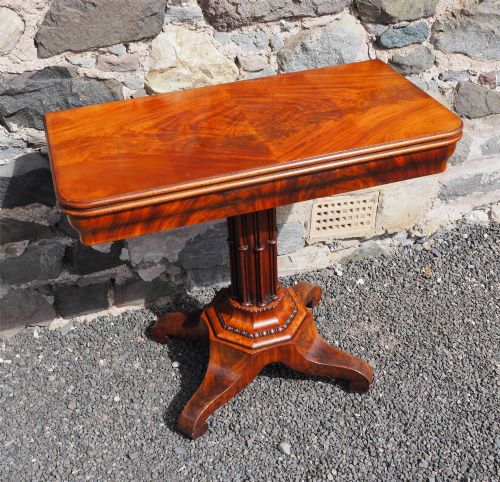
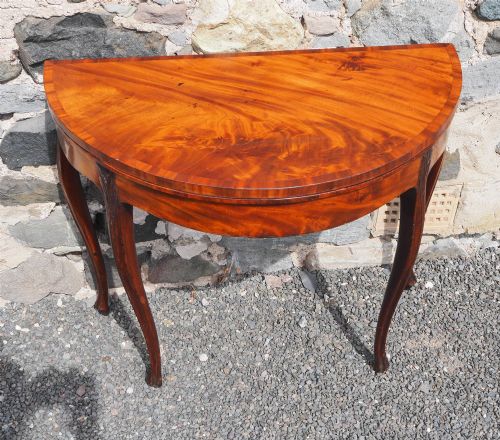
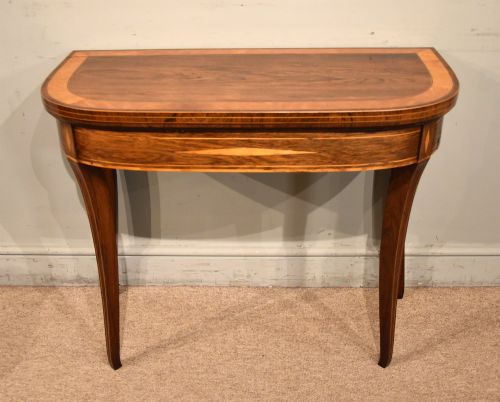
Georgian Fold Over Tea Table
When you search for a georgian fold over tea table, you encounter ingenious dual-purpose furniture designed to expand for evening card games or tea service.
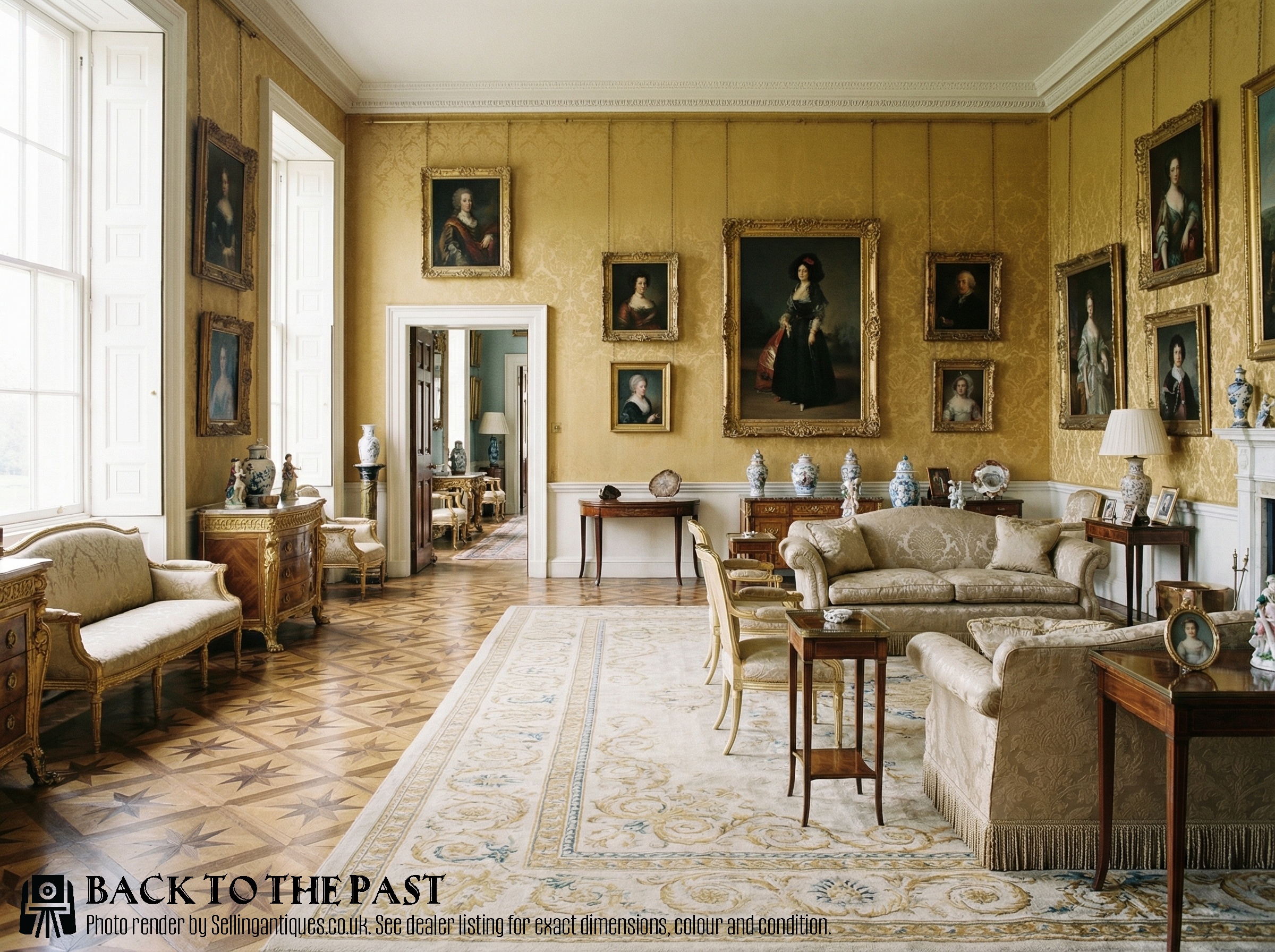
Georgian Fold Over Tea Table
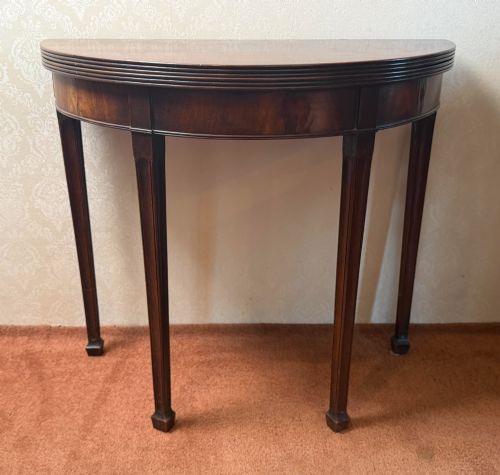
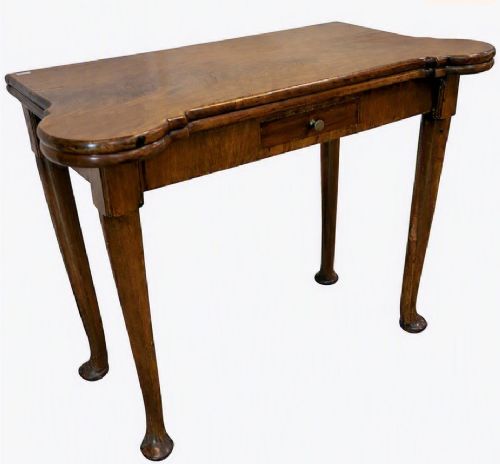
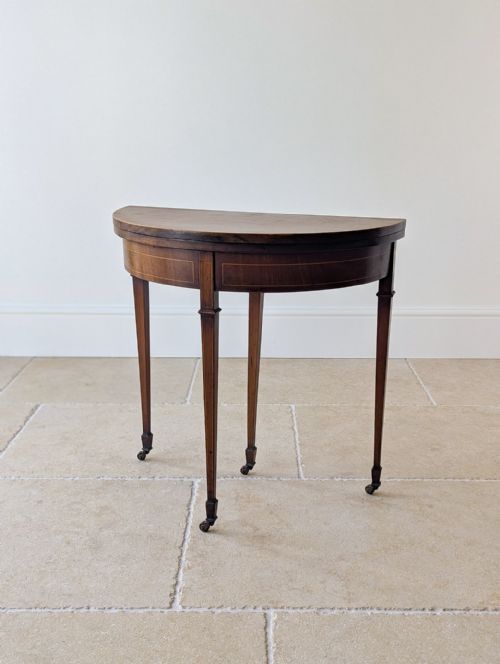
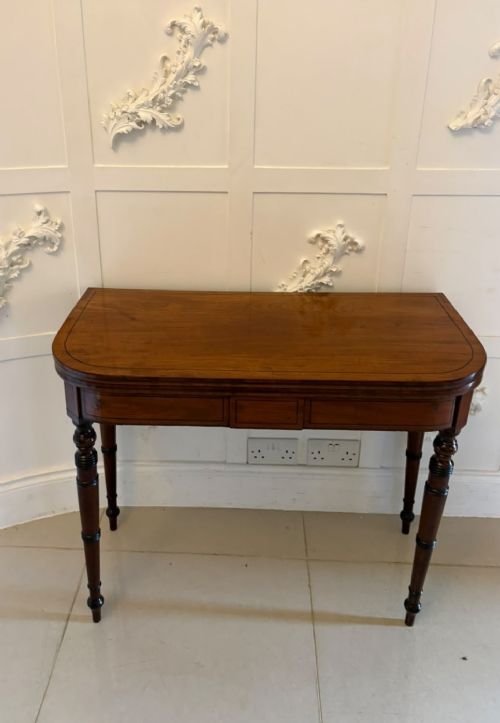
A georgian fold over tea table functions as a compact console or side table against a wall before opening its hinged top to double its surface area. The form adapts readily to domestic spaces through D-shaped, rectangular, or demi-lune formats that suit reception rooms.
Mahogany predominates among surviving pieces, often enriched with flame veneer, satinwood, or rosewood crossbanding. Examples span the eighteenth and nineteenth centuries, taking in stylistic phases from George III through to Regency and William IV iterations.
Makers designed these pieces with pivoting, gateleg, or concertina actions to support the opened leaf safely during use. While many served for tea, numerous variants double as card tables featuring baize-lined playing surfaces.
Distinctions in quality
Quality reveals itself in the selection of timber figures, where symmetrical flame mahogany or scarce burr yew command attention. The crispness of carved details, such as rope-twist edges or sabre legs, indicates the hand of a skilled cabinet maker rather than routine workshop production.
Internal engineering marks the difference between standard and superior pieces. Smooth concertina actions that expand the frame evenly to support the folded leaf demonstrate meticulous joinery compared to simpler pivoting mechanisms.
Listings feature mahogany, rosewood, satinwood, and walnut across eighteenth and nineteenth-century periods.
Bruce & Burns of Edinburgh·Gillows of Lancaster
The Georgian Fold Over Tea Table Glossary
- Demi-lune
- Having a half-moon shape with a flat back edge designed to stand flush against a wall. This profile became particularly popular for late eighteenth-century card and tea tables.
- Crossbanding
- A strip of veneer applied perpendicularly to the grain of the main surface around the border. It frames the top of the table in a contrasting timber species.
- Concertina action
- An expanding frame mechanism that pulls outward accordion-style when the top unfolds. This design provides four matching legs for support rather than leaving a central leg unsupported.
- Stringing
- Very thin inlay lines of contrasting wood or light-coloured material embedded into the surface. It provides delicate linear decoration around table edges and drawer fronts.
- Patina
- The deep surface sheen and mellow colour developed by aged wood through decades of handling and polishing. It serves as a sign of genuine age.
Georgian Fold Over Tea Table: Frequently Asked Questions
How do you open a fold-over table safely?
Lift the upper leaf gently and swing the supporting leg or frame outward to take the weight before lowering the leaf flat.
Forcing a stiff hinge risks splitting the timber or straining the pivot mechanism.
Where were these tables placed in a home?
They stood against parlour or drawing room walls as slim side or console tables when closed.
Hosts moved them into the centre of the room when guests arrived for tea or card games.
How do I tell a tea table from a card table?
Tea tables generally feature plain wooden interiors designed for porcelain or silver service.
Card tables often retain original baize or felt linings inside to cushion playing pieces.
What timber is most common?
Mahogany forms the vast majority of surviving examples, often highlighted with figured veneers.
Cabinet makers also utilised rosewood, satinwood, and occasionally oak.