
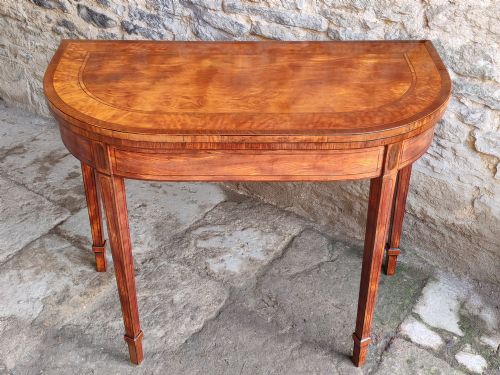
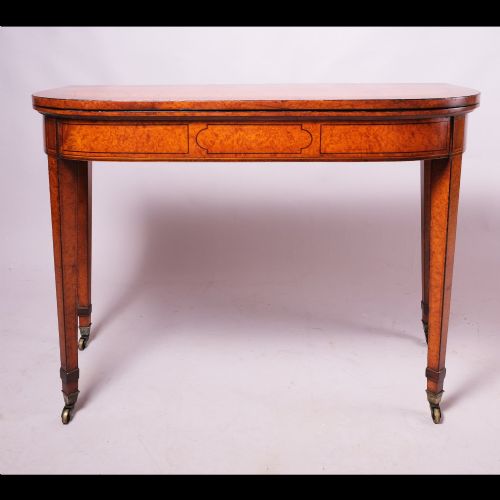
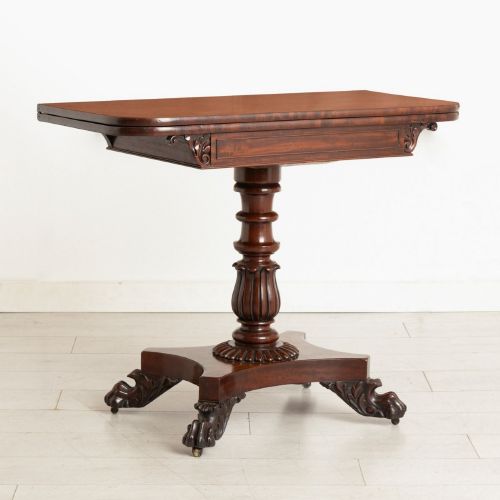
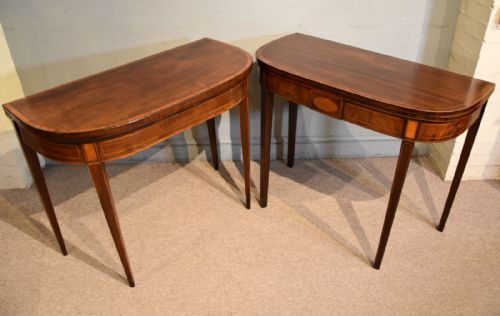
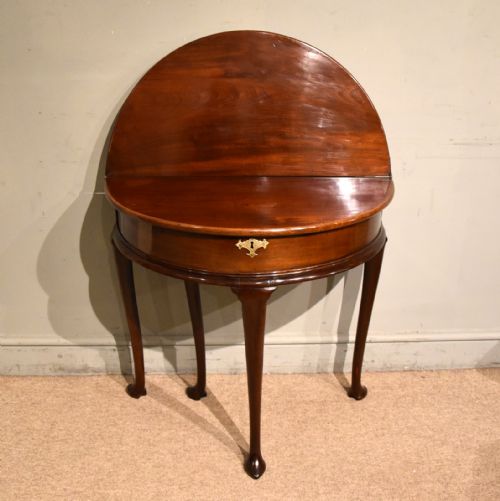


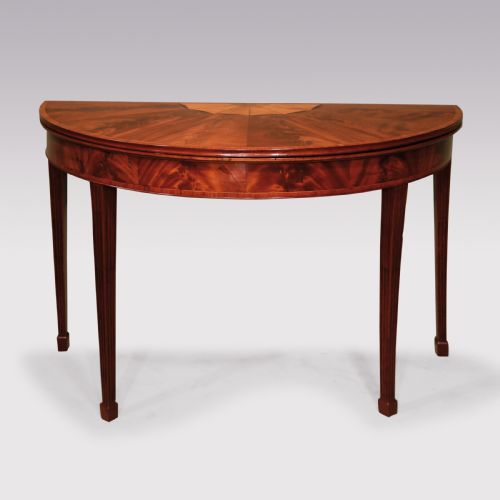


Late Georgian Card Table
These late georgian card table pieces offer clever folding mechanics and handsome timber surfaces, bringing adaptable elegance to any sitting room.
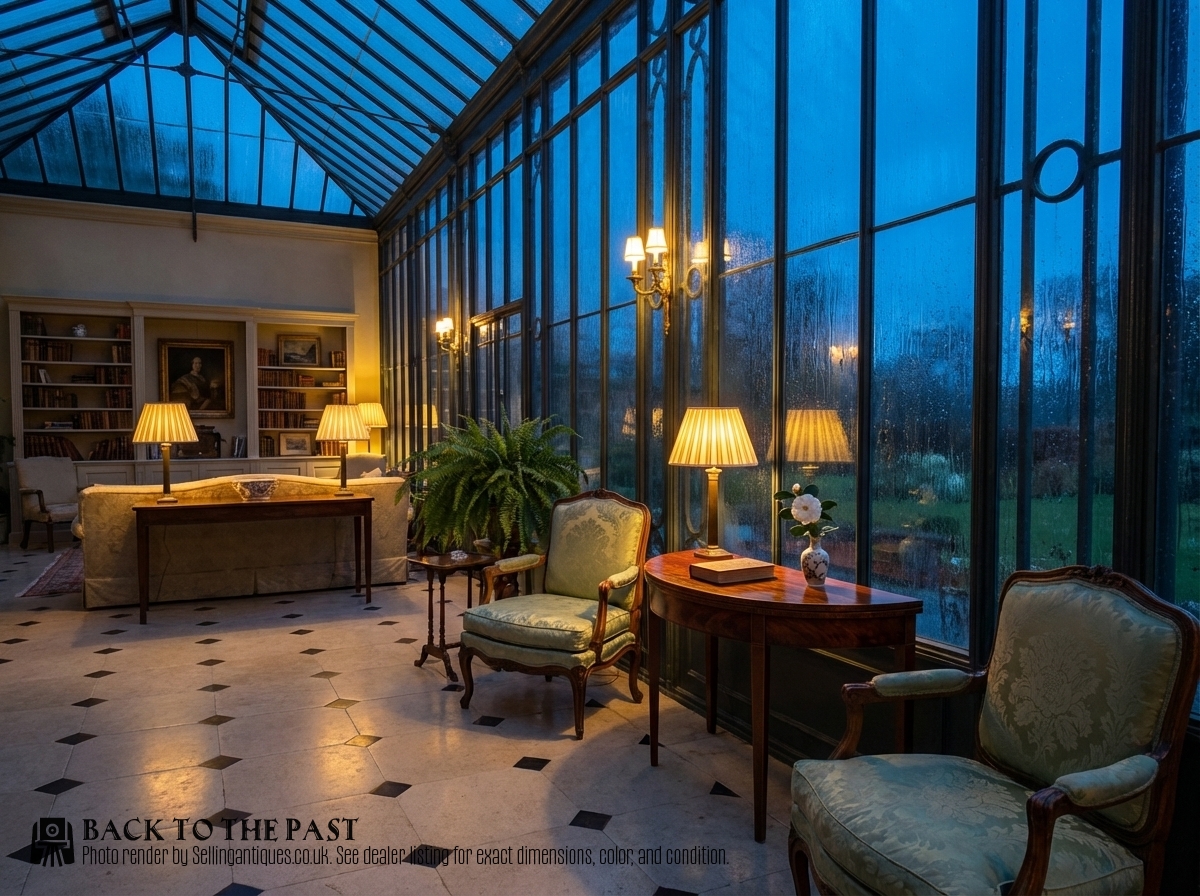
Late Georgian Card Table
A late georgian card table provides a folding top that opens to reveal a baize-lined surface for evening games, doubling as a console or tea table when closed against the wall.
The pieces encountered on this page span the late eighteenth century and the regency period, predominantly taking the form of card tables, tea tables, and games tables.
Makers of this era employed classic silhouettes associated with george iii, sheraton, and neoclassical design, resulting in versatile tables that transition easily from functional furniture to striking display surfaces.
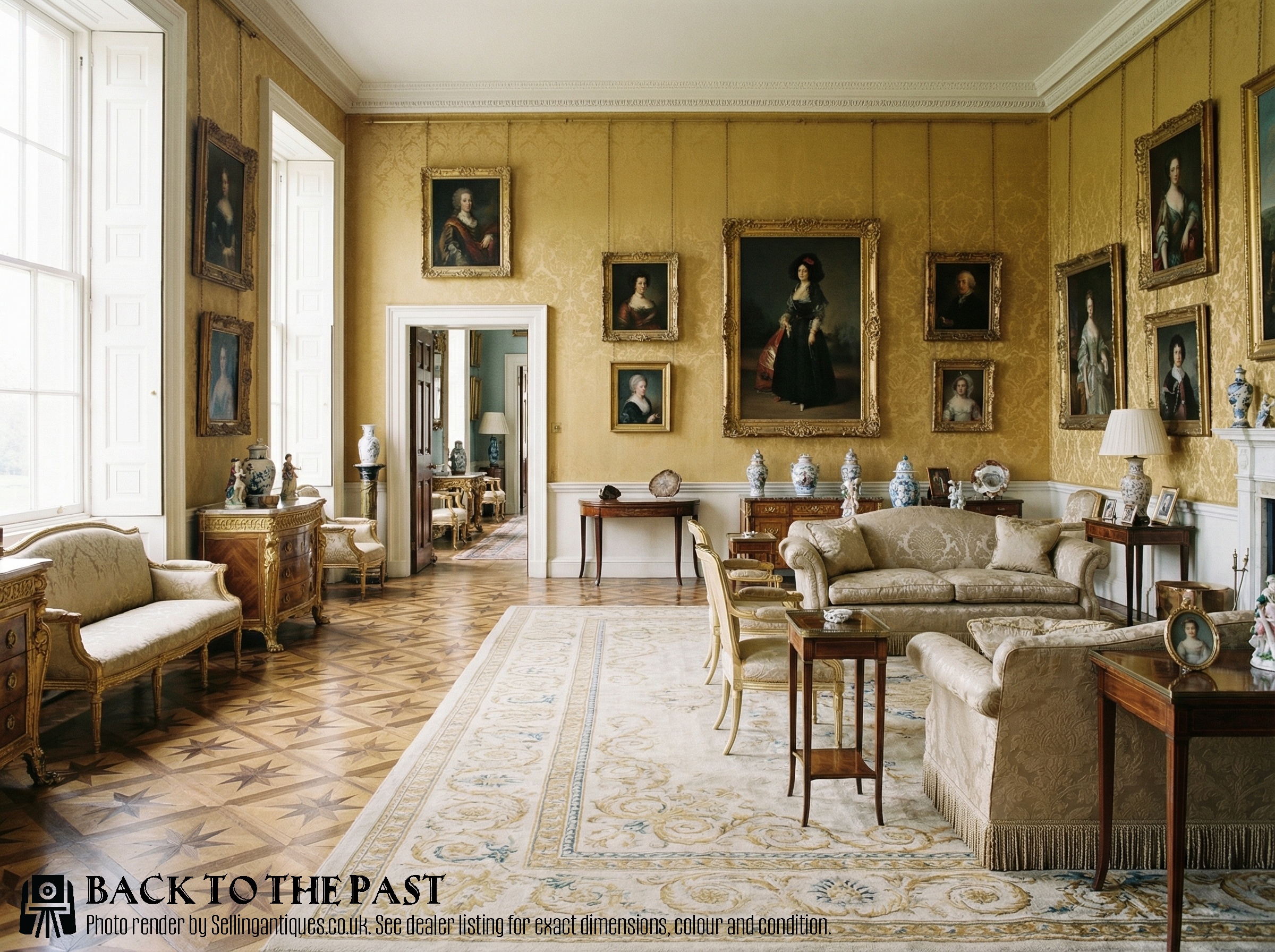
Materials and construction
Cabinet makers built these tables using dense timbers such as mahogany, rosewood, and satinwood, often accentuating the primary wood with contrasting stringing in ebony, boxwood, and amboyna.
Inlay and veneering techniques demanded precise hand-cutting, while hinged folding tops relied on sturdy brass hardware to support the weight of the turning leaf without strain.
Mahogany forms the primary timber across the majority of these listings, accompanied by rosewood, satinwood, and decorative wood inlay.
Distinctions in quality
The finest examples display superior timber selection with rich grain patterns across the folded top, alongside crisp hand-cut inlay that remains flush with the surrounding wood.
Superior construction is evident in the smoothness of the pivoting mechanism and the stability of the folding leaf, ensuring the table stands level and firm whether open or closed.
The Late Georgian Card Table Glossary
- Fold-over
- A hinged tabletop design that doubles the surface area when opened, commonly found on card and tea tables. This mechanism allows a compact console to transform into a full-sized gaming surface.
- Inlay
- A decorative technique where contrasting woods or metals are fitted into recessed channels within the primary surface. This method creates geometric borders or pictorial motifs.
- Stringing
- Thin, narrow lines of contrasting wood inlay used to outline table edges and drawer fronts. It adds subtle linear definition to the piece.
- Console table
- A table designed to stand against a wall, frequently paired with mirrors or used in entryways. During this period, folding versions doubled as card tables.
Late Georgian Card Table: Frequently Asked Questions
How do I open the table?
The hinged top rotates and folds open, supported by a swing leg or a pivoting rear rail that moves out to bear the weight of the leaf.
Take care to lift the top clearly before rotating it to avoid putting pressure on the brass hinges.
Were these only used for cards?
While designated for gaming, the fold-over design served multiple purposes in the home, including tea service and general display.
Many examples function equally well as side tables or occasional tables when closed.
How do I care for the wood surface?
Maintain the finish by dusting with a soft, dry cloth and avoiding placement near direct heat sources or strong sunlight.
Wax polish applied sparingly helps preserve the sheen of mahogany and rosewood surfaces over time.
How do I distinguish george iii from regency pieces?
George iii pieces typically display restrained neoclassical proportions and straight tapering legs, often with understated mahogany or satinwood veneers.
Regency examples frequently introduce bolder rosewood grains, heavier pedestal bases, and brass mounts reflecting changing tastes.