
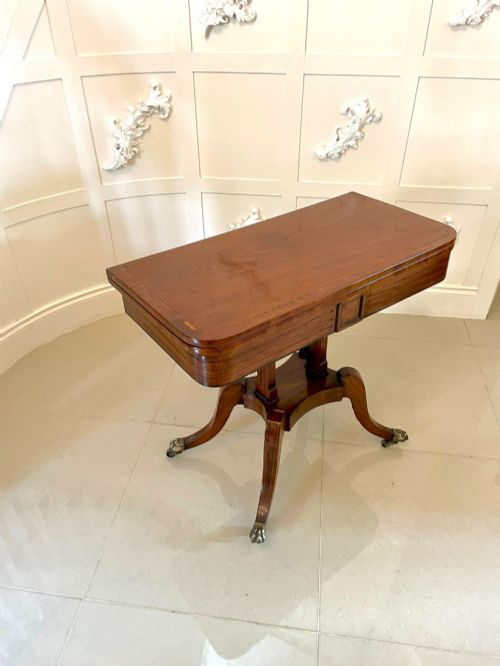

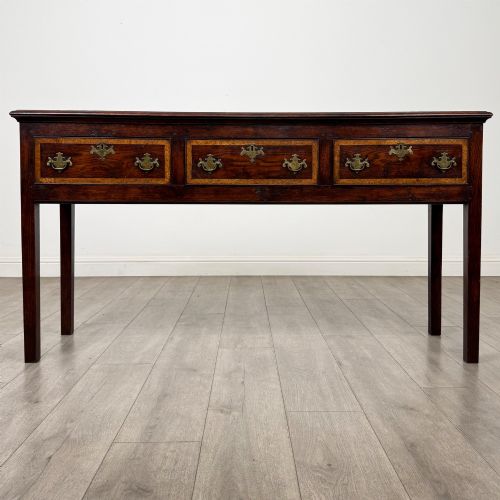
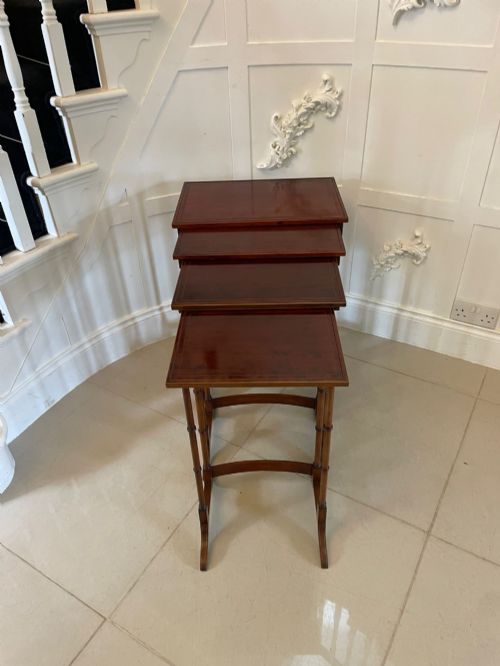
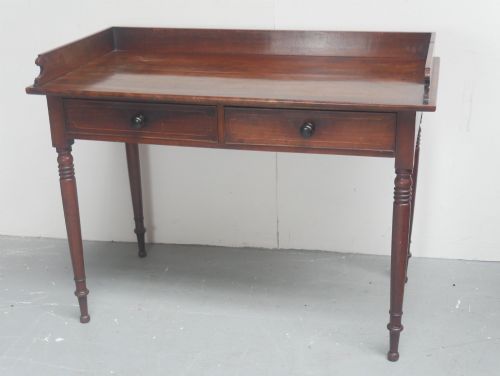
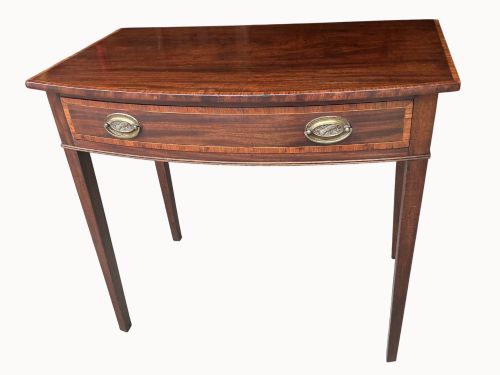
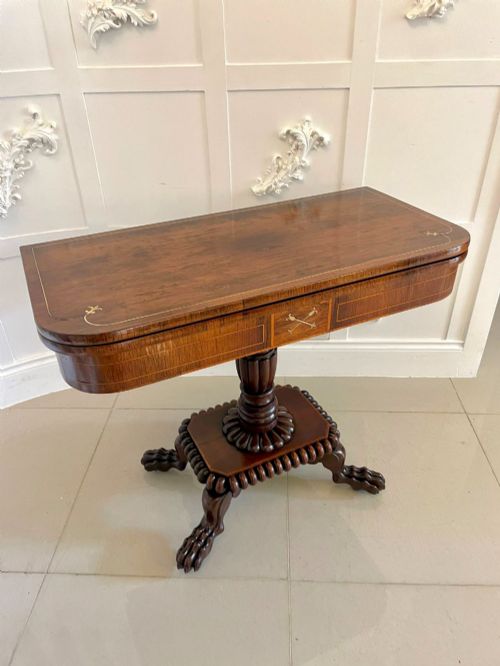
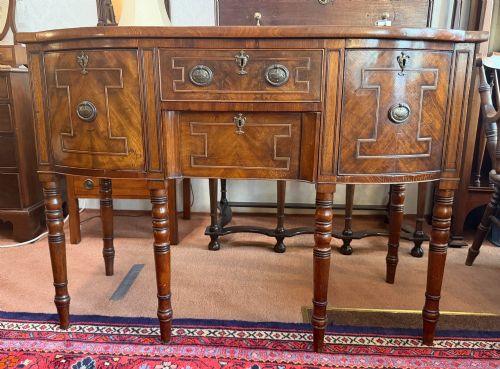
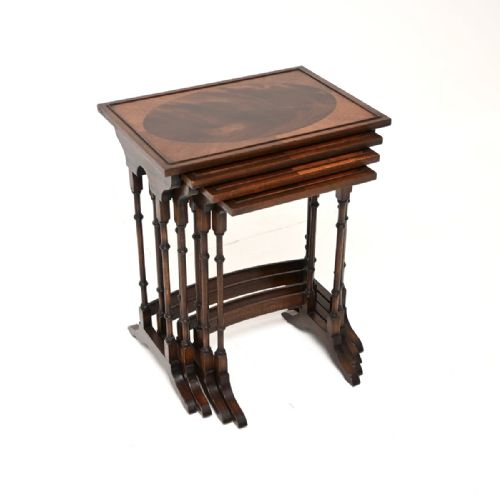
Georgian Inlay Side Table
When you search for georgian inlay side table, you find a mahogany or satinwood surface shaped by Sheraton or Regency hands.
Georgian Inlay Side Table
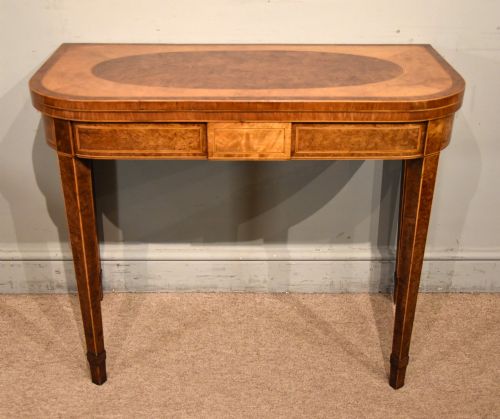
A georgian inlay side table brings together small occasional furniture built during the Georgian, Regency, and Edwardian periods. These tables appear as console tables, card tables, Pembroke tables, and demi-lune tables designed for domestic use.
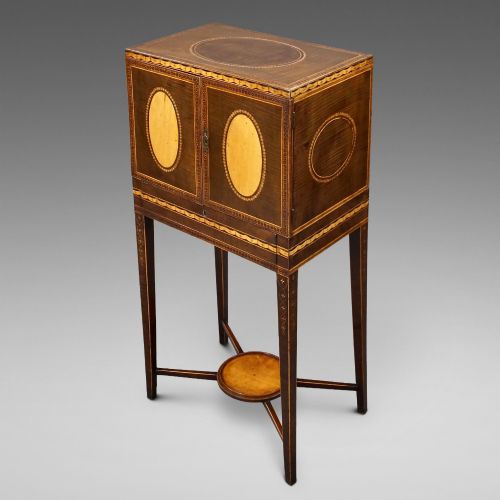
Mahogany forms the primary body across most examples, often finished with satinwood, boxwood, or rosewood veneer. Cabinetmakers shaped these timbers into rectangular, bow-fronted, and curved surfaces supported by slender legs.
The pieces on this page span the late eighteenth century through to early twentieth-century revivals. Side tables, games tables, and tea tables dominate the selections recorded from past and present stock.
How they were made
Cabinetmakers utilised solid mahogany and oak as structural carcasses while applying finer timbers like satinwood, harewood, and burr yew as decorative veneers. Boxwood, ebony, and brass formed delicate stringing and inlay work across the tops and edges.
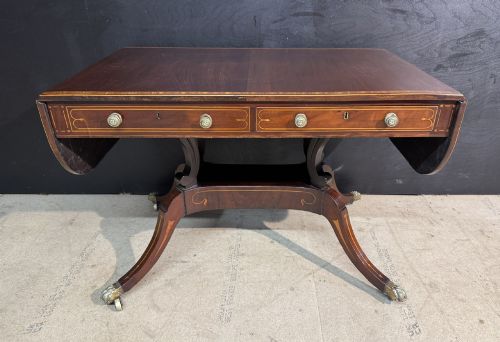
Makers constructed drop-leaf mechanisms, folding card table tops, and Pembroke flaps using traditional joinery. Surfaces received hand-applied polish to highlight the natural grain of Honduras mahogany and amboyna.
Materials recorded across the inventory feature brass galleries, burr yew wood, amboyna, and contrasting boxwood and ebony stringing.
What varies in quality
Quality rests in the precision of the contrasting timber inlays and the choice of figured wood veneers on the top surface. Richly grained Honduras mahogany and crisp boxwood stringing elevate a piece far above plain constructions.
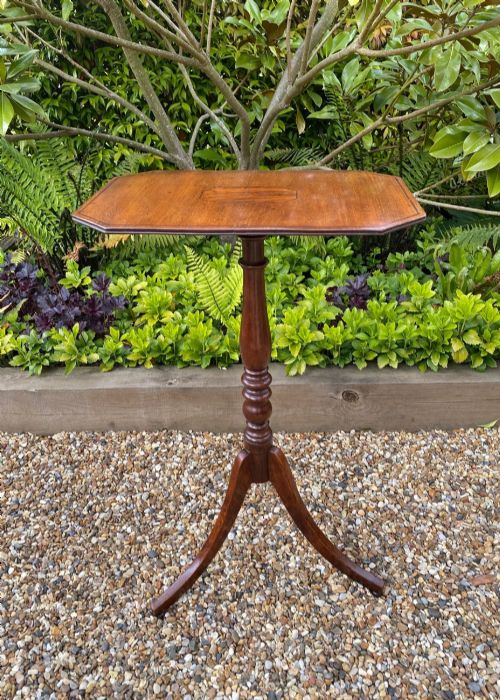
The sophistication of the form dictates distinction, from simple tripod candle stands to serpentine demi-lune console tables with complex marquetry. Structural integrity in the legs and hinges completes the measure.
The Georgian Inlay Side Table Glossary
- Demi-lune
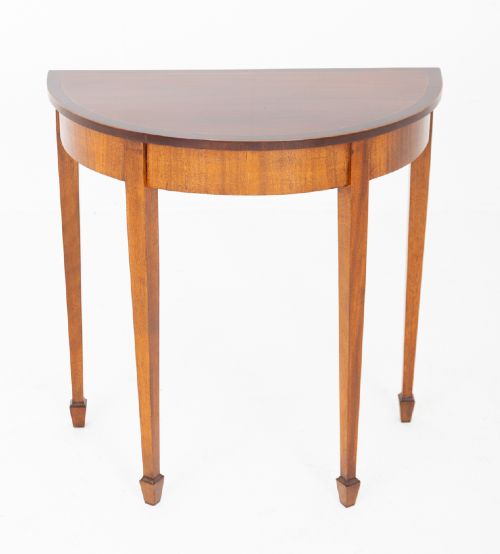
- A half-moon shape used for console and side tables designed to sit flush against a wall. These tables frequently feature fold-over tops for games or tea.
- Pembroke table
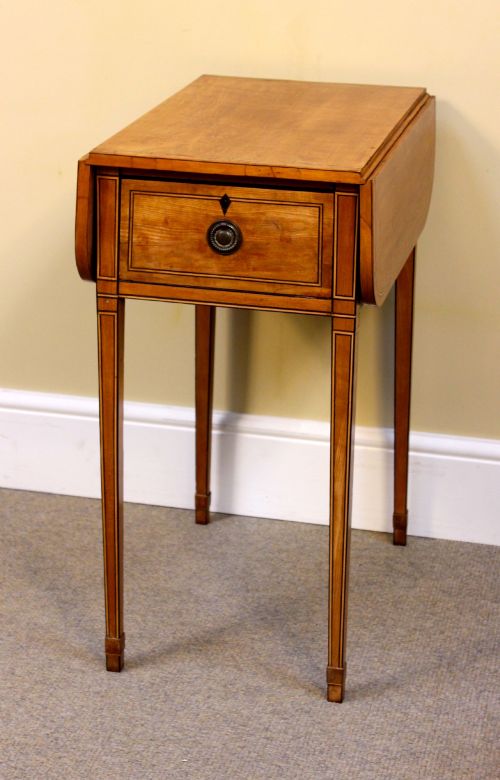
- A small rectangular table with hinged drop leaves on either side and a single drawer. This form emerged during the eighteenth century for versatile room use.
- Crossbanding
- A border strip of veneer applied to the edge of a table top with the grain running perpendicular to the centre panel. This technique creates a neat framing effect.
- Stringing
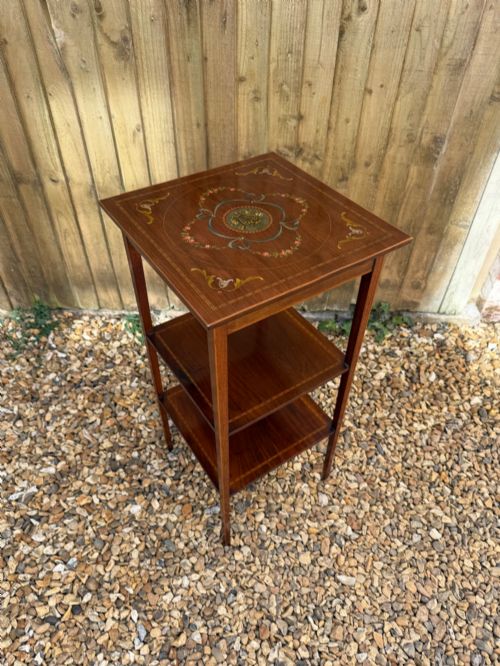
- Thin inlay lines of contrasting light or dark wood, such as boxwood or ebony, embedded into the surface. Makers utilised this linear detail to define table borders and drawer fronts.
Georgian Inlay Side Table: Frequently Asked Questions
How do I identify a Georgian side table?
Look for timber choices such as mahogany or satinwood combined with boxwood inlay and classic proportions. The construction methods and secondary woods like oak provide clues to the period.
Examine the style details, including tapered legs and crossbanded borders, which link the piece to eighteenth or nineteenth-century workshops.
What were Pembroke tables used for?
Pembroke tables served as versatile breakfast, writing, or occasional tables in Georgian sitting rooms. The drop leaves allowed the furniture to expand when needed.
Owners tucked them against walls or unfolded the leaves to create a larger surface for daily domestic tasks.
What is the difference between Sheraton and Regency styles?
Sheraton design relies on classical geometry, satinwood veneers, and refined boxwood stringing developed in the late eighteenth century. The lines remain straight, balanced, and light.
Regency design draws on heavier classical influences, occasionally incorporating rosewood, brass inlay, and bolder carved elements as the nineteenth century progressed.
Can I use a antique card table for dining?
Antique card tables feature fold-over tops supported by pivoting legs, designed primarily for parlour games or tea rather than heavy dining. The folding mechanisms suit lighter domestic use.
Placing lamps or decorative items on the surface preserves the antique hinges and delicate mahogany or satinwood veneers.