
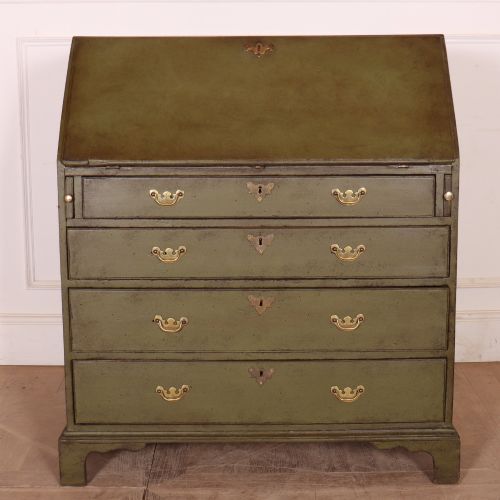

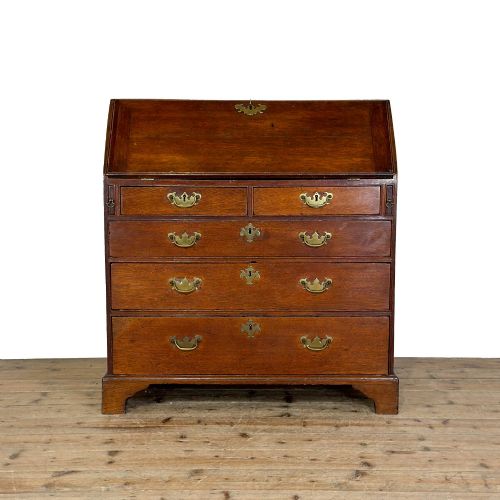
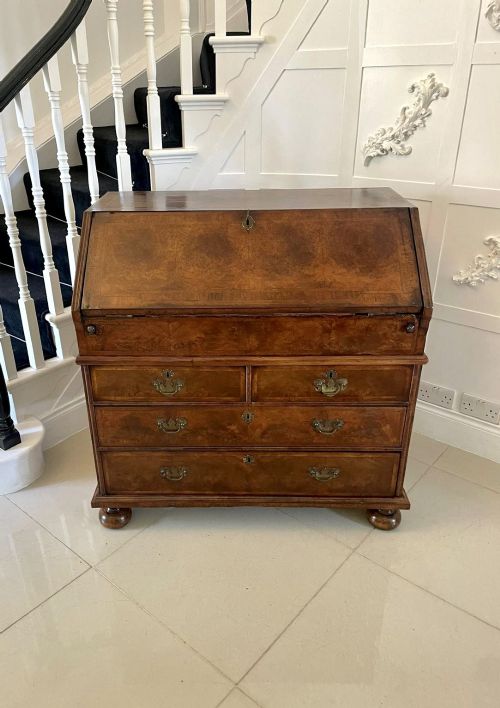
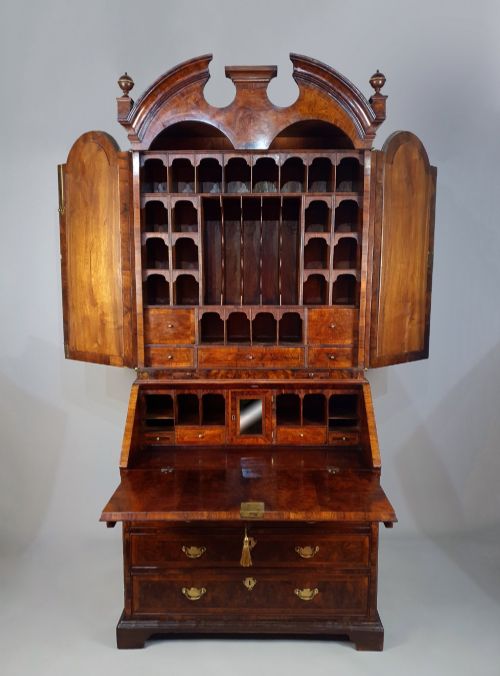
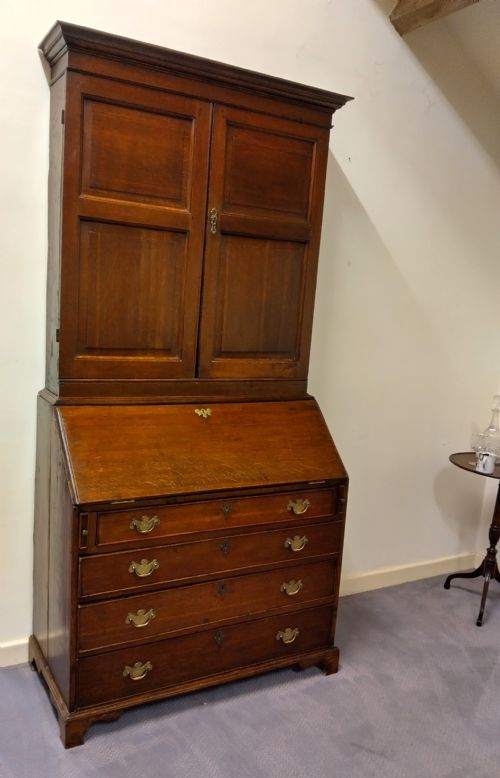
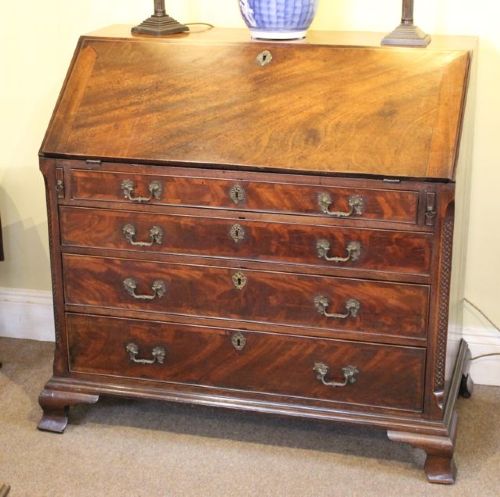
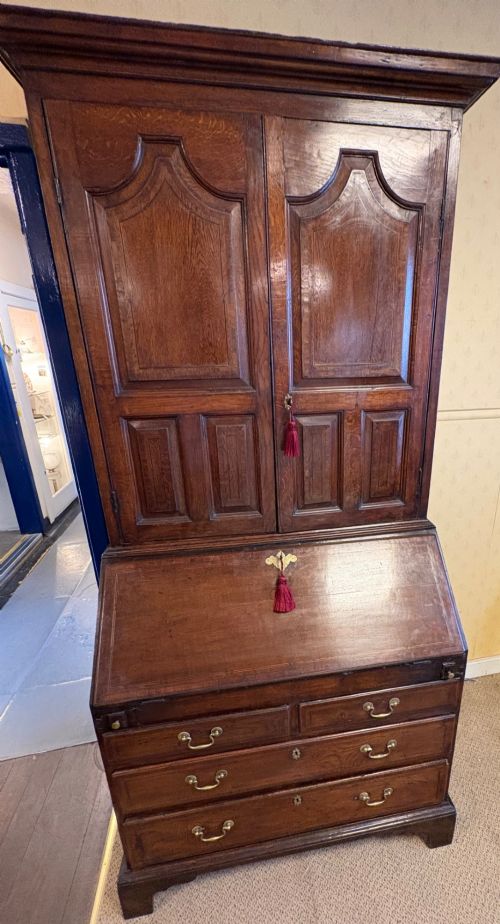
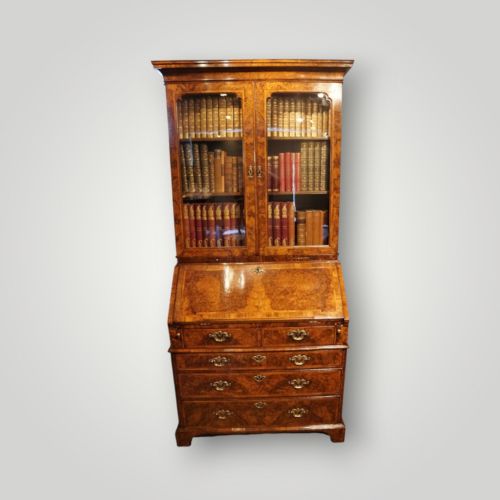


Georgian Fall Top Desk
A georgian fall top desk brings solid construction and fitted compartments to a room, offering a practical writing surface with hidden security.
Georgian Fall Top Desk
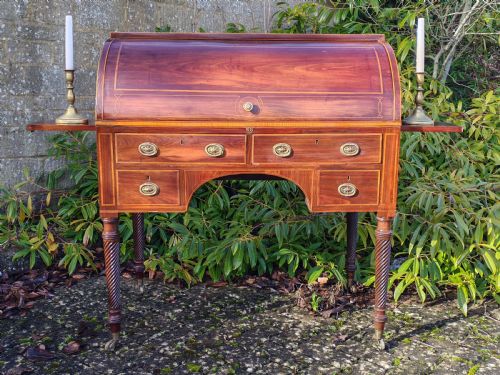
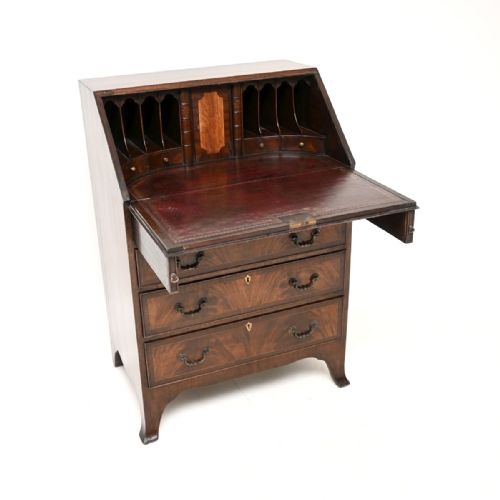
A georgian fall top desk is typically encountered as a bureau or writing desk, featuring a hinged flap that drops to create a slant writing surface. These pieces span from the late seventeenth century through the nineteenth century, encompassing styles from William and Mary to George III and Regency periods.
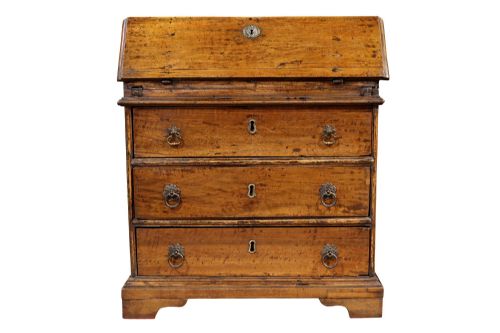
Buyers will find both compact single pieces and large bureau bookcases divided into sections with glazed tops and fitted interiors. The forms range from plain oak and painted English surfaces to figured mahogany and burr walnutveneered bodies.
Origins include country workshops producing solid oak examples as well as metropolitan cabinet makers working in walnut, mahogany, and satinwood with complex herringbone inlay. Many retain their original brass handles, ironwork, candle slides, or stepped internal compartments.
How they were made
Construction relies heavily on timber framing, utilising solid oak for early vernacular pieces and fine veneers of mahogany, walnut, burr walnut, and satinwood applied to secondary woods for later formal items. Makers employed dovetail joints for drawer construction and integrated brass or iron hardware for hinges, escutcheons, and drop handles.
Surface decoration involves timber figure matching, such as herringbone inlay, alongside painted finishes on selected English pieces. Internal compartments are often stepped or arranged with small drawers and pigeonholes behind the main fall flap.
Listings span multiple centuries, incorporating oak, mahogany, walnut, and satinwood pieces built across the Georgian and Regency eras.
What varies in quality
Quality separates pieces through the selection of timber figure, such as richly patterned burr walnut or figured mahogany, compared to plainer grain or faux finishes. The sophistication of the internal fitments, including secret drawers and stepped pigeonholes, also distinguishes finer cabinet work.
The integrity of original construction, surface patination, and surviving metalwork such as iron hinges or brass handles influence the standing of each piece. Adaptation over time, such as conversion for modern media use, alters the original character of the furniture.
The Georgian Fall Top Desk Glossary
- Bureau
- A writing desk with a sloping hinged flap that opens to reveal drawers and pigeonholes. This term frequently overlaps with fall top desks in period listings.
- Fall flap
- The hinged board that drops down to form a writing surface. It conceals the internal compartments when closed.
- Herringbone inlay
- A decorative banding made of small veneer pieces laid in a V-shaped pattern. It frames drawer fronts and panel edges on walnut furniture.
- Candle slide
- A pull-out wooden board mounted beneath the writing flap. It held lighting sources above the desk surface.
- Stepped interior
- An arrangement of internal drawers and pigeonholes rising in tiers. This feature adds complexity to the writing compartment.
Georgian Fall Top Desk: Frequently Asked Questions
What is a fall top desk?
A fall top desk is a writing desk with a hinged flap that drops forward to provide a slanted writing surface. When closed, the flap conceals a fitted interior of small drawers and pigeonholes.
These pieces developed through the seventeenth and eighteenth centuries, evolving from simple solid oak forms into sophisticated veneered cabinet furniture.
How do I identify a Georgian bureau?
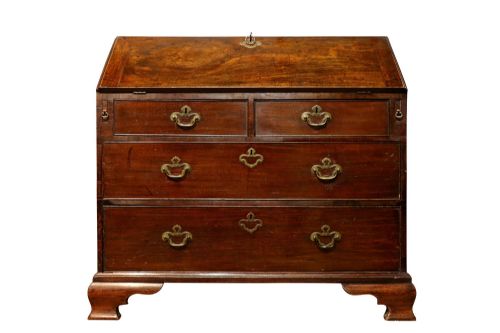
Georgian bureaux are identified by their proportion, timber choice, and internal drawer configuration. They commonly feature mahogany or walnut veneers, bracket feet, and brass hardware characteristic of the eighteenth century.
Style markers range from plain Queen Anne and George I designs to heavier George III proportions and refined satinwood cylinder formats.
Which woods were used for these desks?
Early pieces primarily use solid oak or walnut, frequently accented with herringbone inlay or burr walnut veneers. Eighteenth-century examples shift towards mahogany and satinwood, alongside occasional painted finishes.
Selection depends on the period and the maker's workshop, with figured grains reserved for more expensive formal furniture.