

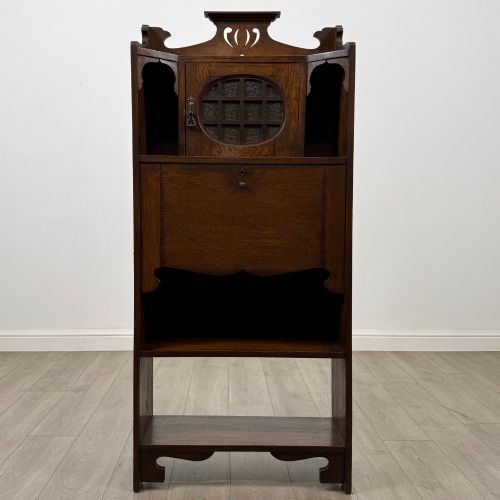
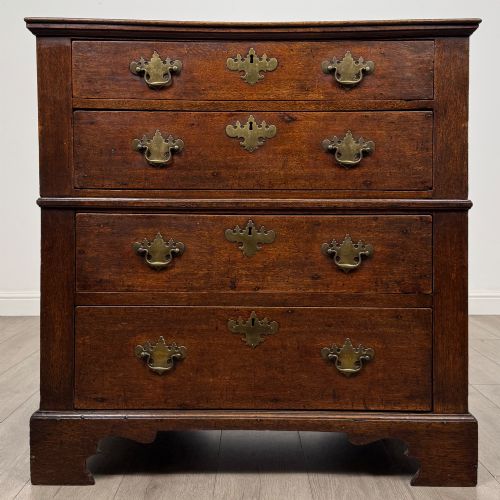
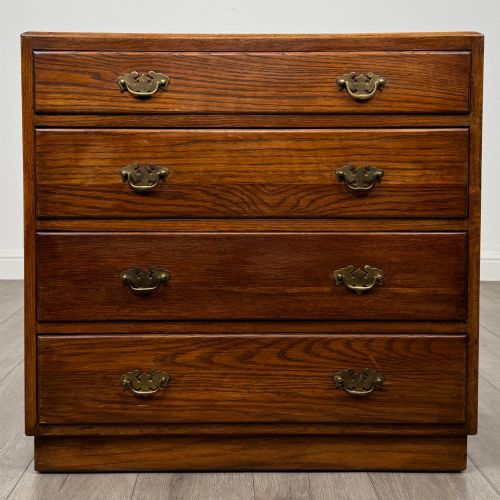
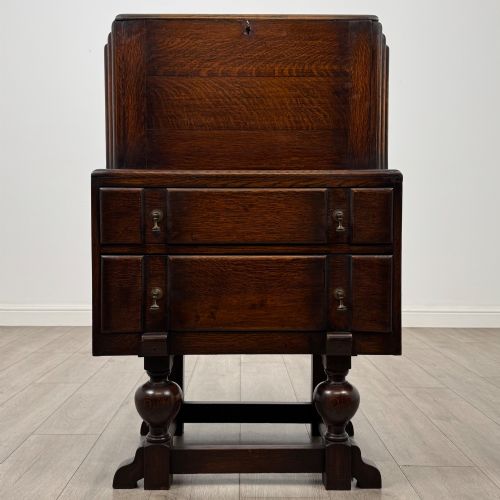
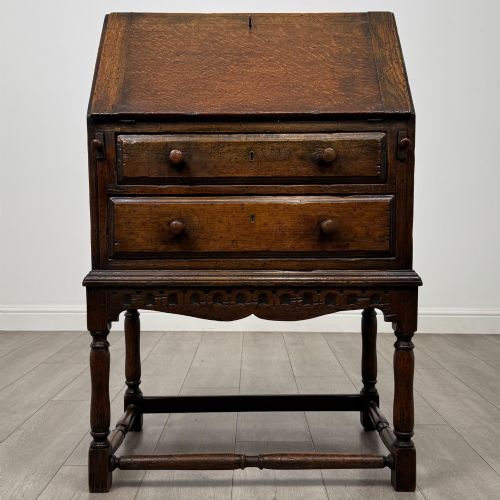
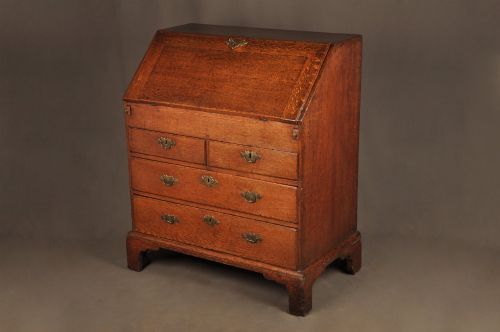
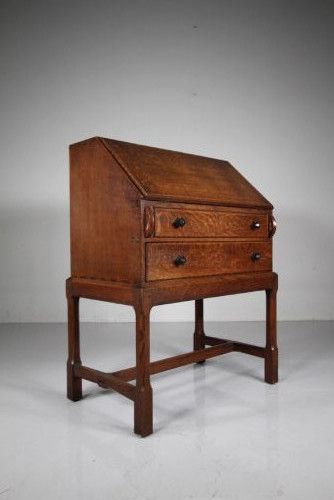
Solid Oak Bureau
A solid oak bureau brings practical writing space and handsome timber grain to a room, spanning centuries of craftsmanship.
Solid Oak Bureau
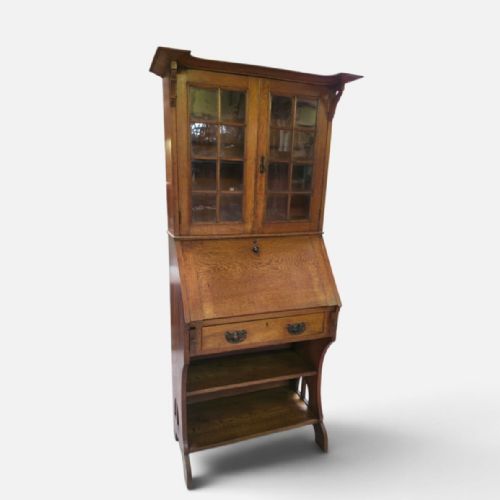
A solid oak bureau combines a hinged writing flap with internal stationary compartments, often sitting atop drawers or shelving. When you search for a solid oak bureau, you encounter forms ranging from simple Edwardian and 1920s writing desks to taller bureau bookcases with glazed upper doors.
The material unites pieces across eras, relying on English oak and general oak construction rather than veneers. You find examples spanning the 17th century, 18th century, Georgian period, and early decades of the 20th century.
Beyond standard writing desks, the category encompasses related forms like roll-top desks, pedestal desks, and bachelor's pieces. Many reflect specific design movements such as Arts and Crafts, Jacobean Revival, and Art Deco.
Assessing quality and craftsmanship
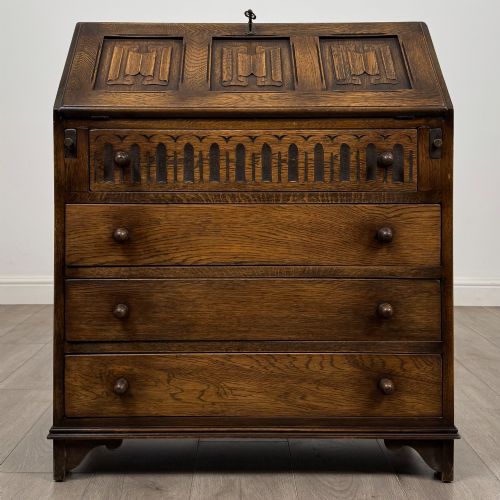
Quality reveals itself in the selection of timber and the execution of carved details, such as linenfold panels or regional workshop motifs. Superior examples show careful attention to the fitted interior behind the fall front, with well-proportioned pigeonholes and small drawers.
Attribution to notable makers or specific schools of design elevates a piece, as seen in labeled works from established workshops. The refinement of the mechanism, from a balanced fall front to smoothly running drawers, distinguishes standard production from finer cabinetmaking.
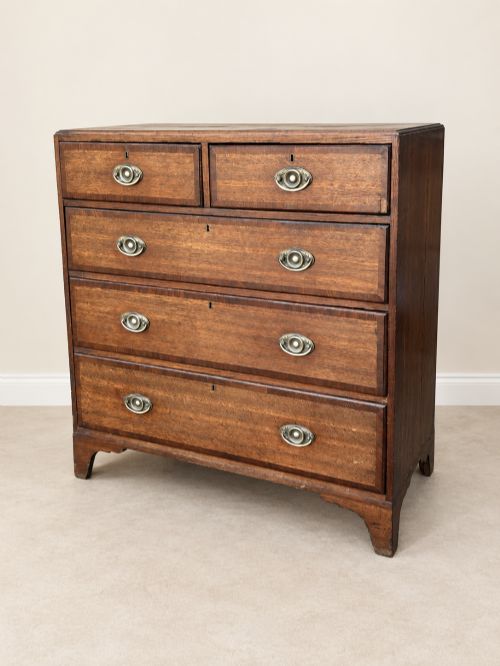
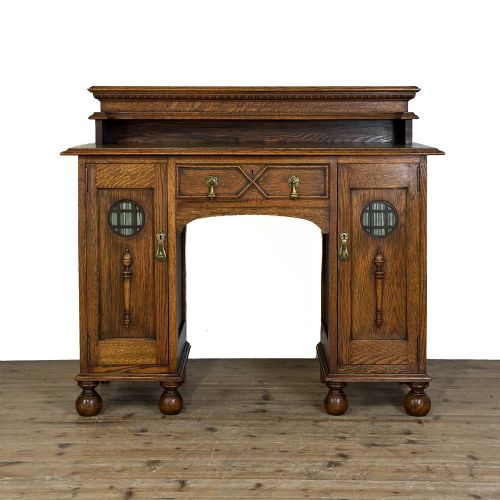
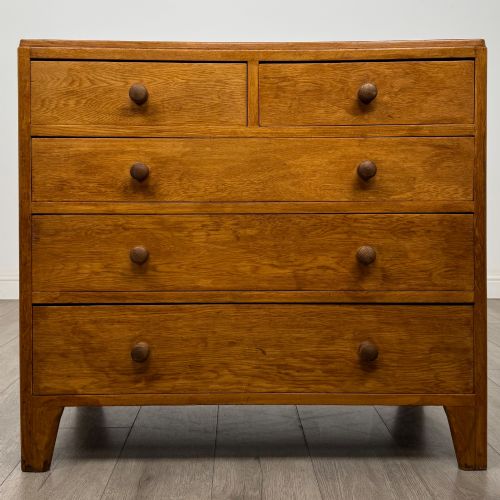
The listings show bureau forms spanning from the 17th century through the Georgian era to the 1930s, constructed predominantly in solid oak with brass hardware.
Heals of London·Stanley Webb Davies·Bryn Mawr·Robert Mouseman Thompson·Peter Waals·Liberty and Co·James Shoolbred and Co
The Solid Oak Bureau Glossary
- Bureau
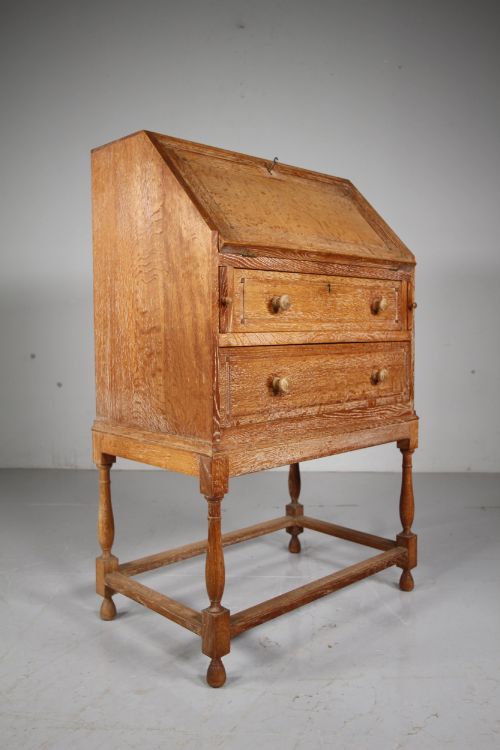
- A desk featuring a sloping fall-front flap that opens to reveal a fitted interior of small drawers and pigeonholes. It typically rests upon a chest of drawers or a stand.
- Fall-front
- The hinged writing flap of a bureau that lowers to a horizontal position to provide a writing surface. When closed, it conceals the stationery compartments.
- Bureau bookcase
- A combination piece featuring a bureau base with a glazed or panelled cabinet superstructure for storing books. These taller units were popular in the 18th and early 20th centuries.
- Tambour top
- A flexible desktop made of narrow strips of wood glued to canvas, sliding along a track to cover the writing surface. This mechanism appears on various roll-top desks.
- Linenfold
- A style of carved wooden panelling that resembles folded linen cloth, frequently found on pieces from the Arts and Crafts and revival periods.
Solid Oak Bureau: Frequently Asked Questions
What is a solid oak bureau?
A solid oak bureau is a traditional desk featuring a hinged fall-front writing flap and internal compartments, constructed from heavy oak timber rather than veneered board.
These pieces range from compact student desks to large bureau bookcases designed for storing books and paperwork.
How do I date an oak bureau?
Dating relies on architectural styling, hardware types, and construction methods. 17th and early 18th-century examples often display simpler joinery and panelled construction, while Edwardian and 1920s versions incorporate revival styles or labeled workshop tags.
Examining the interior fittings and drawer construction helps determine whether a piece originates from the Georgian period or the early 20th century.
Where should I place a bureau?
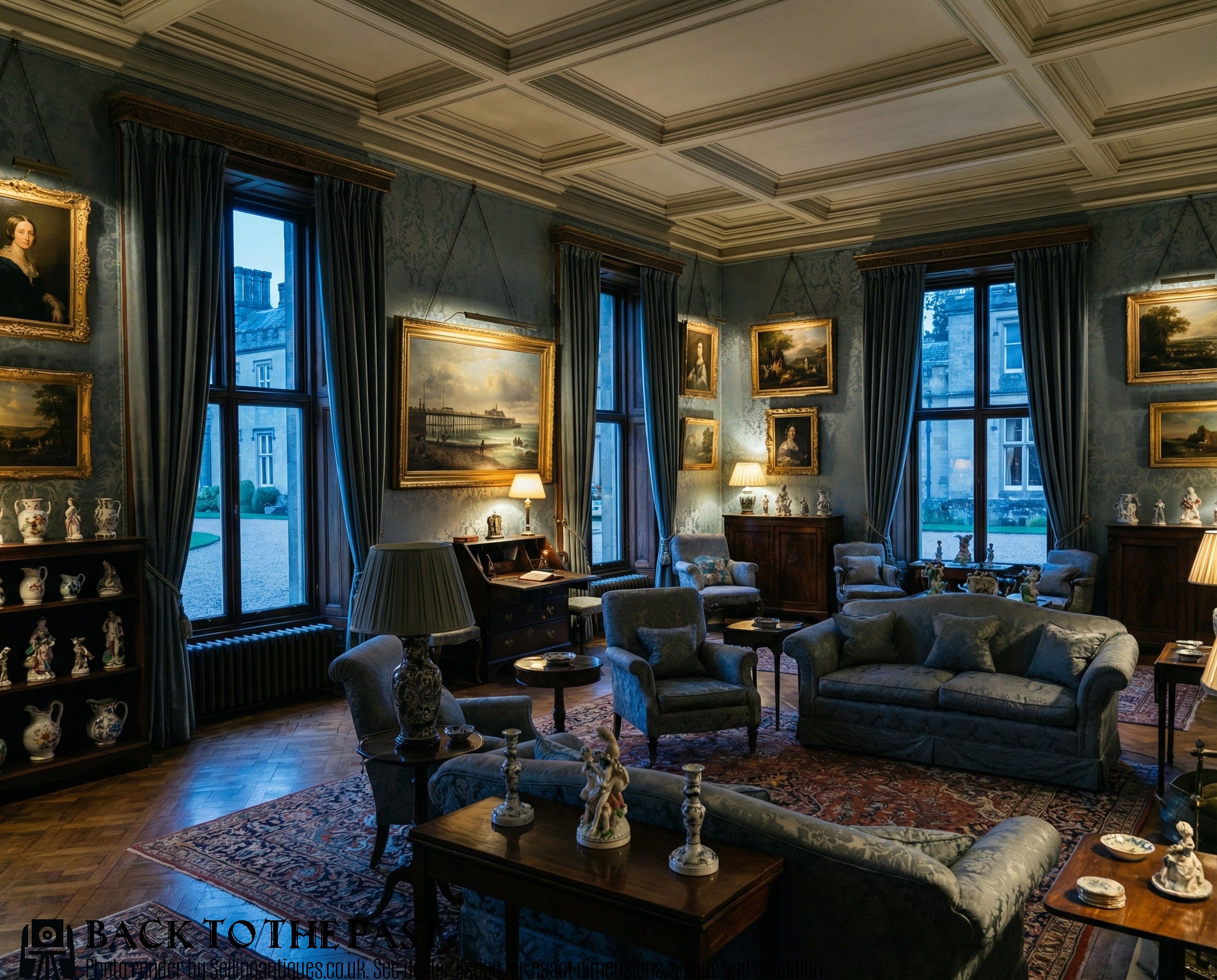
A bureau suits studies, living rooms, and bedrooms, offering a compact workspace that can be concealed instantly by closing the fall-front flap. The shallow depth of many models allows them to fit comfortably into hallways or alcoves.
Position the piece away from direct heat sources and strong sunlight to protect the oak timber and finish over time.
How do Arts and Crafts bureaux differ?
Arts and Crafts bureaux emphasise honest construction, visible joinery, and natural oak surfaces, often avoiding excessive ornamentation. They may feature handcrafted copper or brass hardware and stylistic influences from regional workshops.
These pieces contrast with heavily carved revival styles, focusing instead on simplicity and utility.