


Georgian Earthenware Pitcher
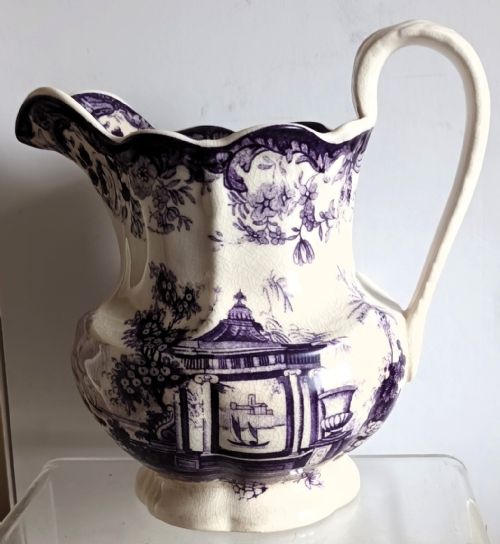
A georgian earthenware pitcher brings robust utility and rich transfer-printed narrative straight into a room from the late eighteenth and early nineteenth centuries.
Georgian Earthenware Pitcher
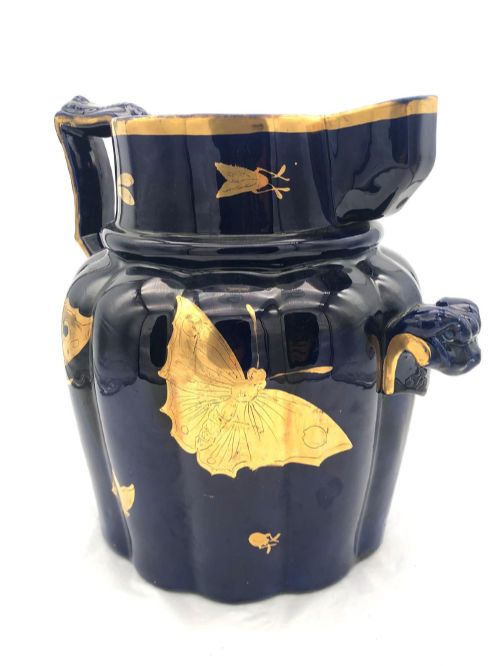
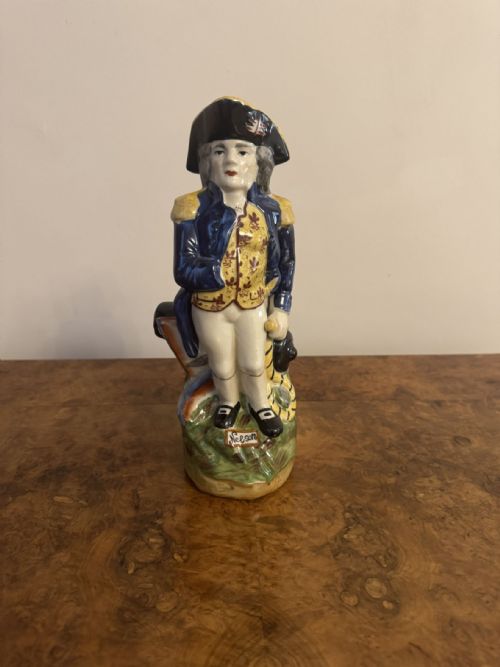
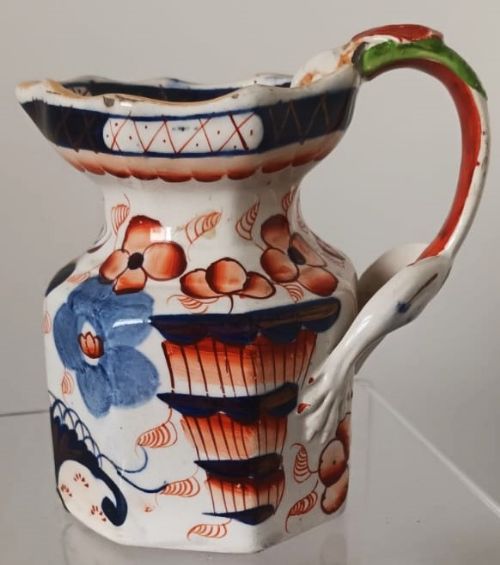
A georgian earthenware pitcher takes many practical and decorative forms, ranging from capacious one-gallon vessels and creamers to figural toby jugs and mazarine footbath jugs. These pieces emerge from periods spanning the eighteenth century through the Regency era and into the nineteenth century.
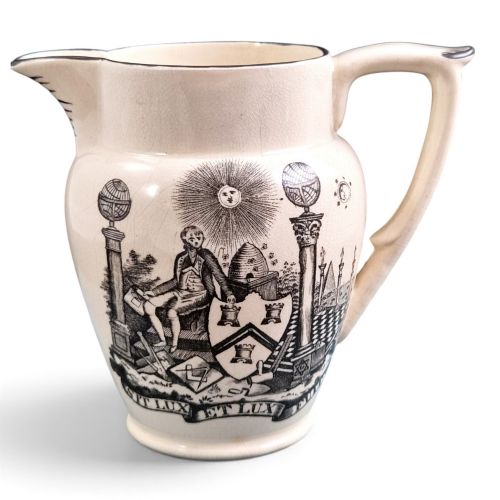
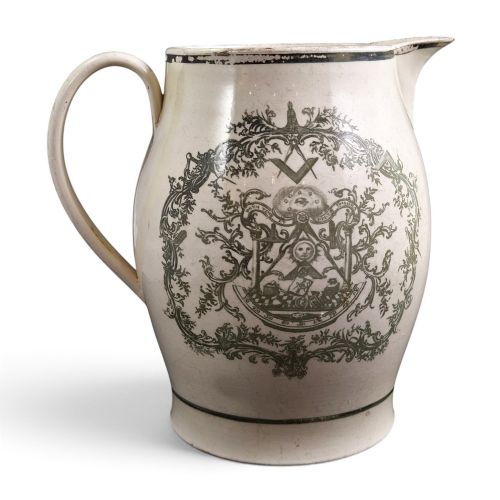
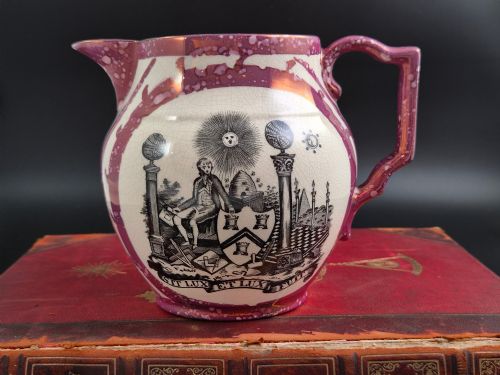
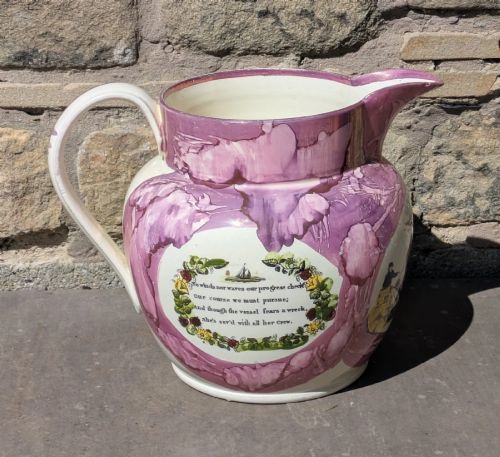
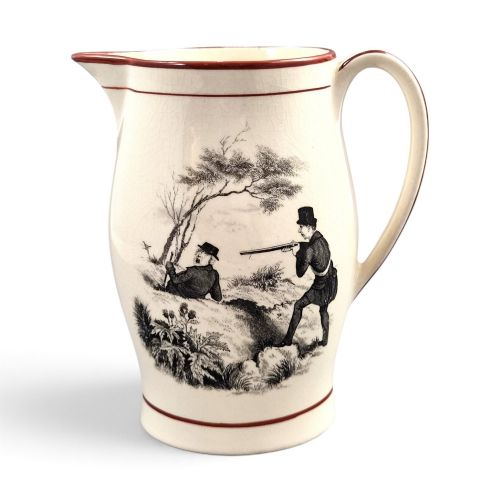
The buyer most frequently encounters creamware and pearlware bodies carrying black, magenta, or transfer-printed scenes alongside pink lustre and metallic glazes. Staffordshire pottery dominates the selection, accompanied by Leeds pottery and Welsh regional pieces.
Quality and Execution
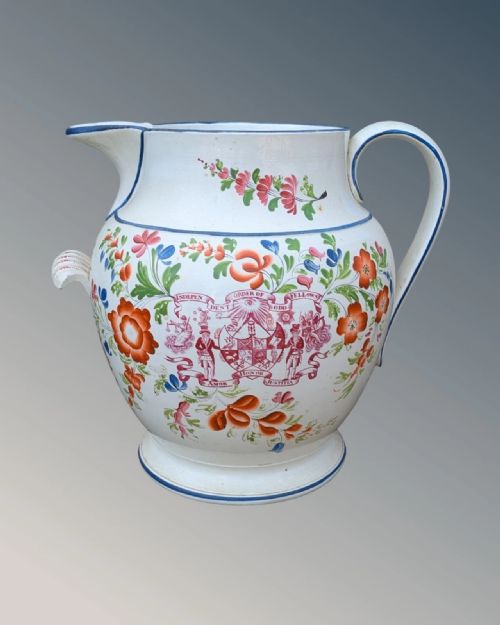
The clarity and crispness of the transfer-printed imagery separate standard production from finer work, particularly on complex Masonic, maritime, or topographical views. The precision of the moulding, visible in cabbage leaf reliefs or figural toby jugs, dictates the artistic success of the piece.
The application and richness of the glaze, lustre work, and enamel colours define the visual weight of the vessel. Superior examples maintain vibrant pigments and even lustre distribution across large surfaces like one-gallon jugs.
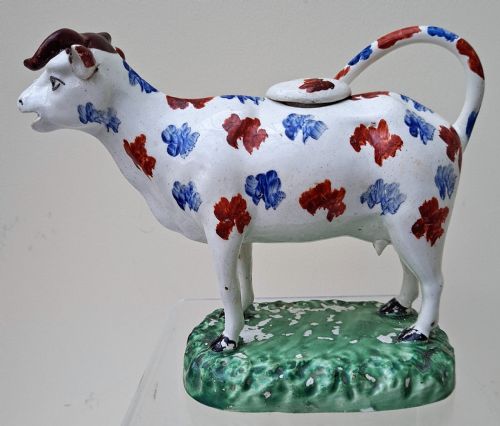
Cow creamers dispense milk rather awkwardly through their noses, proving Georgian tea tables enjoyed a distinct sense of bovine theatre.
The Georgian Earthenware Pitcher Glossary
- Creamware
- A refined earthenware with a pale yellowish-buff body, perfected in the eighteenth century by Staffordshire and Yorkshire potters including Leeds. It provides a smooth surface ideal for transfer printing.
- Pearlware
- An earthenware developed in the late eighteenth century featuring a fine white body and a slightly bluish glaze that pooled in recesses. It was designed to mimic Chinese porcelain.
- Transfer printing
- A decoration technique where an engraved copper plate transfers a design onto tissue paper, which is then pressed onto the ceramic body before glazing. This method allowed for intricate repeatable patterns.
- Pink lustre
- A metallic glaze containing gold that creates a shimmering pink or purple iridescent effect when fired. It appears frequently on early nineteenth-century jugs with maritime or commemorative themes.
- Slipware
- Pottery decorated with slip, a liquid clay mixture trailed or brushed onto the unfired body. It produces tactile linear patterns characteristic of rustic country wares.
Georgian Earthenware Pitcher: Frequently Asked Questions
What is a georgian earthenware pitcher?
A georgian earthenware pitcher is a ceramic pouring vessel made in Britain during the late eighteenth or early nineteenth century. These vessels served practical domestic purposes or commemorated fraternal societies, maritime heroes, and historical events.
Potters used creamware or pearlware bodies decorated with transfer printing, lustre, or hand-painted enamels. They survive today as decorative display items carrying social history.
How do I date a transfer-printed pitcher?
Dating relies on stylistic clues, ceramic bodies, and the subject matter of the transfer print. Creamware bodies and neoclassical shapes usually point to the late eighteenth or early nineteenth century, while pink lustre and bolder transfer prints often suggest the Regency period or later.
Inscriptions, specific historical buildings, or Masonic symbols also help narrow the manufacturing window. Examining the glaze and footring reveals the manufacturing methods of the period.
Were these pitchers used daily?
Many large pitchers and one-gallon jugs fulfilled heavy utilitarian duties in homes, taverns, and communal settings. Smaller creamers and decorative jugs saw service on tea and dining tables.
Over time, many transitioned from functional kitchenware to mantelpiece ornaments, particularly those featuring Masonic emblems or commemorative verses dedicated to sailors.
What is the difference between creamware and pearlware?
Creamware has a warm, pale yellow hue in the body and clear glaze, developed to offer an affordable alternative to porcelain. It defined much of the late eighteenth-century Staffordshire output.
Pearlware incorporates a small amount of cobalt in the glaze to create a bluish tint that made the underlying earthenware look whiter and closer to Chinese export porcelain.