


Antique Ceramic Wash Pitcher
These antique ceramic wash pitcher pieces bring utilitarian pottery into domestic interiors, offering generous proportions and transfer-printed or glazed surfaces.
Antique Ceramic Wash Pitcher
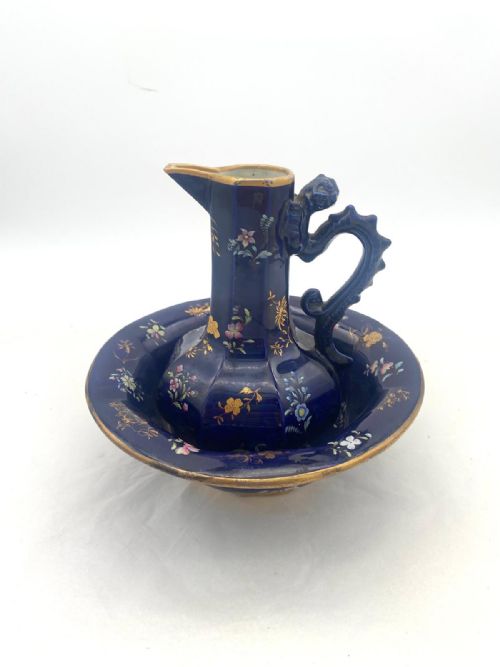
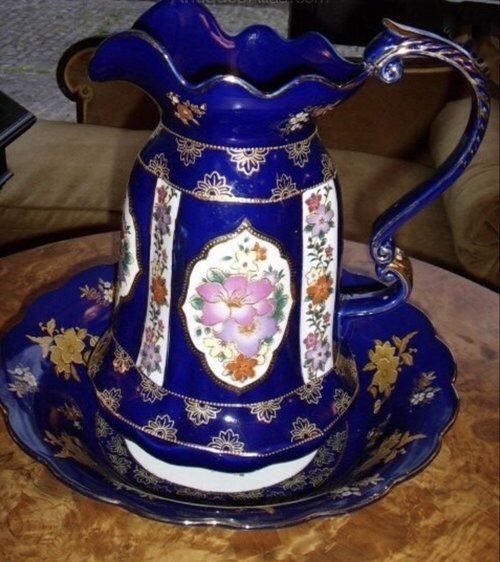
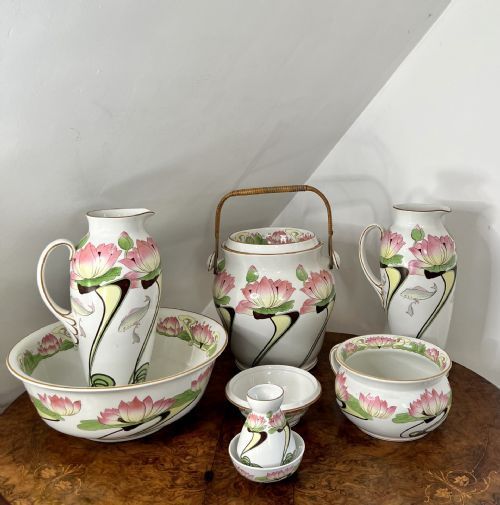
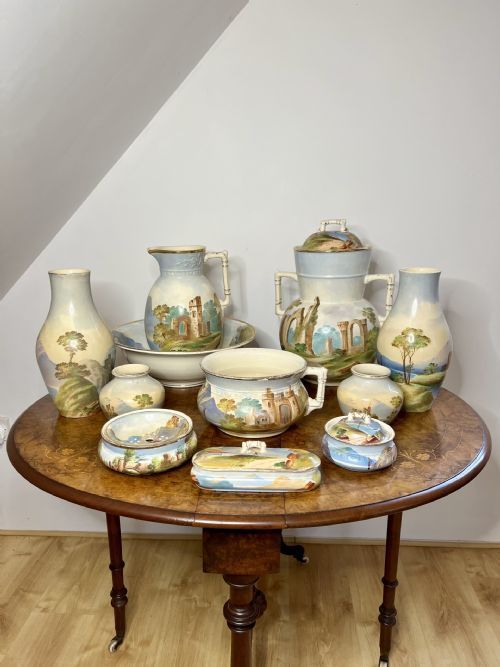
An antique ceramic wash pitcher is typically encountered as part of a larger bathroom or washstand set comprising a large jug and basin for personal ablutions. The forms range from compact miniature sets to large one-gallon vessels produced during the Georgian, Victorian, and Edwardian periods.
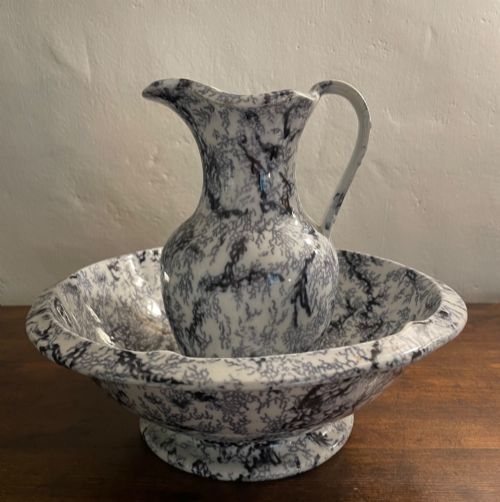
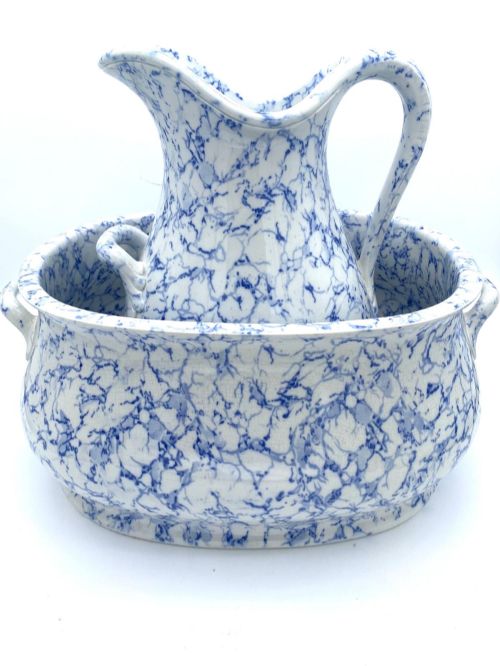
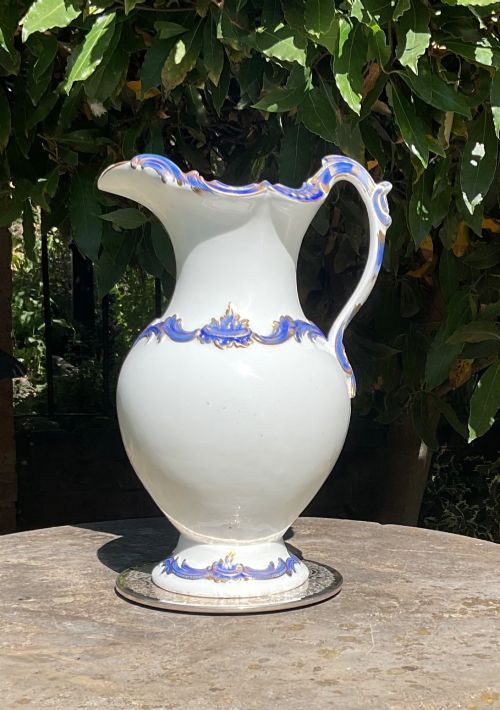
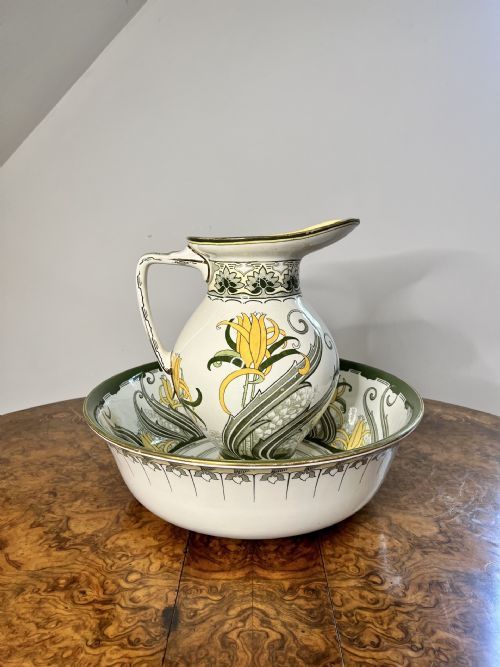
Makers utilised earthenware, porcelain, and ironstone to form these substantial jugs, often decorated with cobalt blue transfer prints, enamel flowers, or gilt highlights. Stylistic influences span from early nineteenth-century chinoiserie and floral motifs to later Art Nouveau and Aesthetic Movement designs.
Materials and production methods
Potteries shaped these jugs from earthenware, ironstone, or porcelain, applying smooth glazes to seal the porous ceramic bodies before decoration. Transfer printing allowed intricate patterns such as marble effects and floral sprays to be applied uniformly across large curved surfaces.
Hand-finishing included the addition of enamel colours and gold leaf highlights over the glaze, followed by a secondary kiln firing to fix the pigments. Handles and spouts were often moulded separately and securely luted to the main body of the pitcher before firing.
Miniature sets allowed Victorian children to practice proper morning ablutions before graduating to full-sized pitchers.
Assessing quality in wash pitchers
Quality rests in the crispness of the transfer print and the precision of any hand-painted enamel work applied over the glaze. Finer examples display balanced proportions, clean ceramic bodies free from excessive kiln flaws, and substantial weight indicative of robust ironstone or porcelain.
The sophistication of the design distinguishes standard utility ware from pieces produced by prominent potteries. Rich cobalt blue saturation, complex multi-part patterns, and intact gilt accents separate superior pieces from simpler utilitarian output.
Minton·Doulton Burslem·Masons Ironstone·Spode·Shelley
The Antique Ceramic Wash Pitcher Glossary
- Ironstone
- A patented ceramic body invented in the nineteenth century that combined durability with the refined appearance of porcelain. It provided a strong foundation for heavy wash jugs.
- Transfer printing
- A technique where an engraved copper plate transferred a design onto tissue paper, which was then stamped onto the ceramic surface. This process enabled consistent repetition of complex patterns.
- Flow blue
- A nineteenth-century transfer printing method where lime or ammonia chloride vapour was introduced into the kiln to deliberately blur the cobalt blue pigment. The resulting wash created a soft, hazy aesthetic.
- Chinoiserie
- A decorative style reflecting European interpretations of Chinese artistic motifs. It frequently appeared on early nineteenth-century pottery alongside traditional landscapes and figures.
- Aesthetic Movement
- A late nineteenth-century design style emphasising visual beauty over narrative function. Ceramics from this period often incorporated stylised natural elements and Japanese-inspired motifs.
Antique Ceramic Wash Pitcher: Frequently Asked Questions
What periods do these pitchers come from?
The pieces span from the Georgian era through the Victorian and Edwardian periods, stretching into the early twentieth century. Most examples date from the nineteenth century when washstand sets were standard household items.
Production methods and stylistic shifts, from early transfer-printed earthenware to later porcelain and Art Nouveau designs, help indicate the specific era of manufacture.
How were wash pitchers used originally?
These jugs sat atop matching basins on wooden washstands in bedrooms before indoor plumbing became universal. They held water for morning washing and shaving.
Households used the large capacity of these pitchers to replenish the basin, often as part of an entire multi-piece bathroom set.
How do I display a wash pitcher at home?
Wash pitchers work well displayed independently as decorative focal points or paired with their original basins on sturdy side tables. Their generous scale makes them suitable for holding dried botanicals or standing alone on the floor.
Placing them away from high-traffic areas protects their handles and decorative rims from accidental knocks.
How do I distinguish ironstone from earthenware?
Ironstone generally feels heavier, rings more clearly when tapped lightly, and resists crazing better than standard earthenware. It offered nineteenth-century potteries a denser, more durable material for utilitarian vessels.
Earthenware bodies tend to be more porous and may show a network of fine cracks in the glaze over time.