


Large Ceramic Water Pitcher
These large ceramic water pitcher examples range from robust Victorian stoneware to delicate porcelain, offering both practical utility and bold decorative presence for the home.
Large Ceramic Water Pitcher
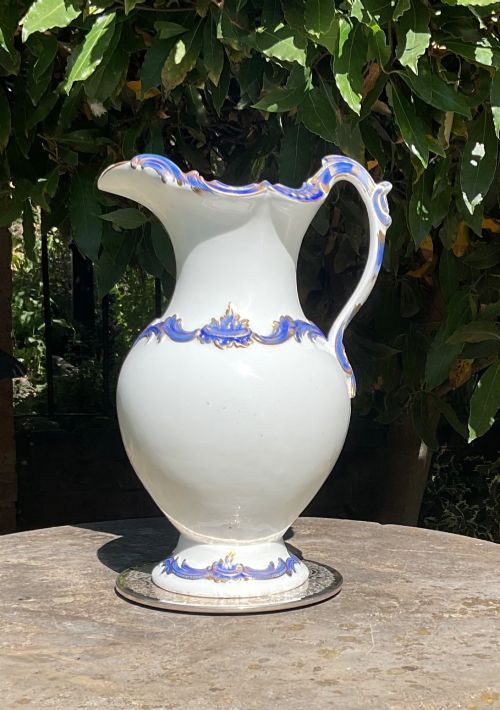
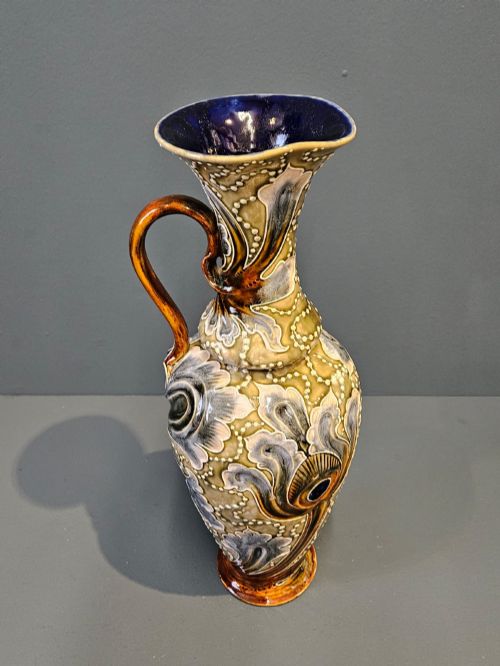
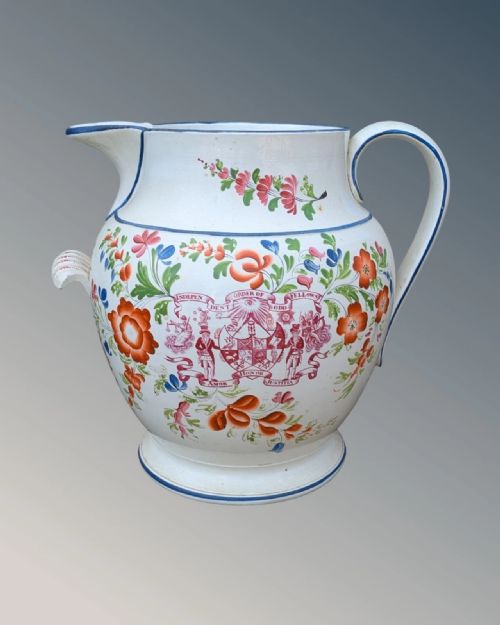
A large ceramic water pitcher typically presents a substantial vessel designed for holding liquids, frequently emerging in forms such as jugs, ewers, and harvest jugs. You encounter pieces spanning the Georgian, Victorian, and later nineteenth century periods, reflecting diverse domestic and decorative uses over generations.
The selections available here showcase distinct stylistic influences including Victorian Arts and Crafts, Renaissance Revival, and Rococo Revival alongside simpler utilitarian shapes. Makers utilised various earthen materials to create vessels that served both everyday functions on the dining table and formal display purposes.
How they were made
Potters shaped these vessels using stoneware, earthenware, creamware, and porcelain, often applying rich glazes or enamel colours to the finished body. Relief-moulding and transfer-printing techniques allowed artisans to achieve intricate surface patterns such as mythological figures, cherubs, and classical motifs.
Many examples feature applied sprigged decoration or hand-painted details, while others incorporate functional additions like silver rims to strengthen the ceramic body. Kiln firing temperatures determined whether the resulting vessel emerged as durable utilitarian stoneware or refined translucent porcelain.
Admiral Lord Nelson stands proudly immortalised in clay, ready to command your mantelpiece.
What varies in quality
The calibre of a large ceramic water pitcher often rests upon the crispness of its relief moulding and the uniformity of its glaze application. Superior examples display sharply defined details in modelled scenes and careful handling of enamel colours without blurring.
Artisanal execution distinguishes standard production items from exhibition-quality pieces, particularly where hand-applied sprigging and specialised ceramic bodies are involved. The weight, balance, and structural integrity of the handle further indicate the skill poured into the manufacture.
Doulton Lambeth·Gien·Ridgway and Sons·Charles Meigh·Frederic Goldscheider·Spode
The Large Ceramic Water Pitcher Glossary
- Stoneware
- A robust pottery fired at high temperatures until vitrified, making it impermeable to liquids without requiring a glaze. It forms the body of many heavy utilitarian vessels.
- Creamware
- A refined earthenware developed in the eighteenth century with a pale yellowish cream-coloured lead glaze. It became widely popular for domestic tableware.
- Ewers
- Large jugs featuring a wide spout and a substantial handle, traditionally used for pouring water. They often lean towards decorative display rather than simple utility.
- Sprigged
- A technique where separately moulded clay reliefs are applied to the surface of an unfired vessel using slip as an adhesive. This creates raised ornamental motifs.
- Relief-Moulded
- Pottery decorated with raised patterns pressed directly into the clay during the forming process. This method produced popular narrative and classical scenes on nineteenth-century jugs.
Large Ceramic Water Pitcher: Frequently Asked Questions
Were these jugs used for water?
Many large vessels served specific utilitarian purposes at the table or washstand, containing water, beer, or cider for household consumption.
Others functioned primarily as decorative ewers or commemorative pieces, reflecting the wealth and taste of the original owners rather than daily kitchen work.
How do I date a ceramic pitcher?
Examine the base for factory marks, registration numbers, or impressed stamps that connect the piece to known periods of production.
Stylistic cues such as Victorian relief moulding, Georgian blue and white transfer printing, or specific glaze characteristics also help narrow down the decade.
Can I display flowers in them?
Large pitchers accommodate floral arrangements well, provided the interior glaze remains intact and free from hairline cracks that might leak moisture.
Place a protective pad beneath the base when holding water to safeguard your furniture from potential seepage through older earthenware bodies.
What is salt glazing?
Salt glazing involves throwing common salt into the kiln during high-temperature firing, which reacts with the silica in the clay to form a durable glossy orange-peel texture.
This technique protects the stoneware body from liquids and produces the characteristic pebbled surface seen on sturdy antique jugs.