

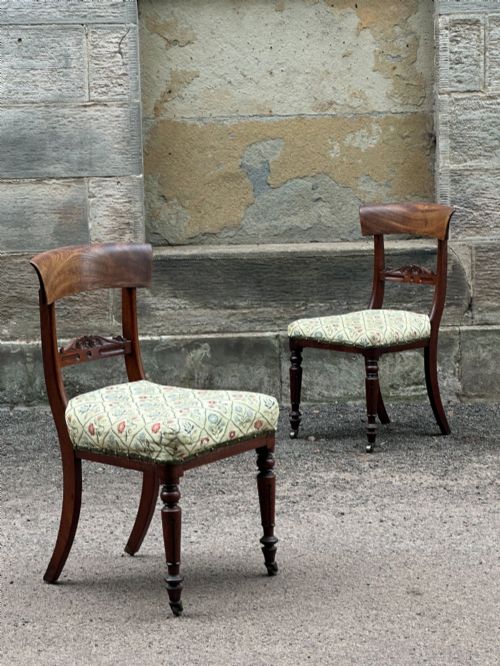
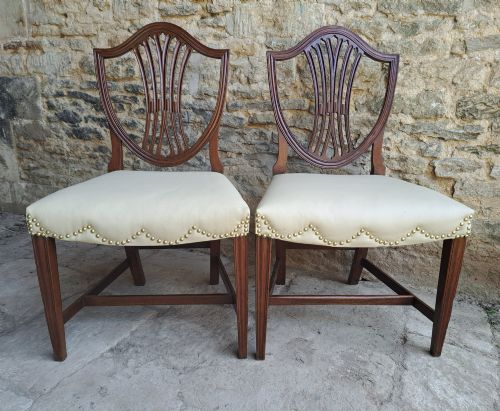

Georgian Dining Chairs Pair
A georgian dining chairs pair brings balanced symmetry and substantial presence to a room, offering functional seating rooted in centuries of cabinet-making.
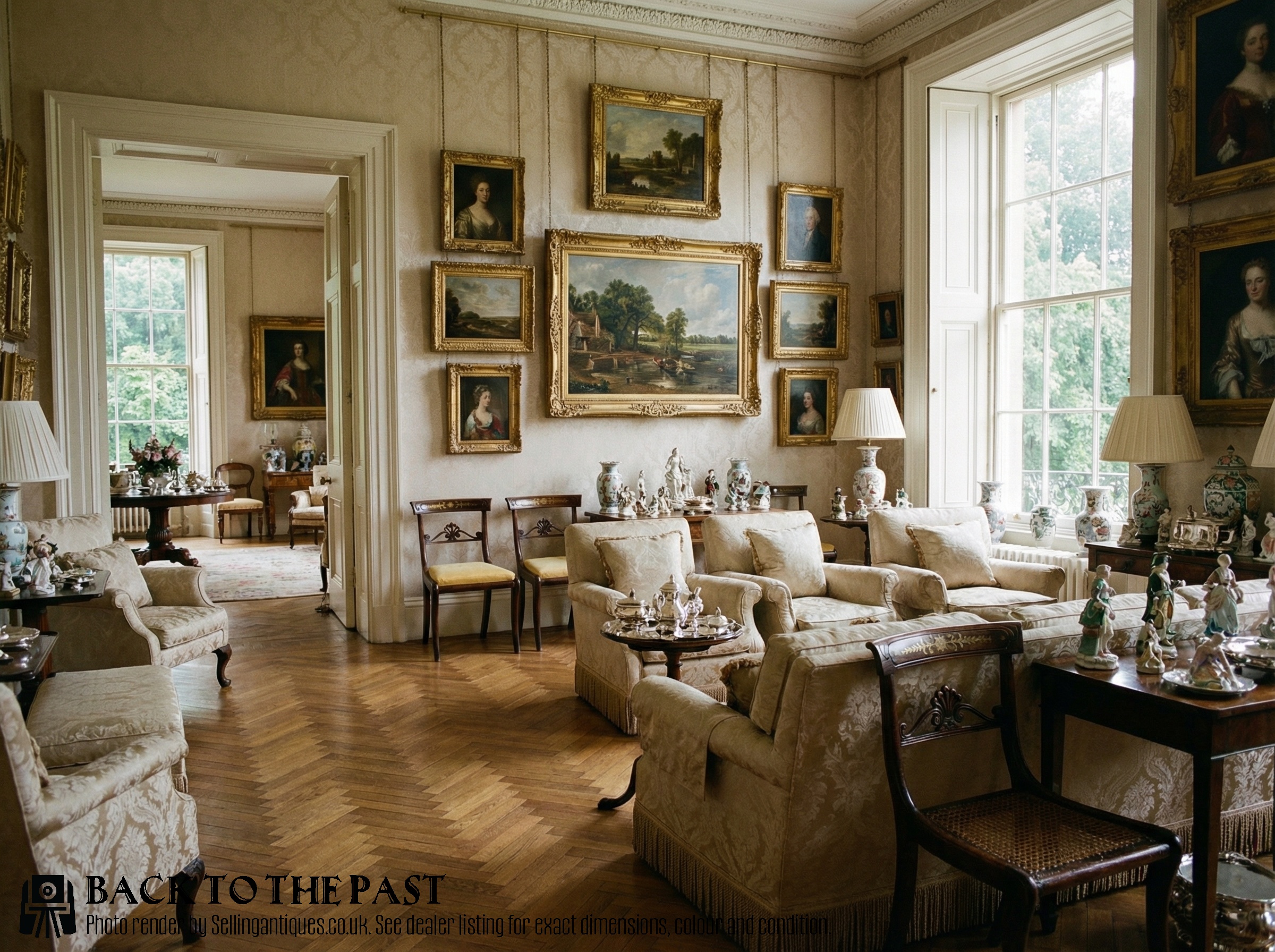
Georgian Dining Chairs Pair
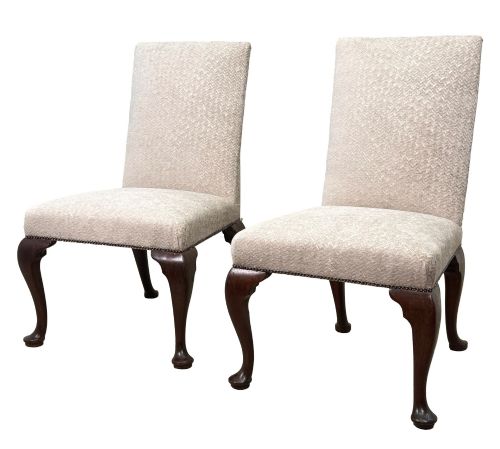
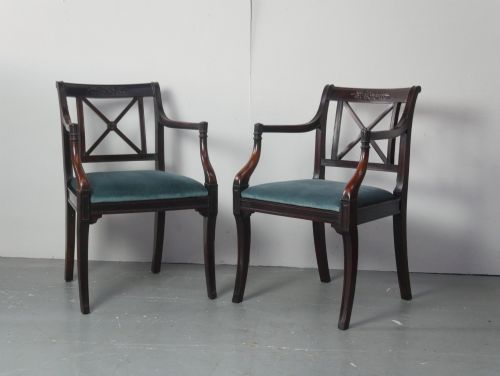
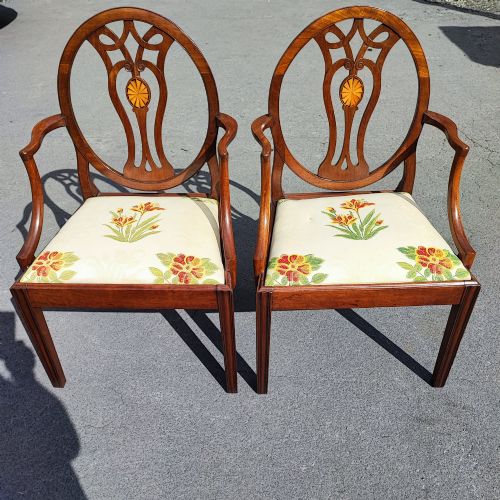
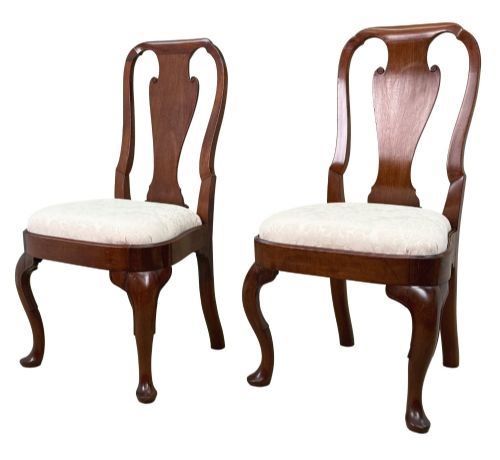
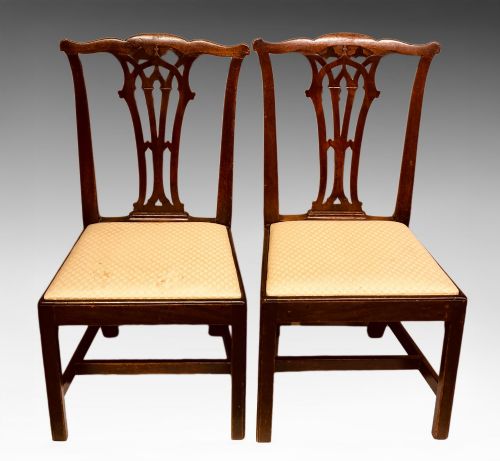
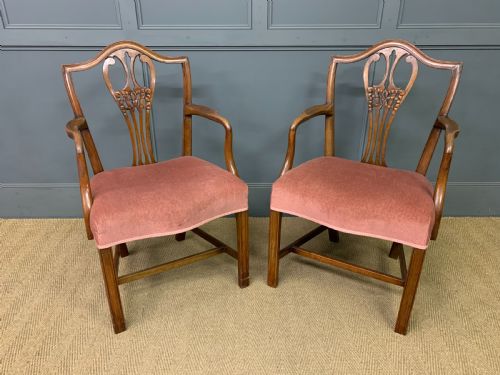
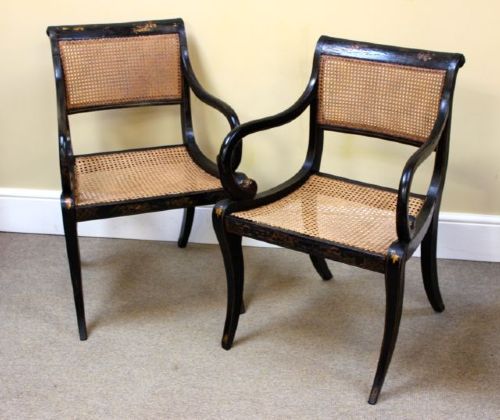
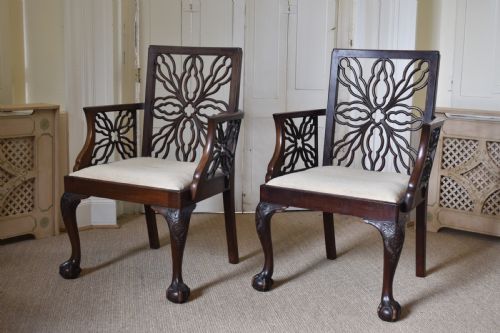
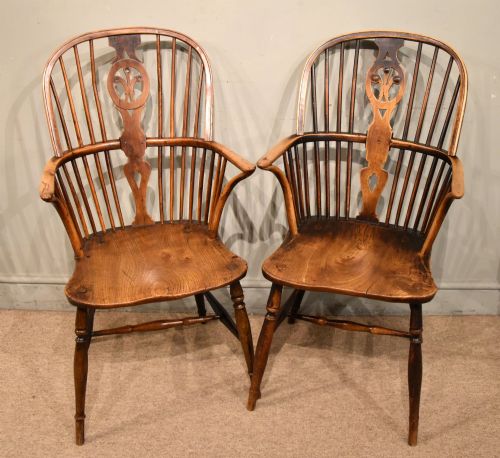
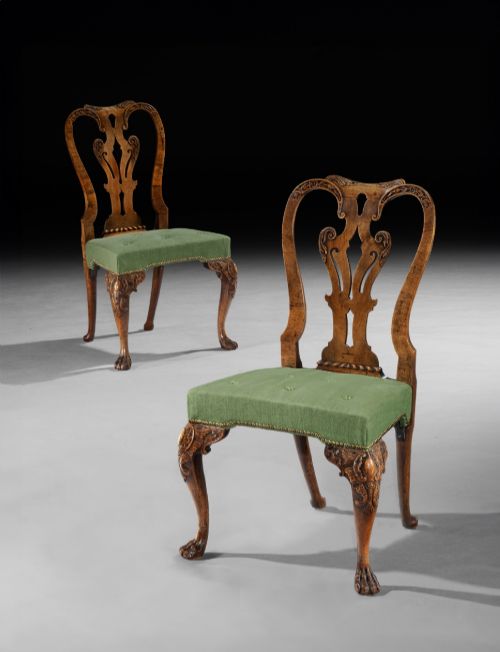
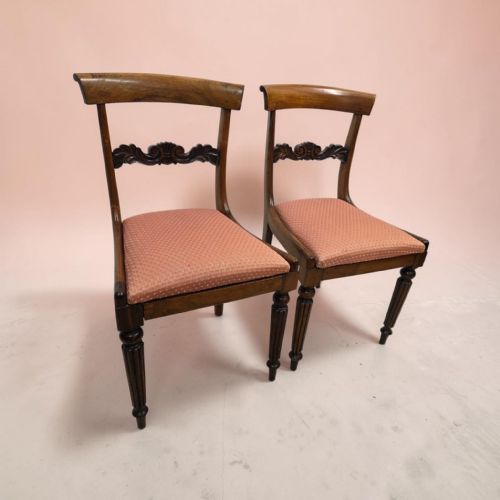
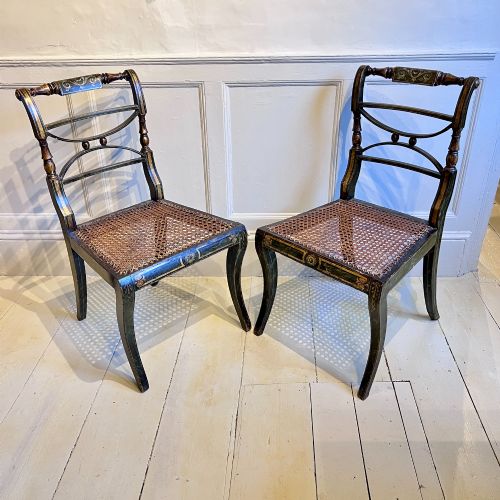
The most common forms on this page are mahogany side chairs and open armchairs reflecting Chippendale, Hepplewhite, and Regency styles. These twin seating pieces function effectively around a dining table, at a desk, or as decorative accents in a hallway.
Regional variations also appear across the selection, including Scottish, Irish, and Welsh examples built by local joiners using regional woods such as elm, oak, and fruitwood. Alongside period originals, the inventory includes later nineteenth and twentieth-century revival pairs replicating earlier aesthetic movements.
How They Were Made
Cabinet-makers relied primarily on solid mahogany, walnut, and rosewood for formal urban seating, while regional workshops utilised accessible timbers including elm, oak, ash, and fruitwood. Timber selection dictated the structural capability of the frame, allowing craftsmen to shape slender splats and curved crest rails without compromising strength.
Joinery techniques involved mortise and tenon joints secured with wooden pins, ensuring structural longevity through decades of daily use. Carved details such as interlaced ribbon backs, reeded legs, and ball and claw feet were executed entirely by hand using chisels and gouges.
Upholstered variants incorporated drop-in seat frames stuffed with natural fibres and covered in fabric, leather, silk, or tapestry. These slip seats allowed workshops to update textile coverings easily without altering the underlying wooden structure.
Listings feature woods spanning mahogany, walnut, rosewood, elm, oak, ash, fruitwood, and cane.
What Varies in Quality
The degree of crispness in hand-carved ornamentation separates superior examples from routine production. Sharp relief work on splats, knees, and rails demonstrates the maker's skill, whereas softer or blunter detailing indicates faster workshop output.
Timber selection and grain figuration also determine grade, with highly figured mahogany and rich burr walnut reserved for top-tier commissions. Matched grain patterns across both chairs in a pair show deliberate material selection by the maker.
Structural integrity depends upon the tightness of the original joints and the absence of excessive timber replacement. Pairs that retain their original blocking, corner braces, and uncompromised frame geometry hold greater authenticity.
The Georgian Dining Chairs Pair Glossary
- Carver chair
- An armchair designed specifically for the head of a dining table or desk use. These pieces feature integrated armrests that match the design of the companion side chairs.
- Splat
- The vertical wooden strip positioned in the centre of a chair back. Master craftsmen pierced and shaped these elements into elaborate ribbons, urns, and geometric patterns.
- Bar-back
- A horizontal top rail spanning the width of the chair back, common in Regency designs. This style often incorporates reeded or brass-inlaid decoration.
- Shield back
- A curved chair back shaped like a heraldic shield, popularised by Hepplewhite in the late eighteenth century. This silhouette frequently frames delicate carved wheat ears or drapery swags.
- Drop-in seat
- A removable wooden frame holding upholstery that fits neatly into a rebate within the chair seat rails. This technique enabled straightforward reupholstery without dismantling the main structure.
- Elbow chair
- An alternative historical term for an armchair with supporting armrests flanking the seat. These were traditionally placed at either end of a dining table.
Georgian Dining Chairs Pair: Frequently Asked Questions
How do I spot a true period pair?
Examine the construction methods, tool marks, and timber shrinkage visible on the undersides and interior frame joints. Period pieces exhibit hand-cut joinery and aged patina consistent with centuries of handling.
Compare the two chairs closely to confirm matching dimensions, identical carving nuances, and uniform timber selection. True pairs share the same workshop origin rather than being assembled from disparate single chairs later.
Can I use these chairs every day?
Most hardwood frames possess robust structural integrity suitable for regular domestic dining use. Professional conservation of loose joints ensures the timber safely withstands modern weight.
Consider having the drop-in seats reinforced or reupholstered with durable modern linings if you intend heavy daily service. Careful placement on level flooring prevents undue twisting stress on antique leg assemblies.
What is the difference between side chairs and carvers?
Side chairs are narrower, armless seats designed to line the sides of a dining table efficiently. Their compact footprints allow multiple chairs to fit comfortably along standard table lengths.
Carvers feature integrated armrests and generous proportions intended for the ends of the table or for use as desk seating. A traditional set typically combined a pair of carvers with several matching side chairs.
How do I care for antique wood and upholstery?
Maintain timber surfaces by applying quality beeswax sparingly and buffing with a soft cloth to preserve the natural lustre. Avoid placing wooden furniture near direct heat sources or strong sunlight to prevent splitting.
Vacuum fabric or leather upholstery gently with a soft brush attachment to remove dust accumulation. Professional cleaning is recommended for antique silk, tapestry, or delicate leather finishes.