
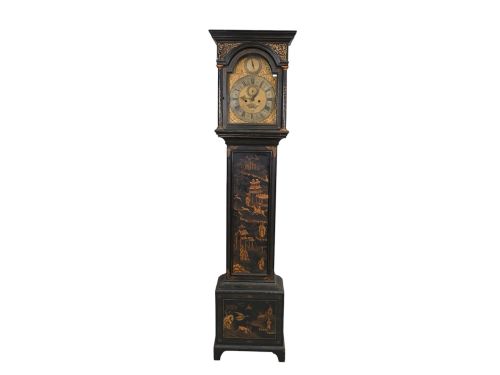


Georgian Chinoiserie Clock
A georgian chinoiserie clock brings dramatic painted lacquer and towering height to a room, offering the mechanical fascination of brass movements alongside vivid orientalist decoration.
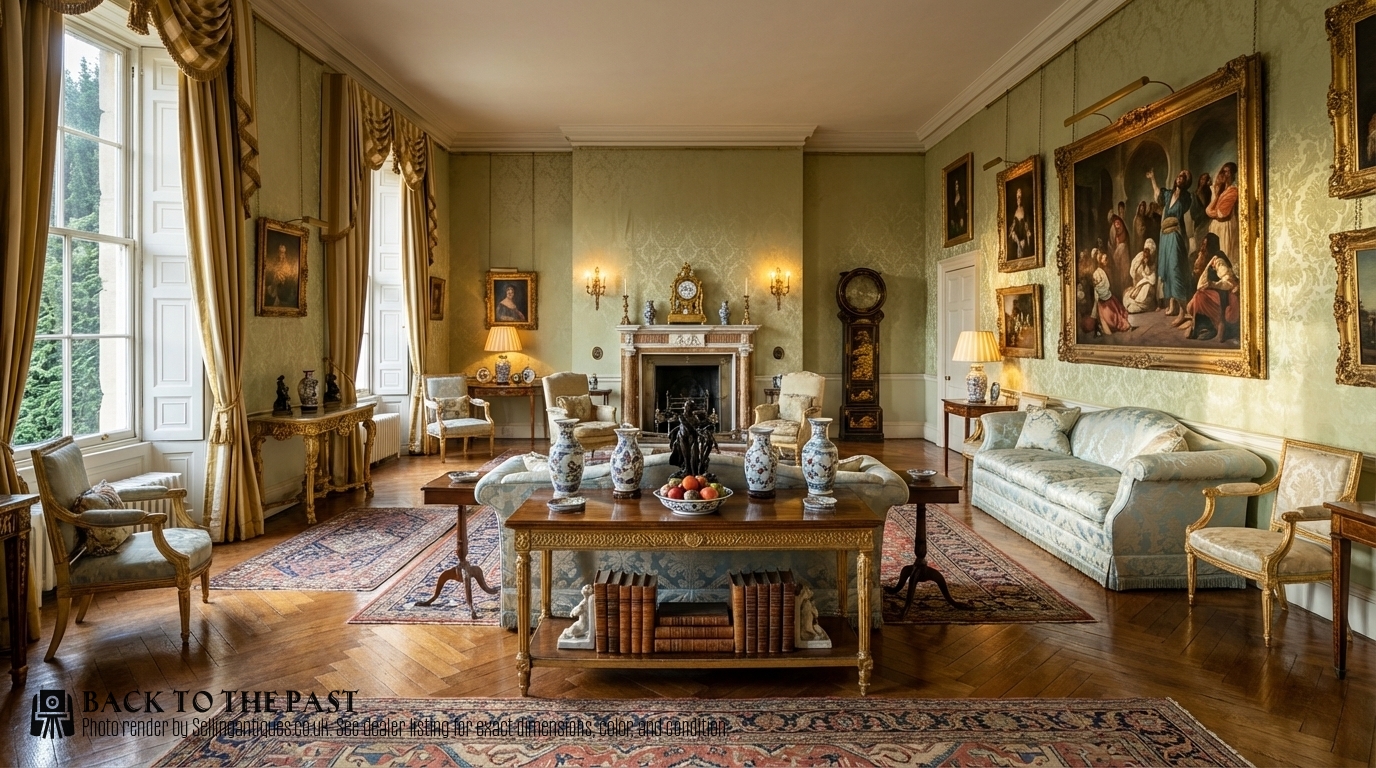
Georgian Chinoiserie Clock
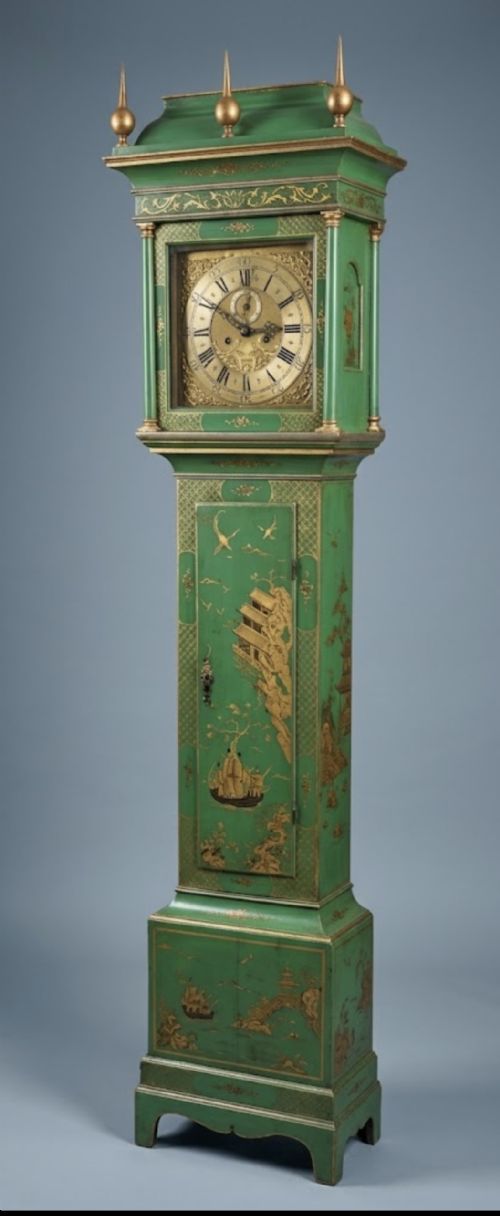
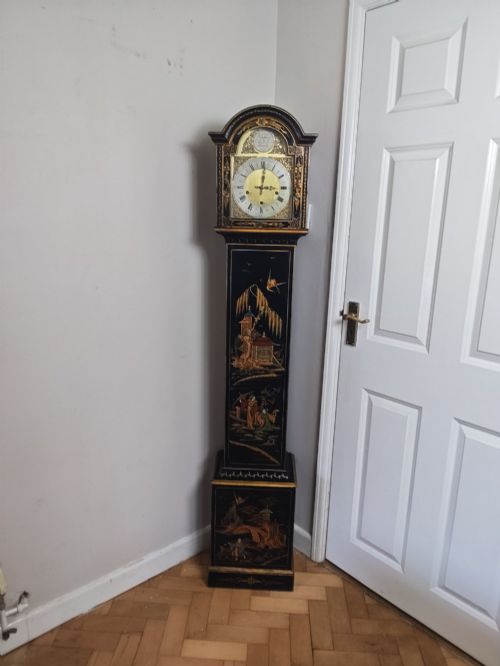
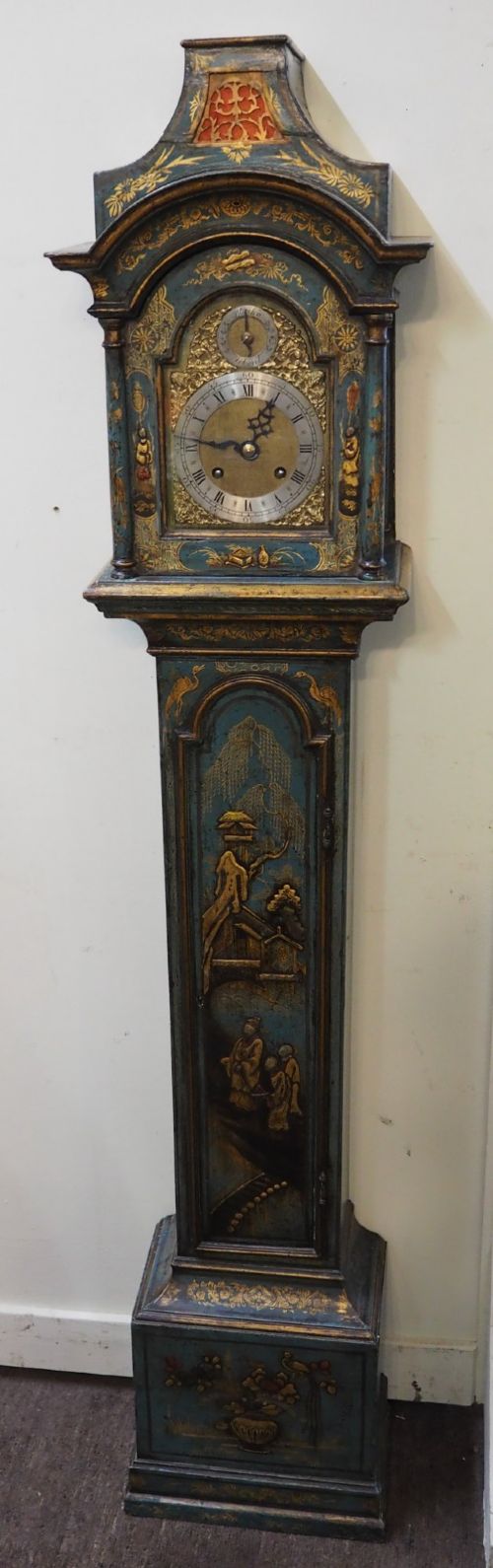
A georgian chinoiserie clock is typically encountered as a tall longcase or grandfather clock, dominating the floor with a substantial wooden case. These pieces combine the precise timekeeping mechanics of the eighteenth century with imaginative, hand-painted decoration inspired by East Asian art.
The aesthetic merges British cabinetmaking with decorative schemes featuring figures, landscapes, and pavilions rendered in gold and metallic leaf. Most examples on this page date from the eighteenth century, encompassing early periods through the reign of George III, alongside occasional later interpretations.
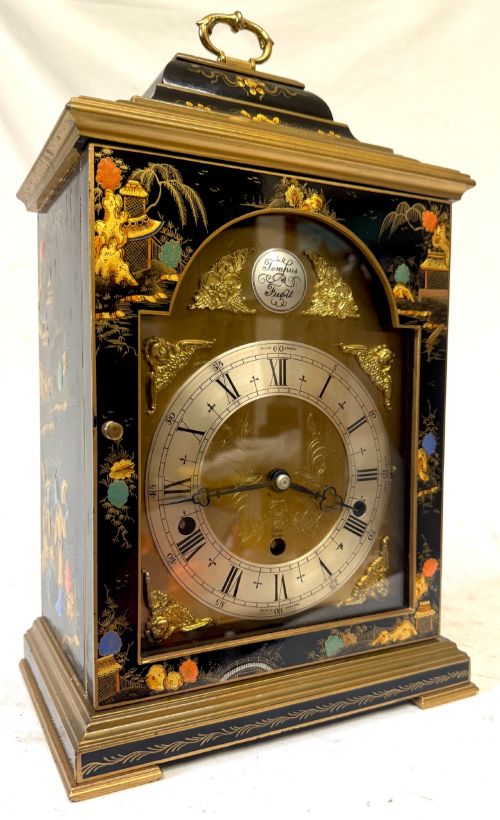
Beyond grand floor-standing models, the category extends to smaller bracket clocks and mantel designs housed in matching lacquered timber. These compact variations bring the same decorative intensity to tabletops and shelves while retaining intricate brass movements.
Materials and construction
The foundational structure relies on timber built into tall cases or smaller bracket bodies, prepared meticulously to receive multiple layers of specialist paint. Artisans applied coloured lacquers - notably green, black, red, and blue - to build up deep, glossy surfaces that could be polished smooth.
Decoration was achieved using gold leaf and gilt pigments to paint elaborate chinoiserie motifs directly onto the coloured ground. Internal brass movements, often driven by weights or springs, were engineered by skilled horologists to regulate time and sometimes power musical trains or automata.
Georgian Chinoiserie Clock Retail Price Guide 2026
Typical asking prices for georgian chinoiserie clock among the pieces listed under this phrase on Sellingantiques today, from the lower quarter to the upper quarter. They describe what is for sale here now, not the wider market.
Evaluating craftsmanship and survival
Quality rests significantly on the depth and preservation of the lacquerwork, where crisp detailing in the gold leaf distinguishes superior artistic execution from simpler surface painting. The finesse of the painted figures and architectural elements reveals the hand of specialised decorators working alongside master cabinetmakers.
The integrity of the original wooden case and the matching quality of the internal brass movement determine how well the piece has survived centuries of use. Retaining deep original coloration, such as dark green or blue grounds without heavy later repainting, marks the distinction at the upper end of the range.
John Fielder of Alton·William Kipling London·Wise of Reading·Gardner of London·James Smith London·Chater Son London·Robert Berry
The Georgian Chinoiserie Clock Glossary
- Longcase clock
- A tall, weight-driven pendulum clock housed in a protective wooden case standing directly on the floor. These pieces are frequently referred to as grandfather clocks.
- Japanned wood
- European furniture finished with varnishes and paints intended to emulate East Asian lacquerware. This technique produces the glossy decorative surfaces characteristic of chinoiserie pieces.
- Bracket clock
- A portable spring-driven clock originally designed to sit on a wall bracket or shelf. They frequently feature arched wooden cases with carrying handles.
- Brass movement
- The internal mechanical assembly constructed primarily from brass plates, wheels, and gears. These mechanisms power the timekeeping, striking, and musical functions.
- Gold leaf
- Extremely thin sheets of beaten gold applied to the lacquered wood surface to create detailed highlights and figures. It provides the brilliant contrast against dark background colours.
Georgian Chinoiserie Clock: Frequently Asked Questions
Where should I place a longcase clock?
These tall pieces require a stable, level floor away from direct sunlight and heating vents to protect the wooden case and delicate lacquer surface.
Their substantial height makes hallways, landings, or high-ceilinged reception rooms ideal settings where the decorative lacquer can be appreciated fully.
How do bracket clocks differ from longcase clocks?
Bracket clocks are compact, spring-driven timepieces designed to sit on furniture or brackets rather than standing directly on the floor.
They offer the same intricate lacquered decoration and brass movements on a smaller scale, making them suited for mantelpieces or tabletops.
What colours do these clocks appear in?
The evidence shows cases finished in green, black, red, and blue lacquers, often highlighted with gold leaf and gilt decoration.
Dark green and black grounds are particularly prevalent among eighteenth-century examples, providing high contrast for the painted orientalist scenes.
How do I wind an antique clock?
Winding depends on whether the mechanism uses weights suspended on cords or internal spring barrels driven by a key.
Careful handling of the key or weights ensures the brass gear train operates smoothly without placing undue stress on the historic movement.