
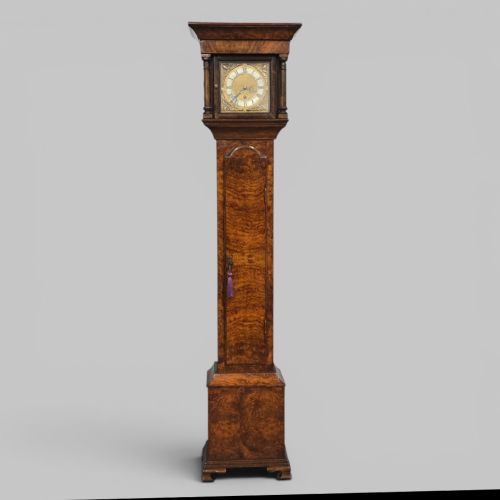


Georgian Burr Walnut Clock
A georgian burr walnut clock brings deep, figured grain and commanding height into a room, offering the quiet precision of centuries-old horology.
Georgian Burr Walnut Clock
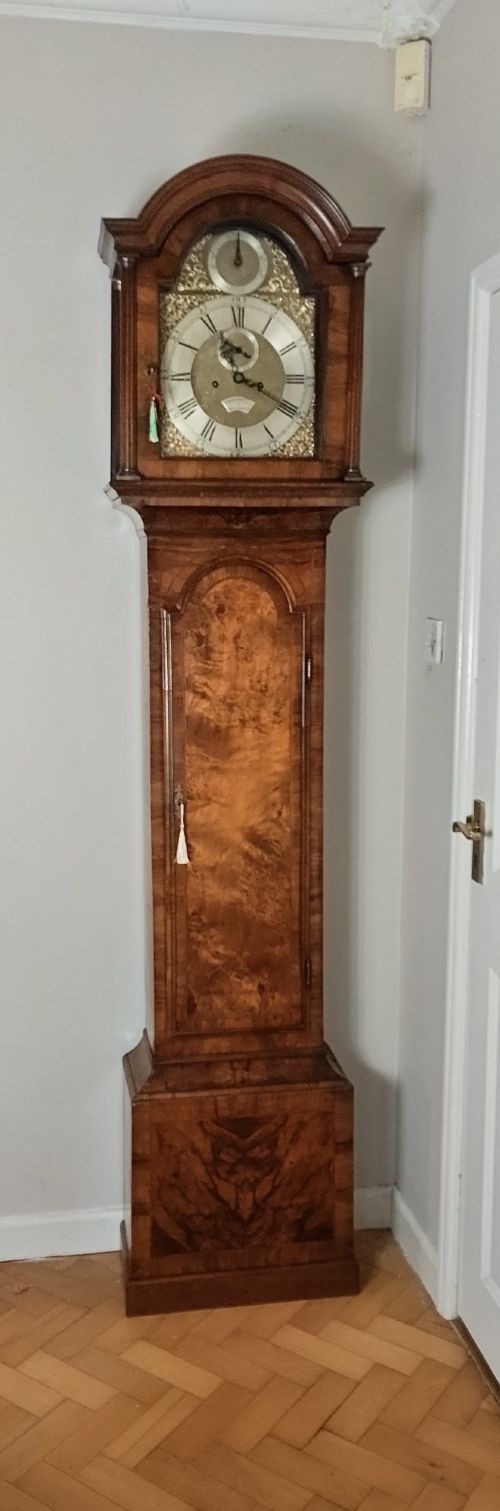
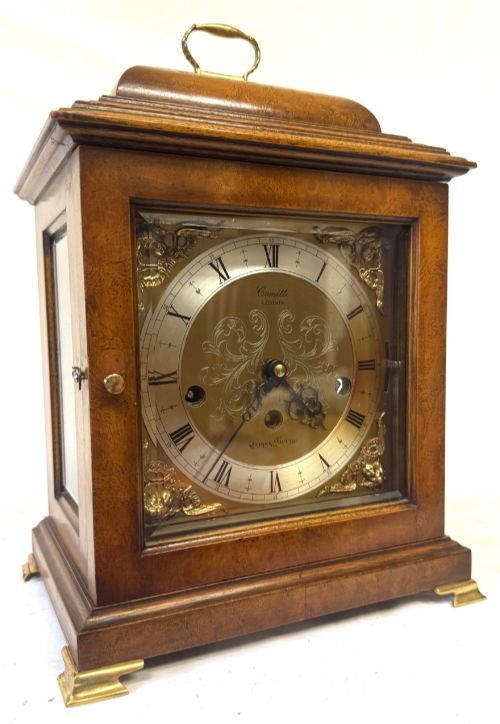
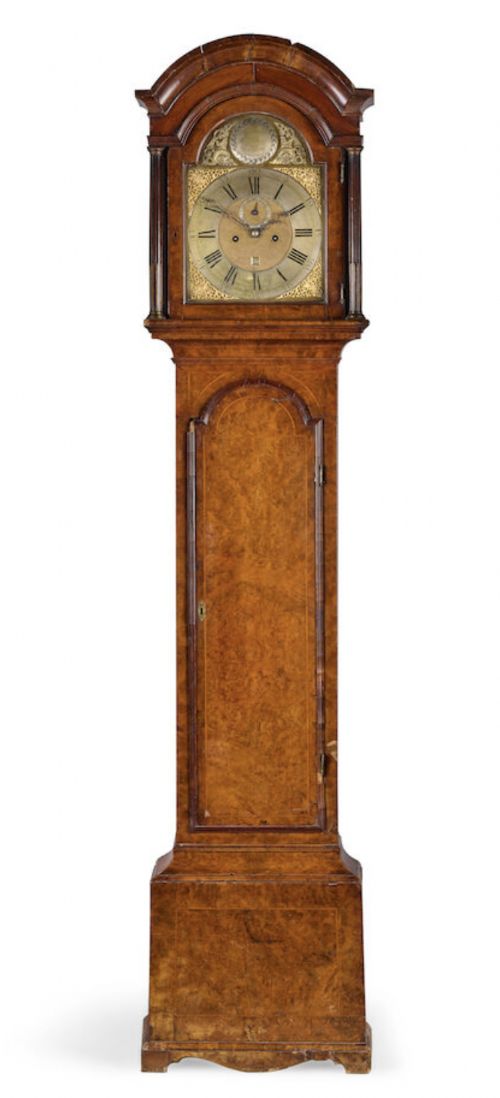
When you search for a georgian burr walnut clock, you encounter tall floor-standing longcases alongside smaller mantel, bracket and desk pieces. The grander grandfather and grandmother longcase clocks dominate the selection, shaped by 18th-century cabinetmakers.
Most examples date from the Georgian period and the 18th century, though revival pieces from the early 20th century also appear. These timepieces display traditional English forms, ranging from towering floor clocks to compact bracket designs.
Makers recorded in the evidence such as Windmills and Wightman, Thomas Vernon, Langley Bradley, Bentley, James Drury, Joseph Oxley, and George Tyler represent the origins of these pieces. Their work establishes the standard for wooden cases housing brass and steel movements.
Distinctions in Quality
The visual depth of the timber veneer dictates much of the character, with tightly knotted burr walnut commanding attention over plainer walnut surfaces. The intricacy of the cabinetwork and the survival of original patination separate exceptional examples from standard ones.
Horological complexity also defines the piece, moving from simple time-only movements to complicated mechanisms featuring quarter chiming, musical barrels, or multiple weights. Signed dials by recorded makers elevate the standing of the clock.
The listings span the Georgian period, the 18th century, and revival eras up to 1960, utilising burr walnut, plain walnut, oak, and ebonised wood.
Windmills and Wightman·Thomas Vernon·Langley Bradley·Bentley London·James Drury·Joseph Oxley·George Tyler
The Georgian Burr Walnut Clock Glossary
- Burr walnut
- A figured veneer sliced from walnut tree growths, prized for its swirling grain patterns. It creates a decorative, highly patterned surface on clock cases.
- Longcase clock
- A tall floor-standing timepiece housed in a wooden trunk, commonly known as a grandfather or grandmother clock. These tall cases protect the hanging weights and pendulum.
- Bracket clock
- A portable table or mantel clock originally designed to sit on a wall bracket. They typically feature a swinging handle on top for carrying.
- Ormolu
- Gilded bronze used for decorative mounts and accents on clock cases. The technique adds metallic highlights against the dark timber.
- Fusee
- A conical pulley used in spring-driven clocks to equalise the declining power of the mainspring as it unwinds. This mechanism improves timekeeping accuracy across the running period.
Georgian Burr Walnut Clock: Frequently Asked Questions
What is a grandmother clock?
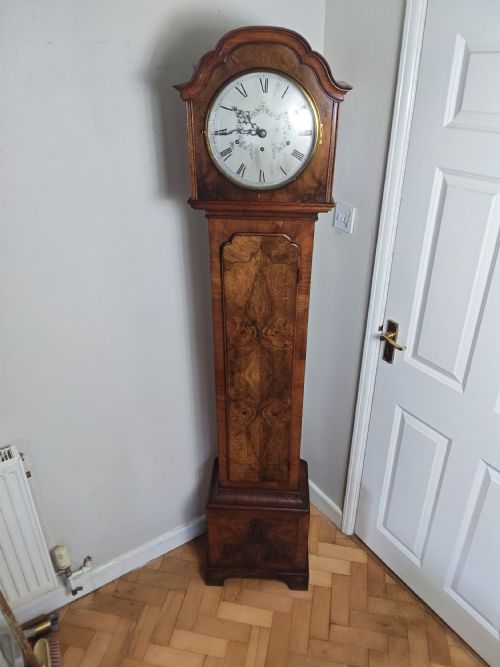
A grandmother clock is a slender, scaled-down version of the traditional longcase grandfather clock. It stands shorter while retaining the mechanical function and timber case.
These smaller floor clocks suited more compact domestic spaces in the 20th century while maintaining the traditional English aesthetic.
How do I identify an 18th-century movement?
Eighteenth-century movements rely on heavy brass plates, hand-cut gear wheels, and pendulum suspension systems distinct from later factory-made mechanisms. Maker signatures are often engraved directly onto the brass dial face.
Examining the construction of the dial and the layout of the internal brass train reveals the working methods of period horologists.
Where should I place a longcase clock?
Longcase clocks require a stable, level floor against a solid interior wall to ensure the pendulum swings evenly. Keeping them away from direct sunlight and temperature fluctuations protects the walnut veneer.
Proper placement prevents the wood from drying out and maintains the accuracy of the weight-driven movement.
What distinguishes a bracket clock from a mantel clock?
Bracket clocks historically incorporated a carrying handle and sat upon matching wall brackets to project sound into a room. Mantel clocks evolved later to rest directly on wooden fireplace shelves.
Both formats offer portable timekeeping enclosed in architectural wooden cases with glass viewing doors.