


Brown Walnut Grandfather Clock
These brown walnut grandfather clocks bring commanding presence and intricate cabinetwork to a room, spanning centuries of disciplined horology.
Brown Walnut Grandfather Clock
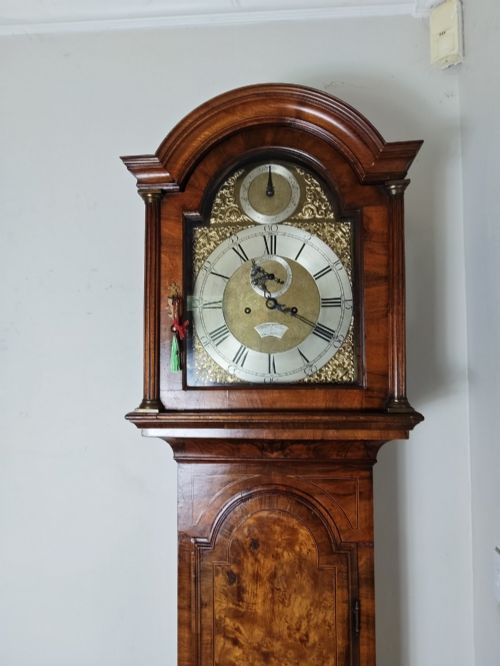
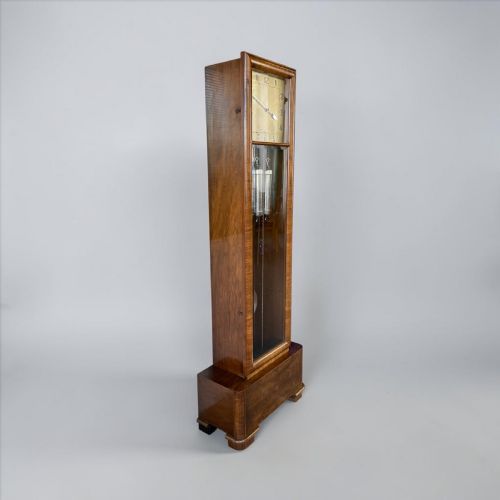
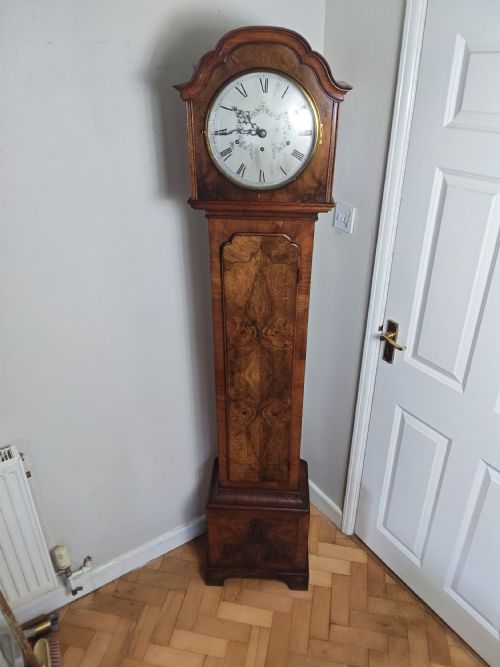
A brown walnut grandfather clock serves as a tall floor-standing timepiece housed in a fitted wooden case. When searching for a brown walnut grandfather clock, buyers encounter examples ranging from seventeenth-century masterworks to later nineteenth-century revivals and Art Deco interpretations.
The selections on this page encompass substantial longcase clocks alongside more compact grandmother and miniature variants. Most pieces display the distinctive figuring of walnut or burr walnut timber, often paired with brass dials and glass door panels.
Origins stretch from early London workshops to regional makers in Exeter, with stylistic influences covering William and Mary, Queen Anne, Georgian, and Art Deco periods. These clocks function simultaneously as precise timekeepers and architectural furniture pieces for the home.
How they were made
Cabinetmakers constructed the tall cases using solid walnut and decorative burr walnut veneers applied over secondary timbers such as oak. These wooden surfaces were meticulously finished to accentuate the natural grain patterns and rich brown tones of the material.
The mechanical movements combine brass gears, steel arbors, and metal plates, driven by hanging weights suspended inside the trunk. Dial faces incorporate cast brass spandrels, engraved chapter rings, and protective glass panels set within hinged doors.
Listings feature walnut, burr walnut, and oak timbers housing brass and steel movements across multiple centuries.
What varies in quality
Quality in these longcase clocks rests upon the sophistication of the cabinetwork and the renown of the horologist who signed the movement. Finer examples exhibit carefully matched burr walnut veneers and crisp architectural mouldings that have survived centuries without major reconstruction.
The precision and complexity of the internal movement further distinguish the pieces, particularly those featuring musical mechanisms or eight-day durations by noted makers. Original brass dial work and untouched movement components elevate the overall integrity of the clock.
Edin Burgis·Langley Bradley·Edward Upjohn·Edward East·Joseph Knibb·John Harrington·James Drury
The Brown Walnut Grandfather Clock Glossary
- Longcase clock
- A tall freestanding pendulum clock enclosed in a wooden case designed to rest directly on the floor. This term is the formal designation for what is commonly called a grandfather clock.
- Burr walnut
- A highly figured wood veneer harvested from the irregular growths of a walnut tree. It produces swirling, decorative patterns prized by cabinetmakers for prominent case surfaces.
- Grandmother clock
- A smaller, more slender version of the traditional longcase clock. These scaled-down timepieces were produced in various periods to fit rooms with lower ceilings.
- Spandrel
- An ornamental brass corner piece applied to the dial of a clock. They evolved in style and complexity across different decades to frame the central chapter ring.
- Movement
- The internal mechanical assembly of gears, weights, and escapements that drives the clock hands and strikes the hours. Makers signed their work on the brass dial plates attached to these mechanisms.
Brown Walnut Grandfather Clock: Frequently Asked Questions
How do I wind an eight-day clock?
Winding requires using a specialised key to raise the heavy metal weights suspended inside the trunk. Care must be taken not to over-wind the mechanism, ensuring the pendulum remains undisturbed.
Most eight-day movements need attention once a week at a consistent time. Maintaining a regular schedule helps preserve the tension on the lines or chains connected to the drums.
Where should I place a longcase clock?
Select an interior wall away from direct sunlight, heating vents, and exterior doors to protect the wooden case from rapid temperature shifts. A stable, vibration-free floor is essential for the pendulum to swing evenly.
Securing the tall case to the wall using hidden brackets prevents accidental tipping. Proper placement also ensures the acoustic chime resonates clearly through the room.
How can I tell a seventeenth-century clock from a later revival?
Early pieces often feature narrower trunk proportions, simpler dial layouts with subsidiary seconds, and construction details characteristic of walnut and oak cabinetry from that era. Signature engraving styles and movement pillars provide further clues.
Revival pieces from later periods may utilise machine-cut gears, heavier plate construction, or wood finishes that differ from seventeenth-century workshop practices. Examining the interior framework alongside the exterior timber helps clarify the true age.
What is the difference between a grandfather and a grandmother clock?
Grandfather clocks stand tall, typically measuring well over six feet, and house substantial weight-driven movements designed for grand hallways or parlours. Their proportions command significant floor space.
Grandmother clocks are significantly shorter and narrower, built to accommodate smaller domestic interiors while retaining traditional longcase styling and mechanical functions.