
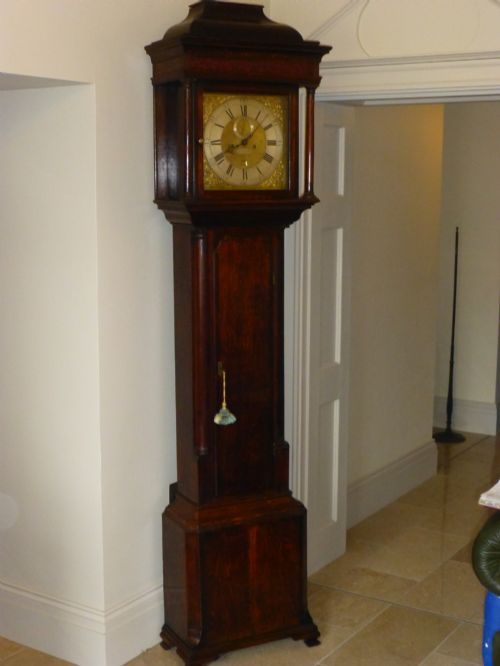
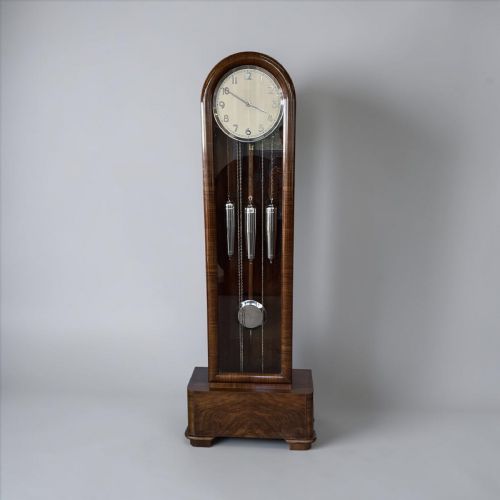
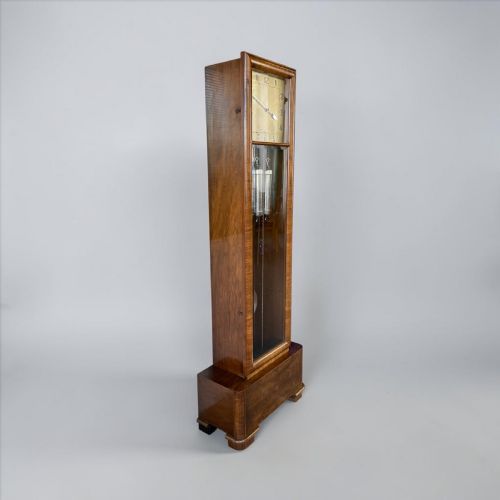
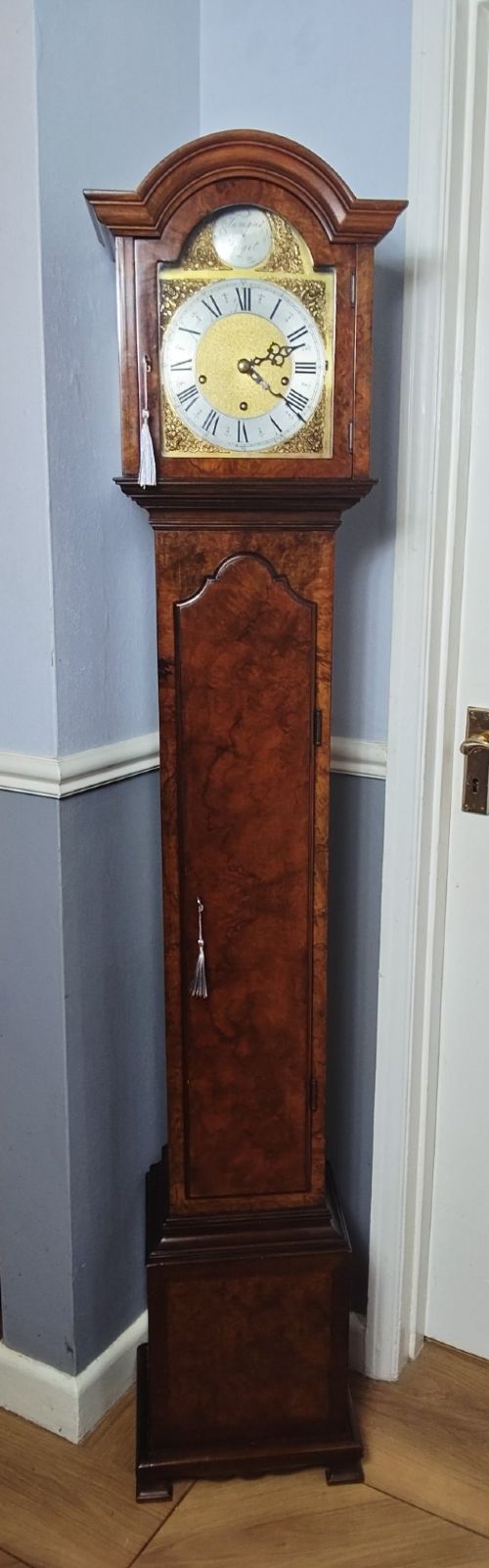
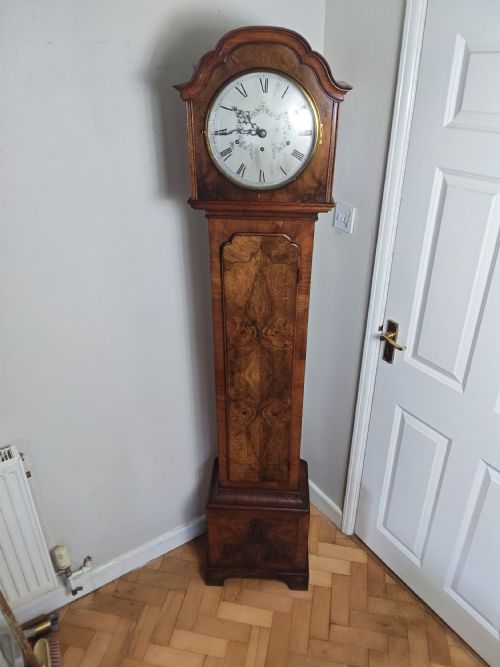
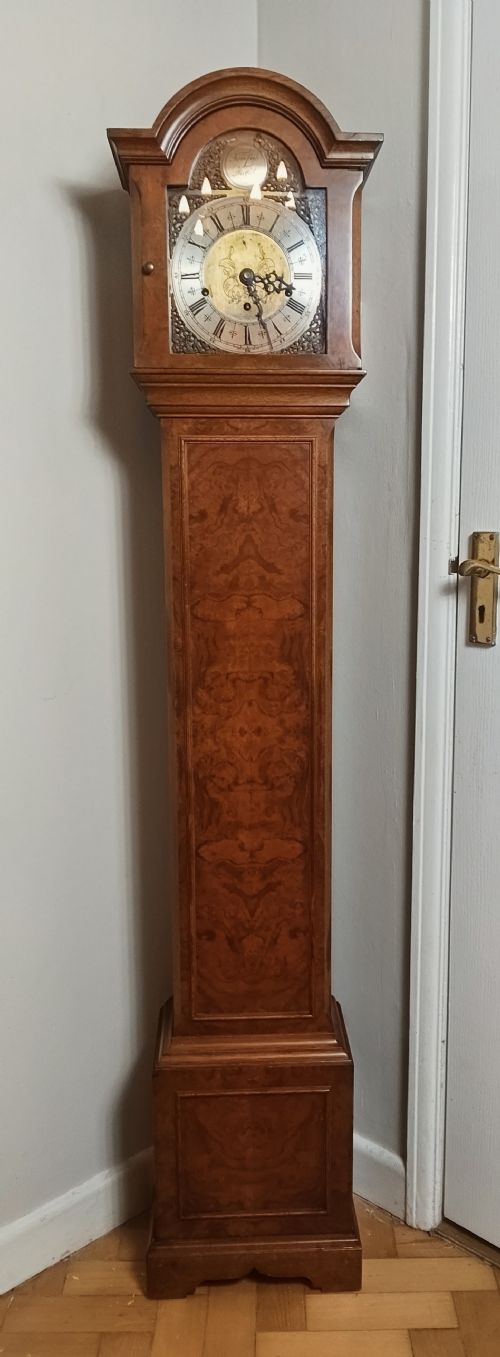
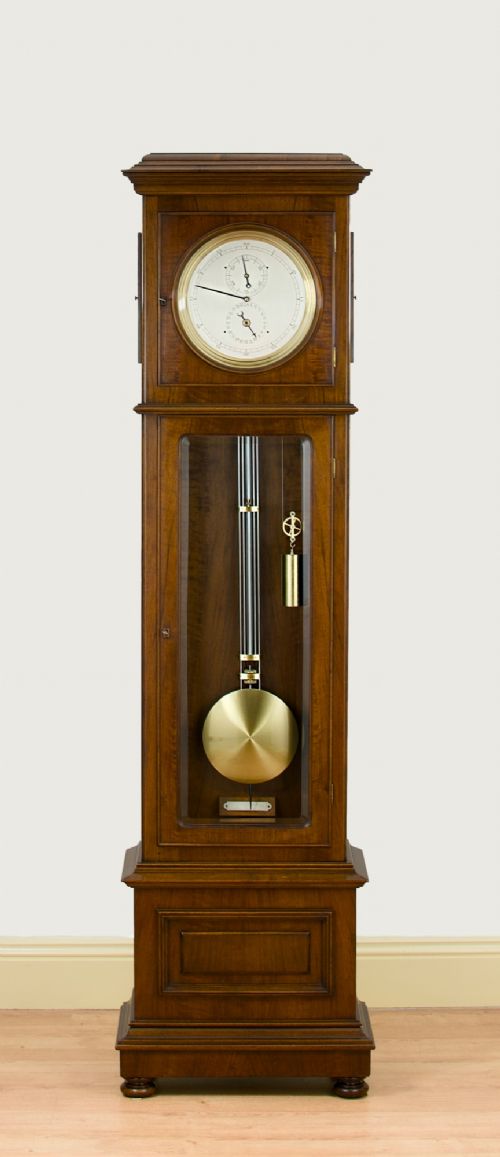
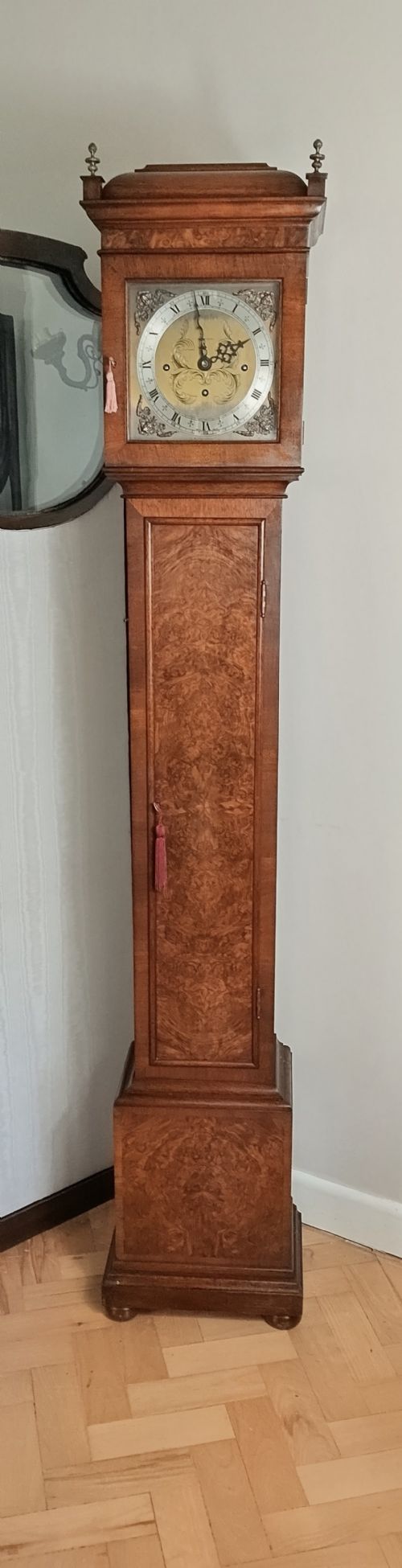
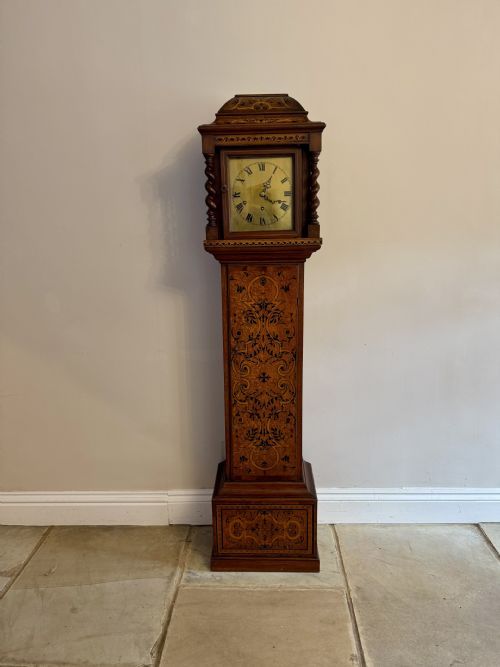
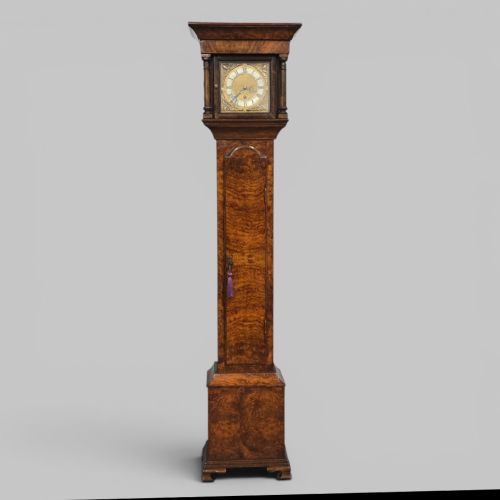


Walnut Floor Standing Clock
These walnut floor standing clock examples combine architectural presence with precise mechanical movement, offering timeless vertical stature and rich timber grain for the interior.
Walnut Floor Standing Clock
A walnut floor standing clock stands tall in a domestic interior, housing a weight-driven or spring-driven mechanism within a protective wooden case. Buyers searching for a walnut floor standing clock encounter full-sized grandfather pieces alongside more compact grandmother and granddaughter formats.
The selection ranges from robust seventeenth-century origins and eighteenth-century Georgian designs through to Edwardian interpretations and twentieth-century Art Deco expressions. Makers utilised various proportions, ranging from grand architectural tall cases to slender, delicate proportions intended for smaller rooms.
Cases often combine primary walnut veneers or solid timber with secondary woods such as oak, mahogany, and intricate marquetry inlay. Dials alternate between traditional brass formats and later chapter rings, housing movements that can include musical chimes and moonphase displays.
Materials and construction methods
Cabinetmakers selected figured walnut, burr walnut, and quarter-veneered panels laid over firmer secondary woods like oak or deal to create rich, patterned exterior surfaces. Marquetry inlay added floral and pictorial motifs using contrasting timbers set directly into the primary veneer.
Clockmakers constructed internal gear trains from brass and steel, housing them behind brass dials featuring engraved chapter rings and cast corner spandrels. Precision movements relied on weighted cords or chains, and later spring-driven setups, to regulate the pendulum swing.
The listings span periods from the 17th century through to 1960, utilising materials like brass, glass, oak, chrome, mahogany, and marquetry alongside walnut.
Factors of quality and execution
The depth and consistency of the timber figure determine visual merit, with complex burr walnut and symmetrical quarter-veneers commanding higher regard than plain surfaces. Finely executed marquetry inlay shows crisp borders and tight joins between contrasting woods.
Mechanical refinement separates standard timekeepers from exceptional horology, seen in the presence of quarter-chimes, musical cylinders, or precision pendulum regulation. The signature of a known maker upon the dial elevates the historical and technical standing of the piece.
Richard Corless of Stockport·Elliott·Lenzkirch·Henry Massy·Nathaniel Pyne·Edin Burgis·Langley Bradley·Edward Upjohn·Edward East·Joseph Knibb·Samuel Young·Edward Stanton·John Harrington·Joseph Windmills·Peter Wise·Richard Baker·Joseph Oxley
The Walnut Floor Standing Clock Glossary
- Grandmother clock
- A smaller version of the traditional longcase clock, typically standing under six feet tall. These narrower pieces emerged to fit more modest twentieth-century domestic ceiling heights.
- Marquetry inlay
- Decorative patterns formed by fitting small pieces of veneer into a prepared wooden ground. Cabinetmakers used various tinted woods to produce elaborate floral or geometric designs across the trunk door.
- Moonphase
- A dial mechanism tracking the lunar cycle through a rotating disc visible through an arched aperture. This complication required sophisticated gear calculation alongside standard timekeeping.
- Quarter chiming
- A movement arrangement striking the bells every fifteen minutes to mark the passage of time. These complicated trains often employ multiple weights and specialised musical cylinders.
- Spandrel
- An ornamental metal casting placed in the corners of a clock dial surrounding the circular chapter ring. These decorative brass pieces evolved from floral scrollwork into distinct regional rococo patterns.
Walnut Floor Standing Clock: Frequently Asked Questions
What is a walnut floor standing clock?
A walnut floor standing clock is a tall domestic timekeeper enclosed in a wooden case made from walnut timber. These pieces combine longcase utility with decorative cabinetwork.
They accommodate weight-driven movements and pendulums inside a vertical trunk, topped by a visible dial.
How do I wind the weights?
Winding involves pulling the suspended chains or turning the key arbor holes on the dial face to raise the internal weights. This action stores gravitational potential energy within the movement.
Careful handling ensures the lines remain untangled and the pendulum maintains its steady beat.
Where should I place it?
These clocks require a stable, dry interior location against a secure wall where floor vibrations are minimal. Placement away from direct sunlight preserves the delicate walnut veneer.
Sufficient clearance is necessary above the case for safe door operation and pendulum clearance.
How do I tell periods apart?
Period identification relies on casework proportions, dial design, and veneer application techniques. Early seventeenth and eighteenth-century examples feature simple architectural hoods and rich marquetry, while later twentieth-century pieces show streamlined Art Deco lines.
Maker signatures engraved on the brass dial offer further chronological markers.