
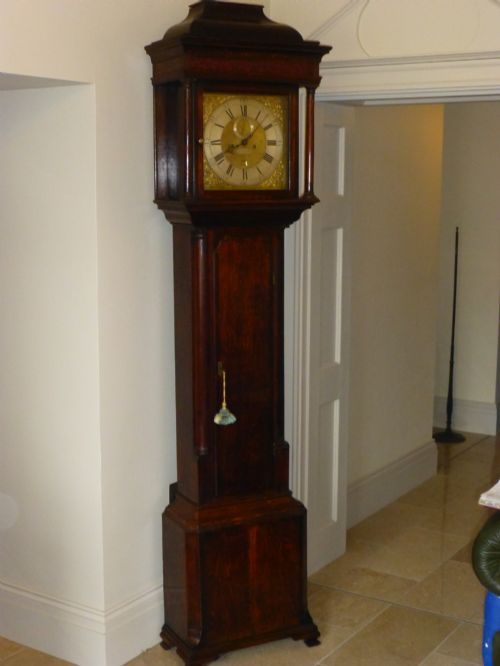


Carved Walnut Grandfather Clock
These carved walnut grandfather clocks bring monumental presence and meticulous period detail into a room, making them a centerpiece for any serious interior.
Carved Walnut Grandfather Clock
When you search for a carved walnut grandfather clock, you enter a field defined by substantial timber cases and precision horology stretching from the seventeenth century through the Georgian era. These tall timepieces combine architectural casework with brass dials, housing weight-driven movements designed to keep accurate time over eight-day or shorter runs.
On this page, you are most likely to meet examples originating from the seventeenth and eighteenth centuries, alongside nineteenth-century revivals. Materials range from straight-grained walnut to highly figured burr walnut, frequently paired with secondary timbers like oak in the internal framing.
How they were made
Cabinetmakers constructed the tall cases using solid walnut and decorative burr walnut veneers applied over foundational timbers such as oak. Carved ornamentation, including caryatid masks and figurative cherubs, was hand-chiselled directly into the timber or onto applied mouldings.
The mechanical interiors rely on brass for the dial plates, gear wheels, and moving parts, often driven by lead or iron weights suspended on cords or lines. Steel components were utilised within the escapement and motion work to ensure durability and precise engagement of the gears.
Some walnut clocks stare back at you through carved wooden faces and cheeky cherubs hidden beneath the dial.
What varies in quality
The standard of a carved walnut grandfather clock rests heavily on the crispness of the cabinetwork and the figuration of the walnut veneers. Finer examples display symmetrical burr walnut figuring across the trunk door and base, coupled with deeply undercut, sharp hand-carving rather than soft or mechanical moulding.
Dial execution separates the exceptional from the ordinary, where engraved brass chapter rings, finely pierced steel hands, and signed maker plaques demonstrate the maker's mastery. The integration of the movement into the case, maintaining original proportions and sympathetic restorations, dictates the standing of the piece.
Richard Corless of Stockport·Edin Burgis of London·Edward East·Samuel Young Nantwich & Bunbury·Edward Stanton·John Harrington London·Joseph Windmills London·Joseph Oxley Norwich·Dent
The Carved Walnut Grandfather Clock Glossary
- Longcase clock
- An alternative and often earlier term for a grandfather clock, describing the tall wooden case that protects the weights and pendulum.
- Burr walnut
- A highly prized wood veneer taken from the wart-like growths on walnut trees, creating swirling, intricate patterns across the clock door.
- Caryatid
- A sculpted female figure serving as an architectural support, sometimes found carved onto the hood or trunk of grander clocks.
Carved Walnut Grandfather Clock: Frequently Asked Questions
What is a grandfather clock?
A grandfather clock is a tall, freestanding, weight-driven pendulum clock with a protective wooden case that encloses the movement and weights. The term typically describes longcase clocks standing over six feet tall.
These pieces were traditionally positioned in hallways or living spaces as both reliable timekeepers and prominent displays of domestic status and fine cabinetry.
How do I wind an 8-day clock?
An eight-day clock requires winding approximately once a week by lifting the weights using a winding key inserted into holes on the dial face. Care must be taken to support the weight slightly if necessary and to avoid over-winding the movement.
Consistency in winding helps maintain the tension of the drive system and ensures the clock keeps a steady and reliable rate.
Where should I place a walnut clock?
Walnut clocks need a stable environment away from direct sunlight, heating vents, and damp exterior walls to protect the delicate wood veneers and internal timber movement components. Placing the clock on a solid, level floor ensures the pendulum swings evenly and the case does not twist.
Because of their height, tall cases should be secured gently to the wall using appropriate brackets to prevent accidental tipping.
How do I tell 17th-century clocks apart from 19th-century styles?
Seventeenth-century clocks generally feature simpler, architectural proportions with square brass dials, walnut or oak carcass construction, and restrained mouldings typical of the period. Nineteenth-century interpretations often exhibit heavier, more dramatic carving, such as caryatids or cherubs, reflecting revival tastes.
Examining the internal construction timber, the style of the dial engraving, and the ageing of the brass and wood provides further clues to the true age of the piece.