
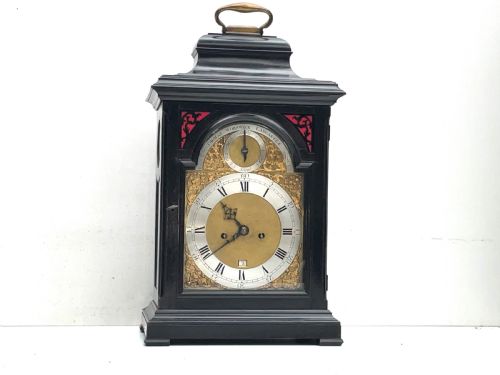
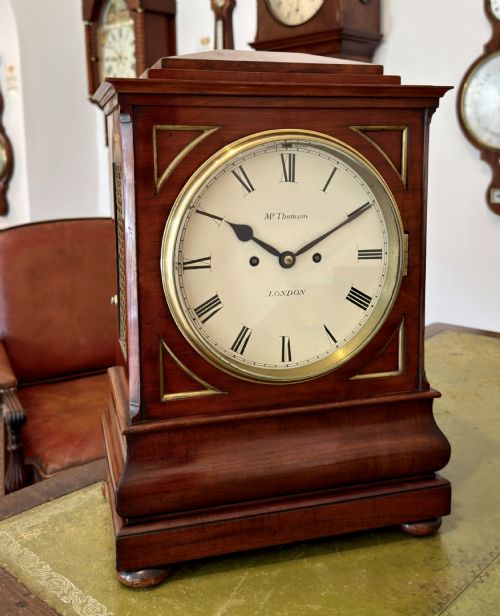
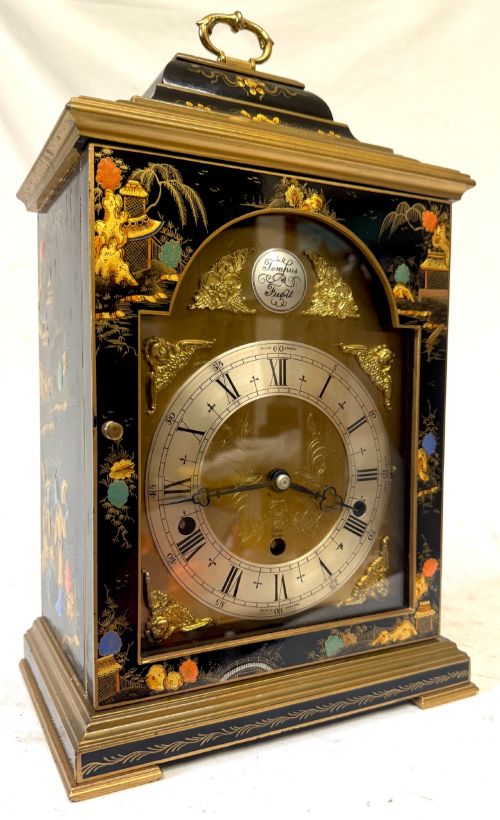
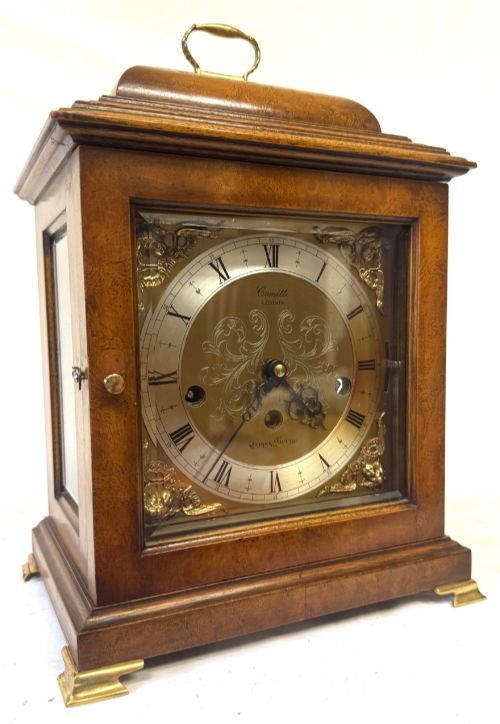
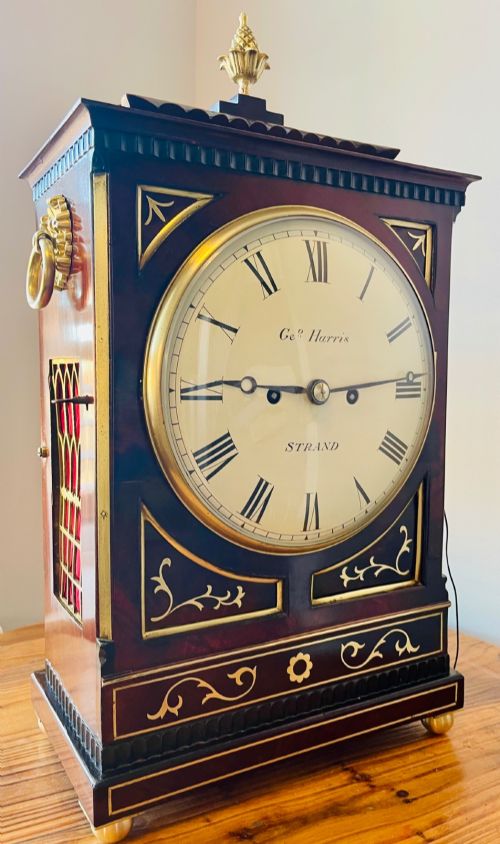
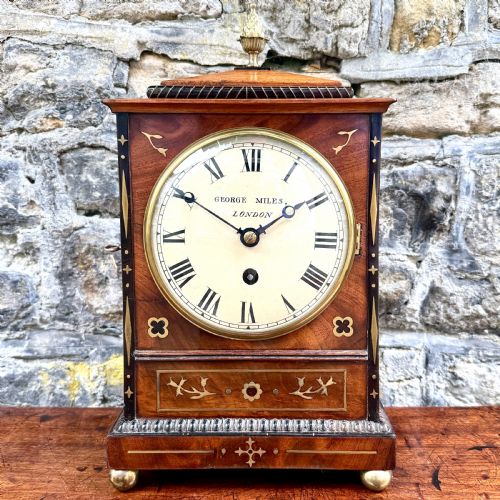
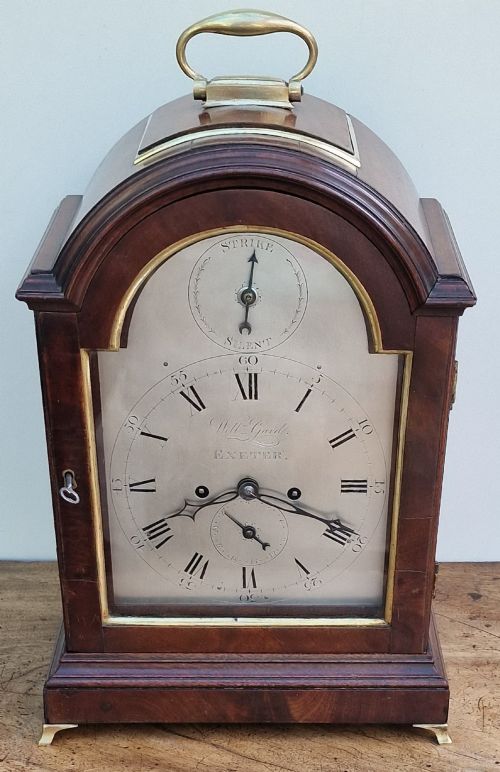
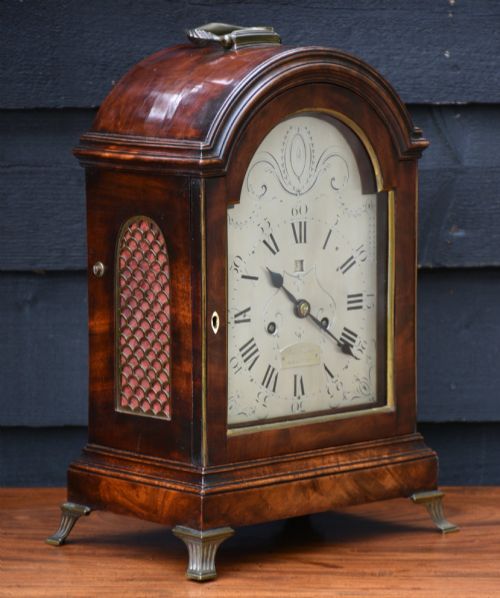

Georgian Brass Table Clock
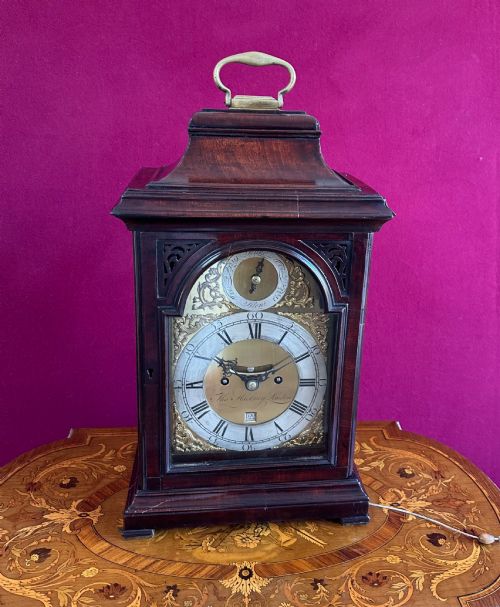
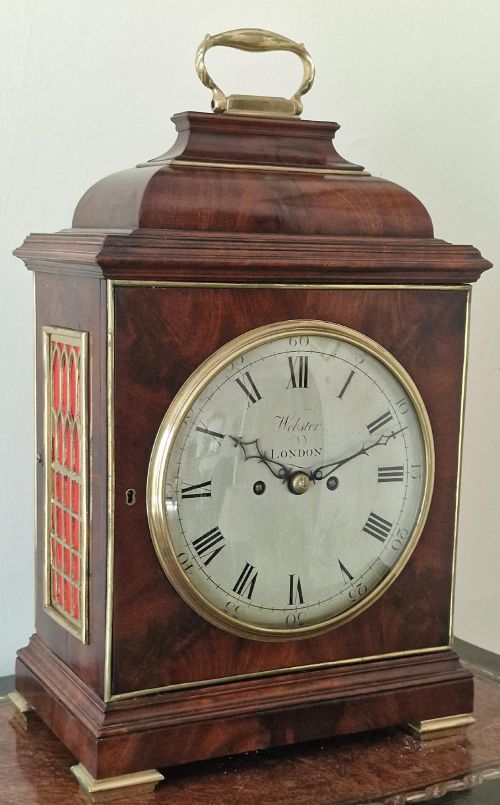
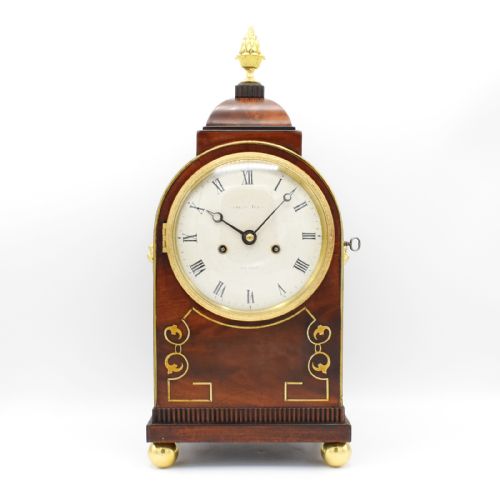
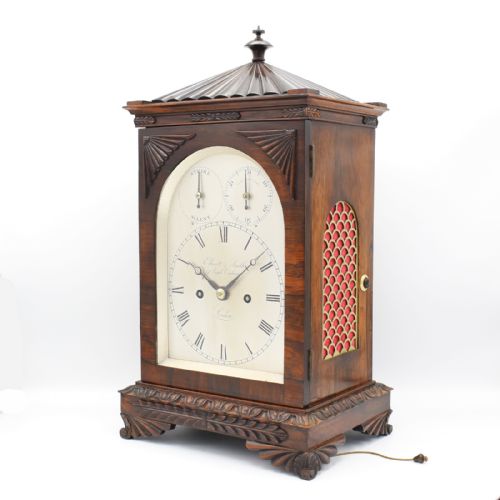
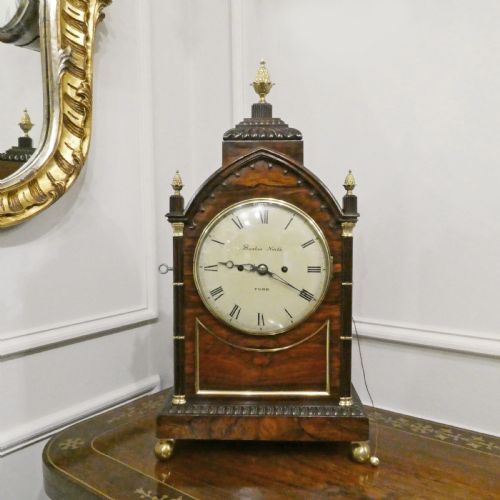
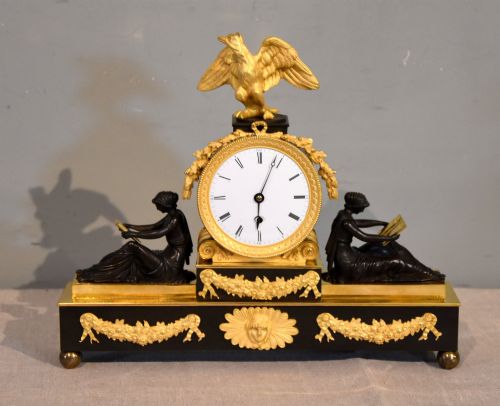
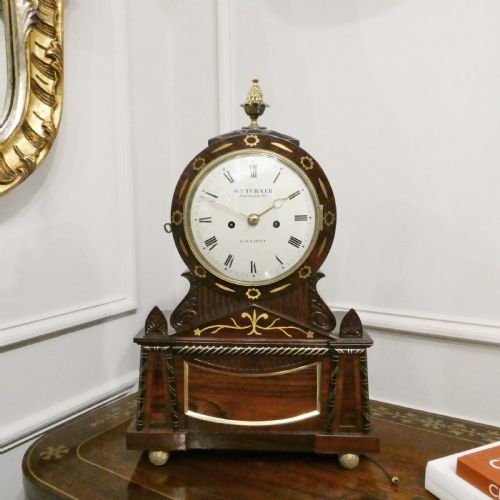
A georgian brass table clock brings gravity to a mantelpiece, driven by brass movements and housed in rich timbers.
Georgian Brass Table Clock
When you search for a georgian brass table clock, you find timepieces designed to sit on tables, brackets, and mantelpieces, originating predominantly from the Georgian, Regency, and 18th century periods.
The specimens on this page encompass various forms such as bracket clocks, mantel clocks, library clocks, and lantern clocks.
Mahogany, rosewood, and ebonised wood frequently form the outer cases, enclosing brass works and enamel dials.
Materials and Construction
Maker workshops built cases using dense cabinet timbers like mahogany, rosewood, and ebony, often incorporating glass panels and brass mounts.
Mechanisms rely heavily on brass for plates and wheels, steel for springs and escapements, and white enamel for circular dial faces.
Listings feature brass table clocks across the Georgian, Regency, and Victorian periods, housed in mahogany, rosewood, and ebonised wood.
Distinctions in Quality
The refinement of the movement determines much of the value, distinguishing simple timepieces from complex quarter-striking or musical mechanisms.
Cabinetwork separates ordinary boxes from exceptional pieces, noting the selection of figured timbers, precise inlay, and well-cast brass mounts.
Thomson of London·William Gard·Webster London·Mappin and Webb·Barwise London·Ellicott and Smith·Barber and North·Turner of London·Thomas Jackson·Bush of London·Desbois and Wheeler·L Vick·Francis Perigal·Seller of Reading·Thomas Moss·John Witherston·Cording of London·Viner London·Windmills and Bennet·William Barrow
The Georgian Brass Table Clock Glossary
- Bracket clock
- A portable clock originally designed to sit on a wall bracket to aid sound projection. These clocks typically feature a carrying handle on top.
- Fusee
- A conical pulley used in spring-driven clocks to maintain even power as the mainspring unwinds. This device ensures more accurate timekeeping.
- Verge escapement
- An early type of escapement mechanism controlling the release of power in the gear train. It works with a balance wheel or pendulum.
- Lantern clock
- An early brass chamber clock of domestic use, driven by weights and featuring a distinct square shape. They date back to the seventeenth and eighteenth centuries.
- Enamel dial
- A face made by fusing powdered glass onto a metal substrate at high heat. These dials provide a durable and bright surface for painted numerals.
Georgian Brass Table Clock: Frequently Asked Questions
How do I wind a fusee bracket clock?
Wind the clock using the appropriate key inserted into the dial winding hole, turning it slowly and steadily until resistance stops the movement.
Avoid over-winding the mechanism, as this places excessive tension on the mainspring and can cause damage to the internal gearing.
Where should I place a table clock?
Position the clock on a stable, level surface away from direct sunlight, draughts, and sudden temperature fluctuations that affect wood and metal.
A mantelpiece, sturdy side table, or dedicated wall bracket provides the necessary support and helps the sound of the strike resonate.
What is a verge escapement?
The verge escapement is an early mechanical regulating device utilising a crown wheel and a pivoted rod with pallets.
This mechanism creates the characteristic ticking sound and governs the speed at which the gear train releases energy.
How do I tell an 18th century clock from a later one?
Examine the construction of the movement, the style of the timber case, and the materials used for the dial and hands.
Earlier examples often feature verge escapements, brass dial plates with cast spandrels, and heavier walnut or early mahogany carcases.